In the crowded digital landscape, driving qualified visitors to your website is more critical and challenging than ever. While paid ads can offer a temporary boost, sustainable, long-term growth is built on a solid foundation of strong organic traffic. This isn't about guesswork or chasing fleeting trends; it's about implementing a systematic approach to attract, engage, and convert your ideal audience. The ultimate goal of this blueprint is to show you how to increase organic search traffic through proven SEO tips on how to increase organic search traffic and strategies.
This guide provides a comprehensive blueprint, detailing 12 powerful and actionable ways to increase organic traffic. We will move beyond generic advice and dive into the specific, proven tactics that separate high-growth websites from the rest. You'll gain practical insights into everything from advanced keyword research and technical SEO audits to crafting compelling topic clusters and optimizing for user experience.
Each section is designed to be a mini-playbook, equipping you with the step-by-step instructions needed to turn your site into a consistent, traffic-generating engine. Let's get started on unlocking your website's true potential.
1. Master the Foundation: Advanced Keyword Research and Optimization
Effective SEO begins with understanding the precise language your audience uses. Advanced keyword research moves beyond simply finding popular terms; it's about mapping specific phrases to user intent. This foundational technique involves identifying high-value search queries and strategically embedding them into your content, meta tags, and headers. By aligning your content with what users are actively searching for, you signal your relevance to search engines and attract highly qualified visitors, making it one of the most powerful ways to increase organic traffic.
This method works because it directly answers the questions your potential customers are asking. For example, HubSpot’s strategic focus on the term “inbound marketing” helped them define and dominate an entire industry category. Similarly, Neil Patel’s blog ranks for thousands of long-tail keywords like “how to get more traffic to your blog,” attracting a targeted audience seeking actionable advice.
Actionable Steps for Implementation:
- Deep Dive with Tools: Use platforms like Ahrefs or SEMrush to analyze search volume, keyword difficulty, and click-through rates. This data helps you prioritize high-impact opportunities.
- Target Long-Tail Keywords: Focus on longer, more specific phrases (e.g., "best SEO tools for small e-commerce business" instead of "SEO tools"). These have lower competition and higher conversion intent.
- Analyze Competitor Gaps: Identify keywords your competitors rank for that you don't. This can reveal untapped content opportunities.
- Map to User Intent: Categorize keywords by intent: informational (how-to guides), transactional (product pages), or navigational (brand searches), ensuring your content format matches user expectations.
By mastering organic search keywords, you build a solid base for all other SEO efforts. For a more detailed guide, you can explore the fundamentals of organic search keywords.
2. High-Quality & Multi-Format Content Creation
Great content is the currency of the internet. Creating comprehensive, original, and valuable content across different formats like articles, videos, and infographics directly addresses user needs and search intent. This approach establishes your expertise, provides genuine value, and naturally attracts backlinks and user engagement, which are critical signals for search engine rankings. It's a cornerstone strategy for anyone looking for sustainable ways to increase organic traffic.
This method works because it caters to diverse audience preferences and captures a wider net of search opportunities. For instance, Backlinko’s "Skyscraper" content strategy generates thousands of authoritative backlinks by creating the best resource on a topic. Similarly, Moz’s "Whiteboard Friday" videos not only dominate YouTube search but also drive significant traffic back to their site by embedding videos in relevant blog posts.
Actionable Steps for Implementation:
- Create Pillar Content: Develop long-form, cornerstone articles that cover a topic in exhaustive detail. These become central hubs for internal linking.
- Repurpose into Multiple Formats: Turn a detailed blog post into a summary video, an infographic, and a series of social media posts. This maximizes reach across different platforms.
- Use Data and Original Research: Incorporate unique data, statistics, and original research to make your content a primary source that others will cite and link to.
- Prioritize the User Experience: Write for humans first and search engines second. Ensure content is readable, engaging, and genuinely helpful.
- Optimize Video Content: Include video transcripts on your pages for text-based indexing, and use keyword-rich titles and descriptions to improve discoverability.
By diversifying your content portfolio, you build a more resilient and authoritative online presence. To find the right software for this, you can explore the best content creation tools for marketers.
3. Technical SEO Optimization
Beyond content, a website's technical foundation is critical for search engine performance. Technical SEO involves optimizing your site's infrastructure to ensure search engines can efficiently crawl, index, and rank your pages. By improving elements like site speed, mobile-friendliness, and code, you remove barriers that could hinder your rankings, making it one of the most fundamental ways to increase organic traffic. A technically sound website provides a better user experience and makes it easier for search engine bots to understand your content.
This method works because it directly impacts how search engines perceive your site's quality and accessibility. For example, Amazon’s robust technical framework allows it to manage and rank millions of product pages effectively. Similarly, The New York Times saw a significant traffic boost after focusing on page speed improvements, demonstrating the direct link between technical health and organic visibility.
Actionable Steps for Implementation:
- Audit Site Performance: Use tools like Google PageSpeed Insights and GTmetrix to diagnose speed issues. Address recommendations to improve loading times.
- Optimize for Core Web Vitals: Focus on improving Largest Contentful Paint (LCP), First Input Delay (FID), and Cumulative Layout Shift (CLS) for a better user experience.
- Ensure Mobile-Friendliness: With mobile-first indexing, a responsive design is non-negotiable. Use Google’s Mobile-Friendly Test to verify your site.
- Implement Structured Data: Use schema markup to help search engines understand your content's context, which can lead to rich snippets in search results.
By solidifying your website's technical base, you create a seamless experience for both users and search engine crawlers. To dive deeper, you can learn about optimizing your crawl budget.
4. Link Building and Backlink Strategy
Building a strong backlink profile is like earning votes of confidence from other websites. Each hyperlink pointing to your site acts as an endorsement, signaling to Google that your content is credible and authoritative. A strategic approach to acquiring high-quality backlinks from reputable domains is one of the most critical ways to increase organic traffic, as it directly influences search engine rankings and enhances your site's overall visibility.

This method is effective because it leverages the authority of established sites to boost your own. For example, Backlinko’s "Skyscraper Technique," which involves improving upon existing popular content and reaching out to sites linking to the original, has helped them earn thousands of backlinks. Similarly, original research published by companies like SEMrush naturally attracts citations from major publications seeking data-driven insights.
Actionable Steps for Implementation:
- Focus on Quality, Not Quantity: Prioritize earning a single link from an authoritative, relevant site over dozens of links from low-quality domains.
- Create Link-Worthy Assets: Develop content that naturally attracts links, such as original research, in-depth guides, free tools, or compelling case studies.
- Use the Skyscraper Technique: Find popular content in your niche, create a significantly better version, and then reach out to websites linking to the inferior piece.
- Build Industry Relationships: Connect with journalists, bloggers, and influencers in your field who may be willing to link to your valuable content.
- Guest Post Strategically: Contribute articles to reputable industry publications to build authority and earn contextual backlinks to your site.
By focusing on earning high-quality endorsements, you create a powerful signal that boosts your search engine rankings. For more detailed strategies, you can explore our guide on getting more website traffic.
5. Build an Internal Linking Web to Boost Authority
A strategic internal linking plan is one of the most underrated ways to increase organic traffic. It involves linking from one page to another within your own website, which distributes page authority, helps search engines understand content relationships, and guides users to relevant information. By creating a strong internal linking web, you signal which pages are most important and how different topics are thematically connected, improving both user experience and search rankings.
This method works by passing "link equity" from high-authority pages (like your homepage) to other important pages, boosting their ranking potential. For example, Wikipedia's massive success is partly due to its extensive internal linking, which helps it rank for millions of topics. Similarly, HubSpot uses a pillar-and-cluster model, where a central "pillar" page links to and from multiple "cluster" articles, creating a powerful, interconnected content hub.
Actionable Steps for Implementation:
- Implement a Pillar-and-Cluster Model: Create comprehensive pillar pages for broad topics and surround them with detailed cluster content that links back to the pillar.
- Use Descriptive Anchor Text: Use keyword-rich anchor text that accurately describes the destination page (e.g., "technical SEO best practices" instead of "click here").
- Link from High-Authority Pages: Identify your top-performing pages and add internal links from them to newer or less visible content that needs a boost.
- Update Old Content: Regularly revisit older blog posts and articles to add internal links pointing to your newest, most relevant content.
By building a thoughtful internal link structure, you create a seamless journey for users and search engine crawlers alike. For a deeper dive, you can explore automated internal linking strategies.
6. User Experience and On-Page Optimization
Optimizing individual web pages for both users and search engines is a critical aspect of modern SEO. This dual-focus approach involves refining everything from content layout and readability to navigation and engagement signals. By creating a seamless, intuitive experience, you encourage visitors to stay longer and interact more, sending positive signals to Google. A well-optimized page is one of the most effective ways to increase organic traffic by improving both rankings and click-through rates.
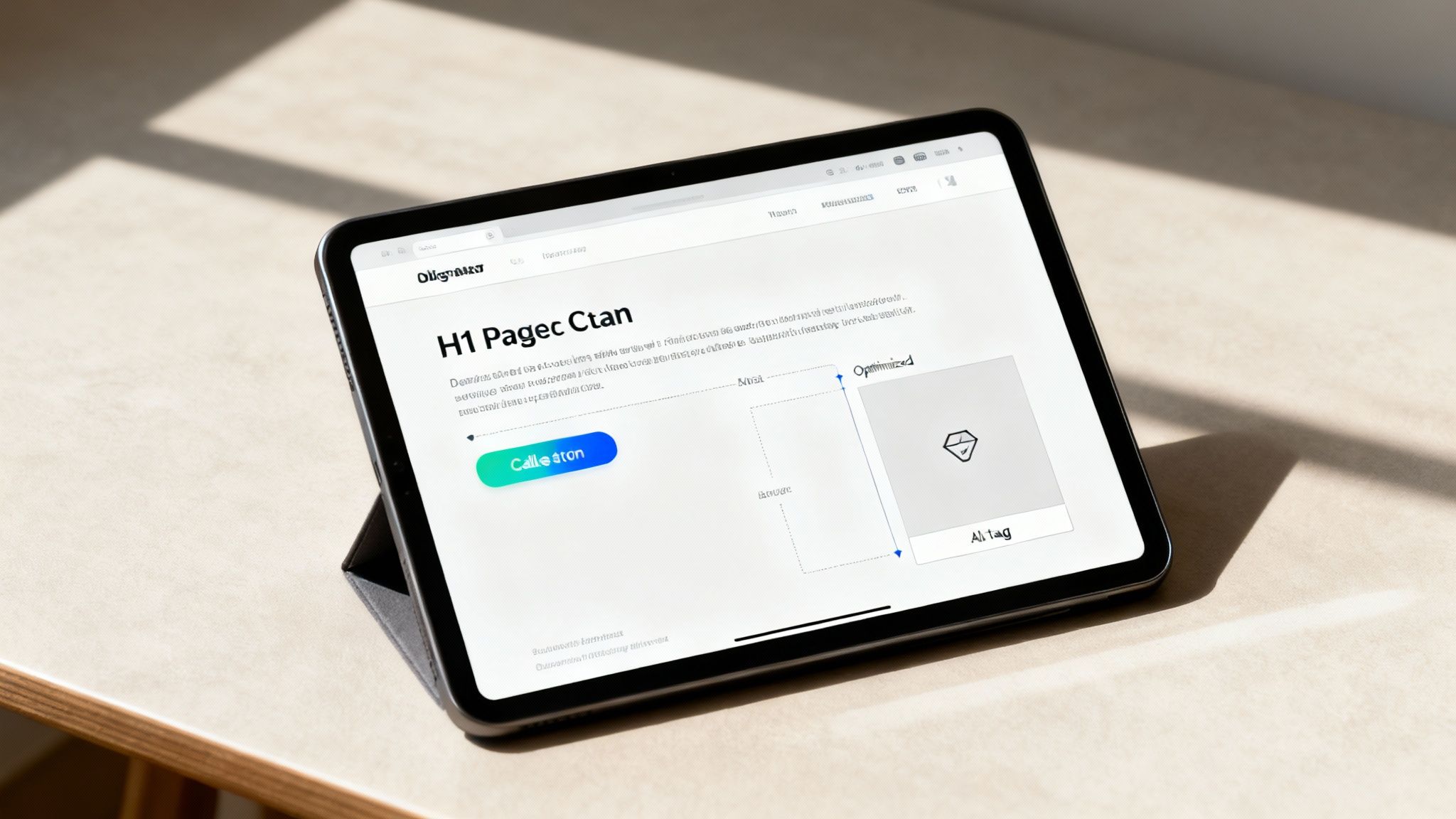
This method works because search engines prioritize content that genuinely helps users. For instance, Airbnb’s streamlined booking process improved conversions by 50%, a clear signal of superior user experience. Likewise, Mailchimp’s comprehensive guides use clear layouts and strong calls-to-action, turning informational content into a powerful conversion tool that ranks highly.
Actionable Steps for Implementation:
- Write Compelling Meta Titles: Keep titles between 50-60 characters and include your primary keyword near the beginning to capture attention in search results.
- Craft Engaging Meta Descriptions: Use 150-160 characters to write action-oriented summaries that entice users to click.
- Optimize Image Alt Text: Use descriptive alt text for all images, incorporating relevant keywords to improve accessibility and image search visibility.
- Structure for Readability: Break content into scannable sections with clear H2 and H3 headers. Use visual elements like lists, tables, and images to make information digestible.
7. Topic Clusters and Semantic SEO
Moving beyond individual keywords, topic clusters signal your site’s comprehensive expertise to search engines. This advanced strategy involves creating a central “pillar” page for a broad topic and linking it to multiple, in-depth “cluster” articles that cover specific subtopics. This interconnected content architecture demonstrates topical authority, making it a highly effective way to increase organic traffic for a whole family of related keywords, not just one.
This method works by creating a logical, organized content hub that keeps users engaged and signals to search engines that your site is a definitive resource. For instance, HubSpot’s pillar page on “How to Start a Blog” links to dozens of cluster articles on topics like choosing a domain, writing content, and monetization. This structure helps them dominate search results for a massive range of blogging-related queries.
Actionable Steps for Implementation:
- Map Your Core Topics: Identify the main subjects your business wants to be known for. These will become your pillar page foundations.
- Create Comprehensive Pillar Pages: Develop a long-form, authoritative resource (often 3,000+ words) that provides a broad overview of your core topic.
- Build Out Cluster Content: Write detailed articles or blog posts that explore specific subtopics mentioned on the pillar page.
- Establish Strategic Internal Links: Ensure every cluster page links up to the main pillar page, and the pillar links out to relevant clusters. This internal linking is crucial for passing authority and context.
8. Long-Form Content and Comprehensive Guides
Creating detailed, in-depth content that comprehensively covers a topic is a proven method for earning top search rankings. Long-form content, typically over 2,000 words, acts as a definitive resource, establishing your authority and attracting more backlinks, social shares, and organic traffic. By thoroughly addressing a user's query in a single place, you signal to search engines that your page is the most valuable result for that topic, making it one of the most effective ways to increase organic traffic.
This method works because it satisfies user intent at a deeper level. For instance, Backlinko’s "The Beginner's Guide to SEO" is a massive resource that ranks at the top for its target keywords by being the most complete guide available. Similarly, HubSpot's annual "State of Marketing" report generates millions of views and earns high-authority links because it offers unparalleled depth, data, and insights.
Actionable Steps for Implementation:
- Aim for Substantial Word Count: For competitive topics, target a minimum of 2,500-4,000 words to ensure you provide more value than existing top-ranking pages.
- Incorporate Original Data: Include original research, case studies, or unique data analysis to make your content a primary source that others will want to cite and link to.
- Structure for Readability: Use descriptive H3 and H4 subheadings, short paragraphs, and bullet points to break up the text and make it easy to navigate.
- Add Visual Elements: Enhance your guide with charts, infographics, screenshots, and videos to illustrate complex points and improve user engagement.
- Include Credible Sources: Back up your claims with statistics and links to authoritative studies or industry reports to build trust and credibility.
9. Win "Position Zero": Featured Snippet Optimization
Securing a featured snippet, often called "Position Zero," places your content in a special answer box at the very top of Google's search results. This strategy involves formatting your content to directly and concisely answer a user's question, making it an incredibly effective way to increase organic traffic by capturing maximum visibility. By providing a clear, authoritative answer, you can leapfrog the traditional #1 result and significantly boost your click-through rate.
This method works by giving search engines the exact, well-structured information they need to satisfy a user's query immediately. For instance, Backlinko’s focused studies on snippet optimization helped them dominate "position zero" for competitive SEO terms. Similarly, SEMrush frequently captures snippets for definitions and comparisons by creating highly organized content that directly addresses specific industry questions.
Actionable Steps for Implementation:
- Answer Directly: For paragraph snippets, answer the user's query immediately in a concise 40-60 word paragraph. Place this answer directly below a heading that matches the search query.
- Format for Lists and Tables: Use numbered or bulleted lists for "how-to" or "best of" queries, and use HTML tables for comparison-based searches (e.g., "A vs. B").
- Analyze and Outdo Competitors: Search your target keyword and see who currently holds the featured snippet. Analyze their answer's format and structure, then create a more comprehensive or clearer version.
- Use Question-Based Headers: Structure your content with H2s and H3s that pose common questions related to your topic, such as "What is..." or "How do you...".
10. Content Freshness and Regular Updates
Stale content loses relevance over time, but refreshing existing articles is one of the most efficient ways to increase organic traffic. This strategy involves updating, expanding, and republishing older posts with current information, new statistics, and fresh insights. Search engines favor up-to-date content, and this "freshness" signal can lead to significant ranking boosts and renewed visitor engagement.
This method works because it shows search engines your content remains a valuable and accurate resource. For example, Backlinko consistently updates its definitive "SEO Statistics" post, helping it maintain its top ranking year after year. Similarly, Moz’s foundational guides are regularly refreshed with the latest research, preserving their authority and high search visibility.
Actionable Steps for Implementation:
- Schedule a Content Audit: Identify high-potential articles that have seen a decline in traffic or rankings. Prioritize posts that target valuable keywords but are no longer current.
- Update Key Information: Refresh statistics, remove outdated facts, and replace broken links. Add new sections to answer common user questions that have emerged since the original publication.
- Enhance Content Quality: Improve readability by adding new visuals, optimizing formatting, and expanding on key concepts. This boosts user experience and engagement metrics.
- Republish and Promote: After making significant updates, change the publication date to the current date and republish the post. Promote it across your channels as if it were new content.
11. Search Intent Optimization and Content Matching
Understanding why a user is searching is just as critical as knowing what they are searching for. Search intent optimization involves creating content that precisely matches the user's underlying goal, whether it's to learn something, find a specific website, investigate products, or make a purchase. Aligning your content format and depth with this intent signals to search engines that your page is the most relevant result, directly boosting rankings and improving one of the most effective ways to increase organic traffic.
This method works because it satisfies the user's immediate need, reducing bounce rates and increasing engagement. For instance, Neil Patel’s comprehensive guides perfectly match informational intent for queries like "what is digital marketing." Similarly, Amazon's product pages are masterfully optimized for transactional intent, providing specs, reviews, and a clear "buy now" button for users ready to purchase.
Actionable Steps for Implementation:
- Analyze SERP Intent: Search for your target keyword and analyze the top 10 results. Are they blog posts, product pages, videos, or lists? This reveals what Google believes users want.
- Match Content Format to Intent: Create blog posts for informational queries, dedicated product or service pages for transactional intent, and comparison articles for commercial investigation.
- Use Intent-Signaling Keywords: Weave in phrases that reflect the user's goal. For informational content use "how to," "what is," and "guide." For transactional content, use "buy," "price," and "deals."
- Optimize for the User Journey: For informational content, provide comprehensive, authoritative answers. For transactional pages, focus on clear calls-to-action, product benefits, and trust signals like reviews.
12. Local SEO and Geographic Optimization
For businesses with physical locations or defined service areas, local SEO is not just beneficial; it's essential. This strategy involves optimizing your online presence to attract more customers from relevant local searches on Google and Google Maps. By focusing on geographic keywords, managing local business listings, and building local citations, you signal to search engines that your business is a prominent and trusted entity within a specific community, making it a critical way to increase organic traffic from a high-intent, local audience.
This method works by capturing users at the exact moment they are looking for products or services “near me.” For instance, a local plumber who fully optimizes their Google Business Profile with services, hours, and positive reviews will dominate the "local pack" results when someone searches “emergency plumber in [City Name].” Similarly, a restaurant can attract foot traffic by appearing prominently in map searches for “best Italian food nearby,” driven by a strong local SEO foundation.
Actionable Steps for Implementation:
- Claim and Optimize Your Google Business Profile: This is your most powerful local SEO tool. Fill out every section completely, including services, photos, and Q&As.
- Create Location-Specific Landing Pages: If you serve multiple areas, build dedicated pages for each (e.g., "HVAC Repair in Brooklyn"). Include local details and testimonials.
- Build Local Citations: Ensure your business name, address, and phone number (NAP) are consistent across relevant local directories like Yelp, Yellow Pages, and industry-specific sites.
- Encourage and Respond to Reviews: Actively solicit reviews from happy customers. Respond professionally to all feedback, both positive and negative, to build trust.
- Utilize Local Schema Markup: Implement structured data on your website to give search engines explicit information about your business location, hours, and services.
12-Point Organic Traffic Strategies Comparison
| Technique | Implementation Complexity | Resource Requirements | Expected Outcomes | Ideal Use Cases | Key Advantages |
|---|---|---|---|---|---|
| Keyword Research and Optimization | Low–Medium — tool and analyst work; ongoing | Keyword tools + analyst time | Targeted organic traffic; improved content relevance | New content planning; SEO strategy foundation | Data-driven targeting; cost-effective vs paid ads |
| High-Quality & Multi-Format Content Creation | High — planning, production, maintenance | Writers, video producers, designers, editing | Authority, backlinks, higher dwell time, social shares | Brand building, awareness, competitive topics | Earns natural links; multi-channel reach; trust |
| Technical SEO Optimization | High — requires developer/engineering support | Dev time, performance tools, hosting/CDN | Better crawlability, faster pages, improved indexation | Large sites, e-commerce, site migrations | Improves UX and ranking fundamentals |
| Link Building and Backlink Strategy | Medium–High — outreach and relationship work | Outreach resources, PR, link-worthy content | Increased domain authority and referral traffic | Competitive keywords; authority growth | Direct ranking influence; referral traffic |
| Internal Linking Strategy | Low–Medium — planning and CMS updates | Content mapping, editorial time | Distributed PageRank, improved crawlability | Sites with many pages; pillar-cluster models | Guides users; strengthens topical clusters |
| User Experience and On-Page Optimization | Medium — iterative testing and design | Designers, content editors, UX testing | Higher CTR, lower bounce, better conversions | Landing pages, product pages, content pages | Improves engagement and conversion metrics |
| Topic Clusters and Semantic SEO | Medium–High — strategy and content mapping | Significant content creation and linking | Demonstrated topical authority; broader keyword visibility | Authority sites; niche expertise development | Scalable content architecture; voice search support |
| Long-Form Content and Comprehensive Guides | Medium–High — research and production | Research, writers, designers, media | Better rankings for competitive terms; more backlinks | Cornerstone content; competitive keyword targets | Strong ranking potential; shareability and authority |
| Featured Snippet Optimization | Medium — precise formatting and testing | Content editing, schema/markup work | Position zero visibility; higher CTR; voice search gains | Q&A, FAQ, how-to pages, comparison queries | Prominent SERP placement; improved CTR |
| Content Freshness and Regular Updates | Low–Medium — recurring editorial process | Editorial time for audits and updates | Maintained/improved rankings; renewed traffic | Evergreen posts, data-driven articles | Cost-effective way to boost existing content |
| Search Intent Optimization and Content Matching | Medium — research and content alignment | Intent analysis, content redesign | Higher CTR, better engagement, higher conversions | Any content aiming to match queries | Reduces wasted traffic; improves relevance |
| Local SEO and Geographic Optimization | Medium — listings + localized content | GMB management, local citations, local pages | Improved local visibility, map pack, foot traffic | Brick-and-mortar, service-area businesses | High-intent local conversions; map visibility |
From Strategy to Scale: Automating Your Organic Growth Engine
Navigating the landscape of SEO can feel like assembling a complex engine. You have all the individual parts: keyword research, high-quality content creation, technical optimization, and a robust backlink strategy. This guide has provided you with the detailed blueprints for 12 essential components that are proven ways to increase organic traffic. From the foundational structure of topic clusters to the high-performance tuning of featured snippet optimization, each strategy plays a critical role.
The true challenge, however, isn't just knowing what these parts are; it's assembling them into a cohesive, self-sustaining system that operates at scale. Implementing one or two of these strategies might yield a temporary boost, but consistent, long-term growth requires a holistic and repeatable process. The secret lies in transforming these individual tactics from a manual checklist into an integrated, efficient workflow that consistently produces results.
Key Takeaways for Sustainable Growth
As you move forward, focus on these core principles to ensure your efforts compound over time:
- Integration is Power: No single strategy works in isolation. An effective internal linking strategy amplifies your long-form content, while strong technical SEO ensures your high-quality articles are discoverable. Think of these elements as interconnected gears, not separate tasks.
- User Intent is Your Compass: The most successful SEO strategies are built on a deep understanding of what your audience is searching for. Aligning your content with user intent, as discussed in our sections on semantic SEO and content matching, is the most direct path to earning top rankings.
- Consistency Trumps Intensity: A burst of activity followed by months of silence will not build momentum. Regularly updating content, consistently building links, and continuously monitoring your technical health are the actions that build authority and trust with search engines.
Your Actionable Next Steps
Mastering the many ways to increase organic traffic means shifting from reactive fixes to a proactive, systematic approach. The goal is to build an organic growth engine that runs efficiently in the background, freeing you up to focus on broader business objectives. This is where automation and intelligent tooling become indispensable allies, allowing you to execute a sophisticated content strategy with unparalleled speed and precision.
By embracing this systematic approach, you stop chasing algorithms and start building a durable digital asset. Your website becomes more than just a marketing channel; it transforms into a powerful, predictable source of leads, customers, and revenue. The journey from learning SEO tactics to mastering organic growth is about building a system that works for you, consistently attracting your ideal audience and establishing your brand as a definitive authority in your niche.
Ready to put your organic growth on autopilot? IndexPilot helps you execute a sophisticated content strategy at scale, from identifying high-potential topic clusters to generating optimized articles and automating internal linking. Stop juggling spreadsheets and start building your traffic engine today with IndexPilot.