SEO automation in 2026 looks very different from what it did just a few years ago. Yes, it still covers rank tracking, technical audits, and backlink monitoring. But the scope has expanded significantly to include AI content generation at scale, real-time site monitoring, and something entirely new: tracking how your brand appears in AI-generated answers from tools like ChatGPT, Claude, and Perplexity.
The right automated SEO tool for your stack depends on what you actually need. Are you looking for end-to-end workflow automation? Technical site health monitoring? Content at scale with AI? Or visibility across both traditional search and AI platforms through combined SEO and GEO optimization? The tools below were selected based on automation depth, AI capabilities, ease of integration, pricing transparency, and suitability for marketers, founders, and agencies building for organic growth.
Here are the top automated SEO tools worth considering in 2026.
1. Sight AI
Best for: Marketers and agencies who want AI content automation, indexing, and AI visibility tracking in one platform.
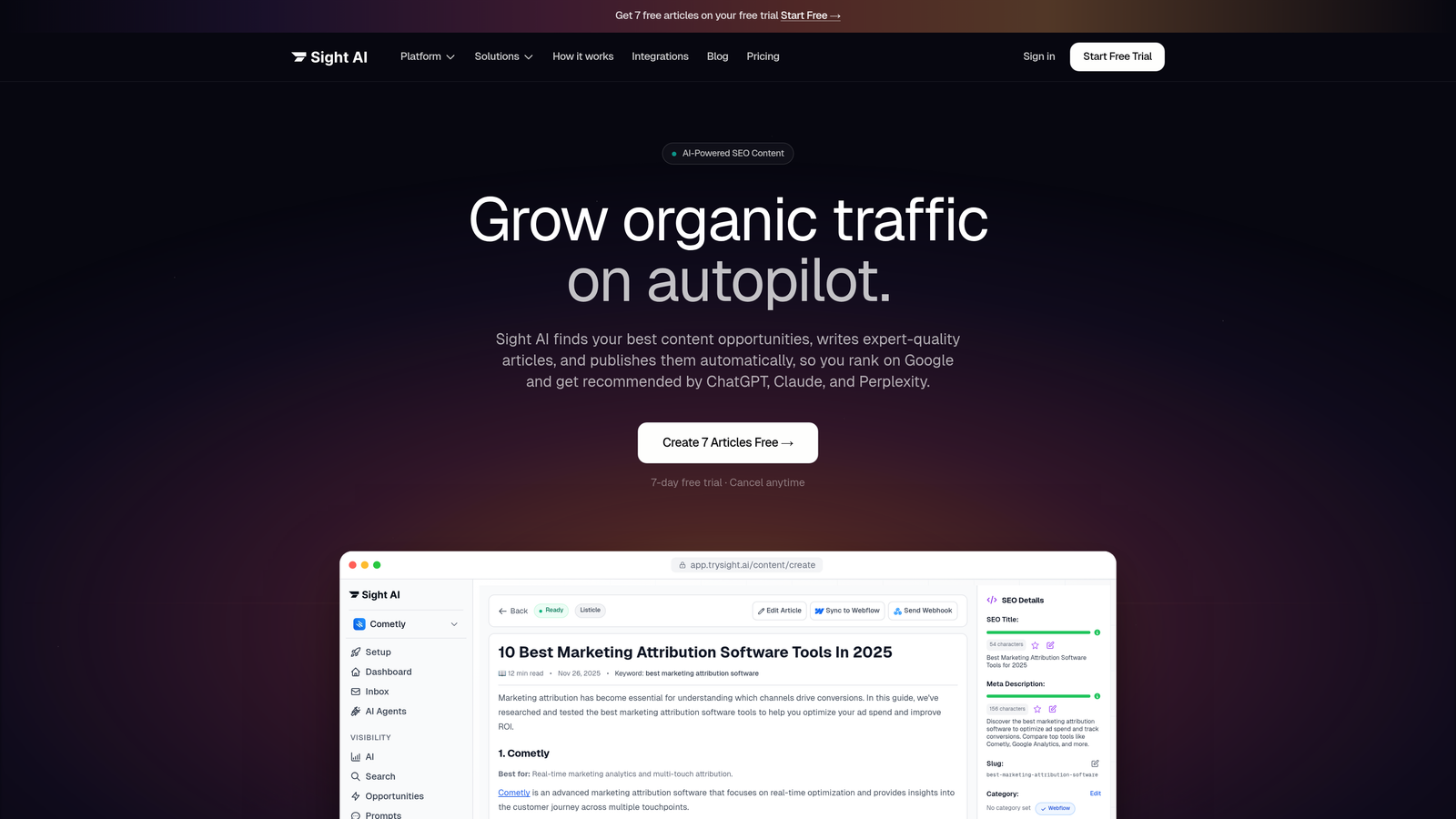
Sight AI is an all-in-one SEO platform that automates content creation, tracks brand visibility across AI models, and auto-indexes new content via IndexNow integration.
Where This Tool Shines
Most SEO tools automate one part of the workflow. Sight AI is built around automating the entire content lifecycle: from research and writing to publishing, indexing, and monitoring how your brand appears in AI-generated answers. That last part is increasingly important as more users turn to AI assistants for recommendations instead of traditional search.
The AI Visibility Score is a standout feature. It tracks how AI models like ChatGPT, Claude, and Perplexity mention your brand, with sentiment analysis and prompt tracking across 6+ platforms. For brands investing in GEO (Generative Engine Optimization), this kind of visibility is hard to find anywhere else.
Key Features
AI Visibility Score: Tracks brand mentions across 6+ AI platforms with sentiment analysis and prompt-level tracking.
13+ Specialized AI Writing Agents: Purpose-built agents for listicles, guides, explainers, and other SEO/GEO-optimized content formats.
Autopilot Mode: Hands-off content production that handles research, writing, and publishing without manual input.
IndexNow Integration: Automatically notifies search engines of new and updated content for faster crawling and indexation.
CMS Auto-Publishing: Publishes directly to WordPress and other platforms, removing manual upload steps from the workflow.
Best For
Founders, marketers, and agencies who need to produce SEO content at scale while also monitoring how their brand is represented in AI-generated answers. Particularly strong for teams embracing GEO alongside traditional SEO strategy.
Pricing
Tiered pricing for individuals, teams, and agencies. Visit trysight.ai for current plans and options.
2. Semrush
Best for: Teams that need a comprehensive traditional SEO suite covering audits, rank tracking, and competitive research.
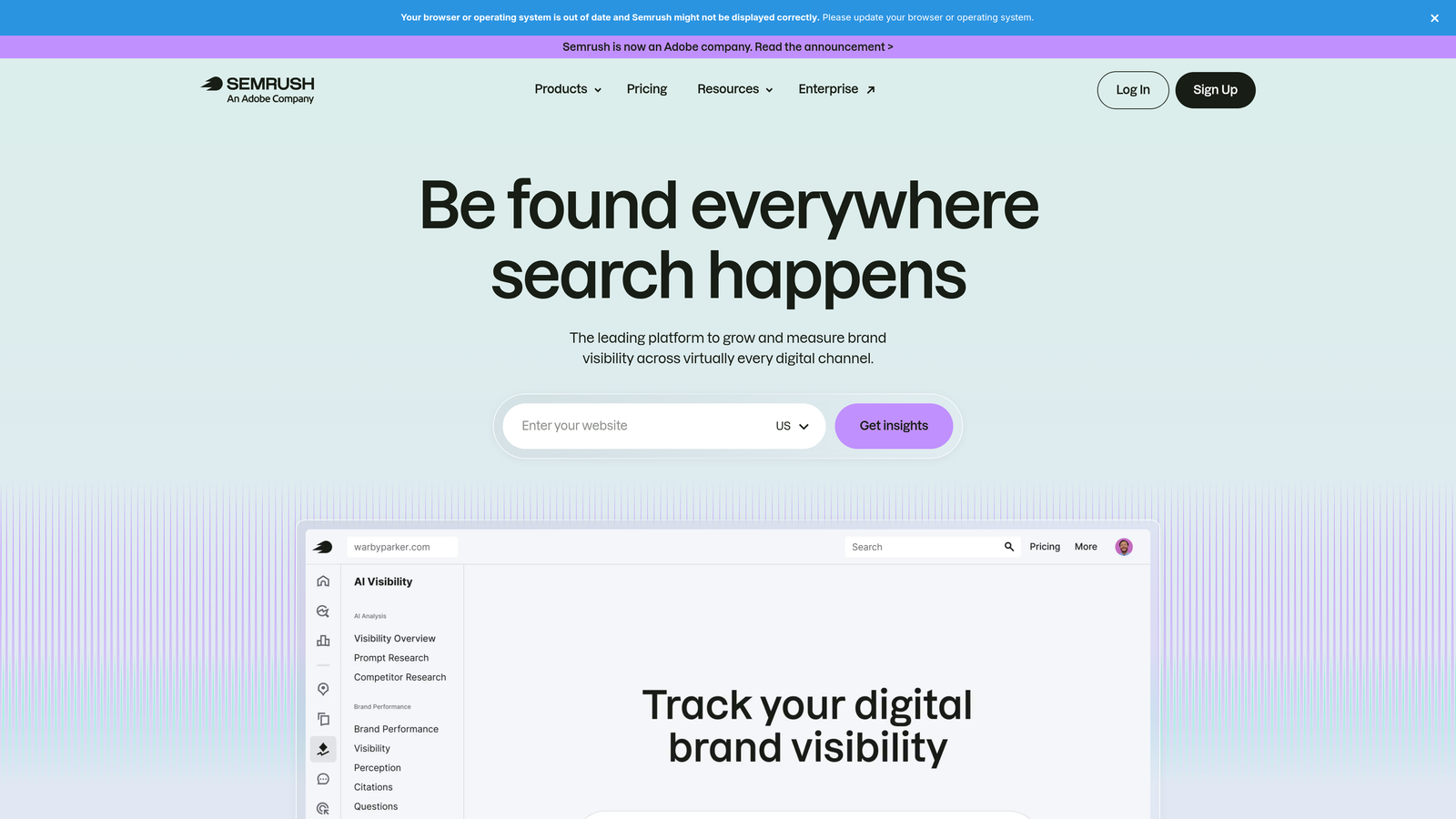
Semrush is an industry-leading SEO platform that automates site audits, keyword tracking, competitive analysis, and content marketing workflows.
Where This Tool Shines
Semrush has one of the broadest feature sets in traditional SEO automation. Its automated site audit runs over 140 technical checks and surfaces issues with clear prioritization, which is useful for agencies managing multiple client sites. The competitive intelligence layer is particularly strong, giving you automated keyword gap analysis and backlink comparisons against any domain.
The content marketing toolkit, including the SEO Writing Assistant, adds a layer of on-page guidance for writers. Automated white-label reporting makes client delivery more efficient for agencies.
Key Features
Automated Site Audit: Runs 140+ technical checks with issue prioritization and automated scheduling.
Daily Rank Tracking: Monitors keyword positions across multiple search engines with automated change alerts.
Keyword Gap Analysis: Automated competitor comparison to surface untapped keyword opportunities.
Backlink Auditing: Continuous monitoring of your backlink profile with toxic link detection.
White-Label Reporting: Automated branded reports for agency client delivery.
Best For
Marketing teams and agencies that need a reliable, well-documented SEO platform covering everything from technical audits to content planning. Works well as a primary SEO hub for mid-to-large organizations.
Pricing
Starts at approximately $139.95/month for the Pro plan. Business and Enterprise tiers are available for larger teams.
3. Ahrefs
Best for: SEO professionals focused on backlink analysis, content research, and keyword discovery automation.
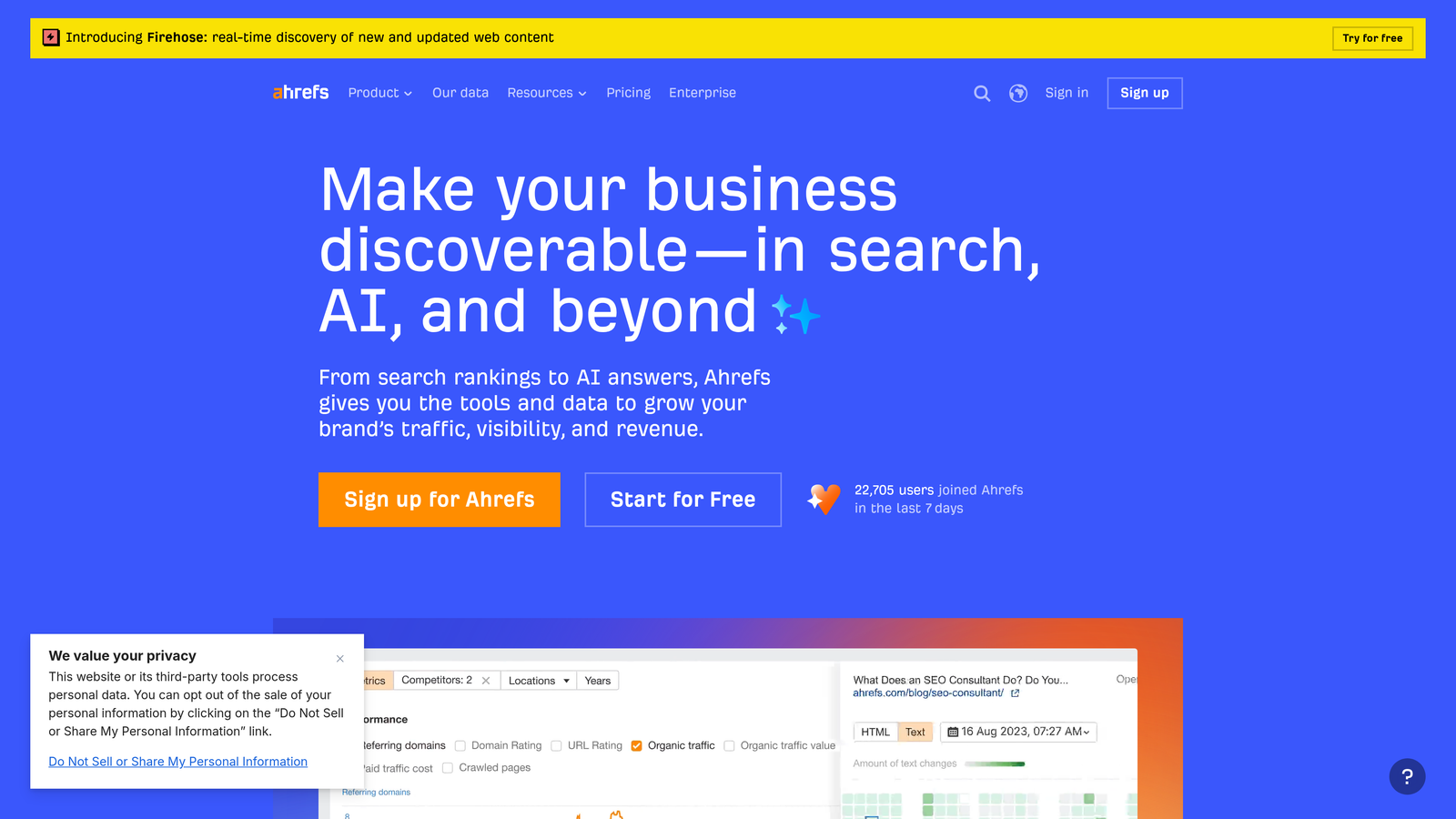
Ahrefs is a powerful SEO toolset known for its extensive backlink index, automated link monitoring, and content exploration capabilities.
Where This Tool Shines
Ahrefs built its reputation on backlink data, and that foundation remains strong. Automated alerts for new and lost links give you real-time awareness of your link profile without manual checking. The Content Explorer is genuinely useful for finding high-performing topics and gaps in your content strategy.
The Site Audit tool with scheduled crawls and the Rank Tracker with automated SERP feature detection make Ahrefs a solid all-rounder, even if it skews toward technical and research-heavy users rather than content creators.
Key Features
Automated Backlink Alerts: Instant notifications for new and lost backlinks across your domain.
Content Explorer: Automated topic discovery based on traffic, backlinks, and social engagement data.
Scheduled Site Audits: Crawl scheduling with automated issue detection and reporting.
Rank Tracker with SERP Features: Monitors keyword positions and automatically flags featured snippet and People Also Ask appearances.
Competitive Domain Analysis: Traffic estimation and keyword overlap analysis against competitors.
Best For
SEO specialists and content strategists who prioritize backlink research and competitive keyword analysis. Strong for link-building campaigns and content gap identification.
Pricing
Starts at approximately $129/month for the Lite plan. Standard, Advanced, and Enterprise plans are available with expanded data limits.
4. Surfer SEO
Best for: Content teams that need automated on-page optimization guidance and data-driven content briefs.
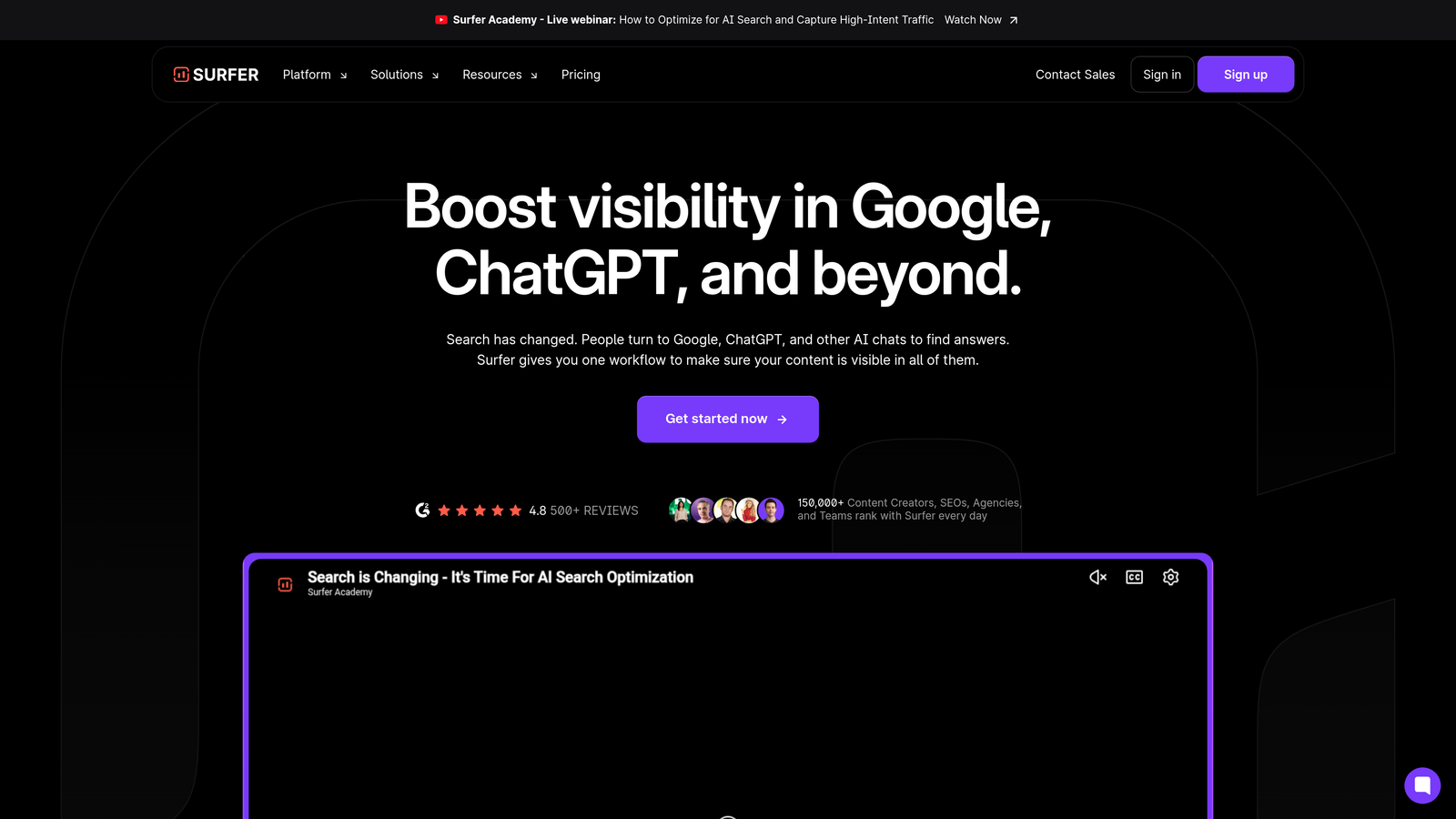
Surfer SEO is an on-page optimization platform that uses NLP and SERP analysis to automate content briefs, scoring, and keyword clustering.
Where This Tool Shines
Surfer's real-time Content Editor is where most users spend their time. As you write, it automatically surfaces NLP-based term suggestions drawn from top-ranking pages, helping writers hit the right semantic signals without guesswork. The automated content brief generation is a significant time-saver for teams producing high volumes of articles.
The keyword clustering feature groups related terms into content clusters automatically, which simplifies topical authority planning. Integrations with Google Docs, WordPress, and Jasper make it easy to embed Surfer into existing workflows.
Key Features
Real-Time Content Editor: Automated NLP term suggestions and content scoring as you write.
Automated Content Briefs: SERP-based brief generation with structure recommendations and keyword targets.
Keyword Clustering: Groups related keywords into content clusters automatically for topical planning.
Audit Tool: Analyzes existing content and generates automated optimization recommendations.
Jasper Integration: Connects with Jasper for automated AI writing with built-in SEO guidance.
Best For
Content marketers and SEO writers who want data-driven optimization guidance baked into their writing process. Especially effective for teams scaling content production with consistent quality standards.
Pricing
Starts at approximately $99/month for the Essential plan. Scale and Enterprise tiers are available for larger content operations.
5. SE Ranking
Best for: Budget-conscious agencies and small teams needing full SEO automation without enterprise-level pricing.
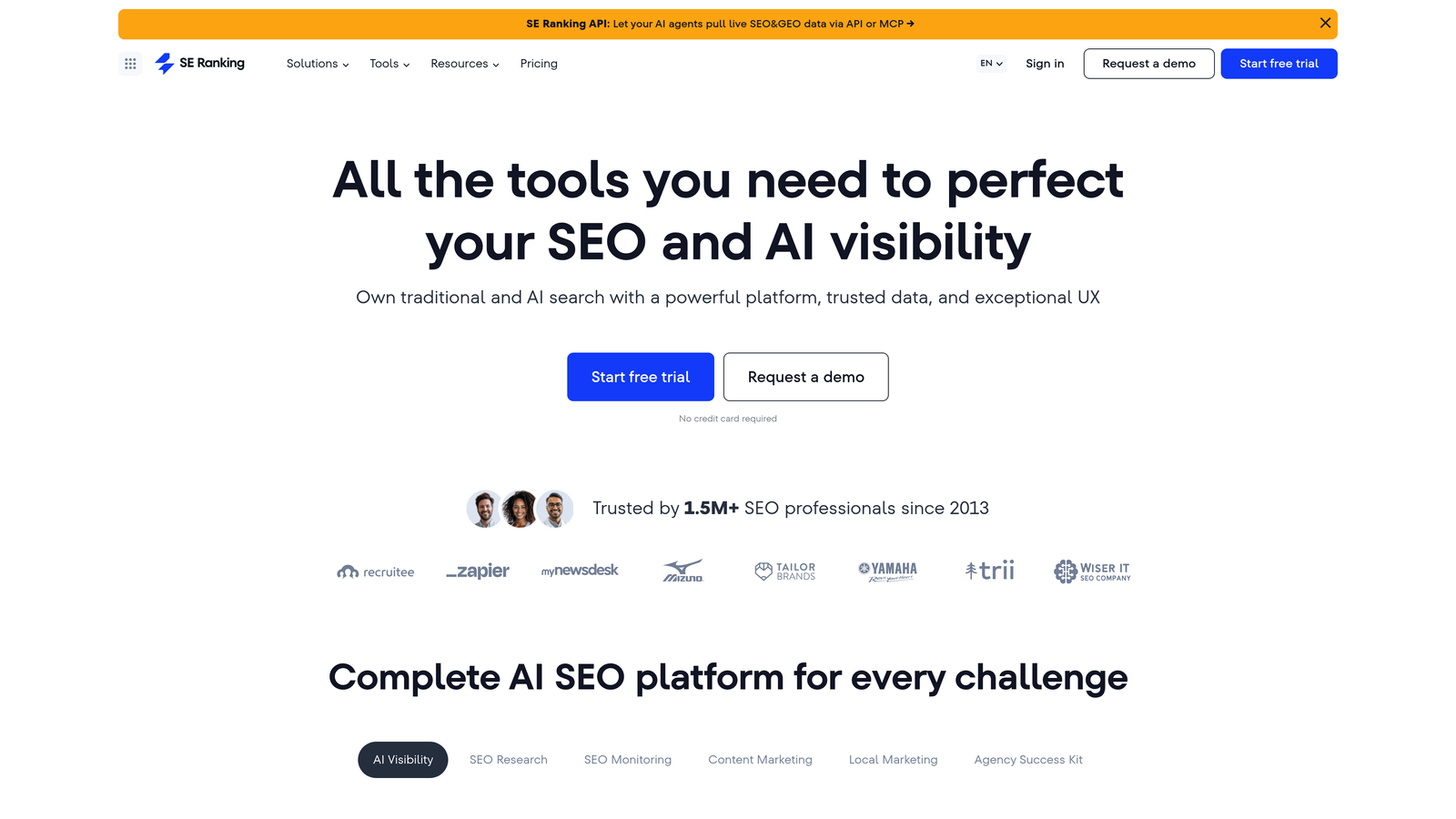
SE Ranking is an affordable all-in-one SEO platform covering automated rank tracking, site auditing, competitor research, and white-label reporting.
Where This Tool Shines
SE Ranking delivers a surprisingly broad feature set at a price point well below Semrush and Ahrefs. Automated daily rank updates, site audits with categorized issue lists, and competitor PPC research make it a practical choice for agencies managing multiple clients on tighter budgets. The white-label reporting is particularly polished for the price tier.
Flexible pricing based on tracking frequency is a smart design choice: teams that only need weekly rank updates pay less than those requiring daily data, which keeps costs manageable for smaller operations.
Key Features
Automated Rank Tracking: Daily keyword position updates across multiple search engines with change alerts.
Site Audit with Fix Suggestions: Automated issue categorization with prioritized recommendations.
Competitor Research Automation: SEO and PPC competitive analysis without manual data collection.
White-Label Client Reporting: Automated branded reports for agency client delivery.
On-Page SEO Checker: Actionable page-level optimization recommendations.
Best For
Freelancers, small agencies, and growing marketing teams that need reliable SEO automation across multiple sites without committing to high-end enterprise pricing.
Pricing
Starts at approximately $65/month for the Essential plan, with flexible pricing tiers based on tracking frequency and number of projects.
6. Screaming Frog SEO Spider
Best for: Technical SEO professionals who need deep automated crawl analysis for large or complex websites.
Screaming Frog SEO Spider is a desktop-based crawler that automates technical SEO audits across large sites, detecting issues from broken links to structured data errors.
Where This Tool Shines
Screaming Frog remains the go-to tool for technical SEO audits because of its depth and flexibility. It crawls at scale, surfaces a wide range of issues, and integrates directly with Google Analytics, Search Console, and PageSpeed Insights for enriched analysis. Scheduled crawls with change detection mean you can automate recurring audits without manual intervention.
For large e-commerce sites, enterprise domains, or any site with complex redirect structures, Screaming Frog's level of technical detail is difficult to match in a browser-based tool.
Key Features
Unlimited URL Crawling: The paid version removes URL caps for full-site analysis of any size.
Broken Link and Redirect Detection: Automated identification of 404s, redirect chains, and canonical conflicts.
Structured Data Validation: Automated schema markup checking against Google's requirements.
Scheduled Crawls with Alerts: Set recurring crawls with automated change detection notifications.
Third-Party Integrations: Connects with Google Analytics, Search Console, and PageSpeed Insights for enriched audit data.
Best For
Technical SEO specialists, in-house SEO teams at large organizations, and agencies handling complex site migrations or audits requiring granular crawl data.
Pricing
Free version available with a 500 URL limit. The paid license is approximately £259/year per user, making it excellent value for professional use.
7. Jasper
Best for: Content teams that need AI-generated copy at scale with brand voice consistency and SEO integration.
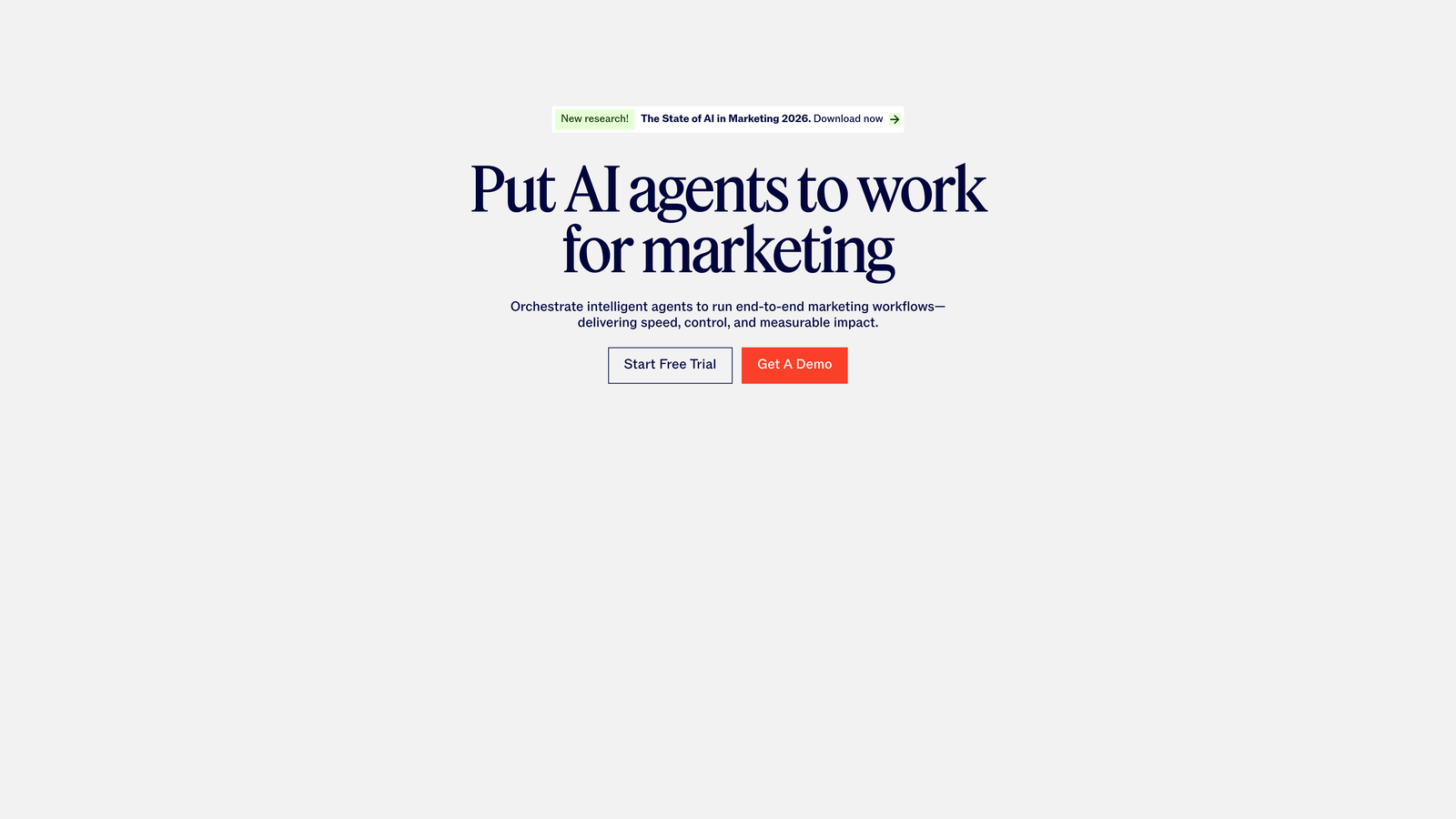
Jasper is an AI content generation platform with brand voice customization, SEO-focused templates, and integrations with tools like Surfer SEO for automated content workflows.
Where This Tool Shines
Jasper's Brand Voice and Knowledge Base features set it apart from generic AI writing tools. By training Jasper on your existing content and brand guidelines, you get automated output that sounds like your brand rather than a generic AI. This matters significantly when producing content at volume.
The Campaigns feature enables multi-asset content generation from a single brief, which is useful for teams that need blog posts, social copy, and meta descriptions to align across a campaign. Surfer SEO integration adds automated on-page optimization guidance to the writing process.
Key Features
Brand Voice and Knowledge Base: Trains on your content to maintain consistent tone across automated outputs.
SEO Templates: Pre-built templates for blog posts, meta descriptions, and product descriptions.
Surfer SEO Integration: Automated on-page optimization scoring within the Jasper editor.
Campaigns Feature: Multi-asset content generation from a single creative brief.
Team Collaboration with Approvals: Workflow tools for reviewing and approving AI-generated content before publishing.
Best For
Marketing teams and agencies producing large volumes of content who need brand consistency, SEO alignment, and team collaboration built into the AI writing workflow.
Pricing
Starts at approximately $49/month for the Creator plan. Pro and Business tiers are available with expanded seats and features.
8. Botify
Best for: Enterprise SEO teams managing large-scale websites where crawl budget and indexation efficiency are critical.
Botify is an enterprise SEO platform that combines automated crawl analysis, log file monitoring, and search analytics to optimize how search engines discover and index large sites.
Where This Tool Shines
Botify addresses a problem that most mid-market tools don't fully solve: understanding what search engine bots actually do when they visit your site. Log file analysis reveals which pages get crawled, how often, and where bots waste time on low-value content. This data directly informs crawl budget optimization decisions.
The unified dashboard combining crawl data, log file analysis, and ranking data gives enterprise SEO teams a complete picture that would otherwise require stitching together multiple tools. SpeedWorkers, Botify's automated pre-rendering solution, helps ensure JavaScript-heavy pages are crawled efficiently.
Key Features
Automated Full-Site Crawling: JavaScript rendering support for accurate analysis of modern web applications.
Log File Analysis: Automated parsing of server logs to understand search engine bot behavior patterns.
Crawl Budget Optimization: Automated recommendations for directing bot attention to high-value pages.
Unified Data Dashboards: Combines crawl, log, and ranking data in one view for comprehensive analysis.
SpeedWorkers Pre-Rendering: Automated page rendering to improve crawlability of JavaScript-dependent content.
Best For
Enterprise SEO teams, large e-commerce platforms, and media sites with hundreds of thousands of URLs where crawl efficiency and indexation at scale are ongoing challenges.
Pricing
Custom enterprise pricing based on site size and requirements. Contact Botify directly for a quote.
9. Rank Math
Best for: WordPress site owners who want powerful on-page SEO automation without leaving the content editor.
Rank Math is a feature-rich WordPress SEO plugin that automates schema markup, internal linking suggestions, SEO scoring, and Search Console integration.
Where This Tool Shines
Rank Math packs an impressive amount of automation into a WordPress plugin. Automated schema markup for over 20 content types removes one of the more tedious technical SEO tasks from the publishing workflow. Real-time SEO scoring with actionable suggestions gives writers immediate feedback without switching between tools.
For WordPress-heavy operations, the automated internal linking recommendations and image alt text suggestions address common on-page gaps that often go unnoticed at scale. The free tier is genuinely capable, making it accessible for individual bloggers and small sites.
Key Features
Automated Schema Markup: Generates structured data for 20+ content types including articles, reviews, and FAQs.
Real-Time SEO Scoring: Live optimization suggestions within the WordPress editor as you write.
Automated Internal Linking: Suggests relevant internal links based on content context during editing.
Google Search Console Integration: Keyword tracking and performance data surfaced directly in WordPress.
Automated Image SEO: Alt text suggestions and image optimization recommendations at the post level.
Best For
WordPress site owners, bloggers, and content teams working primarily within WordPress who want robust SEO automation without a separate platform subscription.
Pricing
Free version available with core features. Pro plan starts at approximately $6.99/month billed annually, with Business and Agency tiers for larger operations.
10. ContentKing (Conductor)
Best for: SEO teams that need real-time change monitoring and instant alerts before ranking drops occur.
ContentKing is a real-time SEO monitoring platform that continuously crawls your site and sends automated alerts when SEO-impacting changes are detected.
Where This Tool Shines
Most SEO tools audit your site on a schedule. ContentKing monitors it continuously. That distinction matters when a developer accidentally adds a noindex tag to a key landing page, or when a CMS update strips title tags from hundreds of pages. You get an alert before rankings drop rather than discovering the issue weeks later in your rank tracker.
The historical change log is valuable for SEO audits and troubleshooting: you can trace exactly when a change occurred and correlate it with ranking fluctuations. Now part of the broader Conductor platform, ContentKing benefits from additional enterprise SEO capabilities.
Key Features
24/7 Continuous Monitoring: Real-time crawling without manual scheduling or periodic audit windows.
Instant Change Alerts: Automated notifications for noindex additions, title changes, content removals, and other SEO-impacting events.
Historical Change Log: Full audit trail of site changes for troubleshooting and correlation analysis.
No Manual Crawl Scheduling: Automated discovery of issues as they happen, not on a weekly or monthly cadence.
Slack and Email Integration: Alerts delivered directly to your team's communication channels.
Best For
In-house SEO teams at medium-to-large organizations, agencies managing high-stakes client sites, and any team where undetected on-site changes represent significant ranking risk.
Pricing
Custom pricing based on site size and crawl requirements. ContentKing is now part of the Conductor platform; contact them for current pricing details.
11. IndexNow Protocol
Best for: Any website owner who wants to eliminate passive crawl discovery delays for new and updated content.
IndexNow is an open indexing protocol that lets websites automatically notify search engines about new or updated content for near-instant crawling.
Where This Tool Shines
Traditional crawl discovery is passive: you publish content and wait for search engine bots to find it. IndexNow flips that dynamic by letting your site push notifications to search engines the moment content is published or updated. Bing and Yandex support the protocol natively, and broader adoption continues to grow.
For sites publishing frequently, like news sites, e-commerce catalogs, or content-heavy blogs, the reduction in crawl lag can meaningfully accelerate the time from publication to indexation. It's also worth noting that Sight AI's IndexNow integration automates this submission process, so every piece of content published through the platform is notified to search engines automatically.
Key Features
Instant URL Submission: Notifies participating search engines immediately upon content publication or update.
Open and Free Protocol: No usage limits or subscription fees for implementation.
Bing and Yandex Support: Native integration with major participating search engines.
Simple API or CMS Plugin Setup: Flexible implementation options for technical and non-technical teams.
Reduces Passive Crawl Dependency: Active notification replaces waiting for bots to rediscover updated content.
Best For
Publishers, e-commerce sites, and any organization frequently adding or updating content who want to minimize the gap between publication and search engine indexation.
Pricing
Completely free and open protocol. Implementation cost is limited to developer time for API setup or the effort of installing a compatible CMS plugin.
Choosing the Right Automated SEO Tool for Your Stack
The honest answer is that no single tool covers everything equally well, and the best stack depends on where you are in your growth journey and what problems you're actually trying to solve.
If you're building for both traditional search and AI visibility simultaneously, Sight AI is the strongest starting point. It's the only tool on this list that combines content automation, GEO-optimized publishing, IndexNow integration, and AI visibility tracking in one platform. For teams that need to know how ChatGPT or Perplexity talks about their brand while also scaling content production, that combination is difficult to replicate by stitching together separate tools.
For traditional SEO depth, Semrush and Ahrefs remain the most comprehensive options. Semrush edges ahead for agencies that need white-label reporting and a content marketing toolkit. Ahrefs is stronger for teams prioritizing backlink research and content gap analysis.
On a tighter budget, SE Ranking delivers most of what mid-market teams need at a fraction of the cost. For WordPress-first operations, Rank Math automates a surprising amount of on-page work for free.
Technical SEO specialists will want Screaming Frog for deep crawl analysis and ContentKing for real-time change monitoring. Enterprise teams managing massive sites should evaluate Botify for crawl budget intelligence. And regardless of which platform you use, implementing the IndexNow protocol is a free, low-effort win for faster content indexation.
The broader shift to AI search is reshaping what "automated SEO" means. Tracking keyword rankings is still important, but understanding how AI models represent your brand is becoming equally critical. Start tracking your AI visibility today and see exactly where your brand appears across top AI platforms. Stop guessing how ChatGPT and Claude talk about your business, and start making decisions based on real data.