Manual content marketing is a time drain that keeps teams stuck in repetitive tasks instead of strategic work. Between keyword research, writing, editing, publishing, and distribution, marketers often spend the majority of their time on execution rather than strategy. An automated content marketing workflow changes this equation by connecting your tools, streamlining handoffs, and letting technology handle the predictable parts of content production.
This guide walks you through building a complete automated workflow—from initial content ideation to published, indexed articles—so your team can focus on creativity and optimization while the system handles the heavy lifting.
By the end, you'll have a functioning automation framework that scales your content output without scaling your workload. Think of it as building a content assembly line where quality control stays human, but the conveyor belt runs on its own.
Step 1: Map Your Current Content Process and Identify Automation Points
Before you automate anything, you need to see what you're actually automating. This sounds obvious, but many teams skip this step and end up automating broken processes—which just means you'll produce bad content faster.
Start by documenting every single step in your existing workflow. We're talking granular detail here. From the moment someone says "we should write about X" to the moment that article goes live, what happens? Who touches it? Where does it wait?
Create a visual map using a simple flowchart tool or even a whiteboard. List out each phase: ideation, keyword research, brief creation, writing, editing, approval, publishing, distribution, indexing. Under each phase, note who's responsible and approximately how long it takes.
Now here's where it gets interesting. Look for bottlenecks—those places where content sits idle waiting for someone's attention. Maybe briefs wait three days for approval. Maybe finished articles languish in a Google Doc waiting for someone to copy them into WordPress. These waiting periods are pure waste, and they're often your best automation targets.
Identify repetitive patterns: Which tasks follow the same steps every single time? Brief creation probably follows a template. Publishing involves the same sequence of clicks. Social distribution uses the same channels. These predictable patterns are automation gold.
Calculate the time investment for each phase. You might discover that your team spends two hours per article just on the mechanical parts of publishing and indexing—time that could be reduced to zero with the right automated content publishing workflow.
Flag your automation opportunities: Mark 5-10 tasks that are both time-consuming and repetitive. Common candidates include brief generation from keyword data, first-draft creation, CMS publishing, sitemap updates, and search engine notifications.
Your success indicator here is simple: you should have a visual workflow map with clear automation opportunities marked. If you can't explain your current process to someone else using this map, you're not ready to automate it yet.
Step 2: Select Your Core Automation Stack
Your automation stack is the foundation everything else builds on. Choose poorly here, and you'll spend more time wrestling with integrations than you save through automation.
Start with an AI content generation platform that matches your content types. If you're primarily publishing how-to guides and listicles, you need a platform with specialized agents for those formats. Generic AI writing tools often produce generic content—look for systems that understand SEO structure, proper heading hierarchy, and content depth.
The best platforms now include multiple specialized agents rather than one-size-fits-all generation. One agent might excel at comparison articles, another at step-by-step guides, another at thought leadership pieces. This specialization produces better first drafts and requires less human editing time.
Project management integration: Choose a project management tool that supports automation triggers. Notion, Asana, and Monday all offer workflow automation features that let you create "when this, then that" rules. For example: when a brief moves to "Approved" status, automatically trigger content generation.
Your CMS needs to support either API-based publishing or built-in auto-publish features. WordPress, Webflow, and most modern platforms offer these capabilities. If your CMS doesn't have an API, you're going to hit a wall when trying to automate the publishing step.
Integration middleware: If your tools don't connect natively, you'll need middleware like Zapier or Make. These platforms act as translators, moving data between tools that don't speak the same language. But here's the catch—every additional integration point is a potential failure point.
The common pitfall here is tool sprawl. It's tempting to add specialized tools for every function: one for keyword research, another for content optimization, another for performance tracking, another for social scheduling. Resist this urge. Fewer integrated tools beat many disconnected ones every time.
Look for platforms that combine multiple functions. An all-in-one system that handles content generation, publishing automation, and indexing will serve you better than three separate tools that require constant data transfer. Many teams find success with a unified content marketing platform that consolidates these capabilities.
Document your data flow: Create a simple diagram showing how information moves between tools. Where does keyword data come from? How does it reach your content generator? How do finished articles get to your CMS? If you can't draw a clear line from input to output, your stack is too complex.
Your success indicator: a documented tech stack where each tool has a clear purpose and data flows smoothly between them without manual export-import cycles.
Step 3: Build Your Content Brief Automation Pipeline
Content briefs are the bridge between strategy and execution. Automating brief generation means your content creation starts faster and more consistently.
Create a templated brief structure that captures everything your writers need: target keyword, search intent, audience persona, required word count, key topics to cover, and competitive context. This template becomes the foundation of your automation.
The magic happens when you connect this template to your keyword research outputs. When your SEO tool identifies a high-opportunity keyword, that data should automatically populate a new brief. No manual copy-pasting, no reformatting—just instant brief creation.
Modern automation platforms can pull keyword difficulty scores, search volume, and related terms directly from your SEO tools. They can even analyze top-ranking content to suggest section structures and topics to cover. Implementing automated SEO content workflows at this stage dramatically accelerates your pipeline.
AI visibility integration: Connect your brief generation to AI visibility data. If you're tracking how AI models reference your brand and competitors, that data reveals content gaps. When an AI model frequently mentions competitors for a topic but never mentions you, that's a content opportunity worth pursuing.
Set up triggers that automatically create briefs when certain conditions are met. For example: when a keyword reaches a specific search volume threshold, or when AI visibility tracking shows a competitor getting mentioned significantly more than your brand for a relevant topic.
Approval workflows: Configure routing rules that send briefs to the right stakeholders based on content type or topic area. Product-focused content might route to product marketing, while thought leadership pieces go to executive review. These workflows prevent briefs from getting lost in someone's inbox.
Build in deadline automation too. When a brief is created, automatically set a draft due date based on your content calendar. This keeps the pipeline moving without manual project management.
Your success indicator: briefs should auto-generate within five minutes of keyword selection or opportunity identification. If you're still manually creating briefs an hour after identifying a keyword opportunity, your automation isn't working yet.
Step 4: Configure AI-Assisted Content Creation Workflows
This is where automation gets really powerful—and where many teams get nervous about quality. The key is understanding that AI assists, humans approve.
Set up your AI writing agents with detailed brand voice guidelines and style parameters. Feed them examples of your best content. Define your preferred tone, sentence structure preferences, and vocabulary choices. The more specific your guidelines, the better your first drafts will be.
Create automated triggers that start content generation when briefs reach "Approved" status. The system should pull all brief data—keyword, structure, topics to cover—and feed it to the appropriate AI agent. A how-to guide triggers the step-by-step agent. A comparison article triggers the comparison agent.
Here's what separates good automation from great automation: human review checkpoints. Your workflow should automatically generate first drafts, but those drafts should flow into an editing queue where humans review, refine, and approve before publication. The right automated content creation workflow balances speed with quality control.
Version control automation: Configure your system so drafts move through clear stages—AI generation, first edit, final review, approved for publishing. Each stage should have an owner and a deadline. When someone completes their stage, the content automatically moves to the next person's queue.
Build feedback loops into the process. When editors make significant changes to AI-generated drafts, those edits should inform future generation. Many advanced platforms learn from human edits, gradually improving their output to match your team's preferences.
Set up quality gates that prevent subpar content from advancing. For example, drafts under a certain word count threshold might automatically route back for expansion. Content that doesn't include the target keyword in key positions might flag for revision.
Batch processing capabilities: Configure your system to handle multiple pieces simultaneously. When you have ten approved briefs, the AI should be able to generate all ten first drafts in parallel, not sequentially. This dramatically improves content velocity.
Your success indicator: first drafts should be ready for human review within hours of brief approval, not days. If you're still waiting overnight for drafts to appear, your automation pipeline has gaps.
Step 5: Automate Publishing and Indexing
Publishing is where many manual workflows break down. The content is done, approved, and ready—but it sits for days waiting for someone to copy it into the CMS, format it, add images, and hit publish.
Connect your content creation tool directly to your CMS through API integration or built-in publishing features. When content reaches "Approved for Publishing" status, it should flow automatically to your website. One click or even zero clicks—just scheduled, automatic publishing.
Modern platforms can preserve formatting, insert proper heading tags, and even handle basic on-page SEO elements automatically. Your H2 and H3 structure should transfer intact. Target keywords should populate meta descriptions. Internal linking patterns should follow your predefined rules.
Automatic sitemap updates: The moment new content goes live, your sitemap should update automatically. This isn't optional—it's essential for search engines to discover your new pages quickly. Most modern CMSs handle this natively, but verify that it's actually working.
Configure IndexNow or similar instant indexing protocols. Instead of waiting for search engine crawlers to eventually find your new content, these protocols actively notify search engines the moment you publish. This can reduce time-to-index from days to hours or even minutes.
Set up post-publish automation triggers. When an article goes live, automatically update your content calendar, notify your team, trigger social media distribution, and add the URL to your performance tracking dashboard. Comprehensive automated content workflow tools handle these multi-step sequences seamlessly.
Distribution automation: Create workflows that share new content across your channels. Published articles can automatically generate social media posts, email newsletter entries, and internal team notifications. The content does the work once, and automation distributes it everywhere.
Build in verification steps. After publishing, your automation should confirm that the page is actually live, the sitemap updated, and indexing protocols triggered. Failed steps should generate alerts so your team can intervene quickly.
Your success indicator: content should move from "approved" to "live and indexed" without any manual steps. If you're still logging into your CMS to publish articles, you haven't automated this step yet.
Step 6: Monitor Performance and Optimize Your Workflow
Automation without measurement is just expensive guesswork. You need visibility into whether your automated workflow is actually improving outcomes.
Set up dashboards that track content velocity—how many articles you're publishing per week or month. Compare this to your pre-automation baseline. The goal is to increase output without increasing team hours or decreasing quality.
Monitor time-to-publish metrics. How long does it take from brief creation to live article? Break this down by phase: brief-to-draft time, draft-to-approval time, approval-to-publish time. Identify which phases still have delays and target them for further automation.
Track indexing speed: Measure how quickly search engines discover and index your new content. With proper automation, you should see dramatic improvements here. Content that used to take a week to get indexed might now appear in search results within hours.
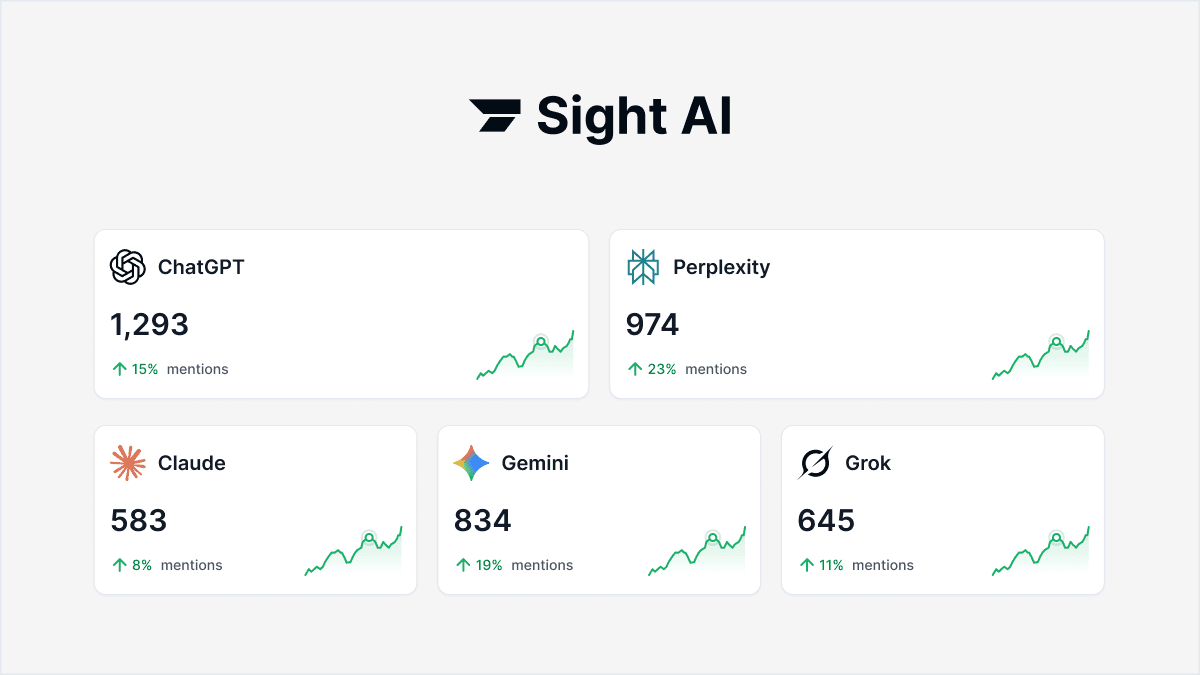
Monitor AI visibility scores to understand how your published content performs in AI search. Are AI models like ChatGPT, Claude, and Perplexity referencing your brand more frequently? Are they citing your new content when answering relevant queries? This emerging metric category reveals whether your content is actually reaching AI-powered search experiences.
Create feedback loops: Performance data should flow back into your content planning. If certain topics or formats consistently perform well in AI visibility tracking, that should automatically influence future brief generation. Your workflow should learn and improve over time. Understanding measuring content marketing ROI helps you identify which automation investments deliver the greatest returns.
Schedule monthly workflow audits. Bring your team together to review what's working and what's not. Which automation steps are saving the most time? Where are manual interventions still required? What new automation opportunities have emerged?
Track quality metrics alongside velocity. Are automated first drafts requiring more or less editing over time? Is published content maintaining your quality standards? Automation should improve consistency, not just speed.
Measure the human impact: Survey your team about how automation has changed their work. Are they spending more time on strategic thinking and less on repetitive tasks? This qualitative feedback often reveals optimization opportunities that pure metrics miss.
Your success indicator: measurable improvement in content output with stable or reduced team hours invested. If your team is working just as hard to produce more content, you've automated the wrong things.
Putting It All Together
Your automated content marketing workflow is now a connected system rather than a series of manual handoffs. Let's review your implementation checklist to make sure everything's in place.
You've mapped your workflow with automation points clearly identified. You've selected and integrated your tech stack so data flows smoothly between tools. Your brief automation pipeline generates detailed briefs within minutes of identifying content opportunities. AI content generation is configured with human checkpoints that preserve quality while accelerating production. Publishing and indexing happen automatically, getting your content live and discoverable without manual intervention. And you've set up performance monitoring that tracks both velocity and quality metrics.
Start with the highest-impact automation first—typically the brief-to-draft phase—and expand from there. You don't need to automate everything on day one. Build your system incrementally, validating each step before adding the next layer of automation.
The goal isn't to remove humans from the process but to free them for the work that actually requires human judgment: strategy, creativity, and optimization. Your team should spend less time on mechanical tasks and more time on the decisions that drive real business impact.
Track your content velocity and AI visibility metrics to measure the real impact of your automation investment. If you're publishing more content but not seeing improvements in organic traffic or AI model mentions, something in your workflow needs adjustment.
Remember that automation amplifies your process—good or bad. If you automate a broken workflow, you'll just produce more mediocre content faster. But when you automate a solid process with proper quality controls, you unlock genuine scale without sacrificing the strategic thinking that makes content valuable.
Stop guessing how AI models like ChatGPT and Claude talk about your brand—get visibility into every mention, track content opportunities, and automate your path to organic traffic growth. Start tracking your AI visibility today and see exactly where your brand appears across top AI platforms.