You open your browser. Seven tabs. Grammarly for editing. SEMrush for keywords. Buffer for scheduling. Google Analytics for performance. Airtable for workflow. Canva for visuals. And that's before you've even touched your CMS.
Sound familiar?
The average marketing team now juggles between six and ten different tools just to get content from idea to publication. Each tool solves one problem brilliantly. But together? They create a fragmented workflow where data lives in silos, context gets lost between platforms, and your team spends more time managing tools than creating content that drives results.
This is where unified content marketing platforms enter the picture. Not as another tool to add to your stack, but as a fundamental rethinking of how content operations should work. These platforms consolidate content creation, distribution, analytics, and optimization into a single ecosystem where data flows seamlessly and insights emerge naturally from your workflow rather than requiring manual synthesis across disconnected systems.
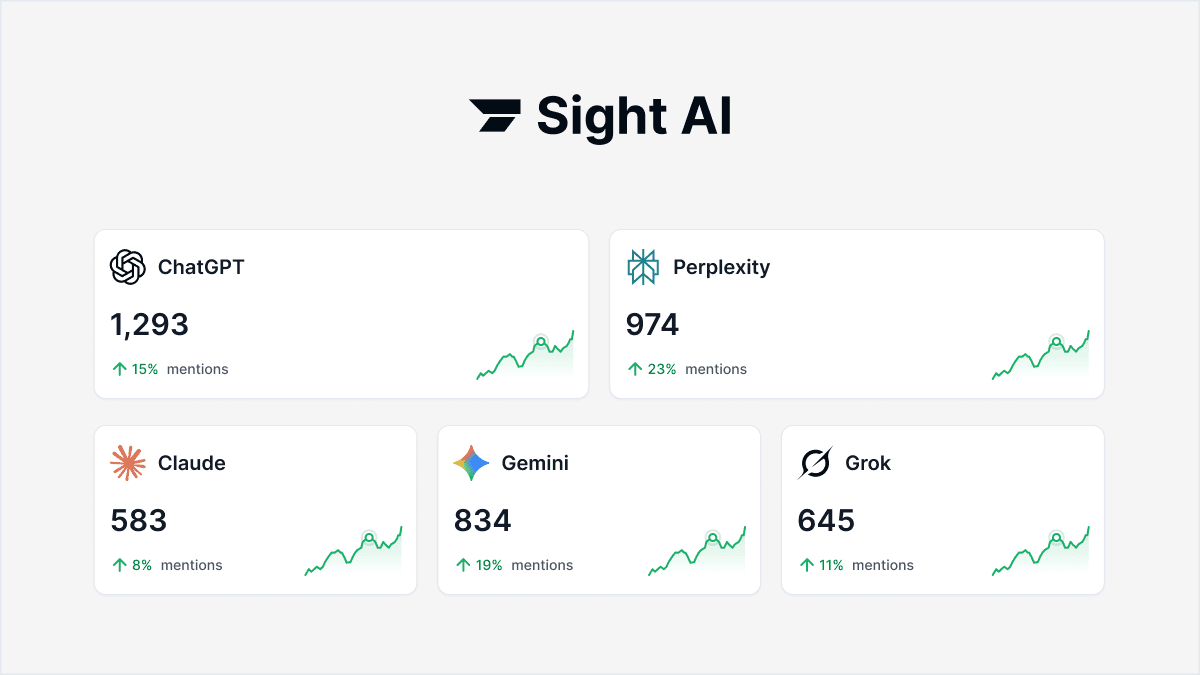
In this guide, we'll break down what truly defines a unified content marketing platform, why the hidden costs of tool fragmentation are higher than most teams realize, and how to evaluate whether your organization is ready to make the shift. We'll also explore how modern platforms are evolving beyond traditional SEO to include AI visibility tracking—monitoring how your brand appears in responses from ChatGPT, Claude, Perplexity, and other generative AI models that are rapidly changing how people discover information.
The Anatomy of a Unified Content Marketing Platform
Let's start with what makes a platform truly unified versus just "all-in-one."
A genuine unified content marketing platform operates on three core pillars: content creation, distribution, and intelligence. But the magic isn't in having these capabilities under one roof—it's in how they communicate with each other.
Content Creation: This goes beyond basic word processors. Modern platforms incorporate AI-powered writing assistance, SEO optimization as you type, and specialized agents for different content types. Think of it like having a team of expert writers: one agent handles listicles, another crafts in-depth guides, another specializes in explainers. Each understands the unique requirements of its format and optimizes accordingly.
Distribution and Publishing: This is where automation becomes critical. The platform should handle technical SEO tasks that typically require developer resources—generating sitemaps, submitting URLs for indexing, managing metadata. Advanced platforms now integrate with IndexNow, a protocol that notifies search engines of new content immediately rather than waiting for traditional crawl cycles. This means your content gets discovered faster, which matters when you're competing for visibility in rapidly evolving search landscapes.
Intelligence Layer: Here's where true unification shows its value. The platform doesn't just track traditional metrics like pageviews and rankings. It monitors how your brand appears across AI models—what these systems say about you when users ask relevant questions. It tracks sentiment, identifies content gaps where competitors appear but you don't, and surfaces opportunities based on actual AI responses rather than just keyword volumes.
The difference between an "all-in-one" tool and a unified platform comes down to data flow. All-in-one tools give you multiple features in one interface, but they often operate independently. You might write content in one module, schedule it in another, and analyze it in a third—with minimal connection between these activities.
A unified platform, by contrast, creates feedback loops. Your analytics inform your content creation. Your AI visibility tracking reveals topics where you need more coverage. Your publishing automation ensures that new content immediately gets indexed and tracked. Data generated in one part of the system automatically enhances capabilities in another part.
This architectural difference matters because it changes how your team works. Instead of manually connecting insights from different tools, the platform does this synthesis for you. When you're planning your next article, you're not switching between keyword research, competitor analysis, and AI visibility tracking—you're seeing all these dimensions in a single view that shows you exactly where the opportunity lies.
Why Fragmented Tools Create Hidden Costs
The financial cost of multiple subscriptions is obvious. What's less visible is the productivity tax your team pays every single day.
Context-switching is the silent killer of deep work. Every time a marketer moves from their content editor to their analytics dashboard to their scheduling tool, they're not just changing windows—they're rebuilding mental context. Research in cognitive psychology consistently shows that these transitions carry a switching cost: the time it takes to reorient to a new interface, remember where you left off, and rebuild the mental model of what you're trying to accomplish.
Multiply this across a team creating dozens of pieces per month, and the cumulative drain becomes substantial. Your writers aren't just writing—they're constantly managing the logistics of moving work between systems.
Data Silos and Analysis Paralysis: When your content performance data lives in Google Analytics, your SEO data lives in Ahrefs, your social metrics live in Hootsuite, and your email performance lives in Mailchimp, you face a fundamental problem: How do you understand what's actually working?
Most teams resort to manual reporting. Someone exports CSVs from each platform, builds a spreadsheet, and tries to find patterns. This works until it doesn't—until the data formats change, until someone forgets to update the sheet, until the analysis becomes so time-consuming that it happens monthly instead of weekly, and insights arrive too late to be actionable. Teams exploring content marketing automation platforms often cite this reporting burden as their primary motivation for consolidation.
The deeper issue is that siloed data prevents you from seeing cross-channel patterns. You might notice that certain blog topics drive email signups, but miss that those same topics perform poorly on social. Or you might see that AI models frequently mention your competitors for specific queries but lack the integrated view to understand which content gaps you should prioritize.
Integration Maintenance Becomes Technical Debt: Many teams try to solve fragmentation with integrations. Zapier becomes the duct tape holding everything together. This works initially, but creates a new problem: maintenance burden.
APIs change. Tools update their authentication methods. Zaps break. Someone who set up a critical workflow leaves the company, and nobody else understands the logic. What started as a clever solution to connect disparate tools becomes a fragile house of cards that requires constant attention.
The compounding nature of this problem is what makes it particularly insidious. With three tools, you might have three integrations to maintain. Add a fourth tool, and you might need six integrations. The complexity grows exponentially, and suddenly you need someone whose job is just keeping the pipes flowing between systems.
Key Capabilities That Define Modern Platforms
The unified content marketing platform category has evolved rapidly, particularly as AI capabilities have matured. Here's what separates leading platforms from legacy tools trying to rebrand themselves.
AI-Powered Content Generation with Built-In Optimization: Modern platforms don't just help you write—they help you write strategically. The best systems employ multiple specialized AI agents, each trained for specific content types and outcomes.
This matters because not all content serves the same purpose. A listicle optimized for quick scanning and social sharing requires different structural choices than an in-depth guide designed to establish authority. An explainer needs to balance accessibility with comprehensiveness. Rather than forcing writers to manually implement these best practices, advanced AI-powered content marketing platforms embed this expertise into the generation process itself.
But here's where it gets interesting: optimization now extends beyond traditional SEO. The platforms leading this space optimize simultaneously for search engines and generative AI models—a practice known as Generative Engine Optimization (GEO). This means structuring content so it's not just discoverable via Google, but also likely to be cited when ChatGPT or Claude answer user queries in your domain.
Visibility Tracking Across Traditional and AI Search: This capability represents the biggest shift in how content marketers need to think about performance. Traditional analytics tell you how you rank in Google. Modern platforms tell you how AI models talk about your brand.
Picture this: A potential customer asks ChatGPT for recommendations in your category. Does your brand get mentioned? What does the AI say about you? How does that compare to what it says about your competitors? This isn't hypothetical—this is how an increasing number of people discover products and services.
Leading platforms now monitor brand mentions across multiple AI models—ChatGPT, Claude, Perplexity, and others. They track sentiment, identify the prompts that trigger mentions of your brand, and surface opportunities where competitors appear but you don't. This creates an entirely new dimension of competitive intelligence that simply didn't exist in the pre-AI era.
The practical value is immediate: You can see which content topics successfully position your brand in AI responses, which topics you're missing, and how your AI visibility trends over time. This feedback loop informs your content strategy in ways that traditional keyword research never could.
Automated Publishing and Accelerated Indexing: Technical SEO tasks that once required developer resources are now handled automatically by sophisticated platforms. This includes sitemap generation, metadata management, and—critically—automated indexing.
Through protocols like IndexNow, modern platforms can notify search engines the moment new content goes live. Instead of waiting days or weeks for search engine crawlers to discover your content organically, you're actively pushing updates to Google, Bing, and other search engines in real-time. Teams using blog automation platforms report significantly faster time-to-index compared to manual submission workflows.
This acceleration matters more than ever because content freshness influences both traditional search rankings and AI model training. The faster your content gets indexed and incorporated into the broader web knowledge graph, the sooner it can influence both search results and AI responses.
For teams publishing frequently, this automation eliminates an entire category of manual work while simultaneously improving performance. You're not just saving time—you're getting better results because your content reaches its audience faster.
Evaluating Platform Fit for Your Marketing Operation
Not every team needs a unified platform. Some organizations are better served by specialized tools. Here's how to evaluate whether consolidation makes sense for your operation.
Team Size and Workflow Complexity Indicators: If you have a single content creator publishing occasionally, the overhead of a full platform probably exceeds the benefits. But certain patterns signal readiness for unification.
Multiple people touching each piece of content? That's a strong indicator. When your workflow involves a writer, an editor, an SEO specialist, and a social media manager all collaborating on the same asset, you benefit enormously from a shared workspace where everyone sees the same version and contributes within a unified system.
Publishing across multiple channels regularly? Another green light. If you're creating blog content, email newsletters, social posts, and gated resources, the ability to repurpose and track performance across these channels from a single platform transforms your efficiency.
Struggling to understand what's working? If your team regularly asks questions like "Which topics drive the most engagement?" or "What content should we create next?" but lacks clear answers, you're feeling the pain of fragmented analytics. A unified platform makes these questions answerable because all your performance data lives in one place. Before committing, many teams find value in conducting a thorough content marketing platform comparison to understand which capabilities matter most for their specific situation.
Integration Requirements with Existing Infrastructure: Your platform doesn't exist in isolation. It needs to play nicely with your CMS, your analytics stack, and any specialized tools you're not ready to abandon.
Look for platforms with robust CMS integration—ideally with the ability to auto-publish directly to WordPress, Webflow, or whatever system powers your website. This eliminates the copy-paste workflow that introduces formatting errors and slows publication.
API access matters for custom integrations. Even if the platform handles 80% of your needs natively, you want the flexibility to connect it to internal tools or specialized systems unique to your industry.
Data export capabilities are non-negotiable. You should be able to extract your content, your analytics, and your tracking data if you ever need to migrate to a different solution. Platforms that make this difficult are essentially holding your data hostage.
Scalability Considerations for Growing Programs: Your content operation today probably looks different than it will in six months or a year. Evaluate platforms based on where you're headed, not just where you are.
Can the platform handle 10x your current publishing volume? What happens to performance and cost as you scale? Some platforms charge per user, others per published piece, others based on features unlocked. Model these scenarios with your projected growth to understand total cost of ownership. Understanding content marketing platform pricing structures upfront prevents budget surprises as your program expands.
Does the platform support team expansion? As you add writers, editors, and strategists, you need role-based permissions, collaborative editing, and workflow management that prevents bottlenecks. The platform that works for a two-person team might buckle under the coordination requirements of a ten-person operation.
Finally, consider AI and automation capabilities as a scalability factor. The platforms that let you maintain quality while increasing output are those that intelligently automate repetitive tasks—not just content generation, but also optimization, publishing, and performance tracking.
Implementation Roadmap: From Selection to Full Adoption
Selecting a platform is one thing. Getting your team to actually use it effectively is another. Here's how to approach implementation in a way that drives adoption rather than resistance.
Phased Rollout Strategy: The biggest mistake teams make is trying to migrate everything at once. This creates chaos, disrupts ongoing campaigns, and often leads to abandonment when things inevitably get messy.
Start with a pilot program. Choose one content type or one team member to test the platform for a defined period—maybe one month. Use this phase to identify friction points, build internal expertise, and create proof of concept before expanding.
Once the pilot succeeds, expand to a single content stream. Maybe all blog content moves to the new platform while other content types remain in existing tools. This contained expansion lets you refine workflows and build confidence before tackling more complex content operations.
Only after you've proven value in these limited contexts should you attempt full migration. By this point, you'll have internal champions who understand the platform deeply, documented workflows that others can follow, and clear evidence of benefits that justify the broader change.
Training and Change Management Approaches: Tools don't fail because of features—they fail because people don't use them. Your implementation plan needs to address the human side of change.
Invest in proper onboarding. Not just a single training session, but ongoing education as people encounter new use cases. The platforms worth using typically offer certification programs, office hours, or dedicated customer success resources. Take advantage of these. For teams new to automation, reviewing best content marketing automation tools can help establish realistic expectations for what's achievable.
Create internal documentation specific to your workflows. Generic platform documentation explains what's possible. Your internal docs should explain exactly how your team uses specific features for specific outcomes. This makes it easier for new team members to get up to speed and reduces reliance on institutional knowledge.
Identify and empower champions within your team—people who naturally gravitate toward the platform and become internal experts. These champions become your first line of support, answering questions and helping colleagues overcome obstacles without requiring escalation to external support.
Metrics to Track During Transition: You need objective ways to evaluate whether the platform is delivering value. Define these metrics before implementation so you have a baseline to measure against.
Time-to-publish is a straightforward efficiency metric. How long does it take to go from content brief to published article? This should decrease as workflows consolidate and automation kicks in.
Tool count and subscription costs give you a clear ROI picture. As you consolidate, you should be able to cancel subscriptions to tools the platform replaces. Track both the direct cost savings and the indirect time savings from reduced context-switching.
Content performance metrics should improve as optimization becomes more systematic. Track organic traffic, AI visibility scores, and engagement rates. These won't change overnight, but over a quarter or two, you should see positive trends as your content becomes more strategically optimized.
Team satisfaction matters too. Survey your team about workflow friction, tool frustration, and confidence in content strategy. Qualitative feedback often reveals issues that pure metrics miss and helps you refine how you're using the platform.
The Path Forward: Choosing Consolidation That Enhances Rather Than Limits
The unified content marketing platform isn't about cramming every possible feature into one tool. It's about eliminating the friction that prevents your team from doing their best work.
The right platform should make three things effortless: creating content optimized for both search engines and AI models, understanding how that content performs across channels, and identifying what to create next based on actual visibility gaps rather than guesswork.
As AI continues to reshape how people discover information, the platforms that thrive will be those that help you optimize for this new reality. Traditional SEO isn't going away, but it's no longer sufficient. You need visibility into how ChatGPT, Claude, Perplexity, and emerging AI models talk about your brand—and you need the ability to create content that positions you favorably in these AI-generated responses.
This is where the market is heading: unified platforms that combine content creation, AI visibility tracking, automated indexing, and performance analytics in a single ecosystem. The teams that adopt these platforms early gain a significant advantage—not just in efficiency, but in their ability to compete for attention in an increasingly AI-mediated information landscape.
The question isn't whether to consolidate your content stack. It's whether to do it now while you can gain competitive advantage, or later when it becomes table stakes and you're playing catch-up.
Stop guessing how AI models like ChatGPT and Claude talk about your brand—get visibility into every mention, track content opportunities, and automate your path to organic traffic growth. Start tracking your AI visibility today and see exactly where your brand appears across top AI platforms.