
Writing a meta description is all about crafting a ~155-character summary that not only nails what your page is about but also convinces someone to actually click. The best ones blend your main keyword, a clear benefit for the user, and a punchy call to action. Get that combo right, and you'll see your click-through rates climb.
Why Meta Descriptions Still Matter in Modern SEO
You've probably heard it a dozen times: "Meta descriptions don't directly affect SEO rankings." And while that's technically true—they aren't a direct ranking factor in Google's main algorithm—writing them off is a huge mistake.
Think of your meta description less as a piece of SEO code and more as your one and only ad on the search results page. It's the small slice of real estate you get to grab a searcher's attention and persuade them that your link is the one worth clicking, even if you're not ranking number one.
The Power of Click-Through Rate
A high click-through rate (CTR) sends a massive signal to Google. When more people click your result for a specific search, it tells the algorithm that your page is a great answer to that query. This is where the indirect SEO benefit kicks in.
A killer meta description can literally steal clicks from pages ranking above you. This sends powerful relevance signals that can, over time, help nudge your rankings upward. Even though Google's own reps have confirmed they aren't a direct factor, meta descriptions have a huge impact on user behavior, and that's something search engines are always watching.
Your First Impression with Users
Forget the algorithms for a second. Your meta description is often the very first time a potential customer interacts with your brand. It’s your chance to set expectations and show them what you're all about before they even land on your site.
- It Builds Trust: A clear, honest description tells users your page will deliver what it promises. Clickbait or misleading snippets just lead to high bounce rates, which kills your credibility.
- It Differentiates Your Content: On a crowded results page where every title looks the same, a unique meta description that spotlights your unique value can be the one thing that earns you the click.
- It Drives Qualified Traffic: By summing up your page accurately, you attract people who are genuinely looking for what you offer. That means more engaged visitors and, ultimately, better conversion rates.
A great meta description is the bridge between a search query and a site visit. It’s not just about telling Google what your page is about; it’s about telling a human why they should care enough to click.
Ultimately, ignoring this small but mighty snippet is like paying for a billboard and leaving it blank. It’s a wasted opportunity to connect with your audience and turn passive searchers into active visitors. Nailing this piece of copywriting is fundamental to improving your overall website visibility and making every bit of your SEO effort count.
Anatomy of a High-Performing Meta Description
Think of a meta description as the tiny, two-line ad for your webpage that shows up on Google. It’s your one shot to grab a searcher's attention and convince them your page is worth their click. Get it right, and you turn a passive scroller into an active visitor. It’s that simple.
To nail this, you need to understand what makes a compelling description tick. It's a blend of a few key ingredients, each playing a critical role in promising value and sparking curiosity.
Mastering the Ideal Length
The first rule of the meta description game is to stay within the lines. Google generally gives you about 120 to 155 characters on a desktop screen. Go over that, and your brilliant message gets chopped off with an ugly "...".
This isn't just about avoiding getting cut off; it's a fantastic exercise in clarity. It forces you to get straight to the point and communicate your page's value in a powerful, punchy way. Staying in this sweet spot ensures your entire pitch is seen, making a much stronger impression. For a deeper dive into character counts, our guide on the ideal SEO title length has some related insights that are super helpful.
Strategic Keyword Placement
Let's be clear: keyword stuffing is dead and gone. But that doesn't mean you should ignore your primary keyword. In fact, you should aim to place it naturally, preferably near the start of your description.
Why? Simple. When a user's search term matches a word in your description, Google bolds it. This is a powerful visual cue that instantly tells the searcher, "Hey, this page is exactly what you're looking for." It draws the eye and builds immediate trust.
Answering the User's Intent
The best meta descriptions feel like they're reading the searcher's mind. What is this person really trying to do? Are they trying to learn something? Buy something? Solve a nagging problem? Your description needs to speak directly to that underlying search intent.
Here’s how that plays out:
- For an informational search like "how to repot a plant," a great description promises a clear outcome: "Learn the simple steps to safely repot your houseplants without the stress. Our guide covers soil, pot size, and aftercare..."
- For a transactional search like "buy waterproof running shoes," the description should jump right to the good stuff: "Shop our collection of top-rated waterproof running shoes. Enjoy free shipping and easy returns on all orders..."
This approach reassures the user that your link is the solution they came to Google to find.
The infographic below breaks down just how much a great meta description can influence user behavior and signal relevance, even if it's not a direct ranking factor.
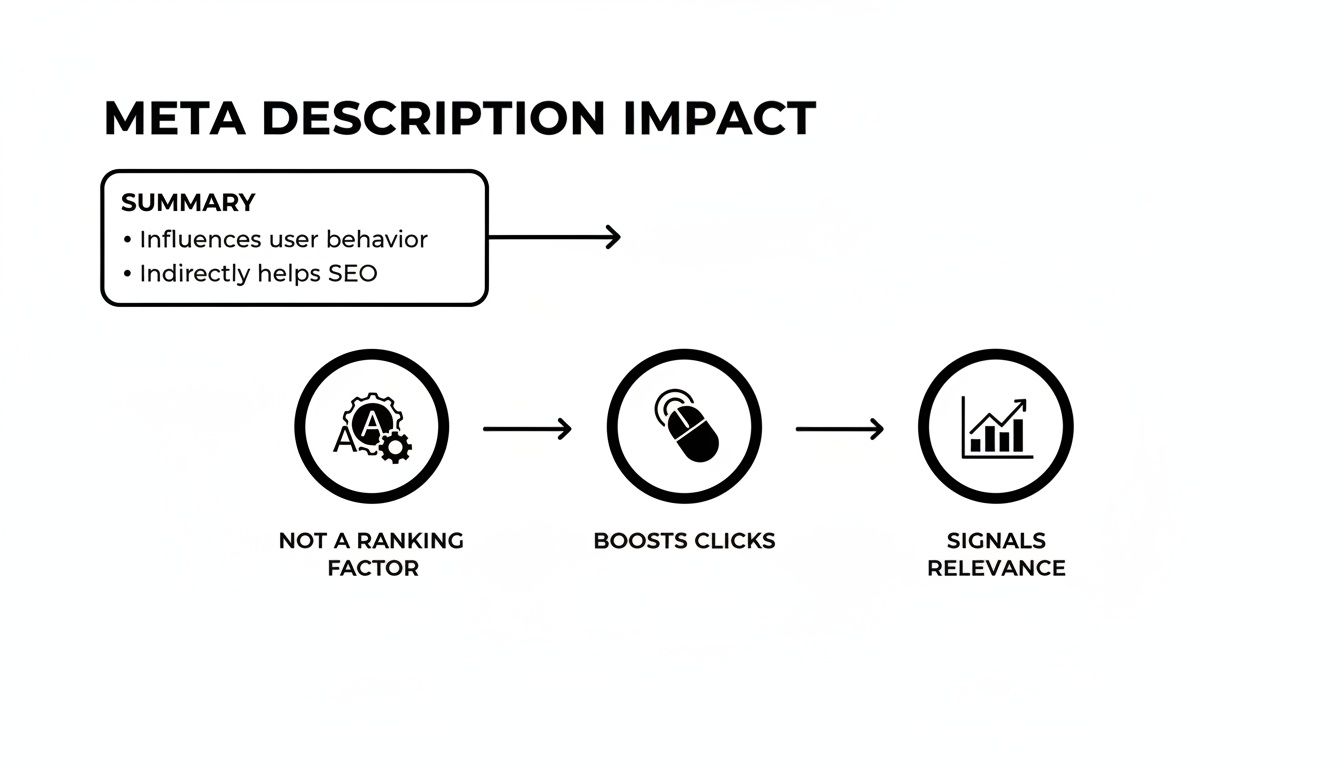
This really drives home the point: you're not writing for a robot. You're writing to persuade a person, and their clicks send powerful positive signals back to Google.
Highlighting Your Unique Value Proposition
So, what makes your page the best result on the page? Your meta description is where you need to shout your unique value proposition (UVP) from the rooftops. This could be a killer feature, a special offer, or a benefit your competitors just aren't talking about.
A great meta description answers the searcher's unspoken question: "Why should I click your link instead of the nine others on this page?"
Do you offer free shipping? Expert-backed advice? The most comprehensive guide on the internet? Mention it. This is your moment to differentiate yourself in a sea of blue links. It’s a wild fact that Google rewrites meta descriptions about 63% of the time, but crafting a strong one gives you the best chance of getting your intended message across.
Including a Compelling Call to Action
Finally, don't leave the user hanging. A high-performing meta description always includes a clear, active call to action (CTA). You have to explicitly tell the user what to do next. A good CTA transforms your description from a passive summary into an active invitation.
Use action-oriented verbs that create a sense of curiosity or urgency.
- Learn more
- Shop now
- Discover how
- Get your free quote
- Try it today
Without a CTA, you're just hoping the user figures it out. By guiding them, you dramatically increase the odds they'll take the one action you want them to: clicking through to your site.
Proven Formulas for Writing Meta Descriptions
Staring at a blank meta description box is a familiar kind of writer's block. But you don't need to reinvent the wheel every single time. Instead, you can lean on battle-tested copywriting formulas that have been adapted specifically for the SERPs.
Think of these as reliable starting points for crafting compelling, click-worthy snippets. Using a proven framework takes the guesswork out of the equation, letting you focus on highlighting your page's value in a way that truly connects with what your audience is looking for.

The Problem-Agitate-Solve Formula
The Problem-Agitate-Solve (PAS) formula is a classic for one simple reason—it works. This model is incredibly effective for service pages or blog posts that zero in on a specific user pain point.
First, you call out the problem the searcher is facing. Next, you agitate it by digging into the frustration it causes. Finally, you position your page as the clear solution.
- Example for a Local Plumbing Service: "Leaky faucet keeping you up at night? Don't let a small drip turn into a costly disaster. Our 24/7 emergency plumbers fix it fast. Get a free quote now."
This structure connects with the user’s emotions before offering them a logical, easy next step. It's a fantastic way to turn a simple search into a solid lead.
PAS works because it mirrors the user's own thought process. It validates their frustration and immediately positions your content as the relief they've been searching for, making a click almost irresistible.
The Feature-Benefit Model
For e-commerce product pages, the Feature-Benefit model is your go-to. People searching for products want to know what it does (feature) and, more importantly, how it will make their life better (benefit). This model draws that line for them instantly.
You simply state a key feature and immediately tie it to the direct benefit it gives the customer.
- Example for a Waterproof Jacket: "Features a Gore-Tex outer shell (Feature) so you can stay completely dry on your next hike (Benefit). Lightweight, breathable, and built for adventure. Shop now."
This approach goes way beyond a dry list of tech specs. It helps the potential buyer actually see themselves using and loving the product. It answers the critical "What's in it for me?" question right there in the search results. Effective SEO copywriting best practices almost always hinge on making this benefit-driven connection as quickly as possible.
The What-Why-How Structure
When you're writing meta descriptions for informational content like guides or "how-to" articles, the What-Why-How structure is the perfect framework for a quick summary. It immediately orients the reader and sets clear expectations for what they're about to learn.
- What: State what the article is about.
- Why: Explain why it’s important or what the reader will gain.
- How: Briefly mention how the article delivers this value (e.g., "with tips," "step-by-step").
- Example for a Guide to SEO Meta Descriptions: "Learn how to write meta descriptions for SEO that boost clicks. A great description can steal traffic from competitors. Get our expert tips and formulas now."
This formula is clean, direct, and incredibly effective for educational content. It promises real value and a clear learning outcome, which is exactly what you need to encourage clicks from users who are ready to dive in and learn something new. For an even deeper dive into this topic, Galant Studios offers a great resource on how to write meta descriptions that get clicks.
Advanced Tactics to Maximize Your SERP Real Estate
Once you've got the fundamentals down, it’s time to get a real competitive edge. Moving beyond the basic formulas involves using some smarter techniques to claim more visual real estate on the search results page, making your listing practically impossible for a searcher to ignore. This is how you truly stand out in a crowded field.
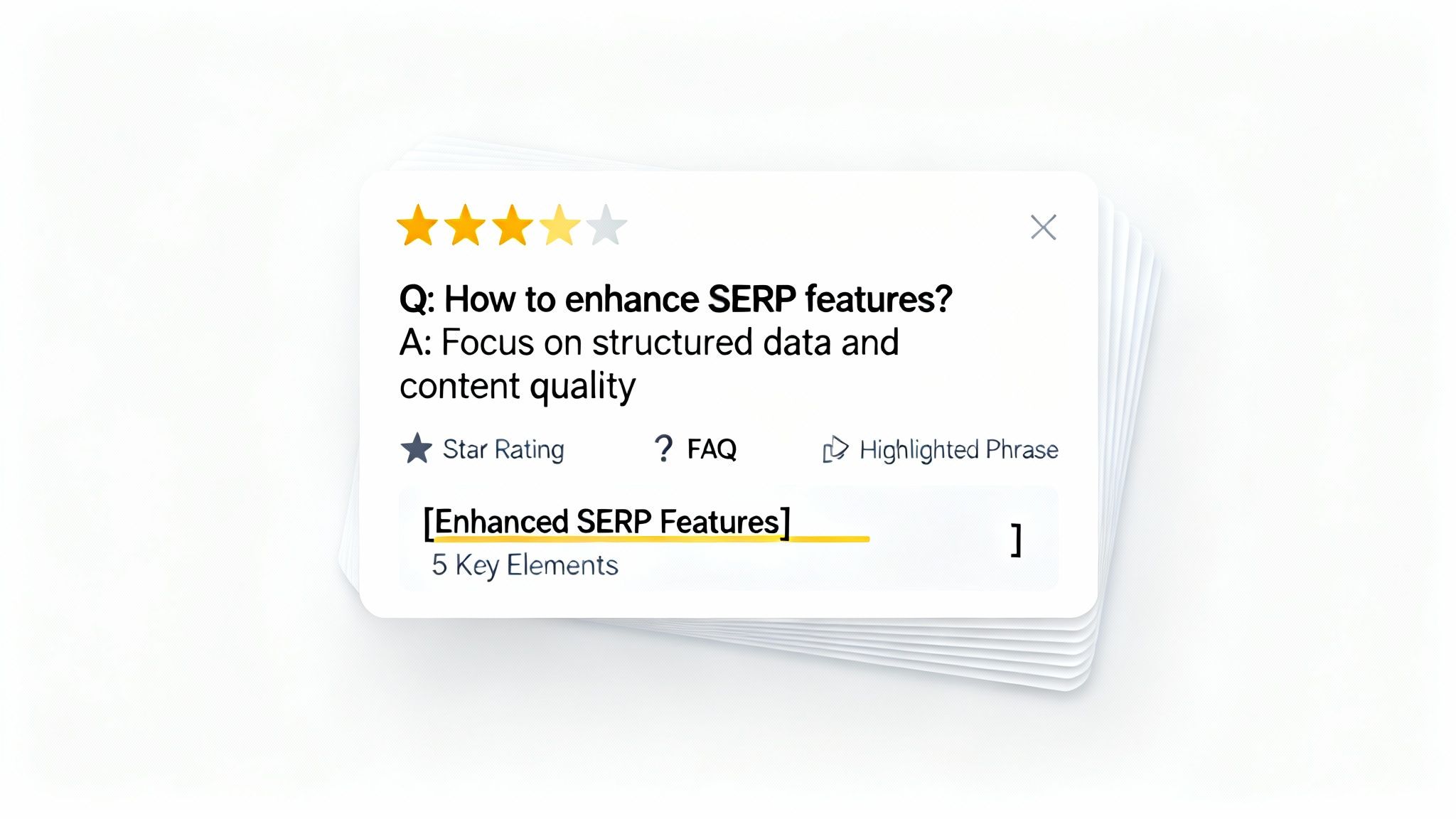
These advanced methods work right alongside your meta description to create a much richer, more engaging search result that pulls the user's eye directly to your link. It’s all about making your result a destination, not just another blue link.
Harnessing Structured Data for Rich Snippets
The single most powerful way to upgrade your SERP appearance is with structured data, often called Schema markup. This is essentially a special vocabulary of code you add to your site’s HTML that helps search engines understand your content on a much deeper level. And when Google gets what your page is about, it often rewards you with rich snippets.
Rich snippets are those visually beefed-up search results that show extra information between the URL and the description. You’ve definitely seen them out in the wild:
- Review Ratings: Those eye-catching gold stars under a product or service, showing off an aggregate score.
- FAQ Snippets: An accordion-style dropdown of frequently asked questions and their answers, right there in the search results.
- Product Information: Details like pricing, availability, and model numbers that pop up for e-commerce listings.
Just implementing the markup doesn't automatically guarantee a rich snippet, but it makes your page eligible to win one. These visual perks can dramatically boost your click-through rate because they build instant trust and deliver value before anyone even clicks. To see if your efforts are paying off, you'll need a clear view of your SERP performance, which is where a solid search engine visibility tool becomes indispensable for tracking those gains.
Leveraging Psychological Triggers in Your Copy
Beyond the technical stuff, the words you choose can have a real psychological impact on a searcher. Small, clever tweaks to your meta description copy can make a massive difference in whether someone’s brain registers your result as the best answer.
A great meta description isn't just a summary; it's a carefully crafted piece of micro-copy designed to trigger a click. It taps into human curiosity, urgency, and the desire for a quick solution.
Try weaving in these powerful elements to draw the user's eye and give them a compelling reason to click on your link over the others:
- Numbers and Data: Digits jump out in a sea of text. "Save 25% Today" is way more powerful than "Save on your order."
- Emotional Trigger Words: Use words that spark a feeling, like "Effortless," "Guaranteed," "Proven," or "Exclusive."
- Brackets and Symbols: Simple characters like
[Guide]or(2024 Update)break up the visual monotony of the SERP and signal what type of content to expect.
These small additions make your snippet feel more structured, valuable, and trustworthy—all key factors in earning that crucial click.
Scaling Descriptions with Dynamic Content
For massive e-commerce sites or content platforms juggling thousands of pages, writing a unique meta description for every single page is a nightmare. It’s just not feasible. This is where dynamic meta descriptions save the day.
Instead of writing each one by hand, you create a smart template that automatically pulls in specific data from the page itself.
For an e-commerce product, a dynamic template might look something like this:
Shop the [Product Name] by [Brand]. Get the best price on this [Product Category] and enjoy our free shipping offer. Order yours today!
This system automatically populates the bracketed fields with data from your product database, creating a unique, relevant description for every item on your site. It’s the only scalable way to ensure every single page has a solid, optimized description without sinking thousands of hours into manual work.
Of course, all these SERP optimization efforts are meant to drive traffic. Once you've earned that click, the journey isn't over. Make sure you're capitalizing on that hard-won traffic by investing in effective landing page design. After all, earning the click is only half the battle; converting that visitor is the real win.
How to Measure and Optimize Your Meta Descriptions
Writing a great meta description is only half the battle. If you're not measuring its performance, you're just guessing. You're flying blind, hoping your copy resonates with searchers.
The real growth happens when you stop treating this as a one-and-done creative task and start seeing it as a data-driven process. This is how you turn good meta descriptions into high-performing traffic drivers and send powerful, positive signals to Google.
Finding Your Biggest Opportunities in Google Search Console
Your first stop should always be Google Search Console (GSC). It’s a free tool packed with invaluable data about how your site performs in search, making it the perfect place to hunt for underperforming pages.
You're looking for the low-hanging fruit—pages that Google already likes but that users are skipping right over. You'll find what you need in the "Performance" report.
The goldmine you're looking for is pages with high impressions but a frustratingly low click-through rate (CTR). This combo is a dead giveaway: Google finds your page relevant enough to show it to tons of people, but your SERP snippet isn't compelling enough to earn the click.
More often than not, this discrepancy is a direct symptom of a weak or uninspired meta description. It's your clearest signal that a rewrite could move the needle in a big way.
How to Identify Underperforming Pages
Pinpointing these opportunities is pretty straightforward. Just follow this process in Google Search Console:
- Head over to Performance > Search results.
- Click the "Pages" tab to see performance broken down by URL.
- Make sure you have "Total impressions" and "Average CTR" metrics toggled on.
- Sort the list by Impressions from highest to lowest.
Now, just scan the list. You're looking for pages with thousands of impressions but a CTR that’s well below your site's average. These are your prime candidates for a meta description overhaul.
By focusing your energy here, you're not trying to revive a page Google doesn't care about. You're polishing a page that's already on the verge of success. To see how CTR fits into the bigger picture, it helps to understand the key website metrics to track for overall performance.
Running Simple A/B Tests to Validate Your Changes
Once you've picked a target page, it's time to test your new, improved meta description. Don't overthink this—it doesn't need to be a complex, expensive process. A simple, methodical A/B test will give you all the data you need.
Here’s a practical approach to follow:
- Establish a Baseline: Before touching anything, record the page's current CTR and total clicks over the last 30 days. This is your control group.
- Implement the Change: Hop into your CMS and update the meta description with your new, more compelling copy.
- Monitor the Impact: Now, wait. Let the new description run for at least 3-4 weeks. This gives Google enough time to recrawl the page and gives you enough data to spot a clear trend.
- Compare the Results: After the test period, compare the new CTR and click data to your original baseline.
Did the click-through rate go up? If so, you've found a winning formula you can start applying to other similar pages. This iterative process—test, measure, refine—is the core of effective SEO. It turns guesswork into a reliable strategy for compounding your organic traffic growth over time.
Common Questions About Writing Meta Descriptions
Even with the best templates and tactics in your back pocket, some specific questions always seem to pop up. It’s those "what if" scenarios that can leave you second-guessing your work.
Think of this section as your quick-reference guide. We'll tackle the most common questions we hear, giving you clear, straightforward answers to help you lock in those final details and write with confidence.
Do I Need a Unique Meta Description for Every Page?
Yes, in a perfect world, every single indexable page on your website would have its own unique meta description. It's a matter of user experience. When you have duplicate descriptions, a searcher might see three of your pages in the results, all with the exact same text. It's confusing, and they have no idea which link is the one they actually need.
Of course, "perfect world" isn't always realistic. If you're staring down the barrel of thousands of pages, the task can feel impossible. In that case, prioritize.
Start with your most important URLs:
- Your homepage and key service/landing pages
- Your best-performing blog posts
- High-value product and category pages
For everything else, it’s often better to leave the description blank and let Google pull a snippet from your page. That's a far better option than just copy-pasting a generic one across the board.
What Happens If I Don’t Write a Meta Description?
If you skip writing a meta description, Google will just step in and do it for you. The search engine will grab a chunk of text from the page that it thinks is the most relevant to whatever the user just searched for.
While that sounds like a handy fallback, it's rarely a good thing. Google's auto-generated snippets are usually functional, but they're almost never persuasive. You might get a disjointed sentence or a phrase that lacks any clear call to action. It's a huge missed opportunity to actually sell the click.
Relying on Google to write your meta descriptions is like letting someone else write the ad copy for your most important campaigns. You completely lose control over the messaging and that critical first impression.
Writing your own ensures you can frame your content's value proposition in the most compelling way possible.
Should I Include the Current Year in My Meta Descriptions?
Tossing the current year into a meta description—like "The Best SEO Tips for (2024)"—can be a surprisingly powerful move. It's a psychological trigger that instantly tells searchers your content is fresh, up-to-date, and relevant right now. This works especially well for fast-moving topics like tech trends, marketing strategies, or financial advice.
But here's the catch: this tactic comes with a non-negotiable maintenance plan. If you add the year, you must remember to update it the moment the calendar flips. Seeing a description that promises "2023's top strategies" when it's already 2024 makes your content look ancient and untrustworthy, which can kill your click-through rate.
How Long Should a Meta Description Be?
The magic number for meta description length is between 120 and 155 characters. This range is the sweet spot that ensures your full message appears on most desktop devices without getting awkwardly cut off by an ellipsis (...).
Think of it less as a strict rule and more as a strategic guideline. The goal is to be concise yet compelling. You need just enough room to fit your target keyword, explain your unique value, and drop in a call to action. Sticking to this character count forces you to be disciplined with your copy, which almost always leads to a stronger, punchier message for hurried searchers.
Ready to stop the manual grind and put your content creation on autopilot? IndexPilot uses trainable AI Agents to handle everything from keyword research and strategy to writing, optimizing, and publishing SEO-optimized articles directly to your CMS. Transform your SEO from a daily task into a reliable growth engine that compounds traffic while you focus on your business. Learn more and start your journey at https://www.trysight.ai.