You've just published your breakthrough article. The research is solid, the insights are fresh, and you know it could rank for a competitive keyword. But here's the frustrating reality: search engines won't discover it for weeks.
While you wait, competitors are already ranking for your target keywords. Their older, less comprehensive content is capturing the traffic that should be yours. Every day that passes represents lost opportunities—potential customers who never see your superior content because search engines simply don't know it exists yet.
This isn't a hypothetical scenario. It's the daily reality for content creators working within the limitations of traditional search engine crawling. Even high-quality content sits invisible in the search results, waiting for the next scheduled crawl that might happen tomorrow, next week, or next month.
The problem isn't your content quality or your SEO strategy. It's the fundamental communication gap between your website and search engines. Traditional crawling operates on schedules determined by search engine algorithms, not by your publishing timeline. When you update a product page, publish breaking news, or launch a time-sensitive campaign, search engines discover these changes on their schedule, not yours.
This is where IndexNow protocol changes everything. Instead of waiting passively for search engines to discover your content, IndexNow lets you notify them instantly. Think of it as the difference between waiting for mail delivery on an unpredictable schedule versus ringing a doorbell to announce immediate delivery.
In this comprehensive guide, you'll discover exactly what IndexNow protocol is, how it works, and why it's transforming content visibility from a waiting game into an immediate competitive advantage. You'll learn the technical foundations without getting lost in complexity, understand the business impact beyond just faster indexing, and gain the practical knowledge to implement IndexNow effectively in your content operations.
Whether you're managing a single blog or orchestrating enterprise content operations, understanding IndexNow protocol has shifted from optional knowledge to essential infrastructure. Here's everything you need to know about what is IndexNow protocol and how it can transform your content's search visibility.
Decoding IndexNow Protocol: The Search Engine Doorbell System
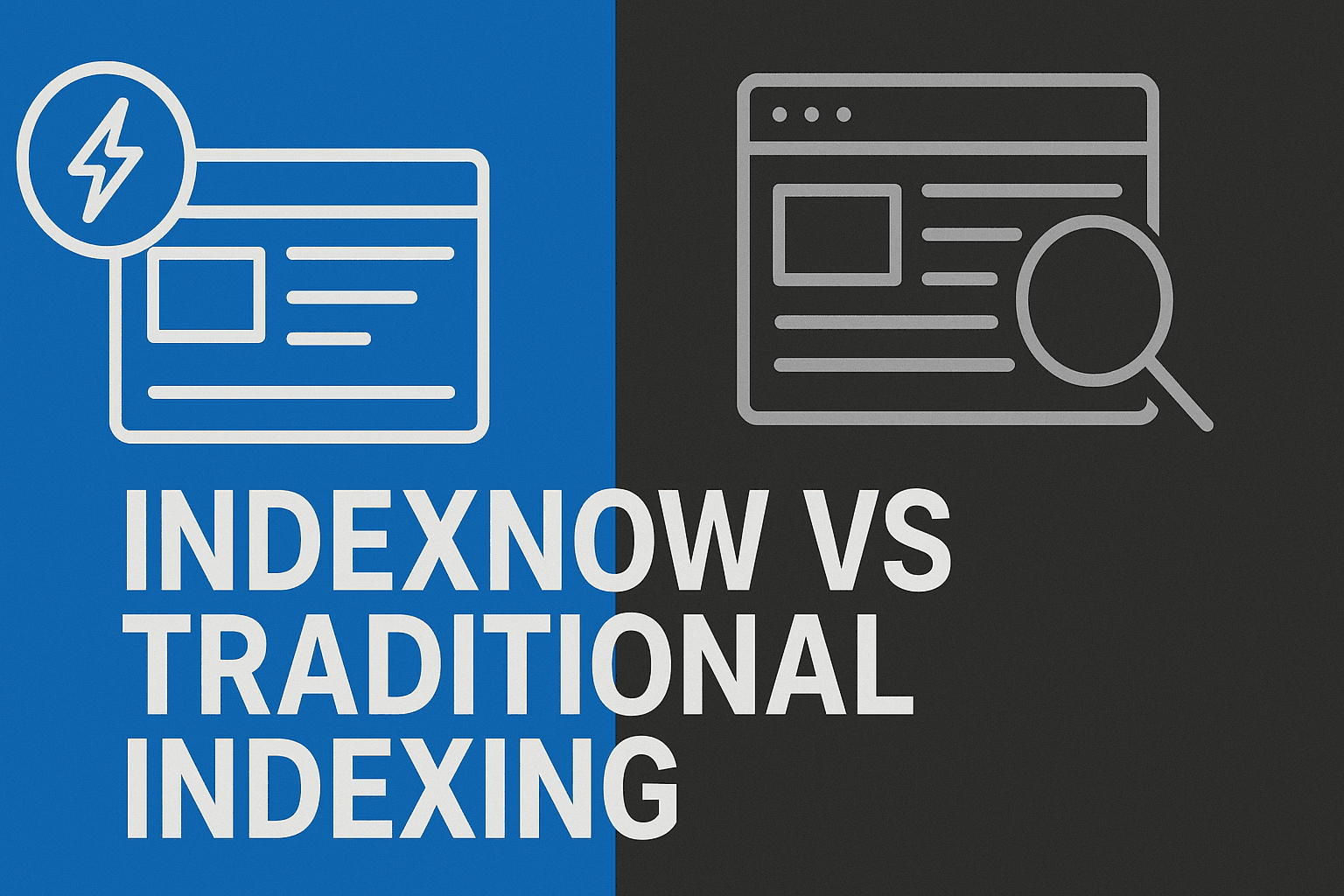
At its core, IndexNow is a direct notification system that fundamentally changes how websites communicate with search engines. Instead of waiting passively for search engine bots to discover your content updates through traditional crawling schedules, IndexNow lets you actively notify search engines the moment you publish or modify content.
Think of it as the difference between two communication methods. Traditional crawling is like waiting for someone to check their mailbox on their own schedule—maybe they check daily, maybe weekly, maybe not at all if they're busy. IndexNow is like ringing their doorbell to announce immediate delivery. You're not hoping they'll eventually notice; you're directly informing them that something new has arrived.
The protocol works through a simple API that allows your website to send instant notifications to participating search engines whenever you create, update, or delete content. When you publish a new blog post, update a product page, or modify any URL on your site, IndexNow sends a direct message to search engines saying "this URL has changed—come check it out now."
What Makes IndexNow Revolutionary
IndexNow represents a fundamental shift in the relationship between websites and search engines. For decades, this relationship has been one-sided: search engines decided when to crawl your site based on their algorithms, their schedules, and their assessment of your site's importance. You had no direct way to say "I just published something important."
The protocol eliminates this communication gap. When you notify search engines through IndexNow, you're not requesting a crawl or asking for preferential treatment. You're simply providing factual information: "This URL exists and has been updated." Search engines can then prioritize discovering that content based on their own criteria, but they're making that decision with complete information rather than waiting to stumble upon your changes.
What makes this particularly powerful is the protocol's universal approach. A single IndexNow notification reaches all participating search engines simultaneously. You don't need separate integrations for Bing, Yandex, Seznam, or other participants. One API call, one notification, universal reach across the IndexNow ecosystem.
The Technical Foundation Made Simple
IndexNow operates through straightforward HTTP POST requests—the same basic technology that powers most web interactions. Your website sends a simple message containing the URL that changed, your API key for authentication, and the type of change that occurred. The search engine receives this notification, validates your authentication, and adds your URL to its discovery queue.
The beauty of this simplicity is that it works with virtually any content management system, custom platform, or publishing workflow. Whether you're running WordPress, a custom-built application, or an enterprise content management system, the technical requirements remain the same: the ability to make an HTTP request when content changes.
This isn't experimental technology or a complex integration that requires specialized expertise. IndexNow is a production-ready protocol backed by major search engines, with clear documentation, straightforward implementation requirements, and growing adoption across the web publishing ecosystem. It's become standard infrastructure rather than cutting-edge experimentation.
What IndexNow Actually Does
IndexNow is a direct notification protocol that lets your website tell search engines about content changes the moment they happen. Instead of waiting for search engine crawlers to discover updates on their own schedule, you're essentially ringing a doorbell to announce that something new or changed is ready for their attention.
Think of it this way: traditional search engine discovery works like a mail carrier who checks your mailbox on their own schedule—maybe daily, maybe weekly, maybe even less frequently depending on how important they think your address is. IndexNow transforms this into a doorbell system where you can notify the mail carrier immediately when you have something important to send.
The protocol works through a simple API that allows websites to "ping" participating search engines with specific URL updates. When you publish a new blog post, update a product page, or make any content change, IndexNow sends a notification containing the URL and a timestamp. Search engines receive this notification instantly and can prioritize crawling that specific URL rather than waiting for their next scheduled visit to your site.
What makes IndexNow particularly powerful is its multi-engine capability. A single notification reaches all participating search engines simultaneously—currently including Microsoft Bing, Yandex, Seznam.cz, and others. You're not managing separate notification systems for each search engine; one API call handles communication across the entire participating ecosystem.
The protocol eliminates the fundamental waiting period between content publication and search engine discovery. While traditional crawling might take days or weeks to discover your new content, IndexNow enables discovery within minutes. This speed advantage transforms from a technical curiosity into a competitive edge when you're publishing time-sensitive content, launching products, or competing for rapidly trending topics.
IndexNow doesn't guarantee immediate ranking or placement in search results—that still depends on content quality, relevance, and all the traditional ranking factors. What it guarantees is immediate awareness. Search engines know your content exists and can evaluate it for ranking consideration right away, rather than discovering it weeks later when the competitive landscape has already shifted.
The protocol serves as a communication bridge between your website and search engines, replacing passive waiting with active notification. For content creators, this means your publishing timeline finally aligns with search engine discovery timing, eliminating the frustrating gap where great content sits invisible simply because search engines don't know it exists yet.
The Doorbell Analogy That Makes It Click
Think about how mail delivery works at your house. The postal service operates on its own schedule—maybe they arrive at 10 AM, maybe 2 PM, maybe not until tomorrow if your route is particularly long. You have no control over when they check your mailbox, and if you put something important out for pickup, you simply wait and hope they notice it during their next scheduled visit.
Now imagine you could ring a doorbell that immediately alerts the postal service: "Hey, I have something new here that needs attention right now." That's exactly what IndexNow does for search engines.
Traditional search engine crawling operates like that unpredictable mail delivery schedule. Search engines send out crawler bots that visit websites based on complex algorithms considering factors like site authority, historical update frequency, and available crawl budget. Your new blog post or updated product page sits waiting for the next scheduled crawl, which might happen in hours, days, or weeks depending on dozens of variables completely outside your control.
IndexNow transforms this passive waiting game into active communication. When you publish new content or update existing pages, IndexNow lets you instantly notify search engines: "I have fresh content here that's ready for discovery." The search engine receives this notification immediately and can respond on its own schedule—but now it knows exactly where to look and that something new is waiting.
Here's what makes this analogy particularly powerful: just like ringing a doorbell doesn't force someone to answer immediately, IndexNow doesn't guarantee instant indexing or ranking. What it guarantees is immediate notification. The search engine knows your content exists and can prioritize crawling it based on its own quality algorithms and capacity constraints.
Consider an e-commerce site updating product prices during a flash sale. With traditional crawling, search engines might not discover the new prices until days later—long after the sale has ended. With IndexNow, the site rings the doorbell immediately: "These product pages have new pricing information." Search engines can respond quickly, ensuring that searchers see current prices rather than outdated information that creates poor user experiences.
The doorbell analogy also clarifies a common misconception: IndexNow doesn't bypass search engine quality standards or ranking algorithms. It simply ensures that search engines know about your content changes immediately rather than discovering them through random crawling schedules. Your content still needs to meet quality standards, provide value to users, and compete based on relevance and authority.
This immediate notification capability becomes particularly valuable in time-sensitive scenarios—breaking news coverage, event announcements, limited-time offers, or trending topic responses. Instead of hoping search engines discover your timely content before it becomes outdated, you can notify them instantly and maximize the window of relevance.
Understanding IndexNow as a doorbell system rather than a ranking shortcut helps set realistic expectations while appreciating its genuine value. You're not gaming the system or forcing immediate rankings. You're simply establishing direct communication that respects both your publishing timeline and search engines' need to discover fresh content efficiently.
The Speed-to-Visibility Revolution: Why IndexNow Changes Everything
Understanding what IndexNow protocol does technically is one thing. Grasping why it matters for your business is something else entirely.
The transformation isn't just about speed—though that's certainly part of it. It's about fundamentally changing the relationship between content publication and search visibility. Traditional crawling created a gap where your best content sat invisible, waiting for discovery. IndexNow eliminates that gap completely.
From Weeks to Minutes: The Discovery Transformation
Traditional search engine crawling operates on schedules that have nothing to do with your publishing timeline. A new blog post might wait days or weeks for discovery, depending on your site's authority and crawl budget allocation. For established sites with strong authority, this might mean a few days. For newer or lower-authority sites, it could stretch into weeks.
IndexNow collapses this timeline to minutes. When you publish content and trigger an IndexNow notification, search engines receive immediate notification of the new URL. They can choose to crawl it right away, rather than waiting for the next scheduled crawl cycle.
This speed advantage becomes critical in competitive content spaces. Breaking news, trending topics, time-sensitive offers—all of these lose value rapidly when discovery is delayed. The first comprehensive article on a trending topic often captures the initial traffic surge and establishes ranking authority that later content struggles to overcome.
Consider a product launch scenario. Your competitor publishes their announcement and waits for traditional crawling. You publish yours and use IndexNow to notify search engines immediately. While their content sits undiscovered, yours is already appearing in search results, capturing early interest and building engagement signals that strengthen your ranking position.
Resource Efficiency and Server Performance
Here's something most people miss about IndexNow: it's not just faster for you—it's more efficient for everyone involved.
Traditional crawling means search engine bots visit your site repeatedly, checking for changes whether they exist or not. This consumes your server resources, bandwidth, and crawl budget. For large sites with thousands of pages, this inefficiency multiplies dramatically.
IndexNow flips this model. Instead of search engines guessing when to check your site, you tell them exactly when content changes. They can focus their crawling resources on URLs that actually need attention, rather than repeatedly checking unchanged pages.
This efficiency translates to real business benefits. Reduced server load means lower hosting costs and better performance for actual visitors. More focused crawling means search engines can discover your important updates faster while spending less time on pages that haven't changed.
For e-commerce sites updating product prices, inventory status, or seasonal promotions, this efficiency becomes particularly valuable. Instead of waiting for crawlers to discover price changes across thousands of products, you can notify search engines of specific updates immediately. Search results reflect current pricing faster, reducing the disconnect between what searchers see and what they find on your site.
Modern automated indexing features for marketers have transformed how content teams approach publication workflows, enabling immediate search engine notification without manual intervention. This automation ensures that every content update triggers appropriate IndexNow notifications, eliminating the gap between publication and discovery that previously cost businesses valuable traffic and competitive positioning.
The resource efficiency extends beyond your own infrastructure. Search engines benefit from reduced crawling overhead, allowing them to allocate resources more effectively across the web. When millions of sites adopt IndexNow, the collective efficiency gains become substantial—less wasted bandwidth, more accurate search indexes, and faster discovery of genuinely new content across the entire web ecosystem.
This creates a virtuous cycle where everyone benefits. Your site uses fewer resources, search engines crawl more efficiently, and users find fresher, more accurate information in search results. The protocol transforms what was previously a resource-intensive guessing game into a streamlined communication system that respects everyone's infrastructure constraints.
For content operations managing hundreds or thousands of pages, these efficiency gains compound dramatically. Instead of search engines repeatedly crawling static pages that haven't changed in months, they can focus on the pages you've actually updated. This means your important updates get discovered faster while your server handles fewer unnecessary crawl requests.
The performance benefits extend to user experience as well. When your server isn't constantly serving crawler requests, it has more capacity to deliver fast page loads to actual visitors. This improved performance contributes to better user engagement metrics, which in turn can positively influence your search rankings—creating another virtuous cycle where IndexNow adoption improves multiple aspects of your site's performance simultaneously.
Implementation Realities: What You Actually Need to Know
Understanding IndexNow's benefits is valuable. Knowing how to actually implement it is essential.
The good news: IndexNow implementation is remarkably straightforward compared to most SEO technologies. You don't need specialized expertise, complex integrations, or significant development resources. The protocol was designed for practical adoption, not technical complexity.
The Three-Step Implementation Framework
IndexNow implementation follows a simple three-step process that works regardless of your platform or technical infrastructure.
First, you generate an API key—a unique identifier that authenticates your notifications to search engines. This key is simply a text string that you create and host on your website. Search engines use it to verify that notifications actually come from your site rather than from someone attempting to spam their systems with false update notifications.
Second, you host this API key file on your website's root directory. This step proves ownership and establishes trust with participating search engines. The key file is a simple text file accessible at a specific URL on your domain, allowing search engines to verify your identity before accepting your notifications.
Third, you configure your website or content management system to send HTTP POST requests to the IndexNow API endpoint whenever content changes. This notification includes the URL that changed, your API key, and basic metadata about the update. The technical requirements are minimal—any system capable of making HTTP requests can implement IndexNow.
Platform-Specific Implementation Paths
How you implement IndexNow depends largely on your content management system and technical infrastructure.
For WordPress users, several plugins automate the entire process. These plugins generate your API key, host it correctly, and automatically send IndexNow notifications whenever you publish or update content. Installation takes minutes, and the plugins handle all technical details behind the scenes.
For custom platforms or enterprise content management systems, implementation typically involves adding a few lines of code to your publishing workflow. When content is published or updated, your system makes an HTTP POST request to the IndexNow endpoint with the appropriate parameters. Most development teams can implement this in a few hours.
For static site generators or headless CMS architectures, IndexNow integration typically happens in your build or deployment pipeline. When your site rebuilds or deploys new content, the build process sends appropriate notifications to search engines. This approach works seamlessly with modern JAMstack architectures and continuous deployment workflows.
The key insight: IndexNow adapts to your existing infrastructure rather than requiring you to adapt to it. Whether you're running a simple blog or managing enterprise content operations, there's an implementation path that fits your technical capabilities and workflow requirements.
Common Implementation Mistakes to Avoid
While IndexNow implementation is straightforward, several common mistakes can reduce effectiveness or create problems.
The most frequent mistake is sending notifications for every page on your site immediately after implementation. This floods search engines with notifications and doesn't provide the value IndexNow is designed to deliver. Instead, send notifications only when content actually changes—new publications, significant updates, or deletions.
Another common error is failing to properly host the API key file. The key must be accessible at the exact URL specified in the IndexNow documentation, typically at your domain root. Incorrect placement means search engines can't verify your identity and will ignore your notifications.
Some implementations send duplicate notifications for the same URL change. This happens when multiple systems or plugins attempt to handle IndexNow notifications independently. Ensure only one system sends notifications for each content change to avoid unnecessary API calls and potential rate limiting.
Finally, some sites implement IndexNow but continue to block search engine crawlers through robots.txt or other mechanisms. IndexNow notifies search engines about content changes, but they still need to be able to crawl and index that content. Notification and crawling are complementary processes, not alternatives.
Monitoring and Validation
After implementing IndexNow, validation ensures your notifications are being received and processed correctly.
Most participating search engines provide webmaster tools or search console interfaces that show IndexNow submission status. These tools confirm whether your notifications are being received, whether your API key is valid, and whether any errors are occurring in the notification process.
Monitor your server logs to verify that IndexNow notifications are being sent when content changes. Look for HTTP POST requests to the IndexNow endpoint with appropriate parameters. If these requests aren't appearing in your logs, your implementation may not be triggering correctly.
Track your content's discovery speed before and after IndexNow implementation. While discovery timing varies based on many factors, you should notice a general trend toward faster indexing of new and updated content. This provides practical validation that IndexNow is delivering its intended benefits.
Pay attention to any error responses from the IndexNow API. These errors typically indicate problems with your API key, malformed requests, or rate limiting issues. Addressing these errors quickly ensures your notifications continue to reach search engines effectively.
Strategic Integration: Making IndexNow Part of Your Content Operations
Technical implementation is just the beginning. The real value comes from strategically integrating IndexNow into your broader content operations and seo content creation workflow.
Stop guessing how AI models like ChatGPT and Claude talk about your brand—get visibility into every mention, track content opportunities, and automate your path to organic traffic growth. Start tracking your AI visibility today and see exactly where your brand appears across top AI platforms.