To discover what AI says about your brand, run a fixed set of prompts (direct brand questions, category recommendations, competitor comparisons and problem-solution queries) across ChatGPT, Gemini, Claude, Perplexity and Copilot, then score every answer for mention, sentiment and accuracy. Repeat the same prompts on a regular schedule, manually or with an AI visibility tool, so you can see changes over time and catch hallucinated or outdated brand information early. The six steps below turn that process into a repeatable monitoring system.
AI assistants now shape shortlists and buying advice, yet most brand monitoring stacks only cover social media, reviews and news. They miss the AI layer completely. If models recommend your competitors, or describe your pricing and features incorrectly, you lose deals without seeing why. This guide shows you how to pick the platforms that matter, write prompts that reveal your real AI visibility, set a baseline, and build ongoing tracking that feeds your content strategy.
Step 1: Map the AI Platforms Your Audience Actually Uses
Not all AI platforms matter equally for your brand. Your first step is identifying which ones your target audience actually uses when seeking information in your industry.
The major players you should evaluate include ChatGPT, Claude, Perplexity, Google Gemini, Microsoft Copilot, and Meta AI. Each platform has different strengths, user demographics, and use cases. ChatGPT dominates general queries and creative tasks. Perplexity excels at research-oriented searches with citations. Claude handles nuanced analysis and longer conversations. Gemini integrates deeply with Google's ecosystem. Copilot serves Microsoft's enterprise users. Meta AI reaches social media audiences.
Start by researching which platforms dominate in your specific niche. If you serve enterprise software buyers, Copilot and Gemini may be critical since they integrate into workplace tools. If your audience skews toward tech-savvy early adopters, Claude and Perplexity become priorities. For consumer brands targeting younger demographics, ChatGPT and Meta AI likely see the highest usage.
Consider your audience's typical workflows. Do they use AI while researching solutions at work? ChatGPT and Claude are common choices. Are they comparing products during personal time? Mobile-friendly platforms like ChatGPT's app or Meta AI within social feeds become relevant. Understanding these usage patterns helps you track brand across AI platforms effectively.
Create a tiered priority list. Your primary tier should include 2-3 platforms where your core audience most likely seeks recommendations. Your secondary tier can include 2-3 additional platforms for broader coverage. Trying to monitor every platform from day one spreads your resources too thin and makes systematic tracking difficult.
Document your rationale for each platform choice. This helps when explaining your monitoring strategy to stakeholders and makes it easier to adjust priorities as platform adoption patterns shift. The AI landscape evolves quickly, so your priority list should be reviewed quarterly.
Success indicator: You have a clear list of 3-5 AI platforms to monitor, ranked by priority based on your audience research. You can explain why each platform matters for your specific business and target market.
Step 2: Build Your Brand Mention Prompt Library
The prompts you use determine what insights you uncover. Generic questions yield generic answers. Strategic prompts reveal exactly how AI models position your brand relative to competitors and whether they recommend you when it matters most.
Start with direct brand queries. These establish baseline awareness. Craft prompts like "What do you know about [Your Brand Name]?" and "Tell me about [Your Company] and what they offer." These reveal whether AI models have any information about you and how accurate that information is. If an AI model responds with "I don't have specific information about that company," you've identified a critical visibility gap.
Next, develop recommendation prompts that mirror real user queries. These are where purchase decisions happen. Create variations like "What are the best [your product category] tools for [specific use case]?" and "Recommend [your product type] for [target customer type]." These prompts show whether you appear in the consideration set when potential customers ask for solutions.
Comparison prompts reveal your competitive positioning. Try "Compare [Your Brand] vs [Top Competitor]" and "What are the differences between [Your Product] and [Competing Product]?" These responses show how AI models frame your strengths and weaknesses relative to alternatives. They also reveal whether the AI has enough information to make meaningful comparisons.
Problem-solution prompts uncover whether AI connects your brand to the problems you solve. Use formats like "How do I solve [specific problem your product addresses]?" and "What's the best way to [achieve outcome your product enables]?" If your brand doesn't appear in these responses, potential customers seeking solutions to their exact problems never hear about you. A solid prompt tracking for brands guide can help you organize this process systematically.
If you sell in specific markets, add location to some prompts (for example, "best payroll software for small businesses in the UK"). Answers often differ by country, so a brand that appears in US results may be missing from Great Britain results.
Organize your prompts into categories: brand awareness, product recommendations, competitive positioning, and problem-solving. Aim for at least 10-15 prompts total, with 3-4 in each category. This variety ensures you're testing different aspects of your AI visibility, not just one narrow angle.
Store your prompt library in a spreadsheet or document where you can track responses over time. Include columns for the prompt text, category, priority level, and notes about what insight each prompt provides. This structure makes systematic testing manageable and repeatable.
Success indicator: You have a documented library of 10-15 strategic prompts organized by category, each designed to reveal specific aspects of your AI brand visibility.
Step 3: Establish Your AI Visibility Baseline
Now comes the critical measurement phase. You need to understand your current AI visibility before you can track improvements or catch problems early.
Run each prompt from your library across all your priority platforms. Copy the exact prompt text to ensure consistency, then document the full response from each AI model. Don't paraphrase or summarize—capture the complete answer. AI models often include nuanced language that matters for understanding their positioning of your brand.
Keep test conditions consistent. Use a logged-out or fresh session where possible, turn off memory and personalization, and note whether web search was enabled. AI answers vary between runs, so run each priority prompt 2-3 times and record how often your brand appears rather than relying on a single response.
Score each response using three key metrics. First, mention status: Was your brand mentioned at all? Score this as yes, no, or partial (mentioned but not prominently). Second, sentiment: When mentioned, is the tone positive, neutral, negative, or mixed? Third, accuracy: Is the information correct, outdated, incomplete, or inaccurate? These three dimensions give you a complete picture of your brand visibility tracking in AI health.
Pay close attention to competitor mentions. When you ask for recommendations and your competitors appear but you don't, note which competitors dominate. When comparison prompts favor competitors, document the specific advantages AI models cite. This competitive intelligence shows you exactly what you're up against in AI-driven discovery.
Record the specific language AI models use when discussing your brand. Do they emphasize certain features? Do they position you for specific use cases? Do they mention particular strengths or limitations? This language reveals how AI models have learned to categorize and present your brand based on their training data.
Create a baseline scorecard that summarizes your findings. Calculate your mention rate (percentage of prompts where you appeared), average sentiment score, and accuracy rating. Note your most common competitive comparisons and any recurring themes in how AI describes your brand. This scorecard becomes your reference point for measuring future changes.
| Metric | How to calculate | Example |
|---|---|---|
| Mention rate | Prompts with a brand mention ÷ total prompts run | 6 of 15 prompts = 40% |
| Share of voice | Your mentions ÷ all brand mentions in recommendation answers | 6 of 30 mentions = 20% |
| Sentiment | Score each mention +1 / 0 / −1, then average | +0.5 |
| Accuracy | Mentions with no factual errors ÷ total mentions | 4 of 6 = 67% |
Take screenshots or save the actual AI responses. AI models update over time, and having the original responses lets you compare how their knowledge about your brand evolves. This documentation also helps when you need to show stakeholders specific examples of visibility gaps.
Success indicator: You have completed baseline testing across all priority platforms, documented responses, scored them using your three metrics, and created a summary scorecard showing your current AI visibility position.
Step 4: Set Up Automated Tracking and Alerts
Baseline measurement is valuable, but AI visibility requires ongoing monitoring. AI models update their knowledge, competitors publish new content, and your own visibility can shift over time. You need a system that catches these changes before they impact your business.
Decide on your tracking cadence. Weekly monitoring provides frequent visibility but requires significant time investment. Bi-weekly tracking offers a practical balance for most businesses—frequent enough to catch meaningful changes, manageable enough to sustain long-term. Monthly tracking works if you're in a slower-moving industry or have limited resources, though you risk missing time-sensitive shifts.
For manual tracking, create a recurring calendar event with your prompt library attached. During each tracking session, run your priority prompts (not necessarily all of them every time) and document any changes from your baseline. Focus on prompts where you previously had low visibility or where competitive dynamics matter most.
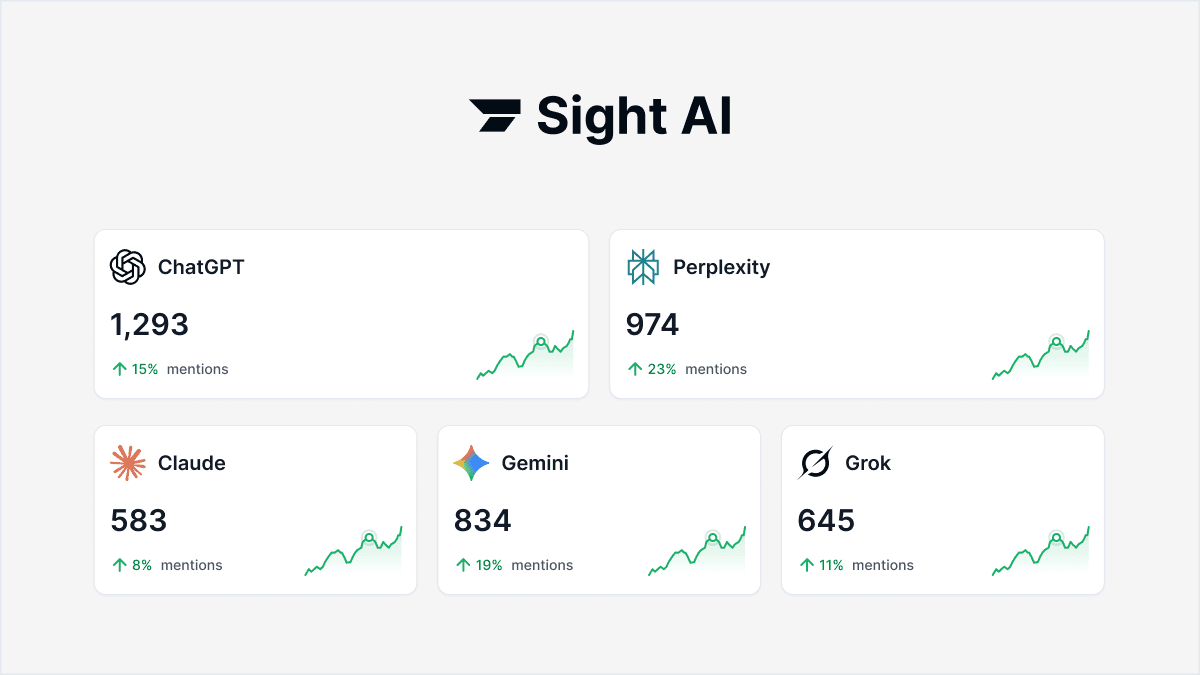
Consider using specialized AI brand visibility tracking tools that automate this process. Tools like Sight AI continuously monitor how multiple AI models discuss your brand, tracking changes in real-time across platforms. These platforms run your prompts automatically, score responses, and alert you when significant changes occur—like a drop in mention frequency or a shift in sentiment. Sight AI's prompt tracking for ChatGPT, Gemini, Claude and Perplexity handles the repeated runs and scoring described above.
Set up alert thresholds for changes that matter. You want to know immediately if you suddenly stop appearing in recommendation queries where you previously showed up. You need alerts when sentiment shifts from positive to negative. You should be notified when competitors gain prominence in queries where you were previously mentioned.
Document your tracking workflow in detail. Write down exactly which prompts to run, how to score responses, where to log results, and what changes trigger escalation to your team. This documentation ensures consistency if multiple team members handle monitoring or if you need to hand off the process temporarily.
Build tracking into your regular marketing operations. AI visibility monitoring should sit alongside your other brand monitoring activities—not as a separate initiative that gets deprioritized when things get busy. Integrate it into your weekly or monthly marketing review meetings so visibility insights inform your content and SEO strategy.
Success indicator: You have a defined tracking schedule, a documented process for running and scoring prompts, and either a manual system you can sustain or an automated platform handling continuous monitoring with appropriate alerts configured.
Step 5: Analyze Patterns and Identify Content Gaps
Raw tracking data only becomes valuable when you analyze it for actionable insights. This step transforms your monitoring results into a strategic roadmap for improving AI visibility.
Start by comparing your visibility against top competitors across all platforms. Create a simple matrix showing which brands appear for which prompts on which platforms. This visual comparison immediately reveals where competitors dominate and where you're invisible. Look for patterns—are certain competitors mentioned consistently across all platforms, or do different platforms favor different brands?
Identify specific prompts where competitors appear but you don't. These represent your highest-value opportunities. When someone asks "What are the best project management tools for remote teams?" and three competitors get mentioned while you don't, you've found a critical gap. These prompts represent real questions potential customers are asking, and you're missing out on those conversations.
Examine the information AI models share about your brand for accuracy issues. Outdated feature descriptions, incorrect pricing information, or references to discontinued products all damage your credibility. Make a list of every factual error or outdated detail you discovered during monitoring. When you find AI models giving wrong information about brand, these inaccuracies need correction through fresh, authoritative content that AI models can learn from.
Analyze sentiment patterns across different prompt types. You might find that AI models mention you positively in direct brand queries but neutrally in recommendation contexts. Or perhaps comparison prompts highlight competitor advantages while downplaying your strengths. Understanding brand sentiment tracking in AI reveals how AI models have learned to position your brand, which directly influences how they present you to potential customers.
Look for topic gaps where AI models lack information about your brand. If prompts about specific use cases or industry applications never mention you, it suggests AI models don't have enough training data connecting your brand to those topics. This indicates where you need to build topical authority through targeted content.
Create a prioritized action list based on your analysis. Rank gaps by potential impact—prompts with high search intent and strong competitor presence deserve top priority. Include specific details: which platforms show the gap, what competitors say, what information is missing or incorrect, and what sentiment shift you're targeting.
Success indicator: You have a documented analysis showing where competitors outperform you, which prompts represent the biggest visibility gaps, what inaccurate information needs correction, and a prioritized list of opportunities to address through content strategy.
Step 6: Create Content That Improves AI Brand Mentions
Analysis without action accomplishes nothing. This final step focuses on publishing content that directly improves how AI models understand and present your brand.
Start with content that addresses your highest-priority gaps. If AI models never mention you for "best [category] for [use case]" queries, publish comprehensive guides specifically about that use case. If comparison prompts favor competitors, create detailed comparison content that objectively presents your advantages. If problem-solution queries miss you, write authoritative articles about solving those specific problems.
Optimize your content for Generative Engine Optimization (GEO) principles. This means writing with clarity and authority that AI models can easily parse and understand. Use clear headings that state your main points. Include specific, factual information about your product capabilities. Provide concrete examples and use cases. Answer questions directly rather than burying key information in marketing fluff.
Build topical authority through comprehensive coverage. Don't just publish one article about a topic where you lack visibility. Create a content cluster that thoroughly covers the subject from multiple angles. When AI models see consistent, authoritative content from your domain about a topic, they're more likely to reference you as a credible source in that area.
Ensure your content gets indexed quickly so it can influence AI training data. Use IndexNow to push new content directly to search engines for immediate indexing. Submit updated sitemaps whenever you publish. The faster your content reaches search engines and web archives, the sooner it can influence how AI models learn about your brand.
Track changes in AI responses after publishing targeted content. Rerun the specific prompts where you had visibility gaps 2-3 weeks after publishing related content. Look for improvements in mention frequency, sentiment, or the accuracy of information AI models share. Effective tracking AI mentions of your brand creates a feedback loop that shows you what content strategies actually work for improving AI visibility.
Focus on evergreen, authoritative content rather than news or promotional material. AI models prioritize informative, educational content when forming their knowledge base. A well-researched guide about solving a customer problem carries more weight than a product announcement or press release.
Success indicator: You have published targeted content addressing your top visibility gaps, optimized it for GEO principles, ensured fast indexing, and begun tracking whether AI model responses improve in the weeks following publication.
Your AI Visibility Monitoring System Is Now Live
You now have a complete framework for understanding and improving what AI says about your brand. This isn't a one-time audit—it's an ongoing system that keeps you informed as the AI landscape evolves and your visibility shifts.
Start implementation this week. Map your priority platforms today. Build your prompt library tomorrow. Run your baseline assessment by the end of the week. The insights you uncover will likely surprise you, and the sooner you establish your baseline, the sooner you can start improving.
Your quick-start checklist:
- Identify your top 3-5 AI platforms based on where your audience seeks information.
- Create at least 10 prompts across brand awareness, recommendations, comparisons, and problem-solving categories.
- Run baseline tests across all priority platforms and document current visibility with scoring.
- Set up your weekly or bi-weekly tracking schedule, or implement automated monitoring.
- Analyze your results to identify gaps, then plan content specifically designed to address them.
The competitive advantage goes to brands that master this discipline early. While most companies remain blind to their AI visibility, you'll have systematic insights into how AI models present your brand. You'll catch problems before they compound. You'll identify opportunities while competitors miss them. You'll create content that strategically improves your position in AI-driven recommendations.
Frequently asked questions
How do I check what ChatGPT or Perplexity says about my brand right now?
Open a fresh, logged-out session and ask three things: "What do you know about [Brand]?", "What are the best [category] tools for [use case]?" and "Compare [Brand] vs [Competitor]." Run each prompt two or three times, because answers vary, and save the full responses. Note whether you are mentioned, the tone, and any factual errors. Step 2 and Step 3 above explain how to expand this into a scored baseline.
What tools track how AI talks about my brand?
Dedicated AI visibility platforms run your prompts automatically across ChatGPT, Gemini, Claude, Perplexity and Copilot, then report mention rate, sentiment, share of voice against competitors and changes over time. Sight AI is one example, with prompt tracking and sentiment monitoring built in. Traditional social listening and rank tracking tools do not capture AI answers, so they cannot replace these platforms. Manual spreadsheets work for small prompt sets but become hard to maintain beyond about 20 prompts.
How do I find out if AI is hallucinating information about my company?
Compare every AI statement about your brand against a fact sheet covering pricing, features, founding date, locations and leadership. Flag anything outdated, invented or attributed to a competitor. Hallucinations usually appear where authoritative public information is thin. The fix is publishing clear, crawlable pages that state those facts directly, then rechecking the same prompts after a few weeks. Step 5 covers accuracy analysis in more detail.
How do agencies report to clients on how AI describes their brand?
Most agencies use a monthly scorecard: mention rate across a fixed prompt set, share of voice versus named competitors, average sentiment, and a log of inaccuracies found and fixed. Including screenshots of representative answers makes changes tangible for clients. Pair the scorecard with the content actions taken that month so clients can link improvements to work delivered. Keeping the prompt set stable is what makes month-over-month comparisons credible.
Why should I track AI brand visibility?
Buyers increasingly ask AI assistants for shortlists and comparisons before visiting any website. If you are absent or misdescribed in those answers, you lose consideration without any signal in your analytics. Tracking shows where competitors are recommended instead of you, surfaces incorrect information before it spreads, and tells you which content actually changes AI answers.
Stop guessing how AI models like ChatGPT and Claude talk about your brand—get visibility into every mention, track content opportunities, and automate your path to organic traffic growth. Start tracking your AI visibility today and see exactly where your brand appears across top AI platforms.
Your next move is simple: open ChatGPT or Claude right now and run your first prompt. Ask what it knows about your brand. See if you appear in recommendations for your category. The answer might be encouraging or concerning, but either way, you'll finally know where you stand—and that's where real improvement begins.