When someone types "What's the best email marketing platform?" into ChatGPT, your brand either shows up in that response or it doesn't. That single moment—repeated thousands of times daily across millions of conversations—shapes purchasing decisions, influences software evaluations, and builds or erodes brand authority in ways traditional SEO never could.
The uncomfortable truth? You probably have no idea what ChatGPT is saying about your brand right now.
Unlike Google rankings that you can check on demand, AI recommendations operate in a black box. ChatGPT's responses aren't static web pages you can monitor with rank trackers. They shift based on model updates, conversation context, and the specific way users phrase their questions. What it recommends today might vanish tomorrow, and you'd never know until a competitor starts capturing the market share you assumed was yours.
This creates a visibility gap most businesses haven't recognized yet. While you're optimizing meta descriptions and building backlinks, potential customers are having private conversations with AI assistants that never touch your website. They're asking for recommendations, comparing solutions, and making decisions based entirely on what ChatGPT tells them—and you're not in the room.
The solution isn't complicated, but it does require discipline. Daily tracking transforms AI visibility from speculation into measurable data. You'll know exactly when your brand appears, how it's positioned against competitors, and which prompts trigger recommendations versus silence.
This guide breaks down the complete process for establishing systematic ChatGPT tracking. You'll learn how to identify the prompts that actually matter for your business, build a sustainable daily monitoring routine, analyze patterns that reveal opportunities, and convert tracking insights into content strategies that improve your AI visibility. Think of it as setting up a surveillance system for your brand's reputation in the AI ecosystem—because the conversations happening there are too valuable to ignore.
Step 1: Identify Your High-Value Tracking Prompts
Before you track anything, you need to know what questions actually matter. Not every ChatGPT query deserves daily monitoring—you're looking for the specific prompts that drive real business outcomes in your market.
Start by mapping your customer journey through an AI lens. When prospects are in research mode, what do they ask? These typically fall into three categories: comparison queries ("ChatGPT vs Claude for content writing"), best-of lists ("best project management tools for remote teams"), and problem-solution prompts ("how to improve email deliverability").
Your goal is identifying the 10-15 questions where being mentioned—or not mentioned—directly impacts whether someone considers your product. If you sell CRM software, "What's the best CRM for small businesses?" matters infinitely more than "What is customer relationship management?" The first drives purchase decisions. The second provides educational context.
Create prompt variations that mirror how real humans actually talk to AI. People don't use formal keyword phrases when chatting with ChatGPT. They ask conversational questions with different levels of specificity. For the same core topic, you might track: "What's the best email tool?" (casual), "Which email marketing platform offers the best automation features?" (specific), and "I need an email solution for e-commerce—what do you recommend?" (context-rich).
These variations matter because ChatGPT's responses change based on prompt structure. A vague question might trigger a generic list of top brands. A specific, context-loaded prompt often yields more detailed recommendations with reasoning—exactly the kind of response where you want your brand featured prominently.
Document competitor names alongside your tracking prompts. You're not just monitoring whether you're mentioned—you're tracking competitive share of voice. If "best SEO tools" consistently mentions Ahrefs, SEMrush, and Moz but never your platform, that's actionable intelligence. You've identified a visibility gap and the exact competitors capturing that AI real estate. Understanding why a competitor is mentioned in ChatGPT but not you becomes critical for strategic planning.
Build a simple tracking document with three columns: the prompt itself, the business outcome it influences (lead generation, competitive positioning, thought leadership), and priority level. Focus your daily tracking on high-priority prompts first. You can always expand later, but starting with 15 prompts is more sustainable than trying to track 50 and burning out after three days.
The prompts you choose today become your baseline for measuring change over time. Choose them carefully, because you'll be running these same queries every day for weeks.
Step 2: Set Up Your Daily Tracking System
Consistency beats perfection in tracking systems. The goal isn't capturing every possible data point—it's establishing a routine you can maintain daily without it becoming a soul-crushing chore.
You have two paths: manual tracking or automated monitoring tools. Manual tracking works if you're monitoring 10-15 prompts and have the discipline to execute the same process at the same time every day. Create a spreadsheet with columns for date, prompt, brand mentioned (yes/no), mention position (first, middle, end of response), sentiment (positive, neutral, negative), and competitors mentioned.
The critical detail most people miss? Timing consistency. ChatGPT's responses can vary based on server load, model version updates, and even conversation context from previous queries in your session. Running your prompts at 9 AM Monday and 4 PM Tuesday introduces variables that make pattern analysis harder. Pick a time—ideally when you're fresh and can focus—and stick to it.
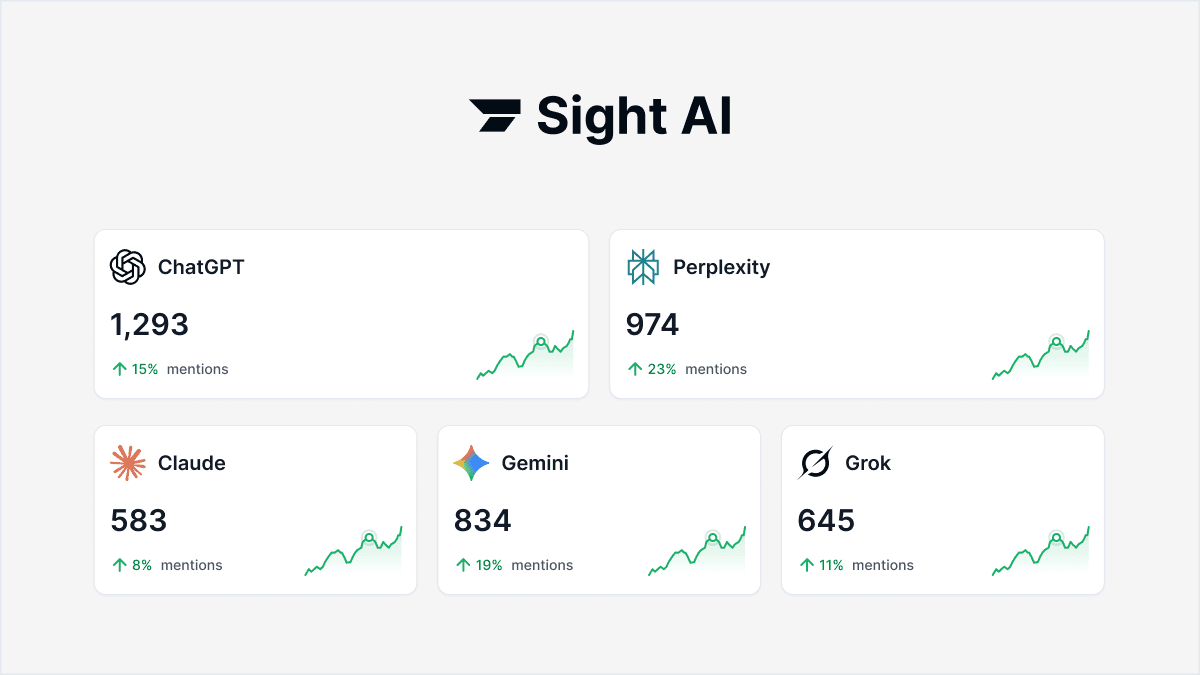
Automated tools like Sight AI's visibility monitoring eliminate the manual grind while providing more comprehensive data. Instead of running prompts yourself, the system tracks mentions across ChatGPT, Claude, Perplexity, and other AI platforms simultaneously. Exploring ChatGPT tracking tools comparison guides can help you choose the right solution. You get historical data, sentiment analysis, and competitive benchmarking without spending an hour each morning copying and pasting responses into spreadsheets.
Regardless of your approach, establish baseline measurements before you start daily tracking. Run your prompt list three times over three days and record the results. This baseline shows you what "normal" looks like for your brand's current AI visibility. When you see changes later, you'll know whether they're meaningful shifts or just noise.
Create a scoring rubric that makes analysis faster. A simple framework: 3 points if your brand is mentioned first or prominently recommended, 2 points for brief mentions in a longer list, 1 point if mentioned only after follow-up questions, 0 points if not mentioned at all. Track competitor scores the same way. This quantifies visibility in a way that's easier to trend over time than reading through paragraphs of AI responses.
Set up your tracking environment for minimal friction. If you're going manual, bookmark ChatGPT and have your spreadsheet open before you start. Create a template with your prompts pre-populated so you're not retyping questions daily. If you're using automation, configure your alert thresholds now—you want notifications when significant changes happen, not just daily data dumps you'll ignore.
The system you build in this step determines whether tracking becomes a valuable habit or something you abandon after two weeks. Make it as frictionless as possible while still capturing the data that matters.
Step 3: Execute Your First Daily Tracking Session
Now you're ready to run your first structured tracking session. This isn't about speed—it's about establishing a process you can replicate exactly the same way tomorrow and the day after.
Open a fresh ChatGPT conversation. Don't reuse existing chats, as prior context influences responses. Start with your first prompt exactly as documented in your tracking list. Read the complete response before recording anything. You're looking for several specific elements: whether your brand is mentioned at all, where it appears in the response (first recommendation, middle of a list, or buried at the end), the context around the mention, and the sentiment.
Context matters more than you might expect. ChatGPT might mention your brand as "a good option for beginners" versus "the industry-leading solution for enterprise teams." Both are mentions, but they position you very differently. Record this nuance in your tracking system—it reveals how AI perceives your brand's market positioning. Learning to track brand sentiment online helps you interpret these positioning signals accurately.
Screenshot or copy the full response into your tracking document. You'll want this historical record when analyzing patterns later. A response that seems unremarkable today might reveal important trends when compared to next week's results. Text copies work fine, but screenshots capture the exact formatting and structure of ChatGPT's output, which sometimes matters for understanding emphasis.
Note any unexpected competitor appearances. If you're tracking "best CRM software" and suddenly a competitor you've never heard of shows up in ChatGPT's top three recommendations, that's signal. Either they've recently published content that influenced the training data, or there's a market shift you haven't noticed yet. These surprises often provide your most valuable insights.
Pay attention to how ChatGPT structures its reasoning. Does it mention specific features when recommending competitors? Does it cite use cases or customer segments? This reveals what factors the AI considers important for recommendations in your category—information you can use to optimize your own content and positioning.
Work through your entire prompt list without rushing. This first session establishes your baseline data quality. If you skip details now, you'll regret it when trying to analyze trends later. The whole process should take 30-45 minutes for 10-15 prompts, including documentation time.
When you finish, review your tracking document. Do you have complete data for every prompt? Are your notes clear enough that you'd understand them a month from now? This first session becomes your template for every subsequent tracking session—get it right once, then replicate it daily.
Step 4: Analyze Response Patterns and Trends
After five to seven days of consistent tracking, you'll have enough data to spot patterns that single-day snapshots miss. This is where daily tracking pays off—you're no longer guessing about AI visibility, you're analyzing measurable trends.
Start by comparing your daily results for each prompt. Some queries will show remarkable consistency—ChatGPT recommends the same three brands in roughly the same order every day. Others will show volatility, with your brand appearing some days and vanishing others. Both patterns tell you something important.
Consistency means ChatGPT has strong training data associations for that query. If you're consistently mentioned, you've achieved solid AI visibility for that prompt. If you're consistently absent while competitors appear, you've identified a content gap where your brand lacks the digital footprint AI models rely on for recommendations.
Volatility reveals opportunity. When your brand appears sporadically, it means you're on the edge of ChatGPT's recommendation threshold. Small improvements in content, mentions, or authority signals could push you into consistent visibility. These are your highest-leverage optimization targets.
Compare prompt variations to understand what language triggers better visibility. You might discover that "best email marketing tools" never mentions you, but "email automation platforms for e-commerce" consistently includes your brand. This reveals semantic territories where you have strong AI visibility versus gaps in your coverage. Adjust your content strategy to target the prompts where you're underperforming.
Track which specific phrases or qualifiers change outcomes. Adding "for small businesses" or "with advanced analytics" to prompts might completely shift the brands ChatGPT recommends. These modifier patterns show you how AI categorizes your brand and which market segments it associates with your solution.
Monitor competitor momentum carefully. If a competitor starts appearing more frequently in responses where they were previously absent, they're gaining AI visibility—possibly through new content, increased mentions, or improved SEO/GEO optimization. Knowing how to track competitor AI mentions helps you understand what changed for them so you can respond strategically.
Look for correlation between your content publishing and AI recommendation changes. If you published a comprehensive guide on "email deliverability best practices" two weeks ago, do you now appear more often when users ask ChatGPT about email deliverability? This lag time between content publication and AI visibility impact is critical for planning your content calendar.
Create a simple trend summary each week: prompts where visibility improved, prompts where it declined, new competitor threats, and prompt variations that outperform others. This summary becomes your strategic roadmap for the next week's content and optimization efforts.
Step 5: Build Your Weekly Reporting Dashboard
Raw tracking data is useful, but a visual dashboard transforms it into strategic intelligence you can share with your team and use for decision-making. You don't need fancy BI tools—a well-structured spreadsheet with basic charts works perfectly.
Focus on three core metrics: mention rate (percentage of tracked prompts where your brand appears), sentiment score (weighted average of positive/neutral/negative mentions), and competitive share of voice (your mentions versus total competitor mentions). These three numbers tell you whether your AI visibility is improving, declining, or stagnating.
Calculate mention rate by dividing the number of prompts where you're mentioned by total prompts tracked. If you're mentioned in 6 out of 15 daily prompts, your mention rate is 40%. Track this daily and plot it on a line chart. You're looking for upward trends over rolling seven-day periods, not day-to-day noise.
Sentiment scoring requires some interpretation. Assign numerical values: +1 for positive mentions, 0 for neutral, -1 for negative. Average these across all mentions each day. A consistent positive sentiment score means ChatGPT not only mentions you but recommends you favorably. Implementing brand reputation tracking in AI helps you monitor these sentiment shifts systematically. Declining sentiment—even if mention rate stays stable—signals positioning problems you need to address.
Competitive share of voice shows your visibility relative to the market. If ChatGPT mentions your brand 8 times this week but mentions your top three competitors 45 times combined, you're capturing roughly 15% of AI recommendation share in your category. Track this weekly to understand whether you're gaining or losing ground against specific competitors.
Visualize trends over seven-day rolling periods rather than daily fluctuations. Daily data is noisy—ChatGPT's responses vary for reasons unrelated to your brand's actual visibility. Weekly rolling averages smooth out this noise and reveal meaningful directional changes. A three-day dip might be random variation. A two-week declining trend is a problem requiring action.
Set threshold alerts for significant changes. If your mention rate drops by more than 15 percentage points week-over-week, that's a red flag. If a competitor suddenly appears in 80% of responses where they were previously absent, that's a competitive threat requiring investigation. Define these thresholds based on your baseline data, then monitor for breaches.
Share weekly dashboard summaries with your content and SEO teams. They need this intelligence to prioritize optimization work. When you can show them "we're not being mentioned for 'best CRM for real estate' but competitors X and Y dominate that prompt," you're giving them specific, actionable targets rather than vague requests to "improve AI visibility."
Keep your dashboard simple enough to update in 10 minutes each week. If it becomes a burden, you'll stop maintaining it. The goal is sustainable visibility intelligence, not a data science project.
Step 6: Turn Tracking Insights Into Content Action
Tracking without action is just expensive data collection. The real value emerges when you use visibility insights to guide content strategy and close the gaps where competitors are capturing AI recommendations you're missing.
Start by identifying your biggest visibility gaps. Review prompts where you're consistently absent but competitors appear. These represent clear content opportunities—topics where AI models lack sufficient information to recommend your brand. Each gap is a signal that you need more authoritative, comprehensive content addressing that specific query. If your brand mentions aren't being tracked in AI, you may have deeper visibility issues to address first.
Prioritize gaps based on business impact. Not all missing mentions matter equally. Focus first on prompts that directly influence purchase decisions in your target market. If you're absent from "best project management tools for agencies" and that's your core customer segment, that gap demands immediate attention. Being absent from "project management history" matters far less for business outcomes.
Create or optimize content specifically targeting your visibility gaps. If ChatGPT never mentions you for "email automation for e-commerce," publish a comprehensive guide on exactly that topic. Use AI content tools to generate SEO and GEO-optimized articles that address the query from multiple angles—how-to guides, comparison posts, use case breakdowns.
The content you create should be explicitly designed for AI consumption, not just human readers. This means clear structure with descriptive headings, comprehensive coverage that answers related questions, and natural inclusion of the exact phrases people use when asking AI assistants for recommendations. Understanding how to optimize content for ChatGPT recommendations gives you a framework for this approach. Think of it as optimizing for AI crawlers the same way you once optimized for Google's algorithm.
Measure the lag time between content publication and ChatGPT recommendation changes. This varies based on how quickly AI training data incorporates new content, but tracking this delay helps you set realistic expectations. If you typically see visibility improvements 3-4 weeks after publishing, you know that today's content efforts will impact next month's AI recommendations.
Use your tracking data to inform content angles and positioning. If ChatGPT consistently describes competitors as "enterprise-focused" while positioning you as "user-friendly," decide whether that positioning serves your goals. If not, create content that establishes the positioning you want—thought leadership pieces, technical deep-dives, or case studies that reshape how AI models categorize your brand.
When you discover competitor content that's driving their AI visibility, study it carefully. What topics do they cover comprehensively that you've only addressed superficially? What semantic territories have they claimed that you've ignored? This competitive intelligence guides your content roadmap more effectively than generic keyword research.
Track the ROI of your AI visibility efforts by connecting mention rate improvements to downstream metrics. If your mention rate increases from 30% to 50% over two months, does organic traffic increase? Do you see more branded searches? Does sales report more informed prospects who mention specific features ChatGPT highlighted? These connections prove the business value of daily tracking and justify continued investment.
Making AI Visibility a Measurable Advantage
Daily ChatGPT tracking transforms AI visibility from a vague concern into a competitive advantage you can measure, optimize, and scale. By following this system—identifying the prompts that drive business outcomes, establishing consistent monitoring routines, analyzing patterns that reveal opportunities, and taking targeted content action—you're no longer guessing how AI perceives your brand. You know exactly where you stand and what needs to improve.
The brands winning in AI search aren't lucky or accidentally well-positioned. They're tracking systematically, identifying visibility gaps before competitors do, and optimizing relentlessly based on data rather than assumptions. They understand that AI recommendations operate on different rules than traditional SEO, and they've built processes to succeed in this new landscape.
Start with your 10 core prompts tomorrow morning. Track them consistently for one week. You'll have actionable intelligence that most competitors don't even know exists—specific prompts where you're underperforming, competitors gaining momentum, and content gaps you can close with targeted optimization. That first week of data will reveal opportunities worth far more than the 30 minutes daily you invested in tracking.
The AI visibility landscape is still emerging, which means early movers capture disproportionate advantages. Brands that establish strong AI presence now will be harder to displace later, just as early SEO winners maintained advantages for years. The question isn't whether to track—it's whether you'll start before or after your competitors do.
Start tracking your AI visibility today and see exactly where your brand appears across top AI platforms. Stop guessing how AI models like ChatGPT and Claude talk about your brand—get visibility into every mention, track content opportunities, and automate your path to organic traffic growth. The conversations happening in AI search are too valuable to ignore, and the data you need to win is available right now.