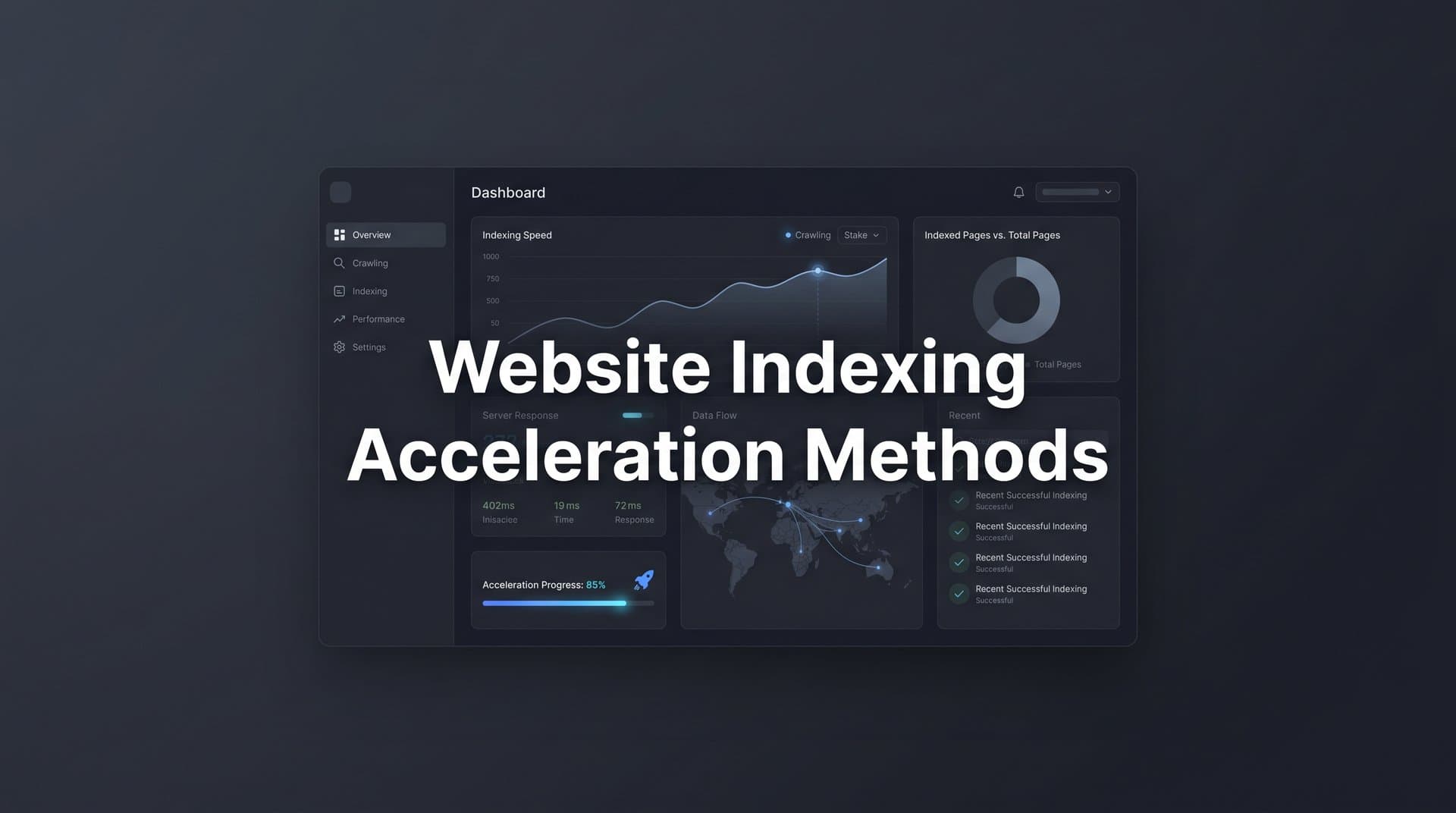
You've just published what might be your best content yet. The research is solid, the writing is sharp, and you're confident it'll resonate with your audience. But there's a problem: search engines haven't noticed it exists. Days turn into weeks, and your carefully crafted page remains invisible to searchers who need exactly what you're offering.
This isn't uncommon. Google processes billions of pages across the web, and without proactive indexing strategies, your content can languish in a discovery queue indefinitely. Slow indexing doesn't just delay organic traffic—it impacts your entire SEO performance, allowing competitors to claim rankings you should own.
The good news? You don't have to wait passively for search engines to find your content. Modern indexing protocols and strategic technical optimizations can dramatically reduce the time between publishing and discovery. From automated submission systems to crawl efficiency improvements, there are concrete steps you can take today to get your pages indexed faster.
In this guide, you'll learn seven proven techniques that work together to accelerate the indexing process. We'll cover everything from auditing your current status to implementing automation that removes manual work from the equation. Let's get your content discovered.
Step 1: Audit Your Current Indexing Status in Google Search Console
Before you can improve your indexing speed, you need to understand where you stand right now. Google Search Console provides the diagnostic tools to establish this baseline, and the Coverage report is your starting point.
Navigate to the Coverage section in Search Console to see a complete breakdown of how Google categorizes your pages. You'll find four main buckets: pages with errors, valid pages with warnings, valid indexed pages, and excluded pages. This snapshot reveals whether your content is actually making it into Google's index or getting stuck along the way.
Pay special attention to the "Discovered - currently not indexed" status. This frustrating category means Google found your pages but decided not to index them yet. Common causes include low perceived value compared to other content on your site, thin content, or insufficient internal linking. If you see dozens or hundreds of pages in this state, you've identified a critical bottleneck that requires slow website indexing solutions.
The URL Inspection tool takes your audit deeper. Enter any specific URL to see exactly how Google views that page—whether it's indexed, when it was last crawled, and whether any issues prevented indexing. This real-time diagnostic tool is invaluable for understanding why individual pages aren't appearing in search results.
Look for patterns in your crawl errors. Are certain sections of your site consistently excluded? Do you have redirect chains that waste crawl resources? Are there pages marked as noindex that should actually be indexable? Document these issues systematically.
Create a simple spreadsheet tracking key metrics: total indexed pages, pages with errors, discovery-to-index timeframes for recent content, and any recurring technical issues. This baseline becomes your reference point. When you implement the strategies in the following steps, you'll be able to measure concrete improvements rather than guessing whether your efforts are working.
Run this audit weekly at first, then monthly once you've stabilized your indexing performance. The data you collect here informs every optimization decision you'll make going forward.
Step 2: Optimize Your XML Sitemap for Crawl Efficiency
Your XML sitemap is essentially a roadmap you provide to search engines, telling them which pages matter most on your site. But many sitemaps are cluttered with URLs that shouldn't be there, creating confusion and wasting crawl resources.
Start by reviewing what's currently in your sitemap. Every URL should be canonical, indexable, and return a 200 status code. Remove any pages marked with noindex tags—there's no point telling search engines about pages you've explicitly asked them not to index. Similarly, eliminate redirected URLs and any duplicate content variations.
The lastmod date (last modification timestamp) is more important than most people realize. When you update this date accurately, you signal to search engines that content has changed and deserves a fresh crawl. Set up your CMS to automatically update lastmod timestamps whenever you edit a page. This simple automation can significantly reduce the time between updates and re-indexing.
Keep your sitemap focused. If you have thousands of low-value pages cluttering your sitemap alongside your priority content, search engines may crawl the wrong pages first. Consider creating separate sitemaps for different content types—one for blog posts, another for product pages, and so on. This segmentation helps you prioritize what gets crawled most frequently. For detailed guidance, explore our website crawling and indexing tools comparison.
Once your sitemap is clean, submit it directly through Google Search Console. Navigate to the Sitemaps section, enter your sitemap URL, and click Submit. Google will begin processing it immediately, which is faster than waiting for crawlers to discover it organically.
Check your sitemap's processing status regularly. Search Console shows you how many URLs were submitted versus how many were actually indexed. A large gap between these numbers indicates problems—perhaps duplicate content issues, crawl errors, or quality concerns that need addressing.
Remember that a well-optimized sitemap doesn't just list your URLs—it actively guides search engines toward your most valuable content with accurate signals about freshness and priority.
Step 3: Implement IndexNow for Instant Search Engine Notification
Traditional indexing relies on search engines discovering your content through crawling—a passive process that can take days or weeks. IndexNow flips this model by allowing you to actively notify search engines the moment you publish or update content.
IndexNow is an open protocol supported by Microsoft Bing, Yandex, and other search engines that enables instant URL submission. When you ping the IndexNow API with a URL, participating search engines receive immediate notification that content has changed. This dramatically reduces the discovery phase of indexing and represents one of the most effective instant website indexing methods available today.
Setting up IndexNow starts with generating an API key. This is simply a text file containing a unique string that you place in your site's root directory. The key verifies that you own the domain and have permission to submit URLs on its behalf. You can generate this key manually or use tools provided by search engines.
The technical implementation involves sending HTTP POST requests to the IndexNow endpoint whenever you publish or update content. The request includes your API key, the URL that changed, and your domain. Most modern CMS platforms either have built-in IndexNow support or plugins that handle this automatically.
For WordPress sites, several plugins integrate IndexNow functionality, pinging search engines automatically when you publish posts or pages. If you're using a custom CMS or static site generator, you can implement IndexNow through API calls in your build process or deployment pipeline.
While IndexNow doesn't currently include Google (which relies on its own submission methods), the protocol covers a significant portion of the search ecosystem. Bing processes billions of searches monthly, and IndexNow integration ensures your content reaches their index almost instantly.
The real power comes from automation. Instead of manually submitting URLs after every content change, IndexNow runs in the background, notifying search engines without any effort on your part. This consistent, immediate notification creates a reliable indexing pipeline that compounds over time.
Monitor your IndexNow submissions through the search engines' webmaster tools to verify that notifications are being received and processed correctly.
Step 4: Build a Strategic Internal Linking Architecture
Search engine crawlers discover content by following links, which means pages without internal links pointing to them—called orphan pages—are nearly invisible. Even if these pages exist in your sitemap, they lack the contextual signals that help search engines understand their importance and relevance.
Start by identifying orphan pages on your site. Use crawling tools or Search Console data to find URLs that have no internal links from other pages. These are your immediate priority for linking integration. Even a single contextual link from an established page can bring an orphan page into the crawl rotation.
When you publish new content, don't just add it to your navigation or blog index and call it done. Link to it from relevant existing pages that already have authority and regular crawl frequency. If you've written a new guide about a topic you've covered before, go back to those older articles and add contextual links to your new, more comprehensive resource. This approach directly addresses website content indexing problems that many sites face.
The hub-and-spoke model works exceptionally well for crawl efficiency. Create pillar content on broad topics, then link to more specific subtopic pages from that hub. This structure helps crawlers understand relationships between content and distributes crawl priority effectively. Your hub page gets crawled frequently, and those crawls naturally extend to the spoke pages linked from it.
Breadcrumb navigation serves a dual purpose: it helps users understand where they are on your site, and it creates a clear hierarchical structure that search engines can follow. Implement breadcrumbs using structured data markup to make these relationships even more explicit.
Contextual links within your content carry more weight than navigational links. When you reference a related concept in an article, link to your page covering that topic in depth. These editorial links signal relevance and importance more effectively than generic "related posts" widgets.
Review your internal linking quarterly. As your site grows, older content can become isolated if you're not intentionally maintaining connections. A strategic internal linking audit ensures that every valuable page remains accessible to both users and crawlers through multiple pathways.
Step 5: Improve Crawl Budget Efficiency Through Technical Fixes
Crawl budget refers to the number of pages search engines will crawl on your site within a given timeframe. This isn't unlimited—Google allocates crawl resources based on your site's size, server response times, and perceived content quality. Wasting crawl budget on low-value pages means fewer resources available for indexing your priority content.
Duplicate content is one of the biggest crawl budget drains. When search engines encounter multiple URLs with identical or substantially similar content, they waste time crawling variations instead of discovering new pages. Implement canonical tags on every page to specify the preferred version of content, consolidating ranking signals and eliminating duplicate crawling.
Broken links and redirect chains create frustrating dead ends for crawlers. Every 404 error represents wasted crawl budget, and chains of redirects (where one redirect points to another, which points to another) force crawlers to make multiple requests to reach the final destination. Audit your site for broken links monthly and fix them immediately. Simplify redirect chains by pointing directly to the final URL. These are common slow website indexing fixes that yield immediate results.
Your robots.txt file controls which parts of your site search engines can access. Review it carefully to ensure you're blocking low-value sections—admin areas, search result pages, filter combinations, and other pages that don't need indexing. Every page you prevent from being crawled frees up budget for pages that matter.
Page speed directly impacts how many pages can be crawled in a session. If your pages load slowly, crawlers will hit fewer URLs before moving on to other sites. Optimize images, minimize JavaScript, enable compression, and leverage browser caching to improve load times. Faster pages mean more efficient crawling and quicker indexing.
Server response time matters too. If your hosting infrastructure struggles under crawl load, search engines may reduce crawl frequency to avoid overwhelming your server. Monitor your server logs for crawl activity patterns and ensure your infrastructure can handle legitimate bot traffic without performance degradation.
Eliminate infinite scroll implementations and pagination structures that create endless URL variations. These can trap crawlers in loops, consuming budget without discovering genuinely new content. Use pagination with clear start and end points, and implement rel="next" and rel="prev" tags to guide crawlers efficiently through paginated content.
Step 6: Use Manual URL Submission for Priority Pages
While automation handles most indexing needs, manual submission through Google Search Console's Request Indexing feature gives you a way to prioritize specific pages that need immediate attention.
Access this feature through the URL Inspection tool. Enter the URL you want indexed, wait for Google to fetch the live version, then click "Request Indexing." Google adds the URL to a priority queue for crawling, typically processing these requests within hours or days rather than weeks. This is essential for anyone looking to speed up Google indexing process for critical content.
Use manual submission strategically, not habitually. This feature is designed for time-sensitive content—breaking news, product launches, critical updates to existing pages, or fixes to previously excluded content. It's not meant for routine publishing workflows where automated methods work better.
Google imposes daily limits on manual indexing requests to prevent abuse. The exact number isn't publicly disclosed, but most sites can submit a handful of URLs daily. Exceeding this limit results in temporary blocks, so reserve manual submission for pages that genuinely warrant immediate indexing.
Prioritize pages that drive business value. If you've published a comprehensive guide targeting a high-value keyword, or updated a product page for a limited-time offer, manual submission ensures these pages reach the index quickly. Don't waste quota on low-priority pages that will eventually get indexed through normal crawling.
Manual submission works best when combined with the other strategies in this guide. If you've already optimized your sitemap, implemented IndexNow, and built strong internal linking, manual submission becomes the finishing touch for your most critical content rather than a primary indexing strategy.
Track which pages you submit manually and monitor their indexing status over the following days. This data helps you understand typical indexing timeframes for priority content and refine your submission strategy over time.
Step 7: Automate Your Indexing Workflow for Consistent Results
Manual indexing strategies work, but they don't scale. As your content production increases, you need automated systems that handle indexing without constant oversight. This is where the real efficiency gains happen.
Start with automated sitemap updates. Configure your CMS to regenerate your XML sitemap every time you publish or update content. This ensures search engines always have access to your latest URLs without you manually editing sitemap files. Most modern platforms include this functionality natively or through plugins.
Integrate indexing tools directly with your content management system. Platforms that combine content creation with automated IndexNow submissions and sitemap updates eliminate the gap between publishing and notification. When you hit "publish," multiple indexing signals go out simultaneously—your sitemap updates, IndexNow pings fire, and your internal linking structure adjusts automatically. Explore the automated website indexing tools available to find the right fit for your workflow.
Create a monitoring routine that catches indexing issues before they become problems. Set up automated alerts in Search Console that notify you when crawl errors spike, when large numbers of pages move to "Discovered - currently not indexed," or when your sitemap processing fails. Early detection means faster fixes.
Build a dashboard that tracks your key indexing metrics over time. Monitor average time-to-index for new content, percentage of published pages that reach the index within 48 hours, crawl error rates, and sitemap coverage. These metrics reveal whether your automation is working and highlight areas needing adjustment.
Consider tools that automate the entire workflow from content creation through indexing. Platforms like Sight AI combine content generation with automatic IndexNow integration and sitemap management, removing manual steps from the publishing process. When your CMS automatically handles technical SEO tasks, you can focus on creating valuable content rather than managing indexing mechanics.
Schedule regular technical audits even when automation is running smoothly. Quarterly reviews catch edge cases that automation might miss—new site sections that need sitemap inclusion, changes in search engine protocols, or emerging indexing issues specific to your industry.
Document your automated workflows so team members understand what happens when content publishes. This transparency prevents duplicate efforts and ensures everyone knows which indexing tasks are handled automatically versus which require manual intervention.
The goal is a system where publishing content automatically triggers every indexing signal needed for fast discovery, without you thinking about it. This consistency compounds over time, training search engines to crawl your site more frequently because they know you're a reliable source of fresh, properly-submitted content.
Your Indexing Acceleration Checklist
You've now got a complete framework for dramatically reducing the time between publishing content and seeing it appear in search results. Let's consolidate these seven steps into a practical checklist you can use to audit your current setup and implement improvements systematically.
Technical Foundation: Run a complete Coverage audit in Google Search Console to identify indexing issues. Clean your XML sitemap to include only indexable, canonical URLs with accurate lastmod dates. Implement canonical tags across your site to eliminate duplicate content crawling. Fix broken links and simplify redirect chains to preserve crawl budget.
Proactive Notification: Set up IndexNow with proper API key verification and automatic pinging when content changes. Submit your sitemap directly through Search Console rather than waiting for discovery. Use manual URL submission strategically for time-sensitive, high-value pages.
Structural Optimization: Eliminate orphan pages by building contextual internal links from established content. Create hub-and-spoke content architectures that distribute crawl priority effectively. Implement breadcrumb navigation with structured data markup.
Automation: Configure automatic sitemap regeneration when content publishes or updates. Integrate IndexNow automation into your publishing workflow. Set up monitoring alerts for crawl errors and indexing issues. Track time-to-index metrics to measure improvement over time.
The beauty of this approach is that these strategies reinforce each other. Better internal linking improves crawl efficiency, which helps search engines discover your sitemap updates faster. IndexNow notifications combined with clean sitemaps create multiple discovery pathways. Technical fixes preserve crawl budget for your priority content.
Consistent application matters more than perfection. Implement these steps progressively, starting with the technical foundation and building toward full automation. Even partial implementation will improve your indexing speed compared to passive waiting.
Modern indexing doesn't have to be a mystery or a waiting game. With the right combination of technical optimization, proactive notification, and automated workflows, you can reliably get content indexed in hours or days rather than weeks. Start tracking your AI visibility today and see exactly where your brand appears across top AI platforms—while automating IndexNow submissions and sitemap updates to ensure your content gets discovered faster than ever.