Picture this: A potential customer opens ChatGPT and types, "What's the best marketing analytics platform for startups?" Within seconds, they receive a confident recommendation—maybe yours, maybe your competitor's. You'll never see this interaction in Google Analytics. It won't show up in your search console. There's no referral traffic to track, no keyword ranking to monitor. Yet this single conversation could represent a lost customer or a new conversion, and you have absolutely no idea it happened.
This scenario plays out millions of times daily across ChatGPT, Claude, Perplexity, and other AI platforms. Users have fundamentally changed how they discover brands, moving from traditional search engines to conversational AI assistants that synthesize recommendations instantly. The problem? Most marketing teams operate with complete blindness to this channel. They optimize for Google while AI models form opinions about their brand based on information they can't see or influence.
Real time AI model monitoring solves this visibility gap. It's the practice of systematically tracking how AI platforms mention, recommend, and represent your brand across different prompts and contexts. Think of it as the AI equivalent of rank tracking—except instead of monitoring your position on a search results page, you're monitoring whether AI assistants recommend you at all, what they say when they do, and how your visibility compares to competitors. For brands serious about organic growth in 2026, this isn't a nice-to-have. It's foundational intelligence.
The Mechanics Behind AI Model Monitoring
Real time AI model monitoring works by systematically querying multiple AI platforms with relevant prompts, then analyzing the responses for brand mentions, sentiment, and competitive context. The process sounds straightforward, but the technical execution requires sophistication to deliver actionable insights.
At its core, monitoring systems send carefully crafted prompts to platforms like ChatGPT, Claude, Perplexity, Gemini, and others—the same questions your potential customers ask. "What are the best email marketing tools?" "Which CRM should I choose for a remote team?" "What project management software do agencies recommend?" These queries trigger responses that reveal how AI models perceive and recommend brands within specific contexts.
The critical difference between static audits and continuous real-time tracking lies in how AI models evolve. Unlike a webpage that remains static until you update it, AI responses can shift as models receive updates, as new training data influences their knowledge base, or as web sources they reference change. A brand mentioned positively in January might disappear from recommendations by March. A competitor not mentioned in February could dominate responses by April. Without continuous monitoring, you're working with outdated intelligence.
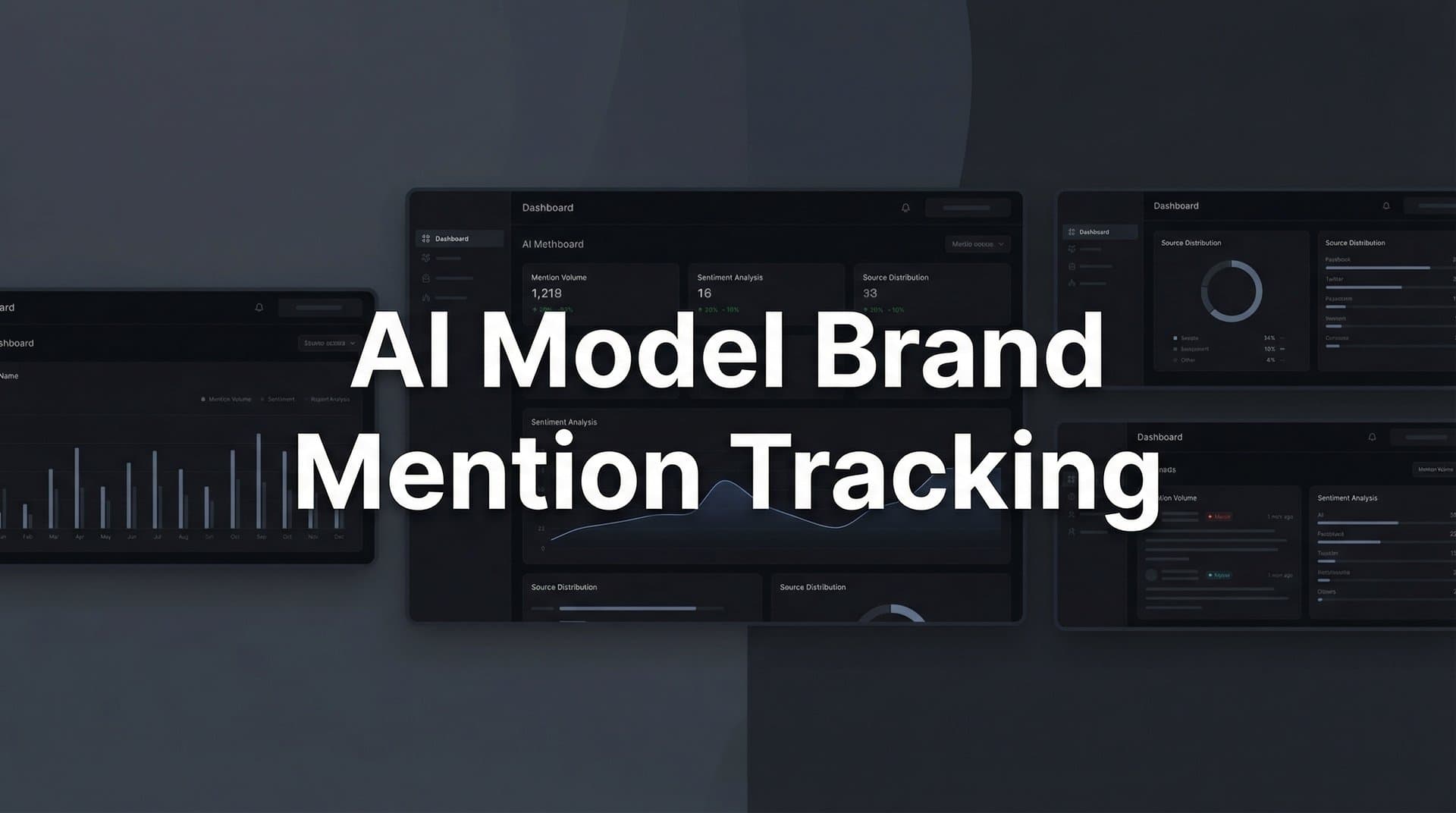
Modern monitoring systems capture several key data points from each AI interaction. Sentiment analysis determines whether mentions are positive, neutral, or negative—crucial for reputation management. Recommendation context reveals whether your brand appears as a top choice, an alternative option, or buried in a longer list. Competitor mention tracking shows which rivals appear alongside you and how AI positions them relative to your offering. Prompt variation analysis tests how different phrasings affect your visibility, helping identify which questions trigger mentions and which leave you invisible.
The technical architecture behind effective monitoring involves API integrations where available, web automation where necessary, and natural language processing to extract structured insights from conversational responses. The goal isn't just to collect mentions—it's to transform unstructured AI conversations into quantifiable metrics that inform strategy. How often does your brand appear? In what contexts? With what sentiment? Against which competitors? These answers only emerge through systematic, ongoing tracking across multiple platforms.
Why Traditional SEO Tools Miss the AI Visibility Gap
Your search console shows thousands of impressions. Your rank tracker confirms you're ranking on page one for target keywords. Your analytics dashboard displays healthy organic traffic. Yet you could be losing significant market share to competitors who dominate AI recommendations, and none of your existing tools would alert you to the problem.
Traditional SEO tools were built for a world where visibility meant ranking on search engine results pages. They excel at showing you where your website appears when someone types a query into Google. But they're completely blind to conversational AI platforms. When a user asks ChatGPT for software recommendations, there's no SERP to rank on, no click to track, no session to analyze. The entire discovery and evaluation process happens inside the AI interface, invisible to conventional analytics. Understanding LLM monitoring vs traditional SEO is essential for modern marketers.
This creates what we call the discovery problem. Imagine a marketing director searching for "best project management software for creative teams." If they use Google, you can track impressions, clicks, and conversions through your analytics stack. You know they found you, how they engaged, whether they converted. But if they ask the same question in Claude or Perplexity, and the AI recommends three competitors without mentioning you, that potential customer vanishes into a black hole. You never knew they existed, never had a chance to compete for their business, and have no data suggesting you should adjust your strategy.
The competitive intelligence gap compounds the problem. Your competitors might be investing heavily in AI visibility—creating content that gets cited by AI models, optimizing their information architecture to appear in AI training data sources, or using monitoring tools to refine their approach. They're gaining market share through a channel you're not tracking. You might attribute declining conversions to market conditions or increased competition in traditional search, never realizing that AI platforms are steering potential customers toward rivals before they ever reach Google.
Search console can't tell you that ChatGPT recommends your competitor 80% of the time when users ask about your product category. Rank trackers can't alert you when Claude starts mentioning negative sentiment about your brand. Analytics tools can't reveal that Perplexity positions you as a budget option while presenting competitors as premium choices. These insights require dedicated AI monitoring because they exist in a fundamentally different channel with different mechanics and different data sources.
Building Your AI Monitoring Framework
Effective AI monitoring starts with identifying the prompts that matter most for your business. These aren't random queries—they're the specific questions your target audience asks when evaluating solutions in your category. A B2B SaaS company needs different prompt strategies than an e-commerce brand or a local service business.
Begin by mapping the customer journey through conversational AI. What questions do prospects ask at the awareness stage? "What types of tools help with X problem?" At the consideration stage? "What are the best platforms for Y use case?" At the decision stage? "How does Brand A compare to Brand B?" Each stage requires different prompts to monitor. The awareness stage reveals whether AI models mention you as a solution category participant. Consideration stage prompts show if you make the shortlist. Decision stage queries indicate how AI positions you against specific competitors.
Industry-specific prompts matter enormously. If you're a marketing automation platform, you need to track prompts about email marketing, lead nurturing, campaign management, and integration capabilities. If you're a project management tool, monitor queries about team collaboration, task tracking, remote work solutions, and industry-specific workflows. Generic monitoring misses the nuanced contexts where your brand should appear. Implementing AI model prompt tracking ensures you capture these critical variations.
Once you've identified your prompt portfolio, set up tracking across the major AI platforms where your audience seeks recommendations. ChatGPT brand monitoring is essential since it dominates conversational AI usage. Claude attracts a technical and professional audience. Perplexity appeals to users who want sourced answers. Gemini reaches Google's user base. Platform selection should align with where your target customers actually go for recommendations, not just where you assume they might look.
Establishing baseline metrics creates the foundation for measuring progress. Your AI Visibility Score quantifies how often your brand appears across tracked prompts—think of it as your share of voice in AI recommendations. Mention frequency tracks the raw number of times AI models reference your brand. Sentiment trends reveal whether mentions lean positive, neutral, or negative over time. Share of voice compares your visibility to key competitors, showing whether you're gaining or losing ground in AI recommendations.
The monitoring framework isn't static. As your product evolves, as competitors shift positioning, as new use cases emerge, your prompt portfolio needs updating. Quarterly reviews ensure you're tracking the queries that matter most right now, not just the ones that mattered when you started monitoring. This adaptive approach keeps your intelligence relevant and actionable.
From Data to Action: Interpreting AI Visibility Insights
Raw monitoring data means nothing without interpretation. The real value emerges when you understand what AI visibility patterns reveal about your market position and content strategy. Learning to read these signals transforms monitoring from passive observation into active competitive advantage.
Sentiment patterns tell a story about your content gaps and reputation. When AI models consistently mention your brand with neutral sentiment—simply listing you among options without qualitative assessment—it often indicates insufficient distinctive information. The AI knows you exist but lacks compelling details to recommend you strongly. Negative sentiment mentions warrant immediate investigation. What information sources are AI models drawing from? Are there unaddressed customer complaints, outdated reviews, or critical articles influencing AI perception? Positive sentiment mentions reveal your strengths as AI models understand them, showing which aspects of your offering resonate most clearly. Implementing sentiment tracking in AI responses helps you catch these patterns early.
Prompt analysis uncovers why competitors get recommended instead of you. If ChatGPT mentions rivals when users ask about "enterprise-grade solutions" but mentions you for "affordable options," that positioning might not align with your actual product tier. If Claude recommends competitors for "teams needing advanced analytics" but overlooks you despite having robust analytics features, you've identified a content gap. The AI doesn't know about your capabilities because the information isn't prominent in sources it references.
Competitive context matters as much as raw mentions. Being mentioned alongside premium competitors positions you differently than appearing with budget alternatives. If AI models consistently group you with established category leaders, that association builds credibility. If they mention you after listing several competitors, you're fighting for consideration rather than leading it. Understanding how AI models choose brands to recommend helps you interpret these positioning patterns.
Temporal trends reveal how your AI visibility evolves. A declining mention rate might correlate with competitors publishing more content, with changes in AI model training data, or with shifts in how your category is discussed online. An improving sentiment trend might follow positive customer reviews, successful case studies, or thought leadership content that establishes expertise. Tracking these patterns over weeks and months shows whether your efforts to improve AI visibility are working.
The most valuable insight often comes from absence. When monitoring reveals that AI models don't mention your brand for prompts where you should be highly relevant, you've identified a critical opportunity. These gaps show exactly where your content strategy needs focus. If Perplexity never recommends you for "best tools for remote teams" despite your strong remote collaboration features, you need content that explicitly addresses remote work use cases with clear, AI-parseable information.
Connecting AI Monitoring to Content Optimization
AI monitoring becomes truly powerful when it directly informs your content strategy. The insights you gather reveal exactly what information gaps prevent AI models from mentioning you, which topics drive visibility, and how to structure content for maximum AI citation potential.
Real-time monitoring data exposes content opportunities with precision. When you discover that AI models recommend competitors for "integration-focused solutions" but never mention your extensive integration library, you've identified a specific content need. Create comprehensive integration guides, comparison articles, and use case documentation that explicitly highlights your integration capabilities. When monitoring shows that Claude mentions you for basic use cases but not advanced ones, develop in-depth technical content demonstrating sophisticated applications.
The feedback loop between monitoring and content creation accelerates improvement. Publish optimized content addressing identified gaps. Track how AI responses change over the following weeks. If your new integration-focused articles lead to increased mentions in integration-related prompts, you've confirmed the strategy. If visibility doesn't improve, refine your approach—perhaps the content needs different structure, clearer information architecture, or broader distribution to sources AI models reference. Learning how AI models select content sources informs this optimization process.
Content optimization for AI visibility differs from traditional SEO in important ways. While both benefit from clear, comprehensive information, AI-optimized content needs explicit statements of capabilities, benefits, and use cases. AI models parse information literally—they work best with direct answers to common questions rather than marketing copy that hints at benefits. Structure content with clear headings, specific feature descriptions, and concrete examples that AI can extract and synthesize into recommendations.
Integrating monitoring with content generation creates a complete AI visibility strategy. Platforms like Sight AI combine multi-model AI presence monitoring across ChatGPT, Claude, Perplexity, and other AI models with specialized content generation tools designed to improve AI visibility. The monitoring component reveals where you need better visibility. The content generation component produces SEO and GEO-optimized articles that help your brand get mentioned. The indexing component ensures new content gets discovered quickly through IndexNow integration and automated sitemap updates.
This integrated approach solves the timing problem that plagues traditional content strategies. Publishing great content doesn't help if AI models don't know it exists or can't access it when forming recommendations. Automated indexing ensures search engines and AI platforms discover your content immediately. Continuous monitoring shows when that content starts influencing AI recommendations, confirming that your visibility efforts are working. The entire cycle—from identifying gaps to publishing solutions to measuring impact—accelerates dramatically when these components work together.
Taking Control of Your AI Presence
Real time AI model monitoring represents a fundamental shift in how brands understand their market visibility. For decades, marketers could rely on search engine rankings and website analytics to gauge their organic presence. Those tools remain valuable, but they're no longer sufficient. The rise of conversational AI as a primary discovery channel demands new intelligence capabilities.
Brands that embrace AI monitoring gain several critical advantages. They understand exactly how AI platforms represent them to potential customers. They catch reputation issues before they compound. They identify content opportunities with precision rather than guessing what might work. They track competitive positioning in real time, responding to shifts before market share erodes. Most importantly, they operate with confidence rather than blindness in the channel that increasingly drives purchase decisions.
The alternative—continuing to optimize only for traditional search while ignoring AI visibility—becomes less viable each month. As more users turn to ChatGPT, Claude, and Perplexity for recommendations, the invisible loss of potential customers accelerates. Your competitors who monitor and optimize for AI visibility capture market share you don't even know you're losing. The gap widens until traditional metrics show declining performance, but by then you're playing catch-up in a channel you should have been building in from the start.
Building an AI monitoring practice doesn't require abandoning existing SEO and content strategies. It complements them. The content that performs well in traditional search often improves AI visibility when optimized appropriately. The audience research that informs keyword targeting also reveals which prompts to monitor. The competitive analysis that guides positioning strategy applies equally to AI recommendations. Exploring LLM brand monitoring tools helps you find the right solution for your needs. You're not replacing your existing approach—you're expanding it to cover the full spectrum of how customers now discover brands.
Stop guessing how AI models like ChatGPT and Claude talk about your brand—get visibility into every mention, track content opportunities, and automate your path to organic traffic growth. Start tracking your AI visibility today and see exactly where your brand appears across top AI platforms.