Picture this: A potential customer needs a solution you offer. But instead of typing keywords into Google, they open ChatGPT and ask a question. The AI responds instantly with a detailed answer—and your brand isn't mentioned once. Meanwhile, your competitor gets cited as the recommended solution.
This scenario is playing out thousands of times daily across industries. The fundamental way people search for information has shifted beneath our feet, and many marketers are still optimizing for yesterday's game.
The challenge isn't that traditional SEO has died—it's that you now need visibility in two parallel universes. Your content must rank in search engines AND get cited by AI models. Different rules. Different metrics. Different optimization strategies. This guide breaks down exactly how AI is transforming organic search and what you need to do about it right now.
The New Search Landscape: Where AI Meets Traditional SEO
Search behavior has fundamentally changed. Users increasingly bypass search engines entirely, going straight to AI assistants for answers. When someone asks ChatGPT about project management tools or Claude about content marketing strategies, they receive synthesized responses drawn from the AI's training data and real-time knowledge—not a list of blue links to click.
This creates a visibility problem traditional SEO never had to solve.
In traditional search, you optimize for rankings. Get to position one for your target keyword, and you win traffic. The rules were clear: build authority, earn backlinks, create quality content, optimize technical elements. Success meant appearing on page one of search results.
AI-powered search works differently. There are no "rankings" in the traditional sense. When Perplexity answers a query, it synthesizes information from multiple sources and may cite three, five, or zero specific websites. When Google's AI Overview appears at the top of search results, it provides direct answers that can eliminate the need to click through to any website. Understanding how AI search engines work is essential for adapting your strategy.
The stakes are clear: brands need dual visibility. You still need to rank in traditional search engines because billions of searches happen there daily. But you also need AI models to know about you, understand what you do, and cite you as an authoritative source when relevant queries arise.
Think of it like this: traditional SEO gets you on the library shelf. AI visibility ensures you get quoted when someone asks the librarian for recommendations. Both matter, but they require different approaches.
The marketers adapting fastest are those treating AI visibility as a parallel channel requiring its own strategy, monitoring, and optimization. They're tracking not just where they rank, but how AI models talk about their brand—the context, sentiment, and competitive positioning within AI-generated responses.
This dual-channel reality is permanent. As AI assistants become more capable and integrated into daily workflows, the percentage of searches that never touch a traditional search engine will only grow. Your organic strategy must evolve to capture visibility in both worlds.
Five Ways AI Is Reshaping Search Engine Algorithms
Google's integration of AI Overviews has fundamentally altered the search results page. When AI-generated answers appear at the top of results, they answer user queries directly—often reducing click-through rates to traditional organic listings. Users get their answer without clicking, which means even top-ranking pages see less traffic than they would have received previously.
This shift forces a strategic question: how do you optimize for visibility when the goal isn't just ranking, but being cited within the AI-generated answer itself?
The second major change involves how search algorithms understand intent. Traditional SEO focused heavily on keyword matching—if your page contained the right keywords with the right density and placement, you had a fighting chance. AI-powered algorithms go deeper, analyzing the actual intent behind queries and evaluating whether your content truly satisfies that intent.
Someone searching "best CRM for small teams" might have very different needs than someone searching "CRM software." AI algorithms are increasingly sophisticated at distinguishing these nuances and surfacing content that matches the specific context, not just the keywords.
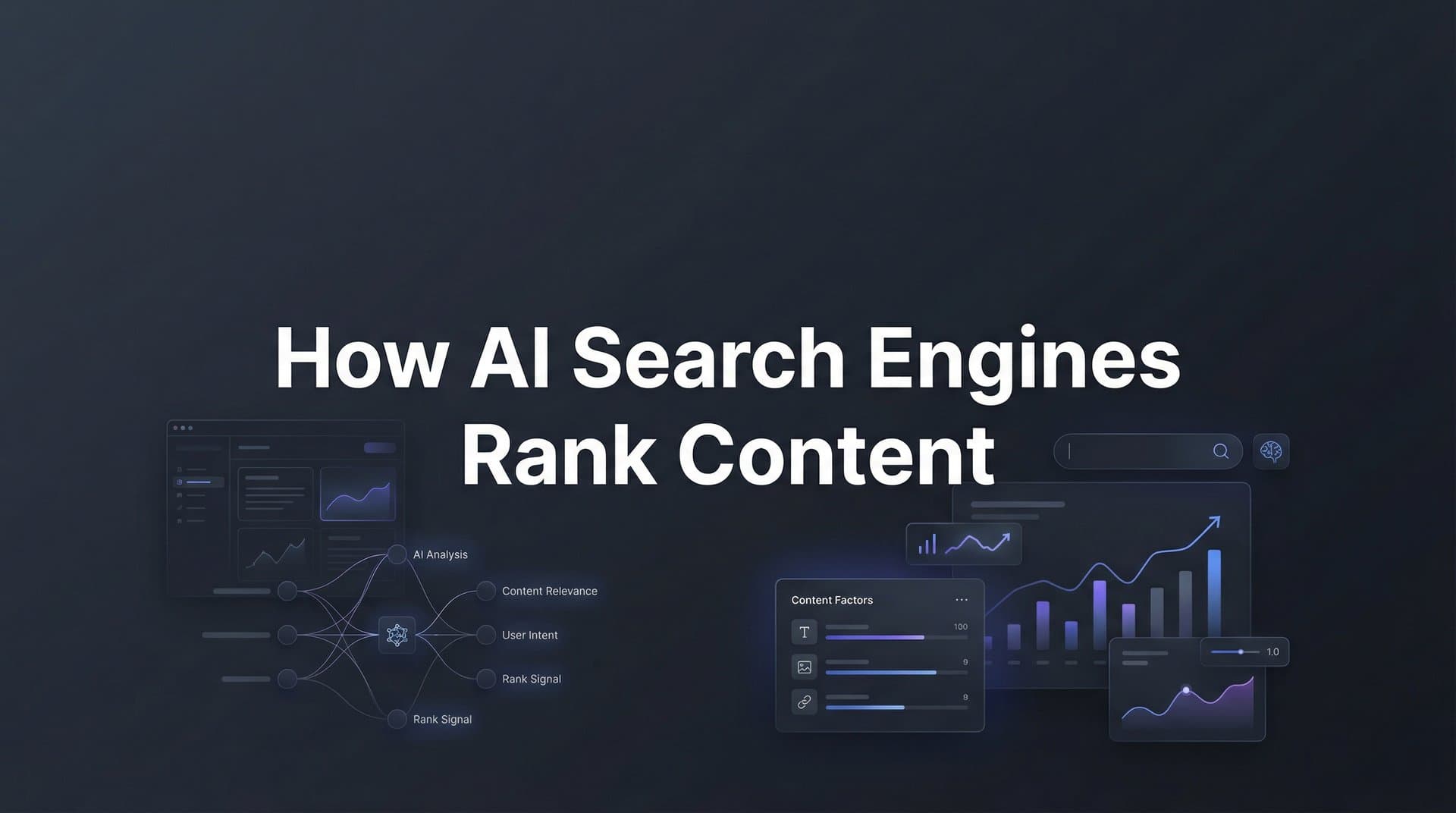
Content quality evaluation has become more nuanced. AI systems analyze E-E-A-T signals—Experience, Expertise, Authoritativeness, and Trustworthiness—in ways that go beyond simple metrics. They can assess whether content demonstrates genuine expertise, whether claims are supported by evidence, and whether the overall presentation suggests authority in the subject matter. Learning how AI search engines rank content helps you align with these quality signals.
Here's where it gets interesting: AI can evaluate content comprehensiveness at scale. It can determine whether your guide on email marketing actually covers the topic thoroughly or just scratches the surface. It can identify whether you've addressed common questions, provided actionable guidance, and demonstrated depth of knowledge. Thin content that once might have ranked on keyword optimization alone now struggles against AI's ability to assess substantive value.
The fourth shift involves semantic understanding. AI-powered search algorithms grasp relationships between concepts, synonyms, and related topics in ways previous algorithms couldn't. This means you can rank for queries that don't contain your exact keywords if your content thoroughly addresses related concepts. It also means keyword stuffing is not just ineffective—it's a signal of low-quality content that AI algorithms can easily identify.
Finally, user engagement signals have become more sophisticated. AI algorithms can better interpret whether users found what they needed, even when they don't click through to your site. If AI Overviews cite your content and users don't need to visit your page because the answer was sufficient, that's actually a positive signal about your content's quality—even though you lost the click.
These changes require rethinking content strategy from the ground up. The question isn't just "what keywords should I target?" but "what information does my audience truly need, and how can I provide it in ways that both search engines and AI models recognize as authoritative?"
Zero-Click Searches and the Rise of AI Answers
Zero-click searches represent the most significant challenge to traditional organic traffic strategies. When AI provides a complete answer directly in search results or through an AI assistant, users have no reason to click through to your website. The information they needed has already been delivered.
This isn't a theoretical problem. Many queries now receive direct answers through Google's AI Overviews, featured snippets, or AI assistants like ChatGPT and Claude. Users get their questions answered without generating a single click to the content sources that made those answers possible.
The traffic implications are real, but so is the opportunity.
When AI models cite sources in their responses, those citations represent a new form of visibility. If ChatGPT recommends your product when someone asks for solutions in your category, that's valuable even without a click. If Perplexity cites your research when answering industry questions, you're building authority even if users don't visit your site immediately. Discovering how to get featured in AI search results becomes a critical skill.
The strategy shift becomes clear: optimize for being cited, not just clicked.
Earning citations in AI-generated responses requires content that AI models can easily parse, understand, and reference. Clear structure matters enormously. Well-organized content with logical hierarchies, descriptive headings, and coherent flow makes it easier for AI to extract and synthesize information accurately.
Authoritative content formatting plays a crucial role. When you make clear claims supported by evidence, define terms precisely, and present information in accessible ways, AI models can more confidently cite your content. Ambiguous or poorly structured information is less likely to be referenced because AI systems prioritize clarity and accuracy.
Structured data implementation becomes more important in this context. While schema markup has always been valuable for SEO, it now serves an additional purpose: helping AI models understand your content's context, relationships, and key information. Properly structured data about products, articles, reviews, and other content types makes it easier for AI to accurately represent your information.
Think about citation-worthy content like you would academic sources. The best-cited academic papers are those that clearly state their findings, support claims with evidence, and present information in ways other researchers can easily reference. The same principles apply to content you want AI models to cite.
This means being direct and definitive when you have expertise to share. Instead of hedging with vague language, state your position clearly. Instead of burying key insights in rambling paragraphs, present them prominently. Instead of assuming readers will infer connections, make relationships between concepts explicit.
The paradox of zero-click searches is this: you may get less direct traffic, but you can build more brand authority. When AI consistently cites your brand as an authoritative source, you establish credibility that eventually drives traffic through other channels—direct visits, branded searches, and recommendations.
Content Optimization for Both Search Engines and AI Models
Creating content that performs well in both traditional search and AI citations requires a balanced approach. The good news: many optimization strategies serve both purposes simultaneously.
Comprehensive coverage remains fundamental. Both search algorithms and AI models favor content that thoroughly addresses topics rather than providing surface-level overviews. When you create a guide, make it genuinely complete. Answer the obvious questions and the nuanced ones. Address common misconceptions. Provide context that helps readers understand not just what to do, but why it matters.
Content structure deserves careful attention. Use clear hierarchies with descriptive headings that accurately reflect the content beneath them. This helps search engines understand your page organization while making it easier for AI models to extract specific information. Someone asking an AI about a particular aspect of your topic should be able to get an accurate answer because your content structure makes that information clearly identifiable. Following best practices for optimizing content for AI search ensures your structure works across both channels.
Formatting techniques matter more than many marketers realize. Short paragraphs improve readability for humans while making content easier for AI to parse. Bold text on key concepts helps both readers and AI models identify important information quickly. Clear topic transitions create logical flow that AI can follow when synthesizing information.
Here's a practical approach that works across both channels: write primarily for human readers, then optimize for machine understanding. Start with content that genuinely helps your audience. Then add structural elements—headings, formatting, schema markup—that help both search engines and AI models understand and reference that content effectively.
Question-and-answer formatting proves particularly effective. When you explicitly state common questions and provide clear answers, you create content that's perfect for both featured snippets and AI citations. Someone asking ChatGPT a question your content addresses can receive an accurate answer because you've formatted information in a way AI can easily extract.
Authority signals work across both channels as well. When you cite credible sources, link to authoritative references, and demonstrate expertise through detailed explanations, you build trust with both search algorithms and AI models. The key is being genuinely authoritative, not just appearing authoritative through superficial signals.
Avoid optimization tactics that serve one channel at the expense of the other. Keyword stuffing might have worked for old-school SEO, but it creates content that AI models recognize as low-quality. Conversely, writing only for AI citations without considering search optimization means missing traffic from traditional search, which still drives significant volume.
The sweet spot is content that would satisfy a knowledgeable human reader while being structured in ways that machines can easily understand and reference. This dual optimization isn't about gaming systems—it's about making genuinely valuable content accessible to all the ways people now discover information.
Tracking Your Brand's AI Visibility: Beyond Traditional Rankings
Traditional SEO analytics tell you where you rank for target keywords. But they can't tell you how AI models talk about your brand, whether you're being cited in AI-generated responses, or how your visibility compares to competitors in AI contexts.
This visibility gap creates a blind spot in your marketing strategy.
Monitoring AI mentions requires a different approach than tracking search rankings. You need to understand not just if you're mentioned, but the context of those mentions. When ChatGPT discusses your industry, does your brand come up? When Claude answers questions about solutions you provide, are you recommended? When Perplexity synthesizes information about your market, do you appear as an authoritative source? Learning how to monitor AI search visibility is essential for closing this gap.
Three key metrics matter for AI visibility: citation frequency, sentiment, and competitive positioning.
Citation frequency measures how often AI models mention or reference your brand when relevant topics arise. Unlike search rankings that update based on algorithm changes, AI citations reflect how well your brand is represented in the training data and knowledge bases these models access. Increasing citation frequency means becoming a more prominent reference point in AI-generated responses.
Sentiment analysis reveals how AI models characterize your brand. Are mentions positive, neutral, or negative? Do AI responses position you as a leader, an alternative, or barely mention you at all? Understanding sentiment helps you identify areas where your brand positioning might need strengthening or where misconceptions exist in AI-generated content.
Competitive positioning shows where you stand relative to competitors in AI citations. If someone asks an AI assistant for recommendations in your category, which brands get mentioned first? Which get the most detailed descriptions? Which are positioned as premium options versus budget alternatives? This competitive intelligence is as valuable as traditional SERP analysis, but it requires different monitoring tools.
Building a monitoring system for AI visibility means regularly testing how major AI platforms respond to queries relevant to your business. This includes direct brand queries, category questions, problem-solution searches, and competitive comparisons. The goal is understanding your presence across the AI landscape, not just in traditional search results.
Documentation becomes crucial. Track how AI responses change over time. Note when your brand starts appearing in new contexts or when competitors gain prominence in AI citations. This historical data helps you understand what content and optimization efforts are actually moving the needle for AI visibility. Implementing a system to track AI search rankings provides the data foundation you need.
The brands succeeding in this new environment treat AI visibility monitoring as seriously as they treat traditional SEO analytics. They've built systems to track, analyze, and optimize for both channels because they understand that visibility in AI-generated responses increasingly influences customer awareness and consideration.
Future-Proofing Your Organic Strategy for AI-Driven Search
The search landscape will continue evolving as AI capabilities advance. Voice search through AI assistants is growing. Multimodal AI that can analyze images, video, and text together is emerging. Conversational search interfaces that remember context across multiple queries are becoming more sophisticated.
Each evolution changes how people discover information and how brands can earn visibility.
Voice search optimization matters increasingly as users ask AI assistants questions conversationally rather than typing keywords. This means content needs to answer natural language questions directly. When someone asks their AI assistant "what's the best way to improve email deliverability," your content should address that exact question in clear, conversational language—not just optimize for the keyword "email deliverability."
Multimodal search creates new opportunities and challenges. AI models that can analyze images alongside text might surface your brand based on visual content, product imagery, or infographics—not just written content. This expands the optimization landscape beyond traditional text-based SEO to include visual content strategy.
Conversational search patterns require content that addresses follow-up questions and related topics. Users might ask an initial question, then drill deeper based on the AI's response. Content that anticipates these question chains and provides comprehensive coverage of related topics will perform better in conversational search contexts. Mastering how to optimize for generative search prepares you for these evolving patterns.
Building adaptable content systems means creating frameworks that can evolve with AI capabilities rather than rigid optimization tactics tied to current algorithms. Focus on fundamentals that will remain valuable regardless of how search technology changes: authoritative expertise, comprehensive coverage, clear communication, and genuine value for your audience.
Start implementing dual-optimization strategies now. Every piece of content you create should consider both traditional search visibility and AI citation potential. Structure content clearly. Make claims you can support. Provide comprehensive coverage. Build genuine authority in your subject matter. These practices serve both channels and will remain valuable as search continues evolving.
Invest in monitoring capabilities that track both traditional rankings and AI visibility. Understanding your presence across both channels helps you allocate resources effectively and identify opportunities others might miss. The brands that thrive in AI-driven search will be those that measure and optimize for this dual reality. Exploring how to improve AI search visibility gives you actionable tactics to implement immediately.
The future of organic search isn't either traditional SEO or AI optimization—it's both, integrated into a comprehensive visibility strategy. The sooner you adapt to this reality, the stronger your competitive position becomes.
Putting It All Together
AI hasn't replaced organic search—it has fundamentally expanded what organic visibility means. Your brand needs to be discoverable in traditional search results and cited in AI-generated responses. Different channels, different optimization approaches, but equally critical for long-term organic traffic growth.
The marketers winning in this environment are those who recognize this dual reality early. They're tracking how AI models discuss their brand alongside traditional keyword rankings. They're creating content optimized for both search algorithms and AI citations. They're building monitoring systems that reveal visibility across all channels where their audience discovers information.
This isn't a temporary shift requiring short-term tactical adjustments. This is the new normal for organic search. As AI assistants become more integrated into daily workflows and search behavior continues evolving, the importance of AI visibility will only increase. The brands that establish strong AI presence now will have significant advantages over those that wait.
The action steps are clear: assess your current AI visibility, understand how major AI platforms currently discuss your brand, identify gaps where competitors appear but you don't, and start optimizing content for both traditional search and AI citations. Build monitoring systems that track both channels. Create content that serves both purposes. Measure success across the full visibility spectrum.
Stop guessing how AI models like ChatGPT and Claude talk about your brand—get visibility into every mention, track content opportunities, and automate your path to organic traffic growth. Start tracking your AI visibility today and see exactly where your brand appears across top AI platforms.
The future of organic search is here. The question isn't whether to adapt, but how quickly you can build the systems and strategies needed to succeed in this dual-channel reality. Your competitors are already making these moves. The time to act is now.