You're sitting in a budget meeting, trying to justify a six-figure investment in AI SEO tools. The CFO wants numbers. Marketing wants guarantees. And you're staring at vendor proposals that range from $500 per month to $50,000 annually—sometimes for what looks like similar capabilities on the surface.
Welcome to enterprise AI SEO pricing in 2026, where traditional SaaS pricing models collide with AI compute costs, and new capability categories like AI visibility tracking create entirely new budget line items. The challenge isn't just finding the right tool—it's understanding what you're actually paying for and building a business case that survives procurement scrutiny.
This guide breaks down the pricing structures you'll encounter, what separates budget tools from enterprise platforms, and how to calculate ROI before signing contracts that could lock you in for years. Whether you're evaluating your first AI SEO investment or consolidating a fragmented tool stack, understanding the pricing landscape helps you make decisions that deliver measurable business outcomes.
Understanding the Three Core Pricing Models
Enterprise AI SEO pricing typically follows one of three fundamental structures, each with distinct advantages and hidden cost implications. The model a vendor uses often reveals how they think about value delivery and what drives their costs.
Per-seat licensing remains the most familiar model for enterprise buyers. You pay a fixed amount per user, typically ranging from $200 to $2,000 per seat monthly depending on feature access. This model works well when you have a defined team size and predictable usage patterns. The challenge? AI SEO tools often require access across content teams, SEO specialists, and executives who need reporting visibility. That "small team" of five users can quickly expand to twenty once you factor in everyone who needs platform access.
Usage-based pricing ties costs directly to consumption—content pieces generated, API calls made, or pages analyzed. Many vendors position this as more flexible since you only pay for what you use. In practice, usage-based pricing creates budget uncertainty. Generate 500 articles one month and 50 the next, and your costs swing wildly. For enterprises running continuous content operations, this unpredictability makes annual budgeting challenging.
Flat enterprise tiers offer unlimited usage within defined parameters—unlimited seats, unlimited content generation, unlimited monitoring—for a fixed annual fee. These packages typically start around $25,000 annually and can exceed $100,000 for organizations with complex requirements. The appeal is predictability, but you need to carefully evaluate whether "unlimited" truly means unlimited or comes with fair-use policies that trigger overages.
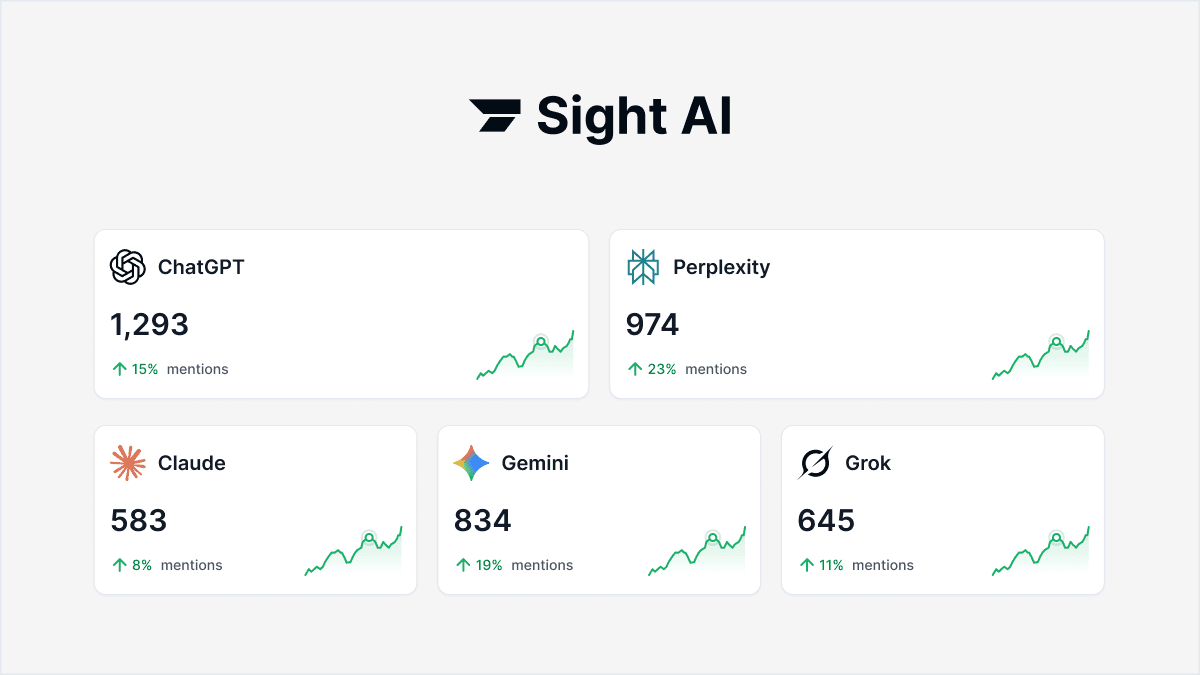
What makes AI SEO pricing different from traditional SEO tools is the compute cost factor. When a platform monitors your brand mentions across ChatGPT, Claude, Perplexity, and other AI models, it's making API calls that cost real money per query. When it generates content using advanced language models, those compute costs are substantial. Traditional SEO tools primarily processed your own data—rankings, backlinks, on-page elements. AI SEO tools consume external AI services continuously, and those costs flow through to pricing structures.
The hidden costs emerge after you sign the contract. Implementation fees for enterprise deployments typically range from $5,000 to $25,000, covering custom integrations, data migration, and initial configuration. Training programs add another $2,000 to $10,000 depending on team size and complexity. API overages hit when you exceed usage limits—and vendors often set these thresholds lower than you'd expect based on your projected needs. Custom integrations with your CMS, marketing automation platform, or data warehouse can add $10,000 to $50,000 to your total cost of ownership.
Many enterprises discover that the sticker price represents only 60-70% of their true first-year costs once implementation, training, and integration work is factored in. Building a realistic budget requires asking vendors for total cost of ownership projections, not just subscription fees. For a deeper dive into what enterprise platforms actually charge, explore our breakdown of enterprise SEO software pricing structures.
The Capability Gap Between Budget and Enterprise Solutions
A $500 monthly tool and a $50,000 annual platform might both claim to offer "AI-powered SEO," but the capabilities under the hood differ dramatically. Understanding these gaps helps you match pricing tiers to actual business requirements.
Feature depth separates casual tools from enterprise platforms. Budget solutions typically offer basic content optimization—keyword suggestions, readability scores, and simple AI writing assistance. They analyze your content and provide recommendations. Enterprise platforms go deeper: comprehensive AI visibility tracking that monitors how your brand appears across multiple AI models, sentiment analysis of those mentions, prompt tracking to understand what queries trigger your brand, and competitive intelligence showing how you compare to rivals in AI search results.
The content generation capabilities tell a similar story. Budget tools might offer a single AI writing assistant. Enterprise platforms deploy multiple specialized AI agents—one for listicles, another for explainer articles, a third for guides—each trained on different content patterns and optimized for both traditional SEO and emerging generative engine optimization (GEO). The difference shows up in output quality and the ability to maintain brand voice at scale. Understanding why use AI for SEO optimization helps clarify which capability tier your organization actually needs.
Scale capabilities create hard limits that only become apparent after you've committed. Budget tools often restrict you to monitoring a single domain, generating 50-100 articles monthly, or tracking a handful of keywords. Enterprise platforms support multi-domain monitoring across your entire brand portfolio, unlimited content generation, and comprehensive keyword tracking across thousands of terms. When you're managing content operations for a large organization, these limits aren't negotiable—they're deal-breakers.
The technical infrastructure matters more than many buyers initially recognize. Budget tools run on shared infrastructure with no performance guarantees. During high-traffic periods, response times slow down. Enterprise platforms offer dedicated resources, guaranteed uptime SLAs (typically 99.9% or higher), and priority processing for your content generation and monitoring tasks.
Enterprise-specific features command premium pricing for good reason. Single sign-on (SSO) integration with your identity provider isn't just convenient—it's often a security requirement for large organizations. Role-based access controls let you define granular permissions across teams. Audit logs track every action for compliance purposes. SOC 2 Type II certification, GDPR compliance documentation, and data processing agreements satisfy legal and security requirements that procurement won't waive.
Dedicated support transforms the user experience. Budget tools offer email support with 24-48 hour response times. Enterprise contracts include dedicated customer success managers, priority support channels, and defined SLAs for critical issues. When your content operations depend on the platform, having someone who knows your setup and can troubleshoot quickly becomes invaluable.
The integration ecosystem expands significantly at enterprise tiers. Budget tools might offer a WordPress plugin. Enterprise platforms provide native integrations with major CMS platforms, marketing automation systems, analytics tools, and custom API access for building your own connections. This integration depth determines whether the tool fits into your existing workflows or requires manual data transfer. Teams looking to understand how how to scale SEO content production will find these integration capabilities essential.
Building Your ROI Case Before Contract Signatures
Procurement teams want numbers, not promises. Building a defensible ROI calculation requires quantifying benefits across multiple dimensions—time savings, traffic value, and emerging AI visibility metrics that traditional SEO tools never measured.
Time savings represent the most straightforward ROI component. Calculate your current content production costs: if a content writer spends 8 hours researching and drafting a comprehensive guide, and you pay $75 per hour, that's $600 per article. If an AI SEO platform reduces that to 2 hours of editing and refinement, you're saving $450 per piece. Multiply by your monthly content volume—say 40 articles—and you're looking at $18,000 in monthly labor savings, or $216,000 annually.
Manual monitoring elimination adds another layer of savings. If someone spends 10 hours weekly tracking rankings, analyzing competitor content, and compiling reports, that's $31,200 annually at the same $75 hourly rate. Automated monitoring and reporting reclaim those hours for strategic work.
Traffic value methodology translates organic improvements into financial terms. Start with your current organic traffic—let's say 50,000 monthly visitors. Calculate the equivalent paid acquisition cost using your average cost-per-click for relevant keywords. If your typical CPC is $3.50, that organic traffic represents $175,000 in monthly paid media value, or $2.1 million annually.
Now project improvements. If better content optimization and AI visibility tracking increase your organic traffic by 25% over twelve months, you're adding 12,500 monthly visitors worth $43,750 in equivalent paid media value, or $525,000 annually. Even a conservative 15% improvement delivers $315,000 in annual value.
The AI visibility factor introduces a newer ROI component that's becoming increasingly critical. When AI models like ChatGPT, Claude, and Perplexity mention your brand in response to relevant queries, you're capturing attention at the research stage—often before users even visit traditional search engines. Quantifying this requires establishing baseline metrics: how often does your brand appear in AI responses today? What's the sentiment of those mentions? How do you compare to competitors?
Track improvements over time. If AI visibility tracking helps you identify content gaps and optimize for AI mention opportunities, you might see your brand mention frequency double or triple. While direct traffic attribution from AI platforms remains challenging, you can correlate AI mention improvements with branded search volume increases and direct traffic growth. Our guide on AI SEO optimization covers specific tactics for improving these metrics.
Building a complete ROI model requires combining these elements. If an enterprise AI SEO platform costs $40,000 annually including implementation, and you can document $216,000 in labor savings, $315,000 in organic traffic value improvements, and measurable brand visibility gains in AI search, you're presenting a compelling 8:1 return on investment.
The key is being conservative with projections and transparent about assumptions. Procurement teams have seen too many inflated ROI models. Present a base case with conservative estimates, then show upside scenarios if results exceed expectations. This approach builds credibility and makes approval more likely.
What's Actually Negotiable in Enterprise Contracts
Enterprise AI SEO contracts aren't take-it-or-leave-it propositions, despite what initial proposals might suggest. Understanding which terms vendors typically negotiate—and which ones they won't budge on—helps you maximize value while avoiding deal-breakers.
Payment terms offer significant flexibility, especially for established enterprises. While vendors prefer annual prepayment, many will negotiate quarterly payments or even monthly billing for larger contracts. The trade-off is usually a modest premium—perhaps 10-15% more than the annual prepaid rate. If cash flow matters more than absolute cost, this negotiation is worth having.
Pilot periods represent one of the most valuable negotiation levers. Instead of committing to a full annual contract sight unseen, negotiate a 60-90 day pilot at a reduced rate. Structure it properly: define specific success metrics upfront, get full access to enterprise features during the pilot, and establish clear criteria for converting to a full contract. Many vendors resist pilots because they're resource-intensive, but for six-figure deals, they're often willing to accommodate serious buyers.
Volume discounts kick in at various thresholds depending on the vendor. If you're close to a pricing tier boundary, ask what additional seats or usage would unlock the next discount level. Sometimes adding a few more seats upfront—even if you don't need them immediately—reduces your per-seat cost enough to make the expansion cost-effective.
Multi-year commitments unlock substantial discounts, typically 15-25% off the annual rate. The calculation here is straightforward: if you're confident the platform will remain valuable beyond year one, locking in current pricing protects you from future increases. The risk is being stuck with a tool that doesn't deliver or that gets surpassed by competitive offerings.
Red flags in enterprise AI SEO contracts deserve careful scrutiny. Auto-renewal clauses with short notice periods—say 60 days—can trap you into unwanted renewals. Negotiate 90-180 day notice periods so you have time to evaluate alternatives. Usage overage penalties that kick in at surprisingly low thresholds suggest the vendor is counting on overage revenue. Ask for higher thresholds or capped overages.
Data ownership and portability clauses matter more than many buyers realize. You should own all content generated by the platform and have the right to export your data in standard formats upon contract termination. Some vendors try to claim ownership of AI-generated content or make data export difficult. These terms are usually negotiable—push back firmly.
Exclusivity clauses sometimes appear in enterprise contracts, restricting your ability to use competing tools. Unless the vendor is offering a substantial discount in exchange for exclusivity, resist these terms. Your technology needs may evolve, and you don't want contractual restrictions limiting your options.
Building a business case that gets procurement approval requires more than ROI calculations. You need to address risk management: what happens if the vendor goes out of business or gets acquired? What's your exit strategy if the tool doesn't deliver expected results? How does this investment align with broader marketing technology strategy? Reviewing SEO content creation software pricing across multiple vendors helps you benchmark terms and identify outliers.
Involve procurement early in the evaluation process, not after you've already decided on a vendor. They can guide you on contract terms, identify risks you might have missed, and often negotiate more effectively than marketing teams who lack experience with SaaS agreements.
A Practical Framework for Budget Allocation
Building an AI SEO budget requires thinking beyond tool subscription costs to encompass the full ecosystem of technology, content production, and ongoing optimization. A practical framework helps you allocate resources effectively while maintaining flexibility as your strategy evolves.
Start with the 50-30-20 rule as a baseline for enterprise AI SEO budgets. Allocate 50% to platform costs—your core AI SEO tool subscription, including implementation and training. Dedicate 30% to content production and optimization—either internal resources or external content partners who execute on the insights your tools provide. Reserve 20% for monitoring, testing, and continuous improvement—this covers additional tools for specific use cases, experimentation budget, and resources for analyzing results and refining strategy.
For a $100,000 annual AI SEO budget, this translates to $50,000 for platform costs, $30,000 for content production, and $20,000 for optimization and testing. These ratios shift based on your maturity level—organizations just starting with AI SEO might allocate more to platform and training, while mature operations might shift more budget to content production and testing.
Phased implementation spreads costs and proves value incrementally. Start with a focused pilot in quarter one—perhaps $15,000 for a 90-day trial with limited scope. Use this period to validate ROI assumptions and build internal expertise. Expand in quarter two based on pilot results, increasing to half your target budget. Scale to full implementation in quarters three and four once you've demonstrated measurable results.
This approach reduces risk and makes budget approval easier. It's harder for procurement to approve a $100,000 annual commitment upfront than to approve a $15,000 pilot with defined success metrics. Once you've proven value, expansion budgets face less scrutiny.
The consolidation versus best-of-breed decision shapes your budget structure significantly. Consolidating multiple tools into a comprehensive AI SEO platform reduces total costs—you're paying for one enterprise contract instead of three or four smaller tools, and you eliminate integration complexity. The trade-off is potential capability gaps where specialized tools might offer deeper functionality.
Best-of-breed stacking gives you top-tier capabilities in each category but increases complexity and total cost. You might use one platform for AI visibility tracking, another for content generation, and a third for traditional SEO monitoring. Each tool requires its own contract, integration work, and training. Total costs can be 30-50% higher than consolidated approaches, but you get exactly the capabilities you need in each area.
Consider a hybrid approach: use a comprehensive platform for core capabilities, then add specialized tools for specific gaps. This balances cost efficiency with capability depth. For example, use an integrated AI SEO platform for most needs, but add a specialized technical SEO crawler if your site complexity demands it. Our comparison of SEO automation software pricing options helps you evaluate the cost-benefit tradeoffs across different tool categories.
Budget for the unexpected by maintaining a 15-20% contingency reserve. Implementation always takes longer than estimated. You'll discover integration requirements that weren't apparent during evaluation. Training needs expand as more team members want access. Having contingency budget prevents these surprises from derailing your entire initiative.
Review and rebalance quarterly. As you gain experience with AI SEO, you'll discover which investments deliver the highest returns and which capabilities you're underutilizing. Shift budget dynamically—if content production is your bottleneck, reduce tool spending and increase content resources. If you're not fully utilizing platform capabilities, invest in training before adding more tools.
Making Your Final Investment Decision
You've evaluated pricing models, calculated ROI, and negotiated contract terms. Now comes the critical decision point where you commit resources and set your AI SEO strategy in motion. A structured decision framework helps you move forward confidently.
Start by asking vendors the right questions before final commitment. How do they handle AI model updates and changes? AI platforms like ChatGPT and Claude evolve rapidly—your monitoring tools need to adapt. What's their product roadmap for the next 12-18 months? You're buying future capabilities as much as current features. How do they measure customer success, and what's their typical time-to-value? Vendors confident in their platform will share specific metrics and timelines.
Request customer references in your industry and at your scale. A platform that works brilliantly for mid-sized B2B companies might not translate to enterprise e-commerce operations. Talk to references about hidden costs, implementation challenges, and whether the vendor delivered on promises. Ask specifically about support quality when things go wrong—that's when vendor relationships matter most.
Trial period strategies maximize your ability to validate ROI assumptions before full commitment. Define three to five specific success metrics upfront: content production time reduction, organic traffic improvement, AI mention frequency increase, or team adoption rate. Establish baseline measurements before the trial starts. Track metrics weekly during the trial period, not just at the end.
Use the trial to stress-test the platform with your real use cases, not vendor-provided examples. Generate content for your actual topics, monitor your actual brand and competitors, and integrate with your actual technology stack. Synthetic tests tell you nothing about real-world performance. Understanding SEO competitive research capabilities during your trial helps you evaluate how well the platform tracks your market landscape.
Building internal alignment around AI SEO investment requires addressing different stakeholder concerns. Executives care about ROI and strategic alignment—show them how AI visibility tracking positions you for the future of search. Finance teams want predictable costs and clear contracts—provide total cost of ownership projections and explain negotiated terms. Marketing teams need to understand workflow changes—involve them early so they're advocates rather than resistors.
Create a cross-functional steering committee for your AI SEO initiative. Include representatives from marketing, content, IT, and finance. This group reviews vendor proposals, validates ROI calculations, and makes the final decision collectively. Shared ownership increases commitment and reduces implementation friction.
Document your decision rationale thoroughly. When you're defending this investment a year from now, you'll want clear records of why you chose this vendor, what ROI you projected, and what success looks like. This documentation also helps if key stakeholders change—new executives can understand the strategic thinking without relitigating the entire decision.
Putting It All Together
Enterprise AI SEO pricing in 2026 reflects a maturing market where traditional SEO capabilities merge with AI-powered content generation and emerging AI visibility tracking. The pricing range from $500 monthly to $50,000 annually isn't arbitrary—it reflects genuine capability differences, scale requirements, and enterprise features that command premium investment.
Your evaluation should start with clear success metrics, not vendor demos. What business outcomes do you need to achieve? How will you measure progress? What capabilities are must-haves versus nice-to-haves? These questions shape your requirements and help you match pricing tiers to actual needs.
Remember that sticker price represents only part of your total investment. Implementation costs, training resources, integration work, and ongoing optimization all factor into true cost of ownership. Budget conservatively and maintain contingency reserves for inevitable surprises.
The ROI case you build needs to be defensible and conservative. Document time savings, quantify traffic value improvements, and track emerging AI visibility metrics. Procurement teams respond to data, not enthusiasm. Show them numbers they can verify and assumptions they can challenge. A solid SEO keywords strategy provides the foundation for measuring these improvements accurately.
AI visibility tracking deserves special attention in your evaluation criteria. As AI models like ChatGPT, Claude, and Perplexity become primary research tools for your target audience, understanding how these platforms talk about your brand becomes as critical as traditional search rankings. Platforms that offer comprehensive AI visibility monitoring, sentiment analysis, and competitive intelligence position you for the future of search.
Start tracking your AI visibility today and see exactly where your brand appears across top AI platforms. Stop guessing how AI models like ChatGPT and Claude talk about your brand—get visibility into every mention, track content opportunities, and automate your path to organic traffic growth. The investment you make in AI SEO today shapes your organic visibility for years to come.