Your brand’s personality is its voice—the consistent, core part of who you are. The different tones it uses? Think of those as its moods, shifting to fit the emotion and context of any given conversation.
What Is Tone of Voice and Why It Matters
If your brand voice is your company's fixed personality, then your tone is the emotional inflection it uses in the moment. It's a simple but powerful distinction. Your own personality doesn't change from one day to the next, but your mood certainly does. You might feel upbeat, serious, or empathetic depending on what's happening around you. The same idea applies to how your brand communicates.
Tone of voice isn't about what you say, but how you say it. This is the secret sauce, the bridge between just sending a message and actually making a connection. Without a clear tone, your content can feel disjointed, confusing, or worse—robotic. That erodes the trust you need to build a loyal audience.
The Foundation of Brand Connection
A well-defined tone of voice isn't just a "nice-to-have." It’s what turns generic content into a memorable brand experience, and it gets a few critical jobs done.
Here’s why getting your tone right is so important:
- It Builds Credibility: A consistent and appropriate tone helps people see you as a reliable, professional source of information.
- It Humanizes Your Brand: Tone breathes life into your company, making it far more relatable and approachable.
- It Creates Emotional Resonance: People are driven by emotion. The right tone helps you tap into feelings that align with your brand's values, whether that’s inspiration, reassurance, or excitement.
That emotional connection is where the magic really happens. When customers feel like you "get" them, they're much more likely to become your biggest fans. It's a fundamental piece of good communication, and it often involves weaving in expert SEO copywriting best practices to make sure your message hits home with both people and search engines.
Why Tone Is Non-Negotiable Today
The need for a distinct tone has only grown with the explosion of conversational tech. We're living in a voice search world, with over 8.4 billion voice-enabled devices in use globally. How your brand sounds is more important than ever.
This shift isn't just a fad; it reflects a deep consumer preference for more natural, human-like interactions. In fact, 71% of people prefer using voice over typing simply because it feels more intuitive. You can dive deeper into how voice search is reshaping digital interaction if you're curious.
A brand’s tone is the ultimate expression of its character. It’s the difference between a monologue and a conversation, and in today's market, conversations are what build relationships and drive growth.
Ultimately, mastering different tones of voice is no longer optional. It’s a core skill for any brand that wants to connect authentically, build lasting trust, and stand out in an incredibly crowded marketplace.
Exploring the Spectrum of Brand Tones
Think of learning brand tones like a painter learning their colors. You can mix, match, lighten, or darken them in countless ways to stir up a specific feeling. Rather than just making a long list of adjectives, let's group these tones into practical archetypes you can actually see in the wild.
These are your starting points—foundational personalities you can build on. Most brands don't just pick one and stick with it. Instead, they blend elements from a few to create a voice that’s uniquely theirs.
This concept map breaks down how a brand's core personality is the engine for everything else—influencing its voice, shaping its tone, and ultimately, building a real connection with its audience.
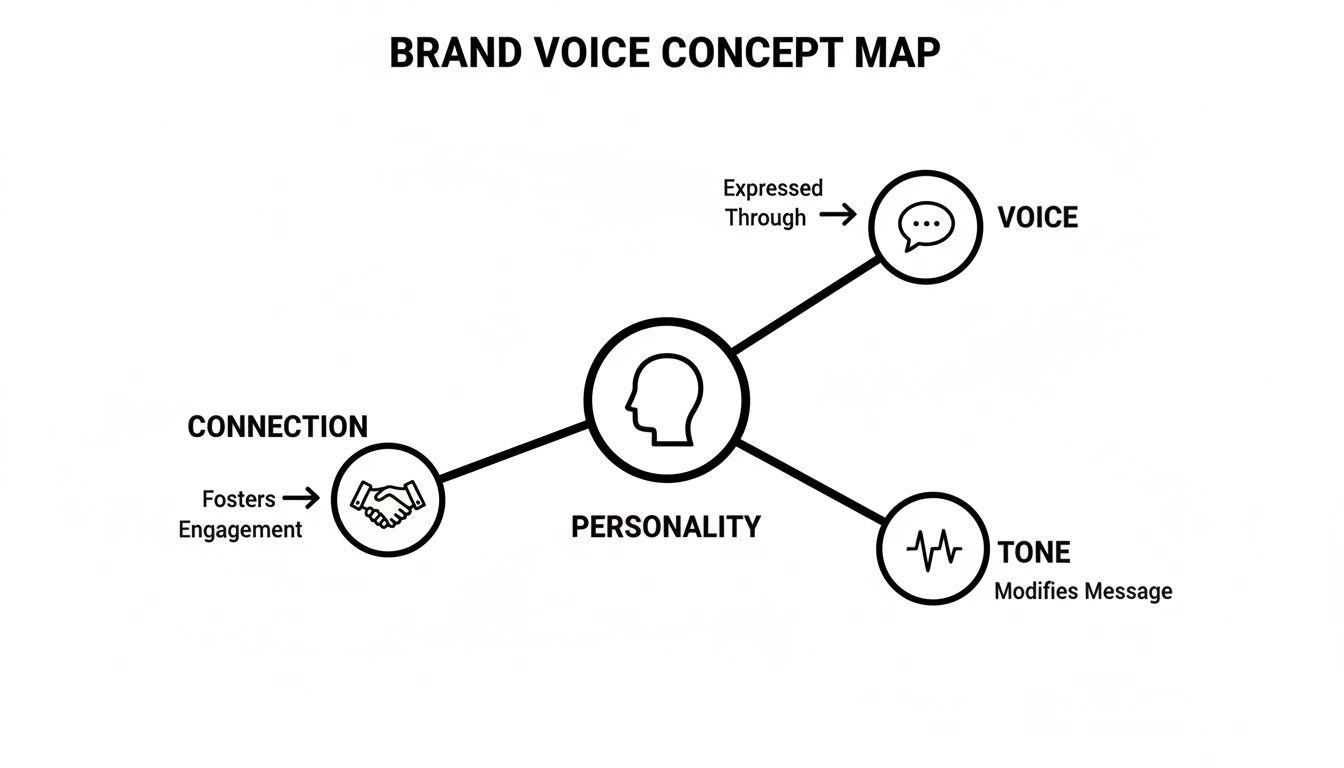
As you can see, your tone is the flexible, day-to-day expression of your steady, unchanging voice. It’s the bridge that turns a monologue into a conversation and builds an authentic bond with your customers.
To make this easier to digest, let's look at a quick comparison of the most common tones brands use.
Comparing Common Brand Tones of Voice
This table breaks down some of the most popular brand tones. Think of it as a cheat sheet to quickly see how each one works, where it fits best, and what it actually sounds like in practice.
| Tone of Voice | Core Characteristics | Best For | Sounds Like |
|---|---|---|---|
| Formal | Professional, structured, avoids slang and contractions. Follows strict grammar rules. | Corporate communications, legal, finance, academic institutions. | "We will provide a comprehensive report detailing the fiscal outcomes." |
| Casual | Relaxed, conversational, uses everyday language and contractions. Like talking to a friend. | Social media, blogs, direct-to-consumer brands, community-focused businesses. | "Hey, just wanted to give you a heads-up on our new report!" |
| Humorous | Witty, clever, playful, and often uses puns or pop culture references. | Social media engagement, advertising campaigns, brands targeting younger audiences. | "Our coffee is so good, it's depresso-proof." |
| Authoritative | Confident, direct, fact-based, and knowledgeable. Establishes expertise without arrogance. | B2B tech, healthcare, financial advising, any industry built on trust and credibility. | "Based on 10 years of industry data, this is the most effective strategy." |
| Supportive | Empathetic, reassuring, and caring. Focuses on the customer's feelings and needs. | Customer service, healthcare, wellness brands, non-profits. | "We understand this can be frustrating, and we're here to help you through it." |
| Inspirational | Uplifting, passionate, and motivational. Aims to empower the audience. | Fitness, lifestyle brands, coaching, non-profits, personal development. | "You have the power to achieve your goals. Let's take the first step together." |
This isn't an exhaustive list, but it gives you a solid foundation for understanding the different flavors of communication you can use. Most brands will find themselves blending a primary tone with a secondary one depending on the situation.
Now, let's dive deeper into those broader archetypes.
1. The Expert
The Expert’s main goal is to build trust and prove they know their stuff. Brands using this archetype communicate with clarity, confidence, and precision. Their language is direct and packed with value, cutting right through the noise.
This is the go-to archetype for any industry where authority is a must-have, like finance, healthcare, and B2B technology.
- Authoritative Tone: Uses firm, declarative statements and fact-based arguments. It’s confident but never arrogant. Think of how a leading research institution would speak.
- Formal Tone: Sticks to the traditional rules of grammar and steers clear of slang. It's respectful and professional—perfect for corporate or legal messages.
- Informative Tone: All about educating the audience. The goal is to provide clear, useful information without a heavy sales pitch attached.
2. The Friend
The Friend archetype just wants to be relatable and approachable. It's all about making your audience feel seen and understood, creating a real sense of community.
This is a favorite for direct-to-consumer brands, community platforms, and any company trying to connect with a younger audience to build a loyal fanbase.
A friendly tone is a constant reminder that there are real people behind the logo. It opens the door for conversation and can turn a simple transaction into a lasting relationship—which is exactly what brand loyalty is built on.
- Casual Tone: Feels like chatting with a knowledgeable peer. It uses contractions, simple language, and has a natural, conversational flow.
- Humorous Tone: Employs wit, clever puns, or funny observations to make people feel good about your brand. It’s fantastic for engagement but risky—you have to really know your audience to get the joke right.
- Supportive Tone: Expresses empathy and reassurance. This is non-negotiable for customer service and any brand focused on well-being.
3. The Inspirer
The Inspirer is here to motivate and empower. The communication style is uplifting, passionate, and often aspirational. These brands aren't just selling a product; they're selling a vision or a better version of you.
This approach is incredibly powerful for lifestyle brands, fitness companies, and non-profits. But there's a catch: the passion has to be authentic, or it falls flat.
- Passionate Tone: Conveys a deep, genuine belief in a mission. The language is emotionally charged and full of energy.
- Optimistic Tone: Always looks on the bright side, focusing on positive outcomes and possibilities. It's hopeful and designed to lift people's spirits.
- Motivational Tone: Uses action-oriented language to nudge the audience to take that next step. It's direct, empowering, and often throws down a challenge.
4. The Entertainer
Last but not least, the Entertainer’s one and only goal is to grab your attention and keep it. These brands are often bold, witty, and not afraid to break the rules. Every piece of communication is designed to be memorable and shareable.
This tone thrives in crowded markets where standing out is everything, especially on fast-paced social media platforms.
- Playful Tone: Fun, lighthearted, and sometimes a little whimsical. It doesn’t take itself too seriously and invites the audience to have a good time.
- Witty Tone: Smart, clever, and quick. This tone uses sharp wordplay and stays on top of cultural trends to connect with an intelligent audience.
Figuring out how to use these different tones takes practice. The good news is there are plenty of great AI tools for copywriting that can help you test out different styles and polish your messaging. The goal is to build a versatile toolkit that lets you communicate perfectly, no matter the situation.
How Powerful Brands Use Tone in the Real World
Seeing tone of voice in action is the best way to really get it. The most memorable brands don’t just have great products; they have a personality that comes through in every single word they write. That consistency is what turns a simple transaction into an unforgettable brand experience.
Let’s look at how four iconic brands absolutely nail their tone, making simple communication their most powerful tool for connection.
Mailchimp: The Friendly Guide
Mailchimp has built an entire empire on being the helpful, slightly quirky expert you actually enjoy listening to. Their tone is consistently supportive, clear, and empowering. They ditch the complicated jargon for simple, encouraging language that makes a beast like email marketing feel totally doable.
This isn’t an accident. By positioning themselves as a friendly guide, Mailchimp demystifies a complex industry and makes its users feel confident.
- Word Choice: You'll see words like "easy," "together," and "you've got this" all over their site.
- Sentence Structure: Sentences are often short, direct, and have a conversational feel.
- The Vibe: It’s like a smart, patient friend walking you through a tough process and cheering for you along the way.
Example (Website Copy): "Whether you're starting out or scaling up, we're here to help you grow. Let's build something great together."
This isn't just fluffy language; it’s a core part of their strategy. It makes them feel like a partner, not just a piece of software, which is a recipe for serious user loyalty.
Nike: The Fierce Motivator
Nike’s tone is pure, unfiltered inspiration. It's aspirational, determined, and powerful. They almost never talk about the technical specs of their sneakers. Instead, they talk about the greatness hiding inside every one of us.
Every word is engineered to light a fire. "Just Do It" is the ultimate summary of this approach—it's a direct, no-nonsense command that cuts right through your excuses.
- Word Choice: Nike leans on strong, active verbs like "unleash," "conquer," and "believe."
- Sentence Structure: The copy is often punchy and minimal, letting the powerful idea do the heavy lifting.
- The Vibe: It’s the voice of a coach who sees your potential, pushing you to become the best version of yourself.
Example (Ad Copy): "Don't ask if your dreams are crazy. Ask if they're crazy enough."
This motivational tone makes Nike more than just a brand; it transforms them into a symbol of athletic grit and personal achievement.
Wendy's: The Witty Entertainer
Over on social media, especially X (formerly Twitter), Wendy's has mastered a witty, playful, and sometimes sarcastic tone. They aren't afraid to roast their competitors, jump into banter with followers, or hijack a trending meme at a moment's notice. This voice turned a fast-food chain into a genuine entertainment channel.
It works so well because it feels authentic and totally unexpected. In a sea of bland corporate social media accounts, Wendy's sharp wit stands out and pulls in massive organic engagement. It’s a masterclass in how a specific tone can completely own a channel.
Their success is a key lesson in many modern content marketing strategy examples, proving that a bold personality can be a brand’s most valuable asset.
Patagonia: The Purposeful Activist
Patagonia’s voice is passionate, urgent, and deeply principled. Every single piece of communication circles back to their core mission: save our home planet. They speak with conviction about environmental crises, using a direct and sometimes somber tone to make sure you understand the stakes.
Their language is refreshingly honest, even when it means telling customers not to buy a new jacket.
- Word Choice: Words like "protect," "fight," and "responsibility" are everywhere in their copy.
- Sentence Structure: They use clear, fact-based statements to build their case for environmental action.
- The Vibe: It feels like listening to a dedicated activist who cares more about the cause than the profits.
By sticking to this purposeful tone, Patagonia has cultivated a fiercely loyal community that buys into their mission just as much as their gear.
How to Define Your Brand's Unique Tone of Voice
Knowing the different tones of voice is one thing, but actually crafting one that feels like you? That’s a whole different ballgame. This isn’t about just grabbing a few adjectives from a list. It's a deep dive into your brand's DNA to figure out who you are, which then dictates how you show up in every message you send.
The process works from the inside out. You start with your core purpose and end up with practical, easy-to-follow guidelines your whole team can actually use. It's how you turn a fuzzy idea about your brand's "personality" into a real, consistent communication style.
Let's walk through how to find your brand's authentic voice.

Start with Your Core Values
Before you figure out how to say something, you have to know what you stand for. Your core values are the bedrock of your brand's personality and, by extension, its tone. These are the non-negotiables that guide every single decision you make.
Get back to basics and ask yourself some big questions:
- Why does our company exist? Think bigger than just turning a profit. What's the mission?
- What impact do we want to have on the world? This includes your customers, your industry, and your community.
- What promises are we making to our customers? What's the one thing they can always count on you for?
The answers to these questions get to the soul of your brand. A company built on innovation is going to sound completely different from one that’s all about tradition and security.
Understand Your Target Audience
Okay, you know who you are. Now, who are you talking to? You wouldn't use the same language with a close friend that you would in a formal client meeting. Great communication is all about empathy.
Go deep and create some detailed audience personas. Don't just stop at demographics; you need to understand their psychographics.
- What are their biggest goals and dreams?
- What challenges are keeping them up at night?
- What kind of slang, jargon, or humor do they use in their everyday lives?
Spend time where your audience hangs out. Read their social media comments, reviews, and forum posts. This is a goldmine for understanding the vocabulary and tone that will actually connect with them. Your goal is to talk with them, not at them.
Analyze the Competitive Landscape
Your tone of voice can be a massive differentiator. Take a good, hard look at how your direct competitors are communicating. Are they all buttoned-up and corporate? That could be your chance to come in with a casual, more approachable vibe.
On the flip side, if everyone in your niche is trying to be the witty, funny one, a more direct and authoritative tone could help you build serious credibility. The point here isn't to copy what others are doing, but to find a unique space where your voice can cut through the noise.
The "We Are and We Are Not" Chart
This is a deceptively simple exercise that works wonders for making your tone tangible. Just create two columns. In the first, list adjectives that describe your brand. In the second, list related words you want to actively avoid.
This simple chart is brilliant for defining nuance.
We Are
- Confident
- Witty
- Helpful
- Direct
We Are Not
- Arrogant
- Sarcastic
- Overbearing
- Blunt
This little guide is invaluable for any writer. It ensures that "confident" never accidentally slips into "arrogant."
Create Your Tone of Voice Style Guide
Finally, pull it all together into a simple style guide. This is the key to making sure everyone—from marketing to customer support—is on the same page. The principles here don't just apply to companies; they're also crucial for anyone focused on building your personal brand and creating a memorable online presence.
Your guide doesn’t need to be a 50-page behemoth. In fact, a simple one-pager is often more effective.
- Our Core Values: A quick summary of your mission and what you stand for.
- Our Tone Adjectives: List your 3-5 core tone words (e.g., "Passionate, Supportive, Clear").
- The "We Are/We Are Not" Chart: Pop your chart right in there for easy reference.
- Practical Writing Examples: Show, don't just tell. Include short "do this, not that" examples for a blog intro, a social media caption, and a customer support email.
Creating this guide is how you put your tone into practice. It’s a vital piece of your overall content strategy, and you can explore more SEO content writing tips to see how a consistent tone fits into the much bigger picture of driving real growth.
Adapting Your Tone Across Different Channels
Having a strong, defined brand voice doesn’t mean you have to sound like a robot. This is a common trip-up. People think consistency means being monotonous, but it’s really about being recognizable. The real art is learning how to adapt your core personality—your voice—to fit different platforms and situations. This flexibility is what makes a brand feel dynamic and genuinely human.
Think of it this way: your brand’s voice is its fixed personality. The tone is the mood it expresses. You wouldn’t use the same casual, high-five energy in a formal business proposal that you’d use in a playful Instagram story, right? Each channel has its own culture, audience expectations, and communication style.

Nailing this adaptation is what separates the good brands from the great ones. It proves you understand the context of the conversation you're joining, which is a massive shortcut to building trust and engagement.
Social Media: A Conversational Space
Social media is, by nature, a fast-paced, conversational arena. This is where your brand’s personality gets to come out and play. Generally, your tone here should be more casual, engaging, and immediate than anywhere else.
For example, a witty and playful tone kills it on a platform like X (formerly Twitter), while a more polished, inspirational tone works wonders on Instagram. On LinkedIn, that same brand would need to shift gears to a professional and insightful tone, offering real value for a business-minded audience. The goal is to match the platform's energy. A big part of this involves creating engaging social media content that resonates with the unique user base of each network.
Email Marketing: A Direct Connection
Email is a different beast entirely—it’s a direct line to your audience. The tone you strike can vary dramatically depending on what kind of email you’re sending.
- Newsletters: A friendly, informative, and personable tone is perfect for building a lasting relationship with your subscribers.
- Promotional Emails: This is where you can dial up the enthusiasm and urgency to drive excitement and action.
- Transactional Emails: For things like order confirmations or shipping updates, clarity and reassurance are king. The tone needs to be straightforward, helpful, and calming.
The inbox is a personal space. Your tone should always feel respectful and value-driven, never intrusive. It’s a one-to-one conversation, even when you're sending it to thousands of people.
Blog Posts and Website Content: The Foundation of Knowledge
Your website and blog are your brand's home base. Here, you have the room to stretch your legs and be more thorough and authoritative. The tone should absolutely reflect your expertise, but it must remain accessible to your target audience.
A blog post can afford a more educational, in-depth tone. Your homepage copy, on the other hand, might be more aspirational and focused on benefits. And when someone lands on your "About Us" page, they're looking for a more personal and authentic tone that tells your brand’s story. It's all about using different tonal shades to guide visitors through their journey.
Customer Service: A Test of Empathy
Nowhere is tone more critical than in a customer service interaction. When a customer reaches out with a problem, they’re often already frustrated or confused. Your brand's response must lead with empathy, support, and reassurance.
Even if your brand voice is typically humorous, this is the time to put the jokes aside. The priority is resolving the issue with a calm, helpful, and respectful tone. This simple shift shows you take their concerns seriously and are committed to making things right—a single interaction that can turn a negative experience into a moment of true brand loyalty.
Adapting your tone isn't about being inconsistent; it’s about being smart and context-aware. By thoughtfully modulating how you communicate on each channel, you keep your brand’s identity intact while connecting far more effectively with your audience, wherever they happen to be.
To make this even clearer, here’s a quick-reference guide on how to modulate your brand's core tone for different marketing channels to maximize engagement and effectiveness.
Channel-Specific Tone Adaptation Guide
| Channel | What to Emphasize | What to Avoid | Example Tonal Shift |
|---|---|---|---|
| Website & Blog | Authority, helpfulness, clarity | Overly casual slang, vagueness | Shift from aspirational homepage copy to an educational, in-depth blog tone. |
| Social Media | Authenticity, engagement, brevity | Corporate jargon, hard-selling | Dial up the humor on X; use an inspirational tone on Instagram. |
| Email Marketing | Personalization, value, respect | Spammy language, generic greetings | Use an urgent, exciting tone for a sale; adopt a helpful tone for a newsletter. |
| Customer Service | Empathy, patience, reassurance | Defensiveness, humor (when inappropriate) | Switch from a normally playful brand voice to a serious and supportive tone. |
This table should help you visualize how a single, consistent brand voice can express itself in different ways to meet the moment. It's about being the same person, just in different rooms.
Frequently Asked Questions About Tone of Voice
Even with the best plan in place, questions always come up when you start putting a brand's tone of voice into practice. Nailing these details is what separates a consistent, memorable brand from one that feels disjointed. This section cuts through the noise with clear, practical answers to the most common hang-ups.
Think of this as your quick-reference guide. We'll revisit the core ideas we've covered and tackle the real-world challenges that pop up when theory meets reality.
What Is the Difference Between Brand Voice and Tone of Voice
This is easily the most common point of confusion, but a simple analogy makes it all click. Think of your brand voice as its core personality—it’s fixed and doesn't change. If your brand was a person, its voice is who it is at its heart. Maybe it's "an approachable expert" or "a witty rebel." That identity is constant.
Your tone of voice, on the other hand, is the mood or emotion you apply to that personality in different situations. It’s how you say something, not what you are.
For example, a brand with an "approachable expert" voice would use different tones for different jobs:
- A reassuring and formal tone when handling a sensitive customer support ticket.
- An enthusiastic and celebratory tone when announcing a new product feature.
- A clear and educational tone when writing an in-depth tutorial.
The personality (voice) is the constant thread, but the emotional delivery (tone) flexes depending on the context. Your voice is who you are; your tone is how you're feeling in the moment.
How Do I Ensure My Team Uses Our Brand Tone Consistently
Consistency never happens by accident. It's the direct result of having crystal-clear documentation and providing ongoing training. Without a single source of truth, every team member will interpret the brand's voice their own way, creating a fractured and confusing experience for your audience.
The single most effective tool for getting everyone on the same page is a brand tone of voice style guide.
A well-crafted style guide is more than just a document—it’s a compass for your entire team. It ensures every piece of communication, from a quick tweet to a dense technical manual, feels like it came from the same brand, building trust and recognition with every interaction.
This guide needs to be a non-negotiable part of onboarding for anyone touching marketing, sales, or customer support. Make it easy to find and even easier to understand. To make it truly stick, be sure to include:
- Core Principles: A quick summary of your brand's mission and voice.
- "We Are / We Are Not" Chart: This is where the magic happens. It defines the nuances (e.g., "We are witty, not sarcastic").
- Real-World Examples: Show, don't just tell. Provide concrete examples of on-brand writing across different scenarios.
Finally, make regular content reviews part of your workflow to offer feedback and keep the team aligned over time.
Can My Brand Have More Than One Tone of Voice
Yes, and it absolutely must. A modern brand needs a whole wardrobe of tones to communicate effectively in different contexts. While you should only ever have one core brand personality (your voice), you need a flexible range of emotional expressions (your tones) to navigate different channels and situations gracefully.
Take a software company with an "innovative and helpful" voice. Its tone would have to shift depending on the task at hand:
- For a knowledge base article: The tone would be precise, technical, and strictly educational.
- For a social media announcement: It would become celebratory, energetic, and much more informal.
- For an apology email after an outage: The tone would pivot to be sincere, empathetic, and direct.
The goal isn't to create a split personality but to show that your brand is adaptable and context-aware. A brand that sounds the same everywhere comes off as robotic and tone-deaf. Using varied tones shows you understand your audience and the situation you're in.
How Can I Measure If My Brand's Tone Is Effective
Measuring something as seemingly abstract as "tone" can feel tricky, but you can absolutely track its impact with a mix of quantitative data and qualitative feedback. This data-backed approach helps you move from, "I think this sounds right," to, "I know this connects with our audience."
Quantitative Measurement:
- A/B Testing: This is your best friend. Test different tones in email subject lines, ad copy, or CTAs to see what drives higher open rates, clicks, or conversions.
- Engagement Metrics: On social media, keep an eye on which tones generate the most likes, shares, and meaningful comments.
- Customer Satisfaction (CSAT): Track CSAT scores after support interactions. A deliberate shift to a more empathetic tone in support replies should lead to higher satisfaction.
Qualitative Measurement:
- Social Listening: Monitor brand mentions and online chatter. Are people using the same adjectives to describe your brand that you use in your style guide?
- Customer Feedback: Dive into reviews, survey responses, and support tickets. Look for comments that mention your communication style. Feedback like, "Their support team was so understanding," is a direct signal that your tone is working.
Using an AI writing assistant can also help maintain consistency at scale and even test different tonal approaches, making it easier to gather this data. By combining hard numbers with real human feedback, you'll get a complete picture of whether your tone is truly hitting the mark.