Your brand's reputation is being shaped right now across channels you might not even be monitoring. A customer posts a review on a niche forum. An AI assistant recommends your competitor when asked for solutions in your category. A sentiment shift begins on social media while your team focuses on yesterday's metrics.
Traditional reputation monitoring—checking social mentions once daily or setting up basic Google Alerts—can't keep pace with how conversations about your brand actually happen in 2026. Brand perception now forms across social platforms, review sites, forums, and increasingly within AI models that millions of people consult before making decisions.
AI-powered reputation monitoring changes the equation entirely. Instead of manually tracking mentions across scattered platforms, intelligent systems can monitor every channel simultaneously, understand context and sentiment, alert you to threats before they escalate, and even predict emerging reputation risks.
The seven strategies that follow represent a complete framework for implementing AI-driven reputation monitoring. Whether you're protecting a startup's fragile early reputation or managing an established brand's complex digital footprint, these approaches will help you stay ahead of sentiment shifts and turn reputation insights into strategic advantages.
1. Deploy Multi-Platform AI Listening Across Traditional and AI Search
The Challenge It Solves
Brand conversations no longer happen in predictable places. Your audience discusses your products on Reddit, asks AI assistants for recommendations, leaves reviews on industry-specific platforms, and shares experiences across social networks. Monitoring just social media means missing critical conversations happening in AI chat interfaces where purchase decisions increasingly begin.
The fragmentation problem compounds when you consider that different audiences use different platforms. B2B buyers might discuss your solution in LinkedIn groups while also asking ChatGPT for vendor comparisons. Consumer brands face mentions across Instagram, TikTok, review sites, and Perplexity searches—all simultaneously.
The Strategy Explained
Comprehensive AI listening establishes monitoring across every channel where your brand appears or could appear. This means traditional social platforms, review aggregators, forums, news sites, and critically, AI platforms where your brand gets mentioned in responses to user queries.
The distinction matters because AI platforms represent a fundamentally different reputation dynamic. When someone asks Claude or ChatGPT for product recommendations, the AI's response shapes perception for potentially thousands of users who see similar answers. These mentions don't appear in traditional social listening tools, creating a blind spot in your reputation monitoring.
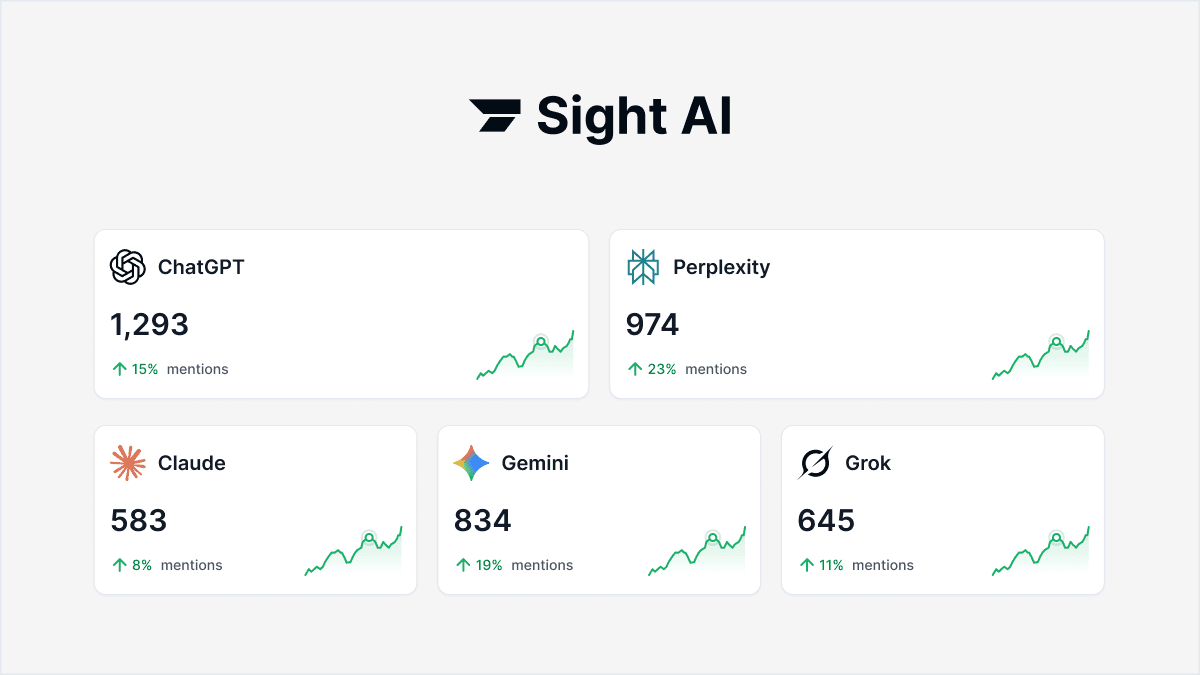
Modern multi-platform listening systems use AI to aggregate mentions from diverse sources into unified dashboards. Rather than logging into six different tools, you see all brand mentions—from a Twitter thread to a ChatGPT recommendation to a Reddit discussion—in one place with consistent sentiment analysis applied across all sources.
Implementation Steps
1. Audit where your brand currently appears by manually searching your brand name across social platforms, review sites, forums, and AI assistants to identify which channels drive the most conversation volume and sentiment impact.
2. Deploy monitoring tools that cover both traditional channels and AI platforms, ensuring your system can track mentions in ChatGPT, Claude, Perplexity, and other AI assistants where recommendations happen.
3. Configure brand name variations and common misspellings to capture mentions that don't use your exact brand name, including abbreviations, acronyms, and product-specific terms your audience uses.
4. Establish baseline metrics for mention volume and sentiment across each platform to understand your starting point and identify which channels require the most attention.
Pro Tips
Set up separate monitoring streams for your brand name, product names, and key executives to understand reputation at different levels. Track competitor mentions on the same platforms to benchmark your reputation performance. Schedule weekly reviews of which platforms drive the most meaningful conversations rather than just the highest volume—quality matters more than quantity.
2. Implement Real-Time Sentiment Analysis with Contextual Understanding
The Challenge It Solves
Basic sentiment analysis that labels mentions as "positive," "negative," or "neutral" misses crucial nuance. A comment like "This product is insanely good" reads as negative to simple algorithms that flag "insane" as a negative term. Industry-specific language, sarcasm, and contextual meaning get lost in binary classification systems.
The timing problem compounds this challenge. Discovering that sentiment shifted negatively three days ago means you've already lost the window to respond effectively. Real-time analysis with contextual understanding lets you catch sentiment changes as they happen and understand what's actually being said.
The Strategy Explained
Advanced sentiment analysis uses natural language processing to understand context, not just keywords. These systems recognize that "sick design" means something positive in consumer tech contexts, understand sarcasm patterns, and detect subtle sentiment shifts that simple keyword matching misses.
The real-time component means sentiment scores update continuously as new mentions appear. Rather than batch-processing mentions once daily, modern systems analyze sentiment immediately and flag significant changes as they emerge. This creates opportunities to engage with positive sentiment while it's building momentum or address negative trends before they spread.
Contextual understanding extends to recognizing industry terminology and brand-specific language patterns. A monitoring system trained on your industry understands that certain phrases carry different sentiment weight in your context than they would elsewhere.
Implementation Steps
1. Choose sentiment analysis tools that specifically mention contextual understanding and NLP capabilities rather than simple keyword-based classification systems that miss nuance.
2. Train your sentiment model on your industry's language by feeding it examples of how your audience discusses products in your category, including common slang, technical terms, and sentiment expressions unique to your space.
3. Set up real-time sentiment dashboards that show current sentiment scores, trending direction, and velocity of change so you can spot shifts as they happen rather than discovering them in retrospective reports.
4. Create sentiment baselines for different mention types—reviews carry different sentiment patterns than social media posts, and AI recommendations have their own sentiment characteristics you need to understand separately.
Pro Tips
Review sentiment classification accuracy monthly by manually checking a sample of mentions to ensure your AI correctly interprets context. Pay special attention to neutral classifications—these often contain the most actionable feedback that's neither clearly positive nor negative. Track sentiment by product line separately if you have multiple offerings, as reputation issues often affect specific products before impacting overall brand perception.
3. Create Automated Alert Hierarchies Based on Threat Level
The Challenge It Solves
Alert fatigue kills effective reputation monitoring. When your team receives notifications for every brand mention, critical issues get buried in noise. A genuine reputation crisis that requires immediate response sits in an inbox alongside fifty routine positive reviews, and by the time someone notices the urgent alert, the situation has already escalated.
The opposite problem is equally dangerous—setting alerts so restrictive that you only hear about major crises means missing early warning signals. The ideal system distinguishes between "someone just left a negative review" and "a viral thread is forming that could damage your brand significantly."
The Strategy Explained
Tiered alert systems categorize mentions by urgency and route them to appropriate team members through appropriate channels. Critical threats trigger immediate notifications to senior team members via SMS or Slack. Medium-priority issues generate email alerts to the monitoring team. Routine mentions batch into daily or weekly digest reports that provide context without interrupting workflow.
The intelligence comes from defining what constitutes each threat level based on multiple factors: sentiment severity, mention velocity, audience size, platform authority, and potential reach. A single negative review on a small blog might be routine, but the same review from an influential industry figure with 100,000 followers requires immediate attention.
Automated hierarchies learn from your team's responses over time. When you consistently escalate certain mention types, the system adjusts its classification to flag similar situations earlier. This creates a monitoring system that gets smarter about what your brand considers urgent.
Implementation Steps
1. Define your threat levels explicitly with specific criteria—for example, Critical (viral negative content, influencer criticism, crisis signals), High (negative reviews on major platforms, sentiment drops), Medium (individual complaints, neutral coverage), and Low (positive mentions, routine coverage).
2. Map notification channels to threat levels by routing critical alerts through immediate channels like SMS or dedicated Slack channels, high-priority alerts through email to relevant team members, and lower-priority mentions into digest reports.
3. Set velocity thresholds that escalate alerts when mention volume spikes suddenly, even if individual mentions seem routine—rapid increases often signal emerging issues before sentiment fully shifts negative.
4. Assign clear ownership for each alert level so everyone knows who responds to what, preventing both duplication of effort and situations where critical alerts go unaddressed because responsibility is unclear.
Pro Tips
Review your alert accuracy monthly by analyzing false positives and missed escalations to refine your threat level criteria. Create separate alert hierarchies for different products or business units if your brand has distinct offerings with different risk profiles. Build in weekend and after-hours protocols for critical alerts since reputation crises don't respect business hours.
4. Track Competitor Reputation Signals for Strategic Positioning
The Challenge It Solves
Your brand's reputation exists in context. When a competitor faces negative sentiment, their customers actively seek alternatives—but only if you know the opportunity exists. When competitors receive praise for specific features, you need visibility into what's resonating with your shared audience.
Most brands monitor their own reputation closely while remaining blind to competitive dynamics. This means missing strategic windows when competitor weaknesses create openings for your positioning, or failing to respond when competitors gain ground on attributes where you previously led.
The Strategy Explained
Competitive reputation monitoring tracks the same metrics for key competitors that you track for your own brand: mention volume, sentiment trends, specific praise and criticism themes, and how AI models position competitors relative to your brand.
The strategic value comes from comparative analysis. When your competitor's sentiment drops due to pricing complaints, you can emphasize your value proposition. When they receive praise for a feature you also offer but haven't emphasized, you know to highlight that capability more prominently.
AI models present a particularly valuable competitive intelligence source. When you ask ChatGPT or Claude for recommendations in your category, their responses reveal how AI positions different brands, which competitors they mention together, and what attributes they emphasize for each option. This insight shows you how millions of potential customers receive brand comparisons.
Implementation Steps
1. Identify your three to five primary competitors whose reputation most directly impacts your positioning, focusing on brands that share your target audience and compete for the same customer decisions.
2. Set up parallel monitoring streams that track competitor mentions with the same depth you apply to your own brand—sentiment analysis, mention volume, trending topics, and platform-specific reputation.
3. Create comparative dashboards that show your sentiment metrics alongside competitor data, making it easy to spot when you're gaining or losing ground relative to alternatives your audience considers.
4. Monitor how AI assistants position competitors by regularly querying ChatGPT, Claude, and Perplexity with purchase-intent questions in your category to see which brands get recommended and why.
Pro Tips
Track competitor product launches and major announcements separately since these events typically generate sentiment spikes that don't reflect ongoing reputation trends. Pay attention to the specific language customers use when comparing your brand to competitors—these phrases reveal positioning opportunities. Set up alerts for sudden competitor sentiment drops that might indicate customers actively seeking alternatives.
5. Leverage AI Visibility Scoring to Measure Brand Authority
The Challenge It Solves
Traditional reputation metrics tell you what people say about your brand but miss an increasingly important question: how do AI models talk about your brand? As consumers shift from search engines to AI assistants for research and recommendations, your visibility within AI responses becomes a critical reputation metric.
A brand might have strong social sentiment but rarely appear in AI recommendations when users ask for solutions in their category. Conversely, a brand with moderate social presence might dominate AI assistant responses, capturing decision-making moments that traditional monitoring never reveals.
The Strategy Explained
AI visibility scoring measures how frequently and favorably your brand appears in AI model responses across different query types. This creates a reputation metric specifically for the AI-powered discovery layer where many purchase journeys now begin.
The scoring considers multiple dimensions: mention frequency (how often AI models include your brand in relevant responses), positioning (whether you appear first, middle, or last in recommendations), context (what attributes AI associates with your brand), and sentiment (how AI describes your offerings relative to competitors).
This metric reveals reputation dynamics that traditional monitoring misses. You might discover that AI models consistently recommend your brand for specific use cases but never mention you for others, indicating positioning opportunities. Or you might find that AI describes your brand with outdated information, signaling a need to update your digital footprint.
Implementation Steps
1. Identify the key queries potential customers ask when researching solutions in your category, including direct competitor comparisons, feature-based searches, and problem-solution queries where your product provides value.
2. Query major AI platforms regularly with these questions to track when and how your brand appears, documenting exact positioning, context, and competitive alternatives mentioned alongside your brand.
3. Calculate visibility scores based on appearance frequency, recommendation rank, and sentiment in AI responses to create a quantifiable metric you can track over time and benchmark against competitors.
4. Analyze patterns in when AI models mention your brand versus when they don't to understand which attributes and contexts trigger recommendations and which leave you invisible.
Pro Tips
Test queries across multiple AI platforms since different models have different training data and may position your brand differently. Track how AI visibility correlates with traditional reputation metrics to understand whether social sentiment predicts AI recommendations or whether these represent separate reputation dimensions. Monitor AI descriptions of your brand for factual accuracy since outdated or incorrect information in AI responses can damage reputation even when sentiment is positive.
6. Build Predictive Models for Reputation Risk Detection
The Challenge It Solves
By the time a reputation crisis becomes obvious, you're already in damage control mode. The viral negative thread, the cascading social media backlash, the sudden sentiment collapse—these visible crises typically have early warning signals that get missed in the noise of daily monitoring.
Reactive reputation management means constantly fighting fires. Predictive monitoring shifts you to prevention by identifying patterns that historically precede reputation issues: unusual mention velocity, sentiment deterioration in specific audience segments, or emerging criticism themes that haven't yet reached critical mass.
The Strategy Explained
Predictive reputation models use pattern recognition to spot early indicators of potential issues. These systems analyze historical reputation events—both your own crises and industry-wide patterns—to identify what warning signals appeared before problems escalated.
The models look for anomalies that humans might dismiss as noise: a slight uptick in negative mentions from a typically positive audience segment, an unusual clustering of criticism around a specific product attribute, or changes in how influencers discuss your category that might affect your positioning.
Machine learning enables these systems to detect complex patterns across multiple variables simultaneously. Rather than just tracking sentiment scores, predictive models consider mention velocity, audience demographics, platform dynamics, competitive context, and dozens of other factors to assess reputation risk.
Implementation Steps
1. Document your historical reputation events including both crises and near-misses, analyzing what early signals appeared in your monitoring data before each situation became obvious.
2. Identify leading indicators that appeared consistently before past issues—these might include sentiment velocity changes, specific criticism themes, shifts in who's discussing your brand, or changes in mention volume patterns.
3. Configure your monitoring system to flag these patterns automatically, setting thresholds based on historical data about what signal strength preceded actual problems versus normal fluctuation.
4. Create a risk assessment protocol that investigates flagged patterns to determine whether they represent genuine threats or false positives, building institutional knowledge about which signals matter most for your brand.
Pro Tips
Start with simple pattern recognition before building complex predictive models—even basic rules like "alert when negative mentions increase 50% week-over-week" catch many emerging issues. Track prediction accuracy by documenting when your system flagged potential issues and whether they materialized, using this data to refine your risk indicators. Pay special attention to cross-platform patterns since reputation issues often begin on one platform before spreading to others.
7. Integrate Reputation Data into Content Strategy Decisions
The Challenge It Solves
Reputation monitoring and content strategy typically operate in silos. Your monitoring team tracks mentions and sentiment while your content team creates articles, social posts, and thought leadership based on separate strategic priorities. This disconnect means missing opportunities to use reputation insights to guide content that actively shapes brand perception.
Content represents your most powerful tool for proactive reputation management. When you understand what questions your audience asks, what concerns appear in negative mentions, and what attributes drive positive sentiment, you can create content that addresses concerns, reinforces strengths, and positions your brand strategically.
The Strategy Explained
Reputation-informed content strategy uses monitoring insights to guide what you create and publish. Sentiment analysis reveals which brand attributes resonate positively—those become content themes you amplify. Negative mention patterns show you what concerns need addressing through educational content or thought leadership.
AI visibility data provides particularly actionable content direction. When you discover that AI models never mention your brand for certain use cases where you have strong offerings, you know to create content targeting those gaps. When AI describes your brand with outdated information, you need fresh content that updates your digital footprint.
The integration works bidirectionally. Reputation monitoring informs content priorities, and content performance feeds back into reputation metrics. You can track whether publishing content on specific topics improves sentiment, increases mention volume, or enhances AI visibility for target queries.
Implementation Steps
1. Create a monthly reputation-to-content briefing that translates monitoring insights into content opportunities, identifying which topics would address negative sentiment, reinforce positive attributes, or fill visibility gaps.
2. Map content themes to reputation goals by defining which brand attributes you want to strengthen and creating content calendars that systematically address those areas through various formats and channels.
3. Track content impact on reputation metrics by monitoring whether publishing content on specific topics correlates with sentiment improvements, mention volume increases, or enhanced AI visibility for related queries.
4. Use question mining from reputation monitoring to identify exactly what your audience asks about your category, then create content that answers those questions comprehensively to capture both search and AI visibility.
Pro Tips
Prioritize content that addresses the most common criticism themes in negative mentions—turning complaints into educational content shows responsiveness and can shift sentiment. Monitor which content formats drive the most engagement in your reputation data, then emphasize those formats in your strategy. Track whether your content appears in AI responses to relevant queries, as this indicates whether your content strategy successfully influences how AI models understand and describe your brand.
Putting Your AI Reputation Monitoring System Into Action
Building an effective AI-powered reputation monitoring system doesn't happen overnight, but you can implement these strategies progressively to create increasingly sophisticated protection for your brand.
Start with multi-platform listening that captures mentions across traditional and AI channels. This foundation ensures you're not blind to critical conversations happening outside your current monitoring scope. Even basic visibility across all relevant platforms dramatically improves your reputation awareness compared to fragmented monitoring.
Layer in real-time sentiment analysis with contextual understanding to move beyond simple positive/negative classification. This upgrade helps you catch sentiment shifts as they happen and understand what's actually being said rather than relying on crude keyword matching.
Implement alert hierarchies next to solve the alert fatigue problem that undermines many monitoring efforts. When your team knows which notifications require immediate attention versus which can wait for batch processing, critical issues get the urgent response they need.
As your monitoring matures, add competitive tracking and AI visibility scoring to understand your reputation in context. These comparative metrics reveal strategic opportunities that monitoring your brand in isolation never shows.
Finally, build toward predictive monitoring and content integration that transform reputation management from reactive to strategic. When you can spot issues before they escalate and proactively shape perception through informed content, you've moved from defense to offense in reputation management.
The shift from traditional search to AI-powered discovery makes this evolution particularly urgent. Brands that establish strong AI visibility now while competitors remain focused solely on traditional channels gain positioning advantages that compound over time.
Start tracking your AI visibility today and see exactly where your brand appears across top AI platforms. Understanding how AI models talk about your brand isn't just reputation monitoring—it's capturing the emerging layer where customer perception forms before purchase decisions happen.