Agencies juggling multiple clients face a constant content production challenge—delivering quality at scale without burning out teams or budgets. The traditional approach of manual content creation hits a wall quickly: you can hire more writers, but coordination complexity grows exponentially. You can raise prices, but clients expect more content, not less, as digital channels multiply.
Automated content creation has emerged as the solution that breaks this ceiling. But here's the thing: agencies that simply purchase AI tools and expect magic often end up disappointed. The difference between automation that transforms your operations and automation that creates new problems comes down to implementation strategy.
This guide explores seven battle-tested strategies that help agencies transform their content operations from manual bottlenecks into efficient, scalable systems. Whether managing five clients or fifty, these approaches will help your agency produce more content, maintain quality standards, and free your team for high-value strategic work like strategy development and client relationships.
1. Build a Modular Content Framework Before Automating
The Challenge It Solves
Many agencies rush to implement AI content tools without establishing the underlying structure that makes automation effective. This creates chaos: inconsistent outputs, content that doesn't align with client goals, and teams spending more time fixing AI-generated content than they would have spent writing from scratch. The bottleneck shifts from production to cleanup.
Without a framework, every piece of content becomes a custom project requiring extensive human intervention. Your automation becomes just another tool in the toolkit rather than a systematic advantage.
The Strategy Explained
Think of your content framework as the foundation of a house—you wouldn't install automated systems in a building without walls and electrical infrastructure. Your framework includes content templates for each format you produce, documented brand guidelines for every client, and standardized workflows that define how content moves from concept to publication.
This modular approach means creating reusable components: introduction structures, section frameworks, conclusion formats, and transition patterns. When these elements exist as documented standards, automation tools can reliably reproduce them across hundreds of pieces while maintaining consistency.
The framework also includes decision trees: if the content type is X and the client is Y, use template Z with voice profile A. This clarity transforms automation from unpredictable to systematic. Understanding how to build an effective automated content creation workflow is essential before selecting any tools.
Implementation Steps
1. Audit your top-performing content across clients to identify common structural patterns—what makes a successful blog post, case study, or social update in your agency's work?
2. Document these patterns as templates with clear sections, recommended word counts, and placeholder text that shows the type of content each section should contain.
3. Create brand voice guidelines for each client that go beyond "professional" or "friendly"—include specific vocabulary preferences, tone characteristics, sentence structure patterns, and topics to avoid.
4. Map your content workflow from initial request through publication, identifying every decision point, approval stage, and quality check currently in your process.
5. Digitize these frameworks in a central knowledge base that both your team and your automation tools can reference consistently.
Pro Tips
Start with your three most common content types rather than trying to template everything at once. Build the framework based on what actually works in your agency, not theoretical best practices. Update templates quarterly based on performance data—frameworks should evolve as you learn what drives results for clients.
2. Deploy Specialized AI Agents for Different Content Types
The Challenge It Solves
Using a single AI model for all content creation is like using one kitchen knife for every cooking task—technically possible but far from optimal. A listicle requires different structural thinking than a technical guide. A social media caption needs different capabilities than a white paper. When agencies force one AI approach to handle everything, the results are mediocre across the board.
The quality inconsistency becomes especially apparent when clients compare your agency's automated content to competitors who've matched AI capabilities to specific content needs.
The Strategy Explained
Specialized AI agents are configured for specific content formats, each optimized for the unique requirements of that type. Think of it like having a writing team where each member has deep expertise in their format—your listicle specialist understands engagement hooks and scannable structure, while your technical writer excels at clarity and accuracy.
This approach leverages the reality that different content types benefit from different AI configurations. A how-to guide agent prioritizes step-by-step clarity and actionable instructions. A thought leadership agent focuses on unique perspectives and industry insights. A product description agent emphasizes benefits and conversion optimization.
Platforms implementing multi-agent content creation use 13+ specialized agents, each trained on the patterns and requirements of specific content formats. When you need a comparison article, you activate the comparison agent. When creating an explainer, you use the explainer agent.
Implementation Steps
1. Categorize your agency's content output into distinct types—listicles, guides, case studies, product pages, social posts, email sequences, and any other formats you regularly produce.
2. Define the success criteria for each content type: what makes a great listicle versus what makes a great technical guide?
3. Select or configure AI agents specialized for each category, ensuring each agent understands the structural requirements and quality standards for its format.
4. Create agent-specific prompt libraries that include the context, constraints, and quality criteria each agent needs to produce on-brand content.
5. Test each agent with real client briefs, comparing outputs to your best manually-created examples of that content type.
Pro Tips
Don't try to deploy all agents simultaneously. Start with your highest-volume content type and perfect that agent before expanding. Document which agent works best for which scenarios—this becomes institutional knowledge that prevents quality inconsistency as your team grows.
3. Implement Automated Research and Topic Discovery
The Challenge It Solves
Content calendars often run dry not because agencies lack writing capacity, but because identifying relevant topics consumes enormous time. Teams spend hours researching trending subjects, analyzing competitor content, and brainstorming angles that will resonate with each client's audience. This research bottleneck limits how much content you can produce regardless of writing speed.
Manual topic research also creates consistency problems—one team member might discover brilliant angles while another misses opportunities simply because research quality varies by individual.
The Strategy Explained
Automated research systems continuously monitor industry trends, competitor content, search patterns, and audience questions to surface content opportunities before your team even asks. Instead of starting each month with "what should we write about?", you start with a ranked list of high-potential topics already validated by data.
This approach transforms content planning from creative guesswork into strategic selection. AI systems can analyze thousands of data points—search volume trends, social media conversations, competitor content gaps, seasonal patterns—and identify topics that align with both audience interest and business objectives.
The automation extends beyond topic identification to angle development. Once you have a topic, AI can suggest unique perspectives, identify related subtopics, and even outline potential article structures based on what's performing well in that content space. Agencies focused on content creation for organic growth find this research automation particularly valuable.
Implementation Steps
1. Set up monitoring systems for each client's industry, tracking competitor blogs, industry publications, social media conversations, and search trend data.
2. Configure AI tools to analyze this data weekly, identifying emerging topics, recurring questions, and content gaps in the market.
3. Establish scoring criteria that rank topics by potential value—considering factors like search volume, competition level, relevance to client products, and alignment with business goals.
4. Create automated topic pipelines that deliver ranked content ideas to your planning system, complete with suggested angles and supporting research.
5. Build feedback loops where content performance data refines future topic recommendations—teaching the system which suggestions actually drive results.
Pro Tips
Combine automated discovery with human curation. Let AI surface the opportunities, but have strategists select which topics align best with client positioning. Set up topic discovery to run continuously rather than on-demand—this creates a always-full pipeline rather than scrambling when calendars run empty.
4. Create Client-Specific Brand Voice Profiles
The Challenge It Solves
The fastest way to lose a client is delivering content that sounds generic or off-brand. When automated content feels like it could have been written for any company, clients rightfully question the value of your agency. Brand voice inconsistency becomes especially problematic when you're producing high volumes—one piece sounds professional, the next sounds casual, creating a disjointed brand experience.
Without documented voice profiles, every team member interprets "professional" or "approachable" differently, and AI systems have no framework for maintaining consistency across outputs.
The Strategy Explained
Brand voice profiles are detailed documentation that captures the linguistic DNA of each client's communication style. This goes far beyond simple tone descriptors to include specific vocabulary preferences, sentence structure patterns, perspective choices, humor levels, technical depth, and even punctuation tendencies.
Think of it as creating a voice fingerprint that makes content instantly recognizable as belonging to that brand. When properly configured, AI systems can reference these profiles to generate content that sounds authentically like your client, not like generic AI output.
The profile becomes a living document that evolves as you learn what resonates with each client's audience. You're not just documenting how they currently sound—you're defining how they should sound to achieve their communication goals. Agencies mastering AI content writing for agencies understand that voice profiles are non-negotiable.
Implementation Steps
1. Analyze 10-15 pieces of each client's best-performing content, identifying patterns in word choice, sentence length, paragraph structure, and overall tone.
2. Interview client stakeholders to understand their brand personality, target audience expectations, and any specific language preferences or restrictions.
3. Document concrete examples: "Use X instead of Y", "Prefer short sentences under 20 words", "Include industry jargon like [examples] but explain technical concepts".
4. Create sample paragraphs that exemplify the voice, giving both human writers and AI systems clear reference points for what on-brand content looks and feels like.
5. Configure your AI content systems to reference these voice profiles during generation, ensuring every output aligns with documented brand standards.
Pro Tips
Record client feedback on initial AI-generated content to refine voice profiles—their reactions reveal nuances that analysis might miss. Update profiles after every client content review meeting, incorporating their specific language preferences into the documented standards. The more detailed your voice profile, the less editing required on automated outputs.
5. Automate SEO and GEO Optimization Into Your Workflow
The Challenge It Solves
Content that doesn't get discovered is content that doesn't deliver results. Many agencies treat SEO optimization as a post-production step—write the content, then try to optimize it afterward. This approach creates two problems: optimization becomes a time-consuming bottleneck, and retrofitting SEO into finished content often compromises readability.
The emergence of Generative Engine Optimization adds another layer: content now needs to perform both in traditional search engines and when AI models like ChatGPT and Claude answer user questions. Optimizing for both manually is unsustainable at scale.
The Strategy Explained
Integrated optimization means building SEO and GEO considerations directly into your content generation process rather than treating them as separate steps. Your AI systems should understand target keywords, search intent, semantic relationships, and AI visibility factors before writing the first sentence.
This approach produces content that's naturally optimized because the structure, keyword placement, and topical coverage align with both search algorithms and AI model training patterns. You're not stuffing keywords into finished content—you're generating content that inherently satisfies optimization requirements. Exploring the best SEO tools for content creation helps agencies identify which platforms integrate optimization most effectively.
The automation extends to technical SEO elements: meta descriptions, title tags, header hierarchy, internal linking opportunities, and schema markup. These elements get generated alongside content rather than requiring separate optimization passes.
Implementation Steps
1. Integrate keyword research into your topic discovery process so every content brief includes target keywords, search volume data, and competitive analysis.
2. Configure AI content agents to understand search intent and structure content accordingly—informational queries need different treatment than transactional searches.
3. Implement automated internal linking that identifies opportunities to connect new content with existing articles, building topical authority systematically.
4. Set up GEO optimization that ensures content includes the citation-worthy facts, clear explanations, and authoritative statements that AI models prefer when generating responses.
5. Automate meta element generation that creates optimized titles and descriptions aligned with content and search intent without manual writing.
Pro Tips
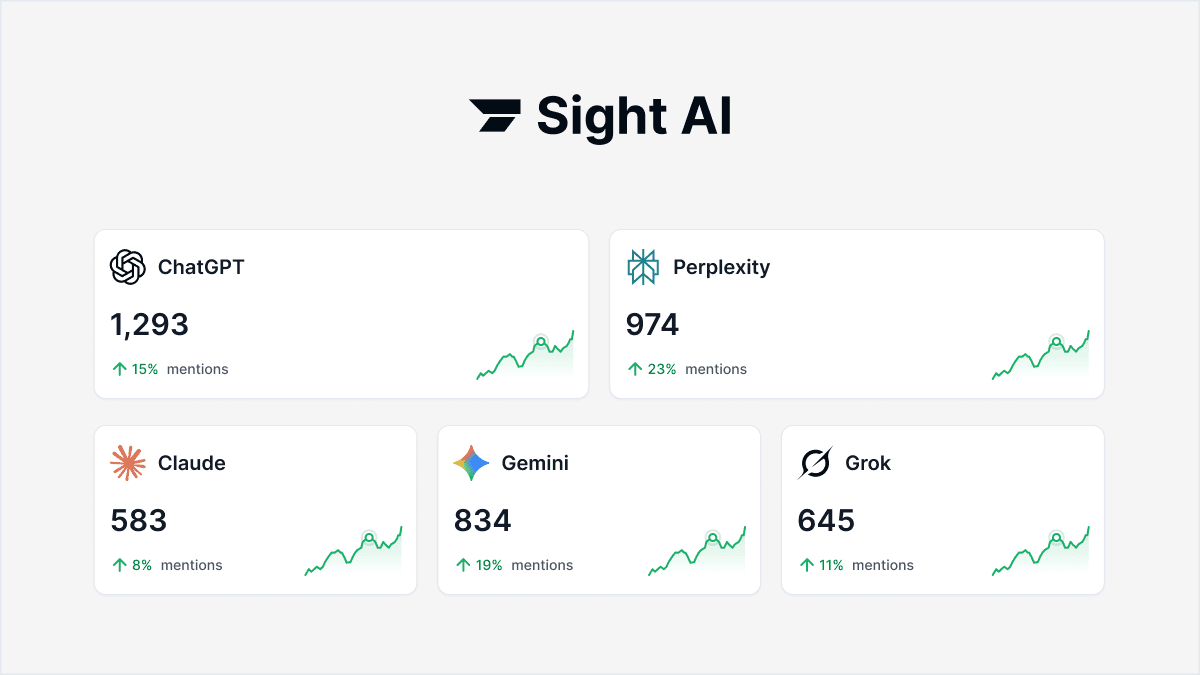
Focus on topical authority over individual keyword optimization—content that comprehensively covers a subject performs better in both traditional search and AI responses. Use tools like Sight AI to track how AI models actually reference your content, then refine your optimization approach based on what gets cited. Remember that GEO favors clear, factual content with strong supporting evidence over keyword density.
6. Set Up Automated Publishing and Indexing Pipelines
The Challenge It Solves
Content sitting in drafts delivers zero value. Many agencies create an automation bottleneck at the final step—content gets generated quickly, but then waits days or weeks for manual publishing, formatting, and indexing. This delay undermines the speed advantages of automated creation and creates scheduling chaos as backlogs grow.
Manual publishing also introduces consistency problems: formatting varies by who's uploading, publication timing becomes irregular, and indexing gets forgotten in the rush to move onto the next project.
The Strategy Explained
Automated publishing pipelines connect your content generation directly to your content management systems, handling everything from formatting and image placement to scheduling and search engine notification. Once content passes quality checks, it flows automatically to publication without manual intervention.
This includes CMS auto-publishing that formats content according to your templates, applies appropriate categories and tags, and schedules publication at optimal times. IndexNow integration ensures search engines discover new content immediately rather than waiting for periodic crawls. Agencies handling high volumes benefit from understanding bulk content creation for SEO and how publishing automation supports it.
The automation creates predictable, reliable publishing rhythms. Clients know exactly when content goes live, search engines index it quickly, and your team focuses on strategy rather than technical publishing tasks.
Implementation Steps
1. Audit your current publishing process to identify every manual step between approved content and live publication—these are automation opportunities.
2. Connect your content generation tools to your CMS platforms through APIs or integration platforms, enabling direct content transfer without manual copying.
3. Configure automated formatting that applies your templates, inserts images in designated positions, and structures content according to your style guidelines.
4. Implement IndexNow integration that automatically notifies search engines when new content publishes, dramatically reducing time-to-indexing.
5. Set up automated sitemap updates that keep search engines informed about your content structure without manual XML file management.
Pro Tips
Build in scheduling intelligence that publishes content at optimal times based on audience engagement patterns rather than random timing. Create automated backup systems that save content versions before publishing in case revisions are needed. Monitor indexing success rates to ensure your automation actually improves discovery speed.
7. Establish Quality Control Checkpoints Without Bottlenecks
The Challenge It Solves
Automation without quality control creates brand risk. But traditional review processes—where every piece goes through multiple approval layers—recreate the bottlenecks automation was supposed to eliminate. Agencies often struggle to find the balance: too little oversight produces inconsistent quality, too much oversight destroys efficiency gains.
The challenge intensifies as volume increases. Review processes that worked for 10 articles per month collapse under 100 articles per month, forcing agencies to choose between quality and speed.
The Strategy Explained
Tiered quality control creates different review depths based on content risk and complexity. Not every piece needs the same scrutiny—a standard blog post requires different oversight than a technical white paper or client-facing case study. This approach maintains quality standards while allowing high-volume production.
The system categorizes content by risk level and routes it through appropriate checkpoints. Low-risk content might only need automated quality checks and spot reviews. Medium-risk content gets structured human review. High-risk content receives full editorial oversight and stakeholder approval. Reviewing how automated content tools for agencies handle quality assurance helps inform your checkpoint design.
Automation handles the first quality layer: checking for factual accuracy, brand voice alignment, SEO optimization, and structural completeness. Human reviewers focus on strategic elements: messaging alignment, competitive positioning, and nuanced quality factors that AI can't fully evaluate.
Implementation Steps
1. Define risk categories for your content types—what makes a piece high-risk versus low-risk in terms of brand impact and client sensitivity?
2. Create automated quality checks that run on every piece: brand voice scoring, keyword optimization verification, factual accuracy validation, and structural completeness.
3. Establish review routing rules that send content to appropriate checkpoints based on risk category—automated approval for low-risk, human review for high-risk.
4. Build feedback loops where reviewer corrections train your AI systems to avoid similar issues in future content, continuously improving baseline quality.
5. Set up quality dashboards that track metrics like approval rates, common revision types, and time-to-publication across different content categories.
Pro Tips
Use your highest-performing content as quality benchmarks—automated systems can compare new content against these standards to flag potential issues before human review. Empower reviewers to update AI configurations directly when they spot patterns, turning quality control into quality improvement. Schedule regular calibration sessions where reviewers align on standards to prevent subjective quality drift.
Putting It All Together
Implementing automated content creation isn't about replacing your team—it's about amplifying their capabilities and eliminating the repetitive work that prevents them from doing their best strategic thinking. The agencies seeing the greatest success treat automation as a systematic transformation, not a tool purchase.
Start with strategy one: build your modular content framework before selecting automation tools. This foundation determines whether automation creates order or chaos. Document your templates, brand guidelines, and workflows until they're clear enough that both humans and AI systems can follow them consistently.
Then progressively add automation layers, beginning with research and topic discovery before moving to full content generation. This staged approach lets you refine each component before adding complexity. Deploy specialized AI agents for your highest-volume content types first, perfecting those outputs before expanding to other formats.
Integrate SEO and GEO optimization into generation rather than treating it as a post-production step. Content that's built with optimization in mind performs better and requires less revision than content that's retrofitted. Set up your publishing pipelines early—there's no point generating content quickly if publication becomes the new bottleneck.
Most importantly, design quality control that scales with volume. Tiered review processes let you maintain standards without creating approval bottlenecks that undermine efficiency gains.
The agencies mastering this progression typically see content output increase substantially while maintaining the quality standards clients expect. Teams report spending less time on production mechanics and more time on strategy, client relationships, and creative problem-solving—the high-value work that actually differentiates your agency.
But here's what many agencies miss: you can't optimize what you can't measure. Stop guessing how AI models like ChatGPT and Claude talk about your brand—get visibility into every mention, track content opportunities, and automate your path to organic traffic growth. Start tracking your AI visibility today and see exactly where your brand appears across top AI platforms, then use those insights to refine your automated content strategy for maximum impact.
The key is treating automation as a system, not a single tool purchase. Each strategy builds on the previous one, creating a content operation that's greater than the sum of its parts. Start today with your framework, and you'll be producing high-quality automated content at scale within weeks, not months.