The content marketing landscape has fundamentally shifted. Agencies that once relied on armies of writers to produce blog posts, social media content, and marketing copy are now discovering that AI content writing isn't just a nice-to-have—it's become essential for survival in an increasingly competitive market.
But here's where most agencies stumble: they treat AI writing tools like glorified spell checkers instead of strategic assets that can transform their entire content operation. The difference between agencies thriving with AI and those struggling isn't the technology itself—it's how strategically they implement it.
The challenge runs deeper than just "writing faster." Agencies face unique pressures that solo marketers don't: maintaining distinct brand voices across dozens of clients, scaling content production without sacrificing quality, proving measurable ROI to demanding stakeholders, and managing content workflows that span multiple team members and approval processes.
Smart agencies are discovering that AI content writing, when implemented strategically, solves these exact challenges. They're not just producing more content—they're producing better content, faster, while freeing their human talent to focus on strategy, client relationships, and creative problem-solving that AI can't replicate.
The strategies that follow aren't theoretical concepts. They're battle-tested approaches that forward-thinking agencies are using right now to transform their content operations, delight clients, and build sustainable competitive advantages in an AI-driven marketplace.
1. Build Client-Specific AI Content Personas
Most agencies hit the same wall when scaling content production: maintaining each client's unique brand voice becomes exponentially harder as the roster grows. A writer who perfectly captures Client A's authoritative, data-driven tone might struggle with Client B's conversational, story-focused approach. The result? Endless revision cycles, frustrated clients, and content that feels generic despite your team's best efforts.
This is where client-specific AI content personas transform everything. Think of them as detailed instruction manuals that teach AI systems to write exactly like each client would—capturing not just their tone, but their vocabulary preferences, sentence rhythms, and even the subtle emotional undertones that make their brand distinctive.
The strategy works because AI systems excel at pattern recognition and consistency once they understand what to look for. While a human writer might need weeks of immersion to truly "get" a client's voice, a well-crafted persona enables AI to generate on-brand content from day one. The key is building personas comprehensive enough to capture nuances that separate good content from great content.
Start with a comprehensive brand voice audit. Collect diverse content samples from your client: website copy, blog posts, social media updates, email campaigns, and sales materials. You're looking for patterns across these samples. Does the client favor short, punchy sentences or longer, flowing prose? Do they use industry jargon liberally or explain technical concepts in accessible language? Is their tone enthusiastic and energetic, or measured and authoritative?
Document specific language patterns and preferences. Go beyond generic descriptors like "professional" or "friendly." Instead, capture concrete details: average sentence length, active versus passive voice usage, paragraph structure preferences, how they address their audience (second person "you" or third person), their approach to humor or emotion, and specific phrases or expressions they use frequently. Include examples of sentences that perfectly capture their voice alongside examples of what doesn't fit their brand.
Create structured persona prompts that AI can process effectively. Your persona document should include target audience characteristics, communication objectives for different content types, specific tone descriptors with examples, vocabulary guidelines including preferred and avoided terms, sentence structure preferences, topics to emphasize or avoid, and clear "do" and "don't" examples that illustrate subtle distinctions. The more specific you get, the more consistent your AI output becomes.
Test persona effectiveness before full implementation. Generate sample content using your initial persona prompts and compare the AI output against actual client content. Can you spot the difference? Have team members or even clients do blind tests to identify which pieces are AI-generated. This validation step reveals gaps in your persona documentation that need addressing before you scale production.
Refine based on real-world performance. Your first persona iteration won't be perfect, and that's expected. Track which types of content require the most editing and identify specific areas where AI output diverges from brand voice. Maybe the AI nails the professional tone but misses the client's preference for concrete examples over abstract concepts. Use these insights to refine your persona prompts, making them more specific and directive.
The real power emerges when you build persona variations for different content types while maintaining core brand identity. A client's LinkedIn thought leadership voice might be more formal and data-driven than their Instagram stories voice, but both should feel authentically "them." Document these variations within your persona framework so AI can adapt appropriately.
Keep personas current as client brands evolve. Schedule quarterly reviews tied to client strategy sessions, monitor their published content for voice shifts or new messaging directions, and create feedback mechanisms where team members flag persona-content mismatches. A persona that worked perfectly six months ago might need updates as the client's market positioning or target audience evolves.
The investment in building detailed personas pays dividends through dramatically reduced revision cycles. Many agencies report cutting editing time by 60-70% once personas are properly implemented, because AI-generated first drafts already match brand voice expectations. That efficiency gain doesn't just save time—it transforms your agency's capacity to serve more clients without proportionally expanding your team.
2. Implement Multi-Stage Content Refinement Workflows
Raw AI output is like uncut diamonds—valuable potential that needs expert refinement to shine. Most agencies make the critical mistake of treating AI-generated content as finished work, leading to bland, generic pieces that fail to meet client standards or drive results.
The solution isn't abandoning AI—it's building systematic workflows that leverage AI's speed while preserving human strategic thinking.
Why Single-Pass Content Fails:
AI excels at pattern recognition and information synthesis, but it can't understand your client's competitive positioning, strategic objectives, or the nuanced context that makes content truly valuable. When you publish AI's first draft without strategic refinement, you're essentially letting the technology make strategic decisions it's not equipped to handle.
Think of AI as your research assistant and first-draft writer—incredibly fast and knowledgeable, but requiring direction from someone who understands the bigger picture.
The Three-Stage Refinement System:
Stage 1: AI Generation Phase begins with detailed briefs that include client personas, strategic objectives, target keywords, and structural requirements. The AI handles research synthesis, creates the first draft with proper formatting, and ensures basic brand voice alignment. This stage should produce coherent, well-structured content that covers all required topics—but it's deliberately not the final product.
Stage 2: Strategic Refinement Phase is where human expertise transforms good content into great content. Your editors focus on strengthening arguments, adding unique insights that differentiate the client from competitors, improving transitions between ideas, and ensuring the content advances specific business objectives. This isn't about fixing grammar—it's about strategic enhancement that AI can't provide.
Stage 3: Quality Assurance Phase catches errors, verifies facts, ensures brand compliance, and confirms SEO optimization. This final review prevents embarrassing mistakes and maintains the quality standards that protect your agency's reputation.
Building Workflow Efficiency:
Create clear handoff protocols between stages. Each phase needs defined entry criteria (what must be complete before moving forward) and exit criteria (what must be achieved before advancing). This prevents content from getting stuck in revision limbo or advancing before it's ready.
Develop stage-specific checklists that guide team members through their responsibilities. For the refinement phase, your checklist might include: "Does this content provide insights competitors aren't offering?" and "Will readers take a specific action after reading this?" These questions force strategic thinking that elevates content quality.
Common Workflow Pitfalls:
Never skip the human refinement stage, even for "simple" content. Blog posts, social media updates, and email campaigns all benefit from strategic enhancement. The time you save on AI generation should be invested in making content strategically stronger, not eliminated entirely.
Avoid bottlenecks by ensuring adequate resources at each stage. If your AI can generate five articles daily but you only have editing capacity for two, you'll create frustrating delays. Balance your workflow capacity across all stages.
Measuring Workflow Success:
Track both efficiency metrics (time per stage, total production time) and quality metrics (revision requests, client satisfaction, content performance). The goal isn't just faster production—it's better content produced more efficiently.
Monitor where content gets stuck or requires the most revision. These patterns reveal opportunities to improve your AI prompts, refine your briefs, or enhance your quality criteria. Continuous improvement comes from analyzing workflow data systematically.
Your Implementation Starting Point:
Begin by documenting your current content creation process, then identify where ai content generation software can handle initial drafting while human expertise adds strategic value through systematic refinement stages.
3. Create Scalable Content Template Libraries
Here's the reality most agencies face: your team recreates the wheel every single time they start a new blog post, social media campaign, or email sequence. Even when you're producing similar content types for different clients, each project starts from scratch. This inefficiency compounds exponentially as your client roster grows, creating a productivity ceiling that no amount of hiring can break through.
The solution isn't working harder—it's building systematic reusability into your content operation through comprehensive template libraries.
Why Template Libraries Transform Agency Operations
Think about how architects work. They don't redesign structural principles for every building—they apply proven frameworks and adapt them to specific requirements. Your content operation needs the same approach.
Template libraries provide the structural foundation that makes AI content generation both faster and more consistent. When you feed AI a proven content structure along with client-specific requirements, you're giving it the blueprint for success rather than asking it to invent architecture from scratch.
The power multiplies when you realize templates serve three critical functions simultaneously: they guide AI generation, train new team members on proven approaches, and provide clients with predictable deliverable structures they can approve confidently.
Building Your Template Foundation
Start by analyzing your highest-performing content across all client accounts. Look for structural patterns that consistently drive results—not just engagement metrics, but business outcomes like lead generation, sales enablement, or brand positioning.
You'll likely discover that your best blog posts follow similar narrative arcs: problem introduction, context building, solution framework, implementation guidance, and actionable conclusion. Your most effective social media campaigns probably share common elements: attention-grabbing hooks, value delivery, engagement prompts, and clear calls-to-action.
Document these winning patterns in detail. A blog post template shouldn't just say "write an introduction"—it should specify the introduction structure: opening hook (1-2 sentences), problem statement (2-3 sentences), context setting (2-3 sentences), and value promise (1-2 sentences).
Create modular components within templates that can be mixed and matched based on content objectives. A thought leadership piece needs different structural elements than a how-to guide, but both might share common components like expert insights sections or actionable takeaway frameworks.
Designing for AI Compatibility
Templates need explicit structural guidance that AI systems can interpret effectively. This means moving beyond vague instructions like "make it engaging" to specific directives like "open with a relatable scenario that illustrates the problem in concrete terms, using 2-3 sentences maximum."
Build prompt libraries that correspond to each template section. When your template calls for a "problem statement," you should have refined prompts that generate problem statements matching your quality standards and client voice requirements.
These templates serve as starting points for ai article generator tools, ensuring consistent quality and reducing production time while maintaining flexibility for client-specific requirements.
Test each template across multiple client accounts before full deployment. Generate sample content for different industries and brand voices to ensure the template structure works universally while allowing for necessary customization.
Implementing Template Systems
Categorize by Content Type: Organize templates by format (blog posts, social media, email sequences, white papers) and purpose (thought leadership, product education, lead generation, customer retention). This categorization helps team members quickly identify the right template for each project.
Create Difficulty Tiers: Develop basic templates for straightforward content and advanced templates for complex pieces requiring deeper strategic thinking. This tiering prevents over-complicating simple projects while ensuring adequate structure for sophisticated content.
4. Establish AI-Human Collaboration Protocols
Here's what kills most agency AI implementations: nobody knows who's supposed to do what. Your writers don't know when to trust AI output versus when to rewrite from scratch. Your editors can't tell which parts need human oversight versus which can flow straight through. Your project managers have no framework for estimating timelines when half the work is AI-assisted.
The result? Chaos masquerading as innovation. Some team members over-rely on AI, shipping mediocre content that damages client relationships. Others refuse to touch AI at all, creating bottlenecks that negate any efficiency gains. Meanwhile, you're stuck mediating conflicts about "proper" AI usage instead of growing your agency.
Smart agencies solve this by establishing clear collaboration protocols that define exactly when AI handles tasks, when humans take over, and how the two work together most effectively. These aren't restrictive rules—they're liberating frameworks that let your team move fast without sacrificing quality.
The Core Protocol Framework
Start by mapping your content creation process into distinct task categories. Research and information gathering? AI excels here, processing vast amounts of data faster than any human. Strategic positioning and messaging decisions? That's purely human territory—AI can't understand your client's competitive landscape or business objectives the way you can.
First-draft generation sits in the collaboration sweet spot. AI produces the initial structure and content, but humans provide the strategic brief that guides what gets created. Think of it like architectural blueprints: AI builds according to specifications, but humans design what should be built in the first place.
Creative enhancement and brand voice refinement require human judgment. AI can match patterns it's seen before, but it can't inject the unexpected metaphor or craft the perfect analogy that makes complex ideas click for your client's specific audience. These moments of creative brilliance remain distinctly human contributions.
Decision Trees That Actually Work
Create simple decision frameworks your team can reference in real-time. For content type selection: straightforward blog posts explaining established concepts? AI can handle 70-80% of the work. Thought leadership pieces establishing new perspectives? Flip that ratio—humans lead, AI assists with research and structure.
For revision decisions: if AI output captures the core message but needs voice adjustment, human editors refine. If the strategic direction is wrong, humans restart with better prompts rather than trying to edit AI output into something it was never designed to be.
Client sensitivity provides another decision point. High-stakes content for major clients or sensitive topics always gets extra human oversight. Routine social media posts or newsletter updates can move through with lighter human touch, focusing quality control on strategic alignment rather than line-by-line editing.
Mandatory Human Oversight Points
Establish non-negotiable checkpoints where human review is required regardless of content type. Every piece needs human verification of factual accuracy—AI can hallucinate statistics or misrepresent sources, and that's your agency's reputation on the line.
Strategic messaging always requires human approval. AI might generate compelling copy, but only humans can confirm it aligns with client positioning, doesn't conflict with other campaigns, and advances business objectives. This checkpoint prevents the embarrassment of publishing content that contradicts your client's actual strategy.
Client-facing communications get human review without exception. Whether it's the content itself or emails about the content, anything a client sees should pass through human judgment. AI can draft, but humans ensure tone, timing, and context are appropriate for the specific client relationship.
Training Your Team on Collaboration
Protocols only work if your team understands both the "what" and the "why." Run workshops where team members practice applying decision frameworks to real scenarios. Use actual client projects as case studies: here's where AI saved us time, here's where human intervention prevented a disaster, here's how we balanced the two for optimal results.
5. Develop Content Performance Tracking Systems
Here's the uncomfortable truth most agencies avoid: you're probably measuring the wrong things when it comes to AI content performance. You track engagement rates and traffic numbers, but you're missing the metrics that actually prove whether AI is transforming your agency operations or just creating more work.
The real challenge isn't collecting data—it's building tracking systems that reveal the complete picture of AI content effectiveness across production efficiency, client satisfaction, and business impact. Without this comprehensive view, you're flying blind, unable to optimize your AI strategies or justify continued investment to skeptical stakeholders.
Why Traditional Analytics Fall Short
Standard content analytics weren't designed for AI-enhanced workflows. They measure output performance but ignore the operational transformation that makes AI valuable for agencies. You need systems that track both the content results and the process improvements.
Think about what actually matters to your agency: Are you producing content faster without sacrificing quality? Are clients happier with turnaround times? Is your team spending less time on repetitive tasks and more on strategic work? Traditional analytics can't answer these questions.
The agencies winning with AI track a dual-layer system: content performance metrics that prove value to clients, and operational metrics that demonstrate internal efficiency gains. This comprehensive approach reveals the full ROI picture.
Building Your Tracking Framework
Production Efficiency Metrics: Track time-to-completion for AI-assisted content versus traditional methods. Document how many revision cycles each approach requires. Measure the percentage of AI-generated content that passes quality checks on first review. These metrics reveal where AI delivers genuine efficiency gains versus where it creates additional work.
Quality Consistency Indicators: Monitor brand voice compliance scores across AI-generated content. Track client approval rates and revision requests. Document the types of edits required—are they strategic enhancements or basic corrections? This data shows whether your AI personas and workflows maintain quality standards at scale.
Client Satisfaction Measurements: Implement systematic feedback collection after content delivery. Track Net Promoter Scores specifically for AI-assisted projects. Document client comments about turnaround speed, content quality, and strategic value. This qualitative data often reveals insights that quantitative metrics miss.
Business Impact Tracking: Connect content performance to actual business outcomes. For client blog posts, track not just traffic but lead generation and conversion rates. For social content, measure engagement quality—comments and shares versus passive likes. Link content pieces to sales conversations and closed deals when possible.
Implementing Comparative Analysis
The most powerful insights come from direct comparisons. Establish baseline metrics from your pre-AI content performance, then track how AI-assisted content performs against these benchmarks. This approach provides concrete evidence of improvement or identifies areas needing refinement.
Create A/B testing frameworks where you produce similar content with and without AI assistance. Compare not just the final performance but the entire production process—time invested, resources required, revision cycles needed. This data becomes invaluable for optimizing your AI workflows.
Document which content types benefit most from AI assistance. You might discover that AI excels at certain formats while requiring more human intervention for others. These insights help you allocate AI resources strategically rather than applying it uniformly across all content.
Creating Client-Facing Dashboards
Transform your tracking data into compelling client communications. Build dashboards that showcase content performance alongside production efficiency gains. When clients see that you're delivering better results faster, AI skepticism transforms into appreciation.
Focus your client reporting on metrics that matter to their business objectives. If a client cares about thought leadership, emphasize engagement quality and audience growth. If they prioritize lead generation, highlight conversion rates and cost-per-lead improvements.
As agencies scale their AI content operations, they often overlook a critical blind spot: tracking how their content performs in AI-powered search experiences. While you're optimizing for traditional SEO, your potential clients are increasingly getting answers from ChatGPT, Claude, Perplexity, and other AI systems that may or may not surface your agency's expertise.
This is where understanding AI visibility becomes essential. Sight AI provides agencies with a systematic way to monitor how their content appears in AI-generated responses across different platforms. Think of it as SEO analytics for the AI era—instead of just tracking Google rankings, you're monitoring whether AI systems recommend your agency's content, services, or thought leadership when users ask relevant questions.
The platform works by testing how various AI models respond to queries relevant to your agency's expertise. For an agency specializing in B2B content marketing, Sight AI might reveal that ChatGPT frequently mentions your competitor's approach to email segmentation, while your agency's superior framework remains invisible. This visibility gap represents lost opportunities—potential clients getting recommendations that exclude your expertise entirely.
Why This Matters for Agency Operations: Traditional analytics tell you about traffic that already reached your website. AI visibility tracking reveals the conversations happening before potential clients ever search for you directly. When a CMO asks an AI assistant "what agencies excel at scaling content operations," you need to know whether your agency appears in that answer—because that's increasingly how buying decisions begin.
The strategic application goes beyond vanity metrics. Agencies can use AI visibility data to identify content gaps where competitors dominate AI recommendations, refine their thought leadership topics to increase AI mention frequency, and adjust their content strategy based on how AI systems interpret and categorize their expertise. This feedback loop helps optimize not just for search engines, but for the AI-mediated discovery process that's reshaping how clients find and evaluate agencies.
For agencies implementing the strategies outlined in this article, Sight AI provides measurable validation of your AI content efforts. As you build client personas, refine workflows, and scale production, you can track whether these improvements translate into increased AI visibility. When your agency appears more frequently in AI-generated recommendations, you're not just producing more content—you're building genuine authority that AI systems recognize and recommend.
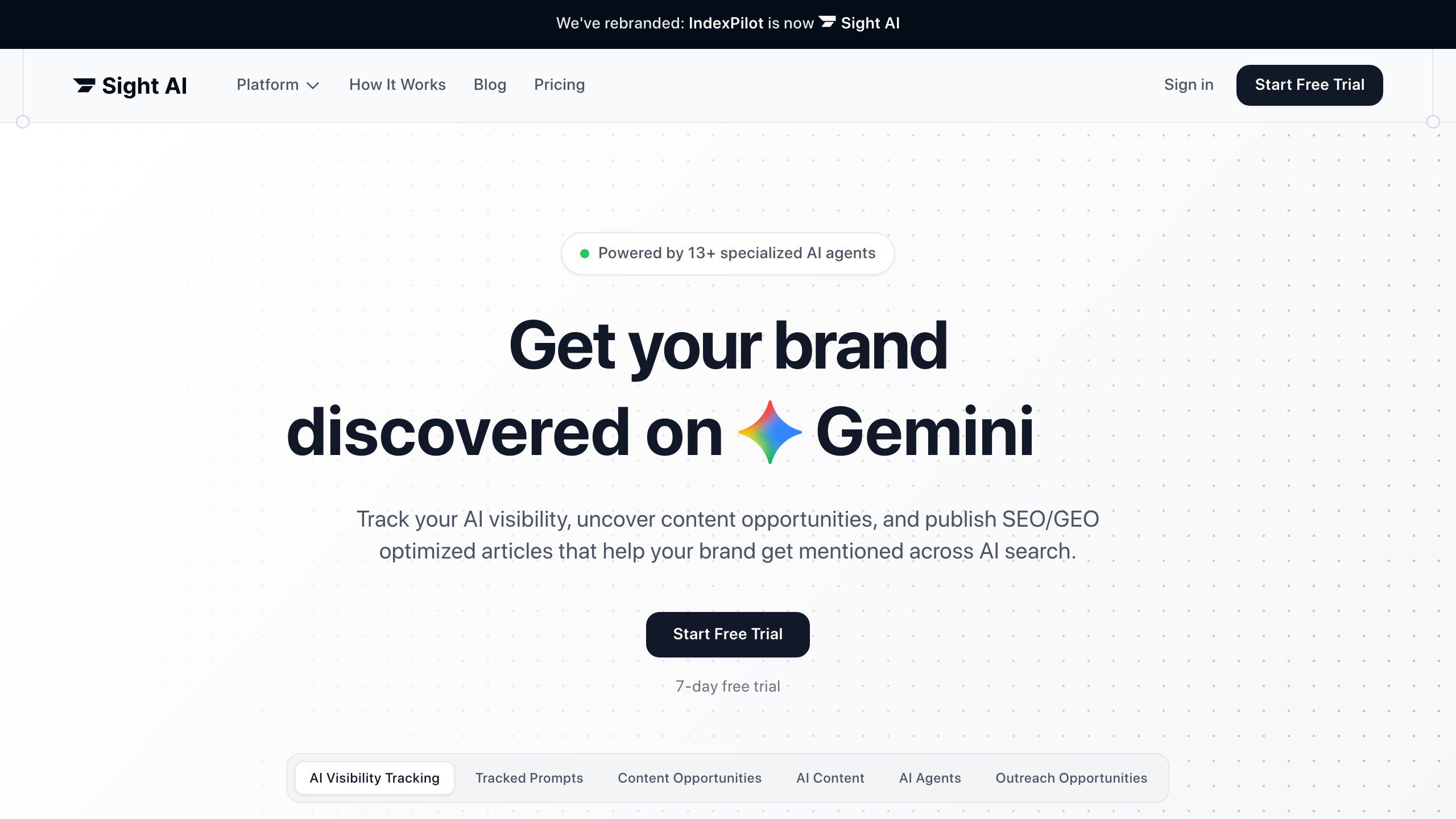
The platform also helps agencies demonstrate value to clients beyond traditional metrics. Instead of just reporting blog traffic and engagement rates, you can show clients how their brand visibility in AI responses has improved, providing concrete evidence that your content strategy is positioning them for success in an AI-driven marketplace.
6. Master Advanced Prompt Engineering Techniques
Here's what separates agencies producing mediocre AI content from those generating work that clients can't distinguish from their best human writers: prompt engineering mastery. Most agencies treat prompts like search queries—throw in a topic and hope for the best. The result? Generic content that requires hours of editing and rarely captures the strategic nuance clients expect.
Advanced prompt engineering transforms AI from a basic writing assistant into a strategic content partner. The difference lies in understanding how to structure prompts that incorporate context, constraints, and strategic objectives in ways that guide AI toward producing publication-ready content.
Understanding Prompt Architecture
Think of prompts as architectural blueprints rather than simple instructions. A basic prompt says "write a blog post about email marketing." An advanced prompt provides the AI with role context, audience understanding, strategic objectives, stylistic constraints, and structural requirements—all before requesting the actual content.
The most effective prompts follow a layered structure. Start with role assignment: "You are a B2B marketing strategist writing for enterprise CMOs." This immediately frames the AI's perspective and expertise level. Next, establish context: "The audience struggles with declining email engagement rates and increasing competition for inbox attention." This grounds the content in real business challenges.
Then specify strategic objectives: "The goal is positioning our client as the authority on email personalization while subtly introducing their segmentation platform." This ensures the content serves business purposes beyond just providing information. Finally, add constraints: "Maintain a confident but not arrogant tone, use data-driven arguments, avoid marketing jargon, and structure content for busy executives who scan rather than read."
Context Layering Techniques
Context layering means progressively adding information that shapes AI output. Begin with broad industry context, then narrow to specific audience challenges, then focus on your client's unique positioning. This progression helps AI understand not just what to write about, but why it matters and how to frame it strategically.
Industry Context Layer: Provide relevant market trends, competitive dynamics, and emerging challenges that inform the content's relevance. This helps AI generate insights that feel current and informed rather than generic.
Audience Psychology Layer: Describe what keeps your target audience awake at night, what success looks like for them, and what objections they typically raise. This enables AI to address real concerns rather than surface-level topics.
Strategic Positioning Layer: Explain how your client wants to be perceived, what makes their approach different, and what conversations they want to lead. This guides AI toward content that advances strategic objectives.
Stylistic Preference Layer: Include specific examples of language patterns, sentence structures, and tonal qualities that match your client's brand voice. The more specific these examples, the better AI can replicate the desired style.
Iterative Refinement Approaches
Advanced prompt engineering rarely produces perfect content on the first attempt. Instead, it uses systematic refinement where each iteration builds on the previous output. Start with a comprehensive prompt that generates a solid foundation. Review the output specifically for areas where it diverges from your vision.
Then create targeted refinement prompts that address specific weaknesses. If the introduction lacks punch, prompt: "Rewrite the introduction with a more compelling hook that immediately demonstrates why this topic matters to enterprise CMOs facing budget scrutiny." If examples feel generic, prompt: "Replace generic examples with specific scenarios that B2B marketers would recognize from their daily experience."
This iterative approach proves more efficient than trying to create the perfect prompt upfront. Each refinement teaches you what additional context or constraints the AI needs for your specific content requirements.
Building Reusable Prompt Libraries
As you develop effective prompts, document them in organized libraries that your entire team can access. Categorize prompts by content type, industry, and strategic objective. This transforms individual discoveries into agency-wide capabilities.
Putting It All Together
The agencies winning with AI content writing aren't just using better tools—they're implementing comprehensive strategies that transform their entire content operation. The difference between thriving and struggling comes down to treating AI as a strategic capability multiplier rather than a simple efficiency hack.
Start with client-specific AI personas to solve your most immediate challenge: maintaining brand voice consistency across multiple accounts. Layer in multi-stage refinement workflows to ensure quality never suffers in pursuit of speed. Then build your template libraries and collaboration protocols to create sustainable, scalable systems that grow with your agency.
The competitive landscape has shifted permanently. Your clients are already encountering AI-enhanced content from competitors who've embraced these strategies. The question isn't whether to implement AI content writing—it's how quickly you can build the capabilities that will define successful agencies in 2026 and beyond.
Begin with 2-3 strategies that address your biggest current bottlenecks. Build competency and confidence before expanding to additional approaches. Remember that AI content mastery is a journey of continuous improvement as both technology and best practices evolve rapidly.
Ready to transform your agency's content operations and prove measurable ROI to your clients? Start tracking your AI visibility today and discover how leading agencies are building sustainable competitive advantages through strategic AI implementation.