When someone opens ChatGPT and types "What's the best project management tool for remote teams?" your brand is either in that conversation or it isn't. When a founder asks Claude "Which marketing agencies specialize in SaaS growth?" your company is either recommended or invisible. This shift is happening right now, at scale, across millions of daily interactions—and most businesses have no idea where they stand.
The search landscape has fundamentally changed. Users increasingly bypass Google's blue links entirely, going straight to AI assistants for direct recommendations. They're not looking for options to evaluate—they want answers. And AI models are delivering them, naming specific brands, comparing solutions, and shaping purchasing decisions in real-time conversations.
This creates a visibility challenge unlike anything traditional SEO prepared us for. You can't check your ranking. There's no page two. Either the AI mentions your brand when it matters, or your competitors own that moment. AI recommendation tracking for businesses is the emerging discipline that makes this black box transparent, giving you visibility into how conversational AI platforms discuss your brand and actionable data to improve your position.
The New Discovery Channel: Why AI Assistants Are Reshaping Brand Visibility
The buyer's journey used to follow a predictable pattern: awareness, consideration, evaluation, decision. Users would search, click through multiple results, read reviews, compare options, and eventually convert. That multi-step process created opportunities for businesses to intercept prospects at various stages.
Conversational AI has compressed this journey dramatically. When someone asks Perplexity "What CRM should I use for a 15-person sales team?" they often get a direct answer with specific recommendations, key features compared, and even pricing context—all without leaving the chat interface. The consideration and evaluation phases happen inside a single AI response.
This is what industry observers call the "zero-click recommendation" phenomenon. The user receives actionable guidance without visiting any websites. They might click through later to verify details or sign up, but the critical moment—when alternatives are surfaced and initial preferences form—happens entirely within the AI conversation.
For businesses, this changes everything about discoverability. Traditional SEO focused on ranking for keywords so users would click your link. AI brand visibility tracking focuses on being mentioned in the answer itself. The goal isn't traffic from the AI platform—it's being present in the recommendation when it matters.
Think of it like this: if traditional search was about getting your store on the main street where people walk by, AI recommendations are about getting mentioned by the trusted advisor everyone consults before they even leave home. The traffic patterns are different. The optimization strategies are different. And the measurement approach needs to be completely different.
This is where AI recommendation tracking becomes essential. It answers the fundamental question: when prospects ask AI assistants about solutions in your category, what happens? Does your brand appear? How is it positioned? What context surrounds the mention? Are competitors mentioned more frequently or more favorably?
Without systematic tracking, you're operating blind. You might hear anecdotally that "someone saw us mentioned in ChatGPT" or discover through a customer conversation that "Claude recommended you." But anecdotes don't reveal patterns. They don't show you the prompts that trigger mentions, the sentiment of those mentions, or the competitive landscape across different AI models.
AI recommendation tracking measures exactly what traditional analytics can't: your brand's presence and positioning in conversational AI responses. It tracks AI brand mentions across major AI platforms, analyzes the sentiment and context of those mentions, identifies which user prompts trigger recommendations, and benchmarks your visibility against competitors. This data becomes the foundation for optimizing your AI discoverability—the same way search rankings once guided SEO strategy.
What Gets Tracked: The Core Metrics of AI Visibility Monitoring
AI recommendation tracking centers on several interconnected metrics that together paint a complete picture of your brand's conversational AI presence.
Brand Mention Frequency: The most fundamental metric is simple presence—how often does your brand appear when relevant prompts are tested? This isn't about vanity; it's about share of voice in AI-driven discovery. If competitors appear in 70% of relevant responses while you appear in 15%, you're losing recommendation opportunities at scale.
Tracking frequency across different AI models matters because each platform has distinct characteristics. ChatGPT has massive user adoption and tends to provide balanced, multi-option responses. Claude often delivers more detailed analytical comparisons. Perplexity focuses on cited, research-backed recommendations. Gemini integrates with Google's ecosystem and emphasizes recent information. A brand might perform well in ChatGPT recommendations but rarely appear in Claude responses—revealing specific optimization opportunities. Understanding how AI models choose information sources helps explain these differences.
Sentiment Analysis: Not all mentions are created equal. When an AI model mentions your brand, the context matters enormously. Is it a positive recommendation? A neutral mention in a list of alternatives? A comparative statement that positions you as less suitable than competitors for certain use cases? Or even a cautionary note about limitations?
Sentiment analysis for AI recommendations categorizes mentions to reveal how AI models actually position your brand. A high mention frequency with neutral or negative sentiment indicates awareness without preference—people know you exist, but AI isn't actively recommending you. Conversely, fewer mentions with consistently positive sentiment suggests strong positioning in specific niches.
Prompt Pattern Tracking: Perhaps the most actionable metric is understanding which questions trigger your brand in AI responses. When users ask about "enterprise solutions" do you appear? What about "affordable options for startups"? "Tools with strong API integrations"? "Solutions for regulated industries"?
Prompt tracking for brand mentions reveals the specific contexts where AI models associate your brand with user needs. This shows you exactly where your visibility is strong and where it's weak. If you're mentioned for "advanced features" but never for "ease of use," you've identified both a positioning pattern and a potential content gap.
Competitive Context: AI recommendations rarely mention brands in isolation. They compare, contrast, and position alternatives. Tracking how often competitors appear alongside your brand, how AI models differentiate between options, and which brands dominate specific prompt categories provides competitive intelligence that traditional tools can't capture.
These metrics work together to answer the strategic question: how does conversational AI currently understand and recommend your brand, and where are the opportunities to improve that positioning?
How AI Recommendation Tracking Actually Works
The technical foundation of AI recommendation tracking involves systematic prompt testing across multiple AI platforms, structured response collection, and pattern analysis to identify meaningful trends.
The process begins with prompt library development—creating a comprehensive set of questions and requests that real users might ask when searching for solutions in your category. These aren't random queries. They're strategically designed to cover different user intents, experience levels, use cases, and decision criteria. For a CRM company, this might include prompts about specific industries, team sizes, integration requirements, pricing tiers, and feature priorities.
These prompts are then systematically submitted to each target AI platform. The responses are collected, parsed, and analyzed for brand mentions. This isn't a one-time exercise. AI models update frequently, training data evolves, and response patterns shift over time. What ChatGPT recommends today might differ from what it recommends next week after a model update.
This variability is why real-time monitoring matters. Unlike traditional search rankings that change gradually, AI recommendation patterns can shift suddenly when models are updated or retrained. A brand that appeared consistently in recommendations might suddenly drop out after a model refresh—not because your business changed, but because the AI's understanding or data sources shifted. Dedicated AI model tracking software captures these changes automatically.
Effective tracking systems run prompts periodically—daily or weekly depending on your needs—to capture these changes. They maintain historical data so you can identify trends: Are mentions increasing or decreasing? Has sentiment shifted? Are new competitive brands appearing in recommendations?
Competitive benchmarking adds another layer of insight. By tracking not just your own mentions but also how competitors appear in the same prompt contexts, you can calculate relative visibility scores. Competitor rank tracking reveals where you're winning, where you're losing, and where the biggest opportunities exist.
The analysis phase involves pattern recognition at scale. Which prompt categories generate the most mentions? Which AI models favor your brand? What language in prompts correlates with recommendations? Are there specific features, use cases, or customer profiles that trigger mentions more reliably?
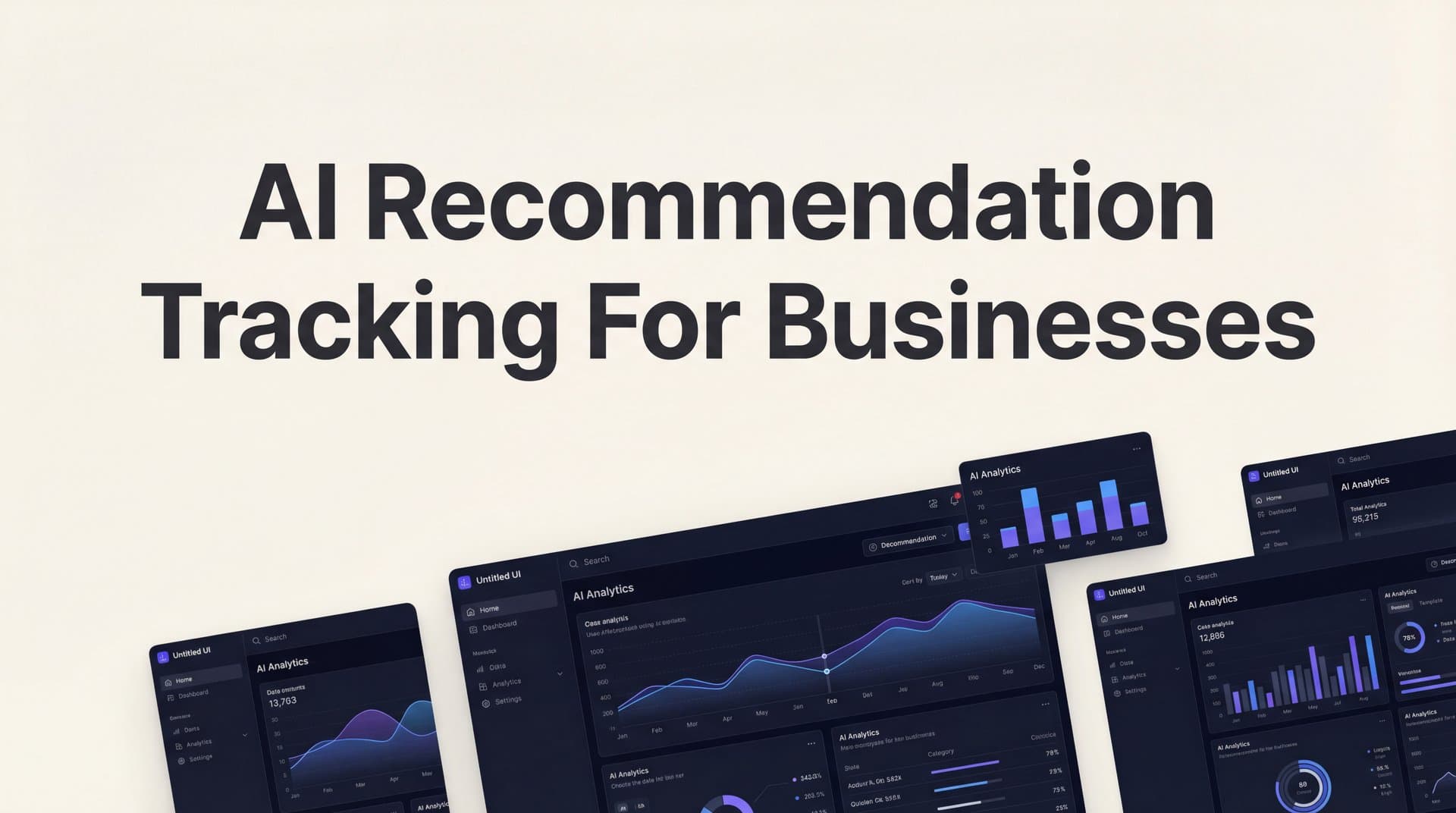
This data gets structured into dashboards and reports that make patterns visible. Instead of reading through hundreds of individual AI responses, you see aggregate metrics: mention frequency by model, sentiment distribution, top-performing prompt categories, competitive positioning, and trend lines showing how visibility changes over time.
The output is actionable intelligence: specific areas where your AI visibility is strong, concrete gaps where competitors dominate, and clear opportunities to improve how AI models understand and recommend your brand.
From Data to Action: Using Tracking Insights to Improve AI Visibility
Tracking data becomes valuable when it drives optimization decisions. The goal isn't just knowing where you stand—it's systematically improving your position in AI recommendations.
Content Gap Identification: Tracking data reveals the specific topics, use cases, and contexts where your brand should appear but doesn't. If prompts about "API integrations" consistently trigger competitor mentions but never yours, despite having strong API capabilities, you've identified a content gap. The AI models don't associate your brand with that strength because the signals aren't clear enough in your content ecosystem.
This goes beyond traditional keyword gaps. You're identifying conceptual associations that AI models make—or fail to make—about your brand. The solution involves creating content that explicitly addresses these gaps, using clear language that AI models can parse and understand.
Optimizing for AI Comprehension: AI models don't read your website the way humans do. They look for structured information, clear value propositions, authoritative signals, and explicit connections between problems and solutions. Learning how to optimize content for AI search means making these elements obvious.
This includes using structured data markup that makes your offerings machine-readable, creating clear comparison content that positions your solution against alternatives, building authoritative signals through citations and references, and maintaining consistency in how you describe features and benefits across your content.
When tracking shows that competitors are mentioned for "ease of use" while you're positioned as "feature-rich but complex," you can address this through content that explicitly demonstrates usability, includes user testimonials about quick implementation, and showcases simple use cases.
Building the Content Ecosystem: AI models form their understanding of your brand from the entire information ecosystem—not just your website. This includes third-party reviews, industry publications, community discussions, documentation, case studies, and comparison sites.
Improving AI visibility often means expanding beyond owned content to ensure the broader ecosystem contains clear, consistent signals about your brand positioning. This might involve contributing to industry publications, ensuring review platforms have accurate information, creating detailed documentation that gets referenced, and building case studies that demonstrate specific use cases.
The content you create should answer the specific questions that tracking reveals users are asking AI assistants. If "best for small teams" is a common prompt pattern where competitors dominate, create comprehensive content specifically addressing small team use cases, with clear examples and relevant features highlighted. Our AI recommendation optimization guide provides a detailed framework for this process.
Iterative Optimization: AI visibility improvement isn't a one-time project. You track current positioning, identify gaps, create or optimize content to address those gaps, then track again to measure impact. This feedback loop allows you to see which optimization efforts move the needle and which need refinement.
Over time, patterns emerge. You learn which types of content most effectively improve AI mentions, which prompt categories are easiest to influence, and where competitive positioning is hardest to shift. This intelligence guides resource allocation—focusing effort where you can gain the most visibility improvement.
Building Your AI Recommendation Tracking System
Setting up effective AI visibility monitoring requires understanding what capabilities matter and how to integrate tracking into your broader content and marketing workflows.
Multi-Model Coverage: Comprehensive tracking must cover the AI platforms that matter most for your audience. At minimum, this typically includes ChatGPT (largest user base), Claude (growing adoption, especially among technical users), and Perplexity (search-focused recommendations with citations). Depending on your market, Gemini and other emerging models may also be relevant. Multi-platform brand tracking software ensures you're not missing critical visibility data.
Single-platform tracking creates blind spots. A brand might perform well in ChatGPT but poorly in Claude, or vice versa. Without multi-model visibility, you're making decisions based on incomplete data.
Sentiment Analysis Capabilities: Basic mention tracking tells you if you're present in responses. Sentiment analysis tells you how you're positioned. Look for systems that automatically categorize mentions as positive recommendations, neutral mentions, comparative positioning, or negative context. Brand sentiment tracking software saves enormous time compared to manually reviewing every response and provides aggregate sentiment metrics over time.
Prompt Library Management: Effective tracking requires maintaining and evolving a comprehensive prompt library. Your system should allow you to organize prompts by category, track which prompts generate the most valuable insights, and easily add new prompts as your business evolves or new competitive dynamics emerge.
The best prompt libraries aren't static. They grow based on actual customer questions, sales conversations, and market changes. If your sales team reports that prospects are asking about a new integration, that question should become a tracked prompt.
Trend Reporting and Alerts: Raw data is overwhelming. You need dashboards that surface key metrics at a glance: overall mention frequency, sentiment trends, competitive positioning, and changes over time. Alert systems should notify you of significant shifts—sudden drops in mentions, negative sentiment patterns, or new competitive threats appearing in recommendations.
Historical trending is particularly valuable. Seeing that your mention frequency increased 40% over three months after content optimization efforts validates your strategy. Noticing a sudden drop after a major AI model update tells you to investigate what changed.
Integration with Content Workflows: AI visibility tracking is most powerful when integrated with content planning and publishing systems. When tracking reveals a content gap, that insight should flow directly into your content calendar. When you publish new content targeting a specific prompt category, you should be able to track whether it improves visibility in that area.
Some platforms connect AI visibility tracking with content generation and publishing workflows, creating a complete loop: identify gaps through tracking, create optimized content automatically, publish to your site, then measure the impact on AI recommendations. This integration turns tracking from a reporting exercise into an active optimization engine.
Competitive Benchmarking Features: Understanding your absolute mention frequency matters, but relative positioning matters more. Your tracking system should make it easy to compare your visibility against key competitors across different prompt categories and AI models. This reveals where you're winning, where you're losing, and where the biggest opportunities exist.
Putting AI Visibility Data Into Practice
AI recommendation tracking creates a continuous improvement cycle that parallels traditional SEO but focuses on conversational AI platforms. You track current positioning to establish baselines and identify gaps. You analyze patterns to understand what drives mentions and how AI models currently perceive your brand. You optimize content—both owned and ecosystem—to address gaps and strengthen associations. Then you measure again to validate impact and identify the next opportunities.
This isn't a one-time audit. AI models update constantly. Competitive dynamics shift. New use cases emerge. Your own product evolves. Effective AI visibility management is an ongoing discipline that treats conversational AI platforms as a primary discovery channel requiring dedicated attention and optimization.
The businesses that win in this new landscape are those that start monitoring early, build systematic processes for tracking and optimization, and treat AI visibility with the same strategic importance they once gave to search rankings. The difference is that while SEO took years to mature as a discipline, AI recommendation patterns are being established right now. The brands that get mentioned consistently in today's AI responses are building advantages that will be harder to displace as these patterns solidify.
The first step is visibility into your current state. You need to know where you stand today: which prompts trigger your brand, how AI models position you relative to competitors, what sentiment surrounds your mentions, and where the biggest gaps exist. This baseline becomes your starting point for systematic improvement.
Stop guessing how AI models like ChatGPT and Claude talk about your brand—get visibility into every mention, track content opportunities, and automate your path to organic traffic growth. Start tracking your AI visibility today and see exactly where your brand appears across top AI platforms.