As AI assistants like ChatGPT, Claude, and Perplexity become primary information sources for millions of users, your brand's reputation is increasingly shaped by how these models describe you—not just traditional search results or social media. When someone asks an AI "What's the best project management tool?" or "Which marketing agency should I hire?", the response can make or break a potential customer relationship.
Yet most businesses have no visibility into what AI models are saying about them.
Think about it: You've spent years optimizing for Google, monitoring social mentions, and tracking review sites. But when a potential customer asks ChatGPT for recommendations in your category, do you even know if your brand gets mentioned? And if it does, is the description accurate? Favorable? Complete?
This guide covers seven actionable strategies to systematically track, analyze, and improve how AI models perceive and recommend your brand. These aren't theoretical concepts—they're practical approaches you can implement starting today to gain visibility into this emerging reputation channel.
1. Establish Baseline AI Visibility Monitoring
The Challenge It Solves
You can't improve what you don't measure. Most businesses discover they have an AI reputation problem only after a customer mentions "ChatGPT recommended your competitor instead." By then, you've already lost opportunities. Without baseline tracking, you're flying blind in a channel that's rapidly becoming critical for customer acquisition.
The first step in any AI reputation strategy is understanding your current position. Where does your brand appear? Which AI platforms mention you? In what context? This foundational knowledge informs every other strategy that follows.
The Strategy Explained
Baseline monitoring means systematically querying major AI platforms with relevant prompts and documenting the responses. You're creating a snapshot of your current AI visibility that you can measure against over time.
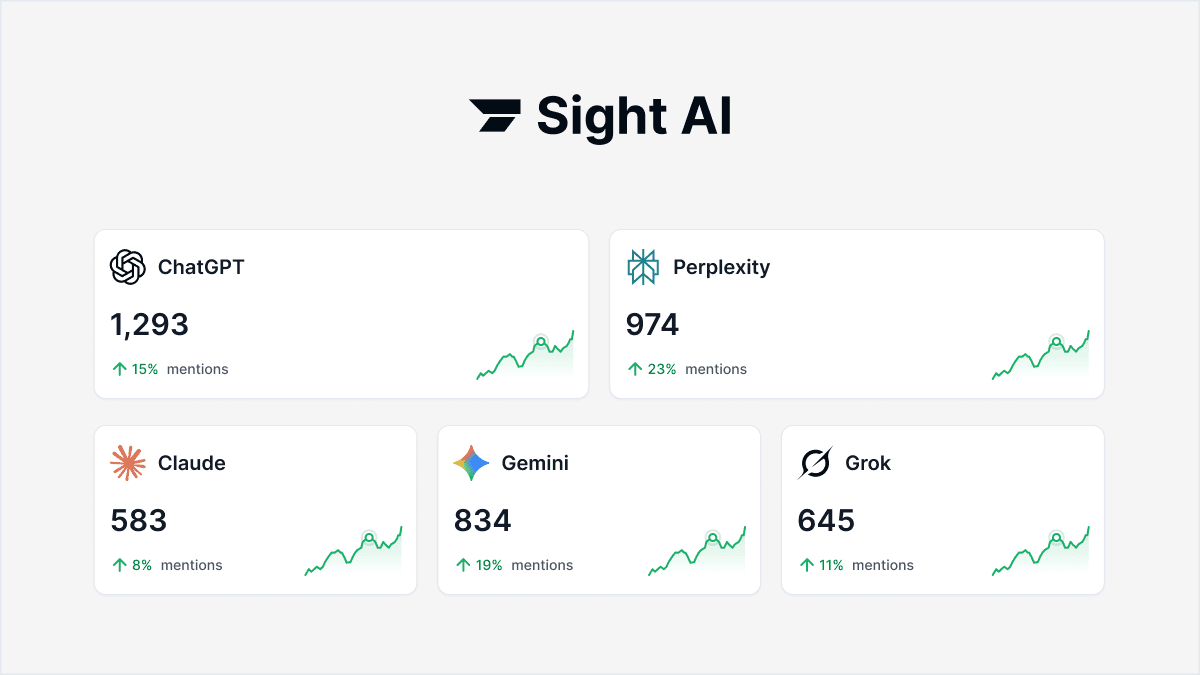
Start with the three most widely used AI assistants: ChatGPT, Claude, and Perplexity. These platforms have different training data, update cycles, and citation approaches, which means your brand presence will likely vary across them. Implementing brand tracking across AI models ensures you capture these variations systematically.
Create a core set of 10-15 prompts that represent how customers might discover brands in your category. Include direct brand queries ("Tell me about [Your Brand]"), category queries ("What are the best [product category] tools?"), and problem-solution queries ("I need help with [specific problem], what should I use?").
Document not just whether you're mentioned, but the full context: positioning in lists, sentiment of descriptions, specific features highlighted, and competitors mentioned alongside you.
Implementation Steps
1. Select your initial platforms—start with ChatGPT, Claude, and Perplexity as your minimum viable tracking set, then expand to others like Gemini or Copilot based on your audience.
2. Develop your core prompt library by interviewing sales teams about common customer questions, reviewing support tickets for recurring themes, and analyzing your existing SEO keyword data for question-based queries.
3. Run your baseline audit by systematically testing each prompt across each platform, taking screenshots of results, and creating a spreadsheet that captures mention frequency, positioning, sentiment, and cited sources for each response.
4. Establish your measurement framework by defining what success looks like—mention rate, average position in lists, sentiment scores, and citation quality—so you have clear metrics to track improvement against.
Pro Tips
Run your baseline audit from multiple accounts and locations to account for personalization. AI models may tailor responses based on conversation history or geographic signals. Test during different times of day and days of the week, as some platforms update their models on rolling schedules. Document the exact model versions you're testing (like "GPT-4" vs "GPT-4 Turbo") since responses can vary significantly between versions.
2. Implement Multi-Platform Sentiment Analysis
The Challenge It Solves
Being mentioned by AI models isn't enough if those mentions are negative, dismissive, or buried in unfavorable context. A brand might appear in ChatGPT's response but be described as "expensive" or "difficult to use" while competitors get glowing descriptions.
Traditional sentiment analysis tools don't work for AI model outputs because the context is fundamentally different. You need to understand not just positive versus negative, but positioning, comparative framing, and the specific attributes being emphasized or omitted.
The Strategy Explained
Multi-platform sentiment analysis goes beyond simple mention tracking to evaluate the quality and context of how AI models discuss your brand. This means analyzing the specific language used, the attributes highlighted, how you're positioned relative to competitors, and whether recommendations come with caveats or qualifications.
Different AI platforms often present wildly different perspectives on the same brand. One model might emphasize your pricing as a strength ("affordable option for small teams") while another frames it as a limitation ("budget tool lacking enterprise features"). Understanding AI model brand sentiment tracking helps you decode these nuances because they shape buyer perceptions.
Create a sentiment scoring framework that captures multiple dimensions: overall tone, specific attributes mentioned, competitive positioning, recommendation strength, and caveats or limitations included. This multi-dimensional approach gives you actionable insights rather than just "positive" or "negative" labels.
Implementation Steps
1. Develop your sentiment scoring rubric with specific criteria for each dimension—use a 1-5 scale for overall tone, track which of your key features get mentioned versus ignored, and note whether you're recommended as a top choice or alternative option.
2. Analyze responses systematically by reading through each AI model output and scoring it against your rubric, paying special attention to qualifiers like "however," "although," or "but" that often signal mixed sentiment.
3. Create comparison matrices that show how sentiment varies across platforms, prompt types, and competitive contexts so you can identify patterns in where your reputation is strongest and weakest.
4. Track sentiment trends over time by re-running your core prompts monthly and comparing scores to identify whether your AI reputation is improving, declining, or holding steady across different platforms.
Pro Tips
Pay special attention to the attributes AI models emphasize about your brand. If they consistently mention pricing but never mention your innovative features, that's a signal about which content is influencing their training data. Look for discrepancies between your intended positioning and how AI models actually describe you—these gaps reveal content opportunities. Track not just what's said about you, but what's said about competitors in the same responses to understand relative positioning.
3. Map Competitor AI Positioning
The Challenge It Solves
Your AI visibility doesn't exist in a vacuum. Potential customers asking AI assistants for recommendations will see your brand alongside competitors—or worse, see only competitors if you're not mentioned at all. Understanding the competitive landscape in AI recommendations is essential for identifying opportunities and threats.
Many businesses discover through competitive analysis that they're being systematically outranked by competitors in AI recommendations despite having superior products or stronger traditional SEO. This happens because AI models draw from different signals than search engines.
The Strategy Explained
Competitive AI positioning analysis means tracking not just your own mentions but systematically monitoring how competitors appear across AI platforms. You're looking for patterns in who gets recommended, in what order, with what descriptions, and under which circumstances.
Create a competitive matrix that captures mention frequency, average positioning, sentiment scores, and specific attributes emphasized for each major competitor across your core prompt library. Using multi-platform brand tracking software reveals where you have advantages and where competitors dominate the AI narrative.
Look for positioning gaps where competitors are consistently recommended for certain use cases or customer types while you're overlooked. These gaps often represent content opportunities—if AI models don't mention you for "enterprise teams" but always mention a competitor, you likely need more authoritative content targeting that audience.
Implementation Steps
1. Identify your core competitive set by selecting the 5-8 direct competitors most relevant to your target audience, focusing on brands that appear in traditional search results for your key terms and in industry analyst reports.
2. Expand your prompt library to include competitive queries like "Compare [Your Brand] vs [Competitor]" and "What's better than [Competitor] for [use case]" to capture direct competitive positioning scenarios.
3. Build your competitive tracking matrix with columns for each competitor and rows for each prompt type, scoring not just mention frequency but positioning order, sentiment, and specific differentiators mentioned by AI models.
4. Analyze positioning patterns by looking for themes in when competitors get recommended over you—is it specific use cases, company sizes, industries, or feature requirements where they dominate the AI narrative?
Pro Tips
Don't just track your direct competitors—monitor aspirational competitors you want to be compared against. If you're a growing SaaS company, track how AI models position you relative to market leaders to understand the perception gap. Pay attention to which competitors get cited sources in AI responses—these citations reveal which content assets are most influential in shaping AI model knowledge. Look for opportunities where no competitor dominates—these white space areas are where you can establish thought leadership that influences future AI training data.
4. Create Strategic Prompt Libraries
The Challenge It Solves
Testing AI models with random queries gives you random insights. To systematically improve your AI reputation, you need structured prompt libraries that mirror actual customer research journeys. Without this structure, you'll miss critical gaps in your visibility and waste time tracking queries that don't matter to your business.
The prompts real customers use when researching solutions are diverse and nuanced. They ask about specific problems, compare alternatives, seek recommendations for particular use cases, and probe for detailed feature information. Your tracking needs to cover this full spectrum.
The Strategy Explained
Strategic prompt libraries are organized collections of queries designed to systematically test your brand visibility across the customer journey. Think of them as the AI equivalent of keyword research—you're identifying the high-value queries where you need visibility and creating a repeatable testing framework.
Organize your prompts into categories that reflect different stages and scenarios: brand awareness queries, category exploration queries, problem-solution queries, comparison queries, and detailed evaluation queries. A comprehensive prompt tracking for brands guide can help you structure these categories effectively.
Your prompt library should be comprehensive enough to catch all critical visibility gaps but focused enough to track consistently. Many companies find that 30-50 well-crafted prompts across categories gives them the coverage they need without becoming overwhelming to manage.
Implementation Steps
1. Mine customer conversation data by analyzing sales call transcripts, support tickets, and chat logs to identify the exact questions prospects ask during their research process—these real questions become your most valuable prompts.
2. Organize prompts by customer journey stage starting with awareness-stage queries like "What tools exist for [problem]", moving through consideration-stage queries like "Compare [solution types]", and ending with decision-stage queries like "Is [Your Brand] right for [specific use case]".
3. Create prompt variations that test different angles on the same topic—if "best project management tools" is important, also test "top project management software," "project management tool recommendations," and "what project management tool should I use" to capture variation in AI responses.
4. Build testing schedules that prioritize your highest-value prompts for weekly or biweekly tracking while checking lower-priority prompts monthly, ensuring you catch important changes without drowning in data.
Pro Tips
Include negative prompts that test for reputation risks—queries like "problems with [Your Brand]" or "[Your Brand] complaints" reveal whether AI models surface negative information about you. Test prompts that include specific customer contexts like company size, industry, or technical requirements to understand how AI models tailor recommendations. Regularly refresh your prompt library based on new product launches, market changes, and emerging customer questions to keep your tracking relevant.
5. Track Citation Sources and Training Data Signals
The Challenge It Solves
Understanding what AI models say about you is valuable, but understanding why they say it is transformative. AI models form their knowledge from training data—the articles, reviews, documentation, and discussions they've been exposed to. If you can identify which sources influence their outputs, you can strategically improve those sources.
Many brands discover that outdated articles, biased reviews, or incomplete documentation are shaping AI model perceptions. Without tracking citation sources, you're guessing about which content improvements will actually impact your AI reputation.
The Strategy Explained
Citation tracking means systematically documenting which sources AI models reference when discussing your brand. Some platforms like Perplexity explicitly cite sources, while others like ChatGPT occasionally mention publications or reference types of information without direct links.
Create a database of cited sources that includes the publication, article title, publication date, sentiment of the original content, and how frequently it appears in AI responses. Dedicated AI citation tracking software reveals which content assets are most influential in shaping AI model knowledge about your brand.
Look for patterns in what gets cited: Are AI models pulling from authoritative industry publications or random blog posts? Recent content or outdated information? Positive reviews or critical analyses? These patterns tell you where to focus your content and PR efforts for maximum AI visibility impact.
Implementation Steps
1. Document all citations by capturing not just the source names but the specific URLs when provided, the context in which they're cited, and whether the citation supports positive, neutral, or negative statements about your brand.
2. Analyze citation patterns by grouping sources into categories like industry publications, review sites, documentation, social media, forums, and academic papers to understand which content types most influence AI model outputs.
3. Identify citation gaps by comparing which topics have strong citation support versus which rely on general knowledge or outdated sources—these gaps become your content creation priorities.
4. Track citation changes over time as AI models update their training data, noting when new sources appear or old sources drop out of citations to understand how fresh content influences model knowledge.
Pro Tips
When AI models cite sources, immediately audit that content for accuracy, completeness, and positioning. If an outdated article is heavily cited, updating or replacing that content becomes a high-priority task. Build relationships with publications that AI models frequently cite—getting coverage in these sources has outsized impact on your AI reputation. Pay attention to citation patterns for competitors to understand which content strategies are working in your industry for AI visibility.
6. Set Up Real-Time Alert Systems
The Challenge It Solves
AI models update their training data and algorithms regularly, which means your brand reputation in AI can change without warning. A model that recommended you positively last month might not mention you at all this month, or worse, might surface new negative information.
Manual tracking catches these changes eventually, but by then you've already lost opportunities or suffered reputation damage. Real-time alerting lets you respond quickly when your AI visibility changes, whether to capitalize on improvements or mitigate problems.
The Strategy Explained
Real-time alert systems automatically monitor your core prompts across AI platforms and notify you when responses change significantly. This means detecting when you're newly mentioned, when you drop out of recommendations, when sentiment shifts, or when new competitors appear in responses.
Effective alerting requires defining what constitutes a meaningful change. Not every minor variation in AI model wording matters, but changes in whether you're mentioned, your position in recommendation lists, or the sentiment of descriptions definitely do. Implementing AI brand mentions tracking provides the foundation for meaningful alerts.
Set up tiered alerting that distinguishes between critical changes requiring immediate attention and informational changes worth noting but not urgent. This prevents alert fatigue while ensuring you catch important shifts.
Implementation Steps
1. Define your alert triggers by identifying specific changes that matter to your business—mention frequency drops, sentiment score decreases, position changes in recommendation lists, and new negative information appearing.
2. Establish monitoring frequency based on your resources and the volatility of your market—weekly monitoring works for most B2B brands while consumer brands in competitive categories might need daily checks on critical prompts.
3. Configure notification routing so critical alerts go to team members who can act quickly while informational alerts go to weekly digest emails that provide context without overwhelming your team.
4. Create response playbooks that outline exactly what to do when different alert types trigger—who investigates, what analysis is needed, and what actions are available to address the change.
Pro Tips
Test your alerting system with known changes before relying on it—manually trigger a prompt that should generate an alert to confirm your system catches it. Build in context for alerts by including historical data so recipients understand whether this is a one-time fluctuation or part of a trend. Set up competitive alerts that notify you when competitors gain or lose visibility, not just when your own brand changes—these shifts often reveal market dynamics or content strategies worth investigating.
7. Build Feedback Loops for Content Optimization
The Challenge It Solves
Tracking AI reputation is valuable, but the real goal is improving it. Without connecting your tracking insights to content creation and optimization workflows, you're just observing problems rather than solving them. The brands that win in AI visibility are those that systematically use tracking data to inform what they publish.
Many content teams operate independently from brand monitoring efforts, which means insights about AI visibility gaps never translate into content that fills those gaps. Building feedback loops ensures your tracking directly drives content strategy.
The Strategy Explained
Content optimization feedback loops connect your AI tracking data to your content creation process. When tracking reveals that AI models don't mention your enterprise features, that becomes a content brief. When citation analysis shows competitors dominate certain topics, those become target keywords for new articles.
Create a systematic process where tracking insights generate content recommendations, those recommendations become prioritized in your editorial calendar, and published content is tracked to measure AI visibility impact. Understanding brand reputation in AI responses helps you close the loop from insight to action to measurement.
The most effective feedback loops include both reactive optimization (improving existing content that's underperforming in AI visibility) and proactive creation (developing new content for gaps where you have no AI visibility at all).
Implementation Steps
1. Establish regular tracking reviews where your content team examines AI visibility data specifically to identify content opportunities—monthly reviews work well for most teams to balance frequency with having enough new data to analyze.
2. Create content briefs from tracking insights by translating visibility gaps into specific content projects with clear objectives like "Create authoritative guide on [topic] to increase mentions in [specific prompt type]" or "Update [existing article] to address [attribute] that AI models currently don't mention about us."
3. Prioritize content projects based on AI visibility impact potential—focus first on high-value prompts where you're completely missing, then on prompts where you're mentioned but poorly positioned, and finally on incremental improvements to strong positions.
4. Measure content impact by tracking changes in AI visibility for specific prompts after publishing or updating related content, documenting which content types and topics most effectively improve your AI reputation.
Pro Tips
Build content specifically designed to be cited by AI models—comprehensive guides, data-driven research, and authoritative explainers that other sources reference. These become the foundation of your AI training data presence. Don't just create new content—systematically update existing high-authority pages that AI models already cite but that contain outdated or incomplete information about your brand. Track the lag time between publishing content and seeing AI visibility changes—this helps set realistic expectations and informs how quickly you need to act on tracking insights.
Putting It All Together
AI brand reputation tracking isn't a one-time audit—it's an ongoing discipline that should sit alongside traditional SEO and social monitoring in your marketing stack. The strategies in this guide build on each other to create a comprehensive tracking and optimization system.
Start with baseline visibility monitoring to understand your current position across major AI platforms. Layer in sentiment analysis to understand not just whether you're mentioned but how you're described. Map your competitive landscape to identify where you have advantages and where competitors dominate the AI narrative.
Build systematic prompt libraries that reflect real customer queries, and track the citation sources that influence what AI models know about you. Set up real-time alerting so you catch important changes quickly rather than discovering them weeks later. Most importantly, connect your tracking insights to content optimization workflows so your visibility improves over time.
The brands that master AI reputation tracking now will have significant advantages as AI assistants become the primary way consumers discover and evaluate businesses. While your competitors are still unaware of how ChatGPT describes them, you'll be systematically improving your positioning across every major AI platform. Exploring AI visibility tracking tools can accelerate your progress significantly.
Begin with strategy one this week: set up monitoring across at least three major AI platforms and establish your baseline. Test your core prompts, document the results, and identify your biggest visibility gaps. Once you understand where you stand, you can systematically work through the other strategies to build a complete AI reputation tracking system.
Stop guessing how AI models like ChatGPT and Claude talk about your brand—get visibility into every mention, track content opportunities, and automate your path to organic traffic growth. Start tracking your AI visibility today and see exactly where your brand appears across top AI platforms.