As AI models like ChatGPT, Claude, and Perplexity become primary information sources for millions of users, understanding whether your brand appears in their training data has become a critical business concern. When someone asks an AI assistant to recommend software in your category, will your brand be mentioned? The answer depends largely on whether—and how—your brand exists in the data these models learned from.
Think of it this way: if your brand doesn't exist in the vast corpus of text that trained these models, you're essentially invisible to one of the fastest-growing discovery channels in history. That's not a hypothetical problem—it's happening right now to brands across every industry.
This guide walks you through the practical steps to investigate your brand's presence in LLM training data, monitor how AI models currently represent your brand, and implement strategies to improve your AI visibility over time. Whether you're a marketer trying to understand a new channel, a founder concerned about competitive positioning, or an agency helping clients navigate AI search, these steps will give you actionable methods to assess and track your brand's footprint in the AI landscape.
The good news? You don't need a data science degree or access to proprietary datasets. With the right approach, you can start uncovering your brand's AI presence today.
Step 1: Audit Your Brand's Current AI Visibility
Before you can improve your position in LLM training data, you need to understand where you stand today. This means systematically querying multiple AI models to see how they currently represent your brand.
Start by testing at least four major AI platforms: ChatGPT, Claude, Perplexity, and Google Gemini. Each model has been trained on different datasets with different cutoff dates, so you'll get varying results. Open each platform and ask direct questions about your brand: "What is [Your Brand Name]?" and "Tell me about [Your Brand Name]."
Document everything. Does the AI know your brand exists? Is the description accurate? What details does it include or omit? Pay close attention to the tone and sentiment—is the AI neutral, positive, or does it misrepresent your positioning? Understanding brand sentiment in LLMs is crucial for identifying reputation issues early.
But here's where it gets interesting: direct brand queries only tell part of the story. The real test is whether your brand surfaces in recommendation scenarios. Ask each AI model: "What are the best tools for [your product category]?" or "I need software that helps with [problem you solve]—what do you recommend?"
This is the moment of truth. If your brand appears in these recommendation lists, you have AI visibility. If it doesn't, you're missing opportunities every time potential customers use AI for research.
Create a simple spreadsheet tracking each query, which AI model you used, whether your brand was mentioned, the context of the mention, and any inaccuracies. This baseline audit becomes your reference point for measuring progress. Take screenshots of responses so you can compare them to future results.
One pattern you might notice: some AI models know your brand exists but provide outdated information. This happens because models like GPT-4 and Claude have training cutoff dates, meaning they only know information published before specific dates. If you launched a major product update in 2025 but the model was trained on data through 2024, it won't reflect your current offerings.
The gaps you identify in this audit reveal exactly where you need to focus your efforts. Missing from recommendations entirely? You need more authoritative content. Mentioned but with outdated information? You need to strengthen your recent digital footprint. Mischaracterized? Your brand messaging needs clarity across public sources.
Step 2: Investigate Training Data Sources
Understanding where LLMs get their training data helps you work backward to improve your brand's presence in future model updates. The largest public dataset feeding most major AI models is Common Crawl—a massive archive of web pages collected over time.
You can check if your brand appears in Common Crawl by visiting index.commoncrawl.org. Search for your domain to see which pages have been crawled and when. This matters because Common Crawl data feeds into training datasets for many open-source and commercial AI models. If your domain isn't being crawled regularly, you're missing a major pathway into training data. For a deeper dive into this process, explore how to track AI model training data systematically.
Next, check your Wikipedia presence. Wikipedia carries enormous weight in LLM training because it's structured, factual, and covers an incredibly broad range of topics. If your brand has a Wikipedia page, review it critically. Is the information accurate and current? Are your key differentiators clearly explained? Wikipedia pages often become the foundation of how AI models understand and describe brands.
If you don't have a Wikipedia page, that's a gap—but not one you can simply fix by creating a promotional page yourself. Wikipedia has strict notability guidelines and frowns on self-promotion. Instead, focus on getting coverage in reliable secondary sources that Wikipedia editors can cite. When authoritative publications write about your brand, you become more notable in Wikipedia's eyes.
Look at where your brand appears in major publications and industry sites. AI models often train on news archives, technical documentation, and authoritative industry sources. Search Google News for your brand name and note which publications have covered you. High-authority mentions in TechCrunch, Forbes, or industry-specific publications carry more weight than mentions on low-authority blogs.
Many companies find that their training data presence is fragmented. You might have great coverage in niche industry publications but zero presence in broader datasets. Or you might have old mentions from years ago but nothing recent. This investigation helps you understand which data sources are working for you and which represent opportunities.
One critical insight: LLMs don't just learn from your own website. They learn from every mention of your brand across the entire web. A single authoritative article about your brand in a major publication might influence how AI models describe you more than your entire website does. This fundamentally changes how you should think about content strategy and PR.
Step 3: Set Up Systematic AI Response Monitoring
One-time audits give you a snapshot, but AI models update regularly—some through retraining, others through retrieval-augmented generation that pulls real-time information. To truly track your brand in LLM training data, you need ongoing monitoring.
Start by building a prompt library. These are the specific questions and scenarios where you want your brand to appear. Include direct brand queries, category recommendation requests, problem-solution prompts, and comparison questions. For example: "What's the difference between [Your Brand] and [Competitor]?" or "How do I solve [specific problem]?" A comprehensive prompt tracking guide can help you build an effective library.
Your prompt library should cover the full customer journey. What would someone ask at the awareness stage when they're just discovering solutions? What about consideration stage when they're comparing options? Create 15-20 core prompts that represent real user queries in your space.
Establish a testing cadence. Weekly monitoring works well for most brands—frequent enough to catch changes but not so often that you're drowning in data. Pick a consistent day and time to run your prompt library across multiple AI platforms. This consistency helps you identify genuine changes versus random variations in AI responses.
Here's where manual monitoring becomes challenging: running 20 prompts across 4+ AI platforms every week means 80+ queries. That's tedious and time-consuming. This is precisely why AI visibility tracking tools exist—they automate this process at scale, running your prompt library systematically and alerting you to changes.
Track not just whether your brand is mentioned, but how it's mentioned. Is the sentiment shifting? Are new competitors appearing in recommendation lists? Is the AI including different features or use cases when describing your brand? These nuances matter because they reveal how the AI's understanding of your brand evolves.
Pay special attention to major model updates. When OpenAI releases a new version of GPT or Anthropic updates Claude, run your full prompt library immediately. New training data means potential changes in how your brand is represented. Sometimes these updates improve your visibility; sometimes they make it worse. You won't know unless you're monitoring systematically.
Create a simple tracking system—even a spreadsheet works. Log the date, AI model, prompt used, whether your brand was mentioned, position in recommendation lists, and any notable changes from previous responses. Over time, this data reveals patterns about what's working and what needs adjustment.
Step 4: Analyze Competitor Brand Presence
Your AI visibility doesn't exist in a vacuum. Understanding how competitors appear in LLM responses helps you benchmark your position and identify strategic opportunities.
Run your entire prompt library for your top 3-5 competitors. Use the same questions, just substitute their brand names. When you ask for category recommendations, do they consistently appear? When you ask problem-solution questions, does the AI suggest their products? This competitive analysis reveals who's winning the AI visibility game in your space.
Look for patterns in which competitors dominate AI recommendations. Often, you'll find that certain brands appear consistently across multiple AI models while others show up sporadically. The brands with consistent presence usually have stronger training data footprints—more authoritative mentions, clearer brand messaging, or better-structured content across the web. Understanding how LLMs choose brands to recommend gives you insight into what drives these patterns.
Study what might be driving their AI presence. Check their Wikipedia pages—are they more comprehensive than yours? Look at their media coverage—do they have more high-authority mentions? Review their content—is it more clearly structured and crawlable? Sometimes the competitive advantage isn't about having more content but having content that AI models can more easily understand and reference.
Document competitive gaps and opportunities. Maybe competitors appear in certain use case scenarios but not others. Perhaps they're mentioned for specific features but miss broader category recommendations. These gaps represent opportunities for you to differentiate and capture AI visibility in underserved areas.
One pattern many brands discover: the competitors who invested early in clear, authoritative content and strong PR now have an AI visibility advantage. Their brand appears in more training data sources, giving them a head start. But here's the opportunity—AI models are updated regularly, and future training data is being created right now. The content you publish today could influence how AI models represent your brand in their next update.
This competitive intelligence should directly inform your strategy. If competitors dominate general category recommendations, focus on specific use cases where you have advantages. If they appear in certain AI models but not others, investigate why and adjust accordingly.
Step 5: Strengthen Your Digital Footprint for Future Training
Understanding your current AI visibility is valuable, but the real goal is improving your position in future training data. This requires a strategic approach to content creation and digital presence.
Start with your owned properties. Create authoritative, comprehensive content that clearly explains what your brand does, who it serves, and what problems it solves. AI models struggle with vague marketing speak—they need clear, factual information. Write content as if you're explaining your product to someone who's never heard of your category. Use specific examples, concrete use cases, and straightforward language.
Implement structured data across your website. Schema markup helps web crawlers understand your content's meaning and context. When your pages clearly signal "this is a software product," "this is a feature list," or "this is a customer testimonial," that structured information can flow more easily into training datasets. Make sure your about page, product pages, and key content are properly marked up.
Focus on crawlability. If web crawlers can't access your content, it won't make it into training datasets. Check that your robots.txt isn't blocking important pages. Ensure your site loads quickly and doesn't rely entirely on JavaScript for content rendering. Submit your sitemap to search engines and use IndexNow to notify crawlers about new content immediately. For actionable strategies, learn how to improve brand visibility in LLM responses.
Build presence on high-authority third-party sites. Guest posts on respected industry publications, contributions to technical documentation, and participation in authoritative directories all create additional training data touchpoints. When multiple authoritative sources mention your brand consistently, AI models are more likely to include you in their knowledge base.
Create content that answers real questions in your space. AI models are trained to be helpful, so they prioritize sources that provide clear, useful information. Write guides, explanations, and how-to content that genuinely helps your target audience. This type of content is more likely to be crawled, referenced, and ultimately influence how AI models understand your category.
Think long-term about content strategy. Training datasets are built from historical web data. The content you publish today might not influence current AI models, but it will be part of the corpus for future model updates. Consistent, high-quality content creation over time builds a stronger training data presence. This isn't about gaming the system—it's about ensuring accurate, authoritative information about your brand exists in the public web archive.
Step 6: Track and Measure Progress Over Time
Improving AI visibility is a long-term strategy that requires consistent measurement. Without tracking progress, you're flying blind—unable to tell which efforts are working and which need adjustment.
Build a tracking dashboard with key metrics. At minimum, track: mention rate across AI models, position in recommendation lists, sentiment of mentions, accuracy of information, and changes over time. If you're mentioned in 2 out of 4 AI models today, improving to 3 out of 4 represents measurable progress. Dedicated LLM brand monitoring tools can automate this tracking for you.
Monitor sentiment and accuracy carefully. Being mentioned is good, but being mentioned positively and accurately is better. If an AI model describes your brand but gets key details wrong, that's a problem you need to address. Track how often AI responses include accurate pricing, correct feature descriptions, and appropriate use cases.
Correlate your content efforts with AI visibility changes. When you publish a major piece of content, note the date. When you get coverage in an authoritative publication, log it. Then watch for changes in AI responses over the following weeks and months. This correlation helps you understand what types of content and coverage drive the most improvement in AI visibility.
Pay attention to which content formats seem to influence AI models most. Many brands find that clear, structured content like comparison guides, feature explanations, and use case documentation have more impact than promotional blog posts. Technical documentation and API references also tend to carry weight because they're factual and specific.
Set quarterly review points to assess overall progress. AI visibility doesn't change overnight—it's a gradual process as new content gets crawled, indexed, and eventually influences model training. Every three months, run your full audit again and compare results to your baseline. Are you appearing in more AI models? Are you mentioned more frequently in recommendations? Is the information more accurate? Using multi-LLM tracking software makes these cross-platform comparisons much easier.
Adjust your strategy based on what the data tells you. If certain types of prompts consistently miss your brand, create content specifically addressing those scenarios. If competitor analysis shows gaps you can fill, focus there. If certain AI models never mention your brand despite strong presence in others, investigate what data sources that specific model might prioritize.
Remember that AI model updates can cause sudden changes—both positive and negative. When a major model releases a new version trained on more recent data, your visibility might jump if you've been strengthening your digital footprint. Track these model update dates and always run your audit shortly after to measure impact.
Putting It All Together
Tracking your brand in LLM training data requires a combination of manual investigation, systematic monitoring, and strategic content creation. Start by auditing your current AI visibility to understand your baseline. Then dig into the data sources that feed these models—Common Crawl, Wikipedia, authoritative publications—to see where your brand already exists and where gaps remain.
Set up ongoing monitoring to catch changes as models update and retrain. Build a prompt library that covers how real users might ask about your brand or category, then test it regularly across multiple AI platforms. Use this monitoring to track not just whether you're mentioned, but how you're mentioned—sentiment, accuracy, and context all matter.
Analyze competitor presence to benchmark your position and identify opportunities. Understanding who dominates AI recommendations in your space reveals what's working and where you can differentiate. Use these insights to inform your content strategy and digital footprint expansion.
Strengthen your presence in future training data by creating clear, authoritative content that web crawlers can easily access and understand. Focus on high-authority sources, implement structured data, and ensure your key information is crawlable. Build presence on third-party sites that carry weight in training datasets.
Track your progress over time with a systematic measurement approach. Correlate your content efforts with changes in AI visibility, and adjust your strategy based on what the data reveals. This is a long-term play—the brands that start now will have a significant advantage as AI-powered search continues to grow.
Quick-start checklist: Query your brand across 4+ AI models today to establish your baseline. Check Common Crawl for your domain to see if you're being crawled regularly. Set up weekly AI response monitoring with a core set of prompts. Audit your highest-authority content for clarity and crawlability. Review your Wikipedia presence or plan how to build coverage that could support one. Document competitor AI visibility to understand your relative position.
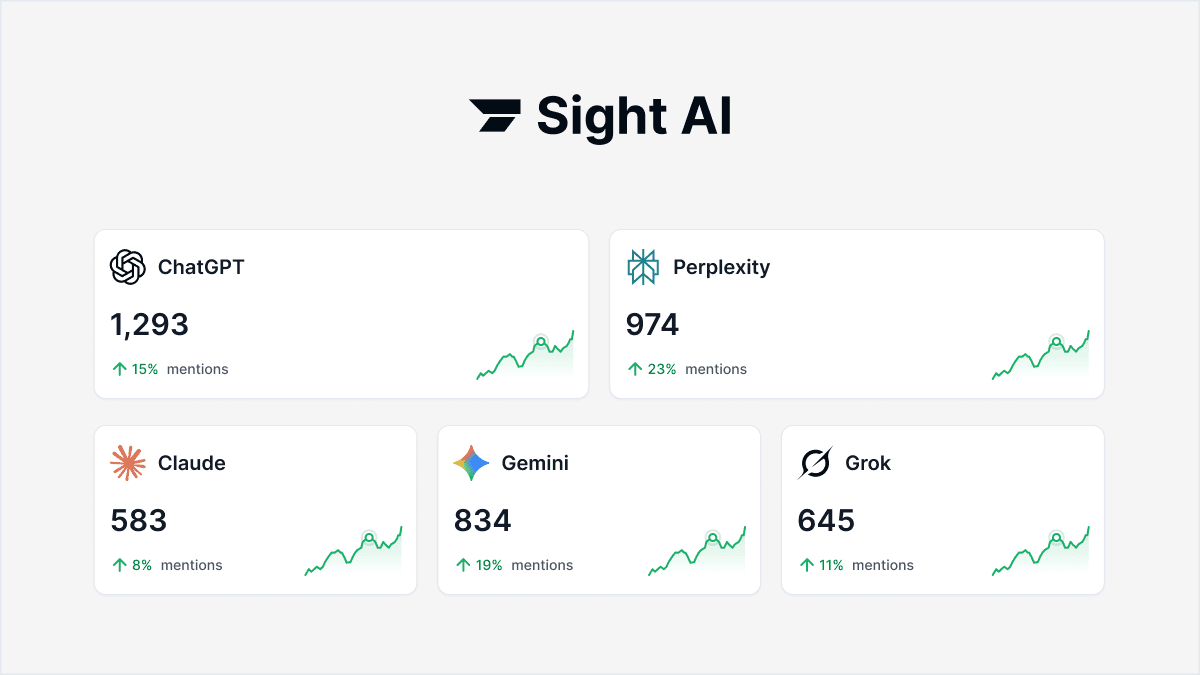
The AI landscape is evolving rapidly, but the fundamentals remain consistent: clear information, authoritative sources, and systematic monitoring give you the best chance of being represented accurately when users ask AI models about your category. Start tracking your AI visibility today and see exactly where your brand appears across top AI platforms—stop guessing how AI models like ChatGPT and Claude talk about your brand, get visibility into every mention, track content opportunities, and automate your path to organic traffic growth.