You hit publish on your latest article. It's thorough, well-researched, and exactly what your audience needs. You check your analytics the next day. Nothing. A week passes. Still barely a trickle. Two weeks later, you're watching competitors who published similar content days after you somehow rank higher. What's happening here isn't bad luck or poor quality—it's the slow content discovery problem, and in 2026, it's costing marketers and publishers more than they realize.
The gap between when you publish content and when search engines and AI models actually find it creates a window of missed opportunity. Your perfectly timed product launch article sits invisible during peak interest. Your trend analysis becomes stale before it gains traction. Your bottom-funnel conversion content waits in limbo while potential customers search elsewhere. This isn't just frustrating—it's a systemic issue rooted in how discovery systems work.
The challenge operates on two fronts: the technical mechanics of how search engines allocate their crawling resources, and the strategic reality of how AI platforms source and surface information. Traditional search engines work on crawl schedules and budgets. AI models train on data snapshots that may be months old. Both systems create friction between your publishing schedule and actual visibility. Understanding these bottlenecks—and more importantly, knowing how to bypass them—separates content that languishes from content that captures attention when it matters most.
The Crawl Budget Reality: Why Search Engines Make You Wait
Search engines don't discover your content the moment you publish it. They work through a resource allocation system called crawl budget—essentially, how much attention and server resources they're willing to dedicate to your site. Sites with established authority get crawled frequently. Newer sites or those with lower domain authority? They wait their turn in a very long queue.
Think of it like this: Google's crawlers are visiting millions of websites constantly, but they can't visit every page on every site every day. They make calculated decisions about where to spend their crawling resources. If your site publishes once a week and hasn't built significant authority yet, crawlers might check in every few days—or longer. Your new article sits there, perfectly optimized, waiting for a crawler to eventually show up and notice it exists.
The traditional discovery model is fundamentally passive. You publish content, update your sitemap, and hope search engines find the updated sitemap during their next scheduled crawl of your site. This worked fine when publishing cycles were slower and competition was less fierce. In 2026, when competitors publish multiple times daily and trends move at social media speed, passive discovery means you're always playing catch-up. Understanding slow content discovery by search engines is the first step toward solving this challenge.
Here's where it gets particularly frustrating: even after a crawler discovers your content, it doesn't immediately appear in search results. The page needs to be processed, indexed, and evaluated for relevance and quality. This multi-step process adds more time to an already slow cycle. Meanwhile, your content ages. The news hook that made it timely fades. The product launch window closes. The seasonal relevance passes.
Many publishers assume their content management system handles this automatically. It doesn't—at least not in a way that prioritizes speed. Standard CMS platforms generate sitemaps on schedules, often daily or even weekly. They don't actively notify search engines when something new appears. They wait for search engines to come check. This passive approach made sense in an era of monthly publishing calendars. It's a liability when you need visibility within hours, not weeks.
When Timing Is Everything: The Business Impact of Discovery Delays
Time-sensitive content has an expiration date that starts the moment you publish. A product launch announcement that takes three weeks to gain search visibility has already missed the peak interest window. Your audience searched during launch week, found competitors or older information, and moved on. By the time your content finally ranks, the conversation has shifted elsewhere.
Consider trend-related content. You spot an emerging trend, research it thoroughly, and publish a comprehensive analysis. If that article takes two weeks to become discoverable, you've lost the moment. Other publishers who spotted the same trend—even if they published days after you with less thorough coverage—may outrank you simply because their content achieved faster indexing. They captured the traffic surge while your superior content waited in the wings. Exploring content indexing delays reveals just how much this timing gap costs publishers.
The revenue implications hit particularly hard for bottom-funnel content. Comparison pages, product reviews, and buying guides directly influence purchase decisions. Every day these pages remain undiscovered represents lost conversions. A potential customer searches for "best project management software for small teams," doesn't find your detailed comparison guide because it's not indexed yet, and signs up for a competitor's recommended solution. That's not just a missed pageview—it's a missed conversion and potentially years of customer lifetime value.
Seasonal content faces an even tighter window. Holiday gift guides, tax planning articles, summer travel recommendations—these have hard deadlines. Publish a "Best Christmas Gifts for Remote Workers" article in November, but if it doesn't achieve visibility until mid-December, you've captured only a fraction of the search volume. The bulk of gift research happens weeks earlier, when your content was technically published but practically invisible.
There's also a compounding effect most marketers overlook. Content that gains early traction accumulates signals—clicks, engagement, backlinks—that further boost its visibility. Content that sits undiscovered misses this momentum-building phase. Even if it eventually gets indexed, it starts from zero while competitors who achieved faster discovery have already built a foundation of positive signals that reinforce their rankings.
The Competitive Disadvantage of Slow Discovery
Your competitors aren't all facing the same discovery delays. Larger publishers with established authority get crawled more frequently. Sites that have implemented proactive indexing protocols notify search engines immediately when they publish. While your content waits to be discovered through passive crawling, theirs is already indexed and accumulating the engagement signals that search algorithms reward.
This creates a frustrating paradox: you may produce better content, but slower discovery means you're always entering the race after competitors have already gained an advantage. By the time your article appears in search results, theirs has accumulated days or weeks of clicks, time-on-page data, and backlinks. Search algorithms interpret these signals as quality indicators, making it harder for your late-arriving content to compete—even if it's objectively more comprehensive or useful.
Technical Friction: The Infrastructure Holding You Back
The slow content discovery problem isn't just about search engine crawl budgets—it's also about the technical infrastructure between your publishing workflow and discovery systems. Many sites inadvertently create bottlenecks that delay even the initial notification that new content exists.
Start with sitemap generation. Most content management systems generate XML sitemaps that list all your site's pages, helping search engines understand your site structure. But here's the catch: many CMS platforms generate these sitemaps on schedules rather than in real-time. You publish a new article at 9 AM, but your sitemap doesn't update until the scheduled generation runs at midnight. Search engines checking your sitemap during the day see no indication that new content exists. You've built in a 15-hour delay before search engines even know to look for your new page. These content indexing problems with Google are more common than most marketers realize.
Even when sitemaps update promptly, there's another gap: notification. Traditional SEO practice involves submitting your sitemap to Google Search Console and waiting for crawlers to check it. But crawlers don't monitor your sitemap constantly. They check it based on your site's crawl schedule—which, as we've discussed, may be days apart for sites without established authority. Your updated sitemap sits there, accurately reflecting your new content, while you wait for a crawler to eventually notice the changes.
Internal linking structures create another bottleneck. Search engine crawlers discover new content by following links from pages they already know about. If your new article isn't linked from frequently-crawled pages—your homepage, popular cornerstone content, or recent posts—crawlers may not find it even when they visit your site. Many sites publish new content that's only accessible through archive pages or category listings that rarely get crawled. The content exists, but crawlers can't easily find the path to it.
The IndexNow Gap: A Solution Most Sites Haven't Implemented
IndexNow protocol offers a direct solution to passive discovery delays. Instead of waiting for search engines to crawl your sitemap and notice updates, IndexNow lets you proactively notify search engines the moment you publish or update content. Think of it as the difference between leaving a voicemail and hoping someone checks it versus calling them directly and waiting for them to answer.
Microsoft Bing, Yandex, and other search engines support IndexNow. When you publish new content, your site can send an instant notification to participating search engines: "New content here, come index it now." This bypasses the entire waiting-for-crawl-schedule cycle. Instead of days or weeks, you're talking about hours or even minutes for initial discovery. Learning how to leverage IndexNow for faster content discovery can dramatically reduce your time-to-visibility.
Yet most sites haven't implemented IndexNow. It requires technical setup—generating an API key, configuring your CMS to send notifications, verifying the integration works correctly. Many marketers simply don't know it exists, or assume their standard sitemap submission covers them. It doesn't. Standard sitemaps are passive. IndexNow is active, immediate notification. The difference in discovery speed is dramatic.
The technical barrier isn't insurmountable, but it's enough friction that many sites never implement it. They continue relying on passive discovery, accepting weeks-long delays as inevitable, when a proactive notification system could compress that timeline to hours. This represents one of the largest gaps between sites that achieve fast discovery and those that don't—not content quality, not SEO optimization, but simply whether they've implemented instant indexing protocols.
Taking Control: Proactive Strategies for Instant Discovery
Shifting from passive to proactive content discovery requires both technical implementation and strategic workflow changes. The goal is eliminating every unnecessary delay between hitting publish and achieving visibility across search engines and AI platforms.
IndexNow implementation should be your first priority. The protocol is straightforward: generate an API key, add a verification file to your site's root directory, and configure your publishing system to send HTTP POST requests to IndexNow endpoints whenever you publish or update content. Many modern CMS platforms now offer IndexNow plugins that handle this automatically. For custom sites, the API documentation is clear and implementation typically takes a developer a few hours at most. A comprehensive guide on how to improve content discovery time can walk you through the entire process.
The immediate benefit is that supported search engines receive instant notification of your new content. Instead of waiting for their next scheduled crawl of your sitemap, they know immediately that something new exists and can prioritize crawling it. This doesn't guarantee instant indexing—search engines still need to crawl, process, and evaluate the content—but it eliminates the discovery delay entirely. You're no longer waiting to be found. You're announcing your presence.
Automated sitemap updates complement IndexNow by ensuring your sitemap always reflects your current content state. Configure your CMS to regenerate and update your sitemap immediately when you publish, not on a schedule. This matters for search engines that don't yet support IndexNow but do regularly check sitemaps. Even if they're not receiving push notifications, they'll see updated sitemaps reflecting new content the moment they check, rather than finding stale sitemaps that don't reflect recent publications.
Strategic Internal Linking for Faster Crawl Paths
Internal linking isn't just an SEO best practice—it's a discovery acceleration tactic. Search engine crawlers follow links to discover content. The more direct the path from frequently-crawled pages to your new content, the faster crawlers find it.
Implement a practice of immediately linking to new content from your homepage or a "recent posts" section that appears on every page. This creates a direct crawl path from pages that search engines visit frequently. When a crawler visits your homepage—which typically happens more often than crawls of deeper pages—it immediately sees a link to your new article and can follow it. You've shortened the discovery path from potentially several clicks deep to just one hop from a high-traffic page.
Consider creating a "latest content" sidebar or footer section that automatically displays your most recent publications across all pages. This distributes discovery paths throughout your site. Crawlers visiting any page find links to your newest content, multiplying the opportunities for fast discovery. The technical implementation is simple—most CMS platforms can automatically populate such sections—but the impact on discovery speed is significant.
Strategic linking from cornerstone content provides another acceleration path. Your most authoritative, frequently-crawled pages should link to related new content. Published a new article about email marketing automation? Update your cornerstone guide on digital marketing strategies to include a link to it. Crawlers regularly visiting that popular cornerstone piece now have a direct path to your new content, often achieving discovery within hours rather than days.
AI Discovery: A Different Challenge Requiring Different Tactics
While search engine discovery has clear technical solutions, AI platforms like ChatGPT, Claude, and Perplexity operate differently. Traditional search engines crawl the web continuously, indexing new content as they find it. Large language models train on data snapshots, meaning content published today may not influence AI responses until future model updates—a timeline measured in months, not days.
This creates a fundamentally different discovery challenge. You can't "index" your content with ChatGPT the way you submit a sitemap to Google. The models already completed their training. Your new content exists on the web, but the AI doesn't know about it because it wasn't in the training data. For AI visibility, you're playing a longer game focused on being included in future training datasets and optimizing for AI platforms that do access real-time information. Understanding how to optimize content for AI discovery requires a different mindset than traditional SEO.
Platforms like Perplexity and newer AI search tools bridge this gap by combining language models with real-time web search. They can access and cite recently published content because they're actively searching the web for relevant information, not just relying on training data. This makes them more similar to traditional search engines in terms of discovery timelines—your content can influence responses within days or weeks rather than months.
Creating content structured for AI comprehension helps when your content does get discovered. AI models excel at extracting clear, well-structured information. Use explicit definitions, clear headings that signal topic structure, and authoritative formatting that makes key points easy to identify. Think about how an AI would parse your content to answer questions. Are your main points clearly stated? Do you define terms explicitly? Does your structure make it easy to extract specific facts or recommendations?
Entity Relationships and Authority Signals
AI models understand content partly through entity relationships—how concepts, brands, people, and topics connect to each other. Content that clearly establishes these relationships tends to be more useful for AI responses. When discussing a product, explicitly connect it to its category, use cases, and related concepts. When explaining a process, clearly link each step to outcomes and prerequisites. This semantic clarity helps AI models understand not just what you're saying, but how it fits into broader knowledge structures.
Authority signals matter for AI visibility just as they do for traditional SEO. Content from recognized, authoritative sources is more likely to be included in training datasets and more likely to be cited by AI platforms that access real-time information. Building domain authority through consistent, high-quality publishing, earning backlinks from reputable sources, and establishing expertise in your niche all contribute to AI visibility over time.
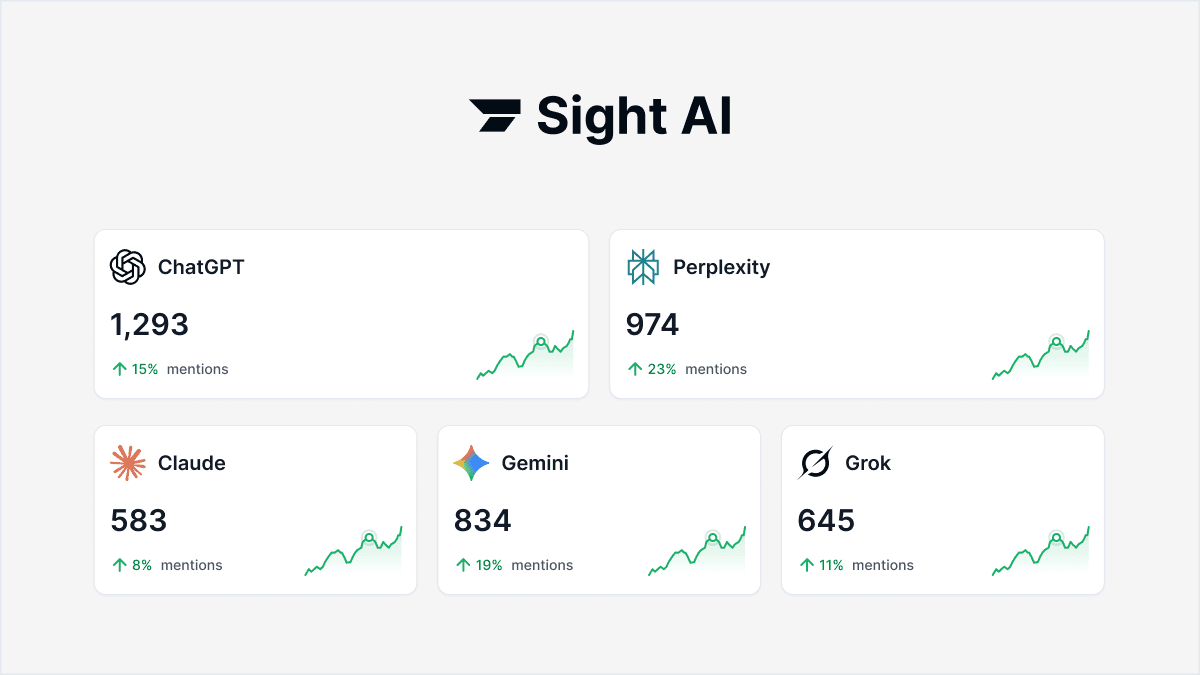
Monitoring your AI visibility provides insight into when and how AI models begin referencing your content. Track mentions across platforms like ChatGPT, Claude, and Perplexity to understand which content achieves AI visibility and how AI platforms characterize your brand or expertise. This feedback loop helps you identify what works for AI discovery and refine your content strategy accordingly. Just as you track search rankings, tracking AI mentions reveals your visibility in this increasingly important discovery channel.
Building a Discovery-Optimized Publishing Workflow
Fast content discovery doesn't happen by accident—it requires a systematic workflow that prioritizes discovery at every stage. Think of it as discovery-first publishing rather than publish-then-hope-for-discovery.
Your pre-publish checklist should verify that discovery mechanisms are in place before you hit publish. Confirm that internal links from high-authority pages are included in your new content. Check that your sitemap generation is configured to update immediately. Verify that IndexNow integration is active and will fire upon publication. These checks take minutes but prevent discovery delays that cost days or weeks. Implementing content discovery acceleration techniques should become standard practice for every publishing workflow.
Include strategic internal linking as part of your content creation process, not an afterthought. As you write, identify opportunities to link from existing popular content to your new piece. Update relevant cornerstone articles to reference and link to your new content. This simultaneous approach means links exist the moment you publish, creating immediate crawl paths rather than adding them later after discovery delays have already occurred.
Post-publish automation handles the technical notification side. Configure your publishing system to automatically trigger IndexNow notifications the moment content goes live. Set up automated social media posts that create immediate external signals and potential traffic. These automated actions ensure that discovery mechanisms activate instantly without requiring manual intervention that might be delayed or forgotten. An automated blog content pipeline can handle many of these tasks without manual intervention.
Monitoring and Optimization
Ongoing monitoring reveals whether your discovery acceleration tactics are working. Track indexation status through Google Search Console to see how quickly new content appears in search results. Monitor initial traffic patterns to identify whether content is gaining visibility within hours or days rather than weeks. Check AI platform mentions to understand when your content begins influencing AI responses.
When you identify discovery gaps—content that takes longer than expected to achieve visibility—investigate the cause. Was IndexNow properly triggered? Are internal links present from frequently-crawled pages? Is the content accessible through clear site navigation? These diagnostic questions help you refine your workflow and eliminate bottlenecks that slow discovery.
Create a feedback loop between your discovery monitoring and content strategy. Content that achieves fast discovery and strong early performance reveals what works—both in terms of technical implementation and content approach. Double down on these patterns. Content that languishes despite proper technical setup may signal issues with content quality, topic selection, or competitive dynamics that require strategic adjustment.
Moving Beyond Passive Discovery
The slow content discovery problem isn't an inevitable reality of digital publishing. It's a technical and strategic challenge with clear solutions. The shift from passive waiting to proactive notification, from hoping crawlers find your content to actively telling search engines it exists, compresses discovery timelines from weeks to hours. For time-sensitive content, competitive landscapes, and revenue-dependent pages, this acceleration isn't just convenient—it's essential.
Implementation requires both technical setup and workflow changes. IndexNow protocols, automated sitemap updates, and strategic internal linking address the technical side. Pre-publish checklists, post-publish automation, and ongoing monitoring embed discovery optimization into your regular publishing process. Together, these changes transform content discovery from a passive hope into an active, controllable system.
The AI visibility dimension adds complexity but also opportunity. While traditional search discovery can be accelerated through proactive indexing, AI discovery operates on different timelines and requires different optimization approaches. Content structured for AI comprehension, clear entity relationships, and authority signals position your content for inclusion in training datasets and real-time AI search results. Monitoring AI mentions provides visibility into this emerging discovery channel just as search analytics reveal traditional SEO performance.
Audit your current content discovery workflow. How long does your newest content take to appear in search results? Are you implementing IndexNow or relying on passive sitemap discovery? Do you have strategic internal linking practices that create fast crawl paths? Are you monitoring AI visibility alongside traditional search metrics? The gaps you identify represent opportunities to accelerate discovery and capture value that's currently being lost to delays.
In 2026, content discovery is no longer just about creating quality content and hoping it gets found. It's about building systems that ensure your content achieves visibility when it matters most—while your timing is relevant, your competitive advantage is fresh, and your audience is actively searching. Start tracking your AI visibility today and see exactly where your brand appears across top AI platforms, uncover content opportunities that drive mentions, and automate your path to faster organic traffic growth across both traditional search and AI discovery channels.