Managing SEO manually in 2026 is like bringing a calculator to a supercomputer fight. Between tracking rankings across traditional search and AI platforms, optimizing hundreds of pages, and staying ahead of algorithm changes, marketers need automation that actually works.
This review covers top SEO automation tools—evaluated for their ability to streamline workflows, deliver actionable insights, and adapt to the evolving search landscape where AI visibility matters as much as Google rankings. Whether you're a solo founder or agency managing dozens of clients, you'll find options that match your budget and technical requirements.
1. Sight AI
Best for: Tracking AI visibility and automating SEO/GEO-optimized content creation
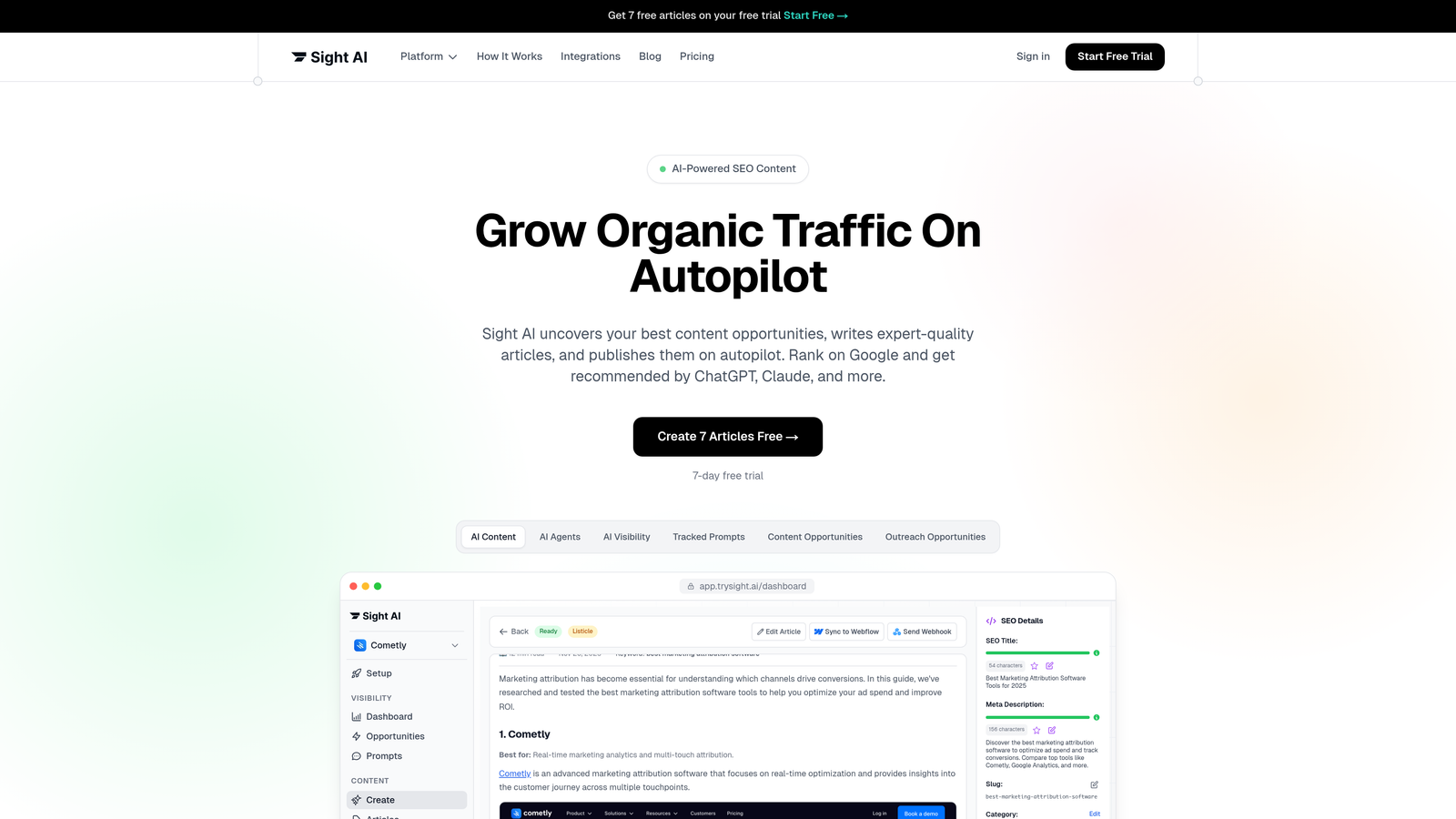
Sight AI addresses a gap most traditional SEO tools ignore: how AI models like ChatGPT, Claude, and Perplexity talk about your brand.
Where This Tool Shines
While competitors focus exclusively on Google rankings, Sight AI tracks brand mentions across 6+ AI platforms and provides an AI Visibility Score that shows exactly how often—and in what context—your brand appears in AI-generated responses. This matters because search behavior is shifting: users increasingly turn to AI chatbots for recommendations, comparisons, and research.
The platform combines three core capabilities: AI visibility tracking with sentiment analysis, automated content generation through 13+ specialized AI agents, and website indexing with IndexNow integration. This means you can identify content gaps where competitors get mentioned instead of you, generate optimized articles to fill those gaps, and get them indexed faster.
Key Features
AI Visibility Score: Real-time tracking across ChatGPT, Claude, Perplexity, and other major AI models with prompt tracking to see what queries trigger brand mentions.
13+ Specialized AI Agents: Generate SEO and GEO-optimized content including listicles, guides, and explainers designed to improve both traditional and AI search visibility.
Autopilot Mode: Hands-off content publishing that automatically generates, optimizes, and publishes articles based on your content strategy.
IndexNow Integration: Automated sitemap updates and instant indexing notifications to major search engines for faster content discovery.
Sentiment Analysis: Track not just whether AI models mention your brand, but how they describe it—positive, neutral, or negative context.
Best For
Marketers and founders who recognize that AI search is reshaping how customers discover brands. Particularly valuable for SaaS companies, agencies, and content-driven businesses where appearing in AI-generated recommendations directly impacts lead generation. If you're already investing in content marketing but want to ensure that content gets surfaced by AI models, this bridges that gap.
Pricing
Visit trysight.ai/pricing for current plans. The platform offers tiered pricing based on tracking volume and content generation needs.
2. Semrush
Best for: All-in-one SEO automation with comprehensive competitive analysis
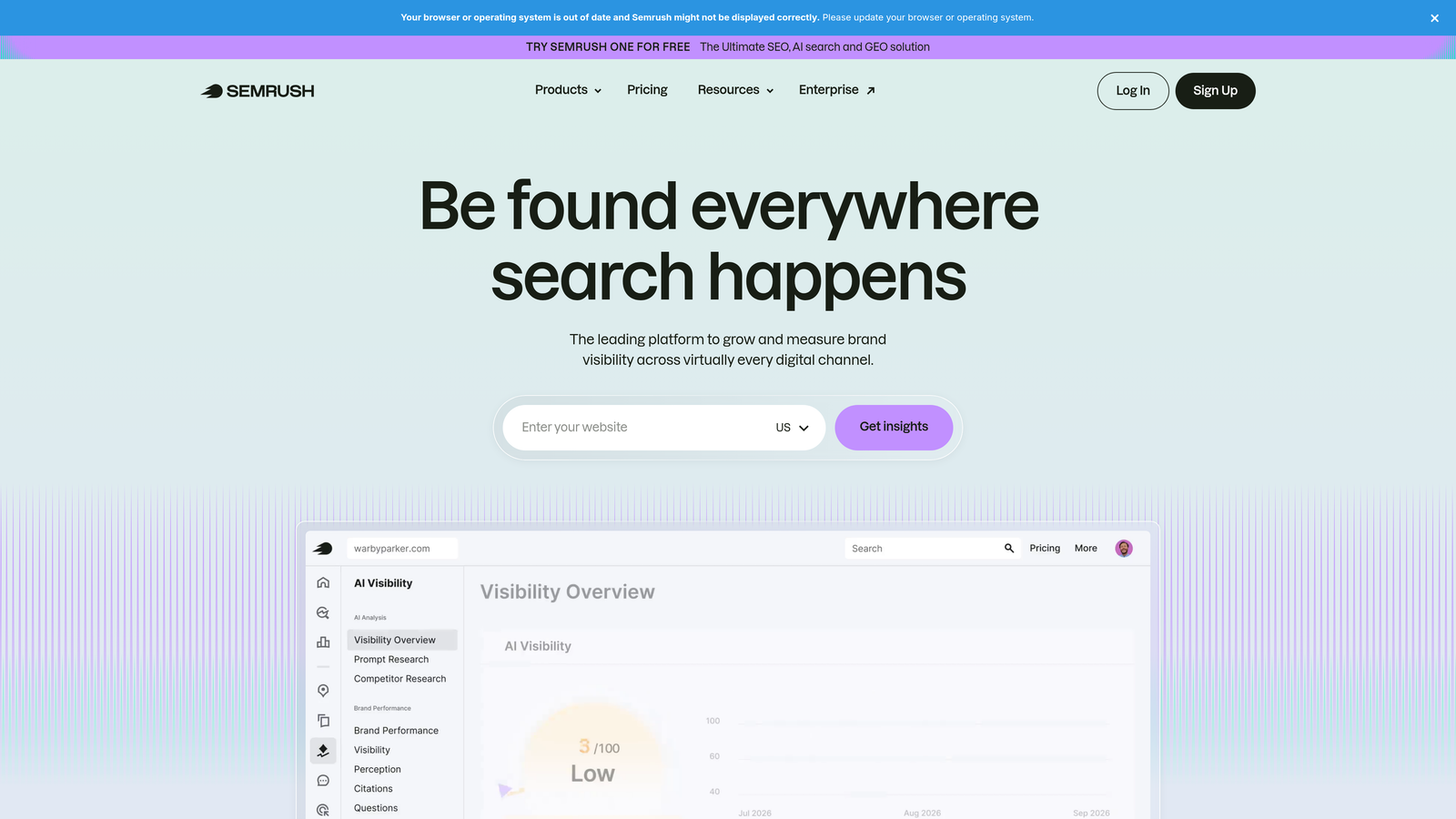
Semrush is the Swiss Army knife of SEO platforms, bundling site audits, rank tracking, competitive research, and content optimization into one interface.
Where This Tool Shines
Semrush excels at competitive intelligence automation. Its Position Tracking tool monitors your rankings against up to 20 competitors simultaneously, sending automated alerts when significant changes occur. The platform's Site Audit feature runs weekly scans that prioritize issues by severity, so you're not drowning in hundreds of minor warnings when critical problems need attention.
The Content Marketing Platform deserves special mention. It analyzes top-ranking content for your target keywords and generates topic clusters automatically, showing exactly what subtopics you need to cover to compete. This removes guesswork from content planning and ensures your articles address search intent comprehensively.
Key Features
Automated Site Audits: Weekly crawls with prioritized issue lists, historical tracking, and integration with Google Analytics to correlate technical problems with traffic drops.
Position Tracking: Daily rank updates with SERP feature tracking, competitor comparison, and automated email reports when rankings change significantly.
Competitive Gap Analysis: Identifies keywords competitors rank for that you don't, with difficulty scores and traffic estimates to prioritize opportunities.
SEO Writing Assistant: Real-time content optimization as you write, with readability scores, keyword density recommendations, and tone of voice analysis.
Backlink Monitoring: Automated toxic link detection with disavow file generation, new/lost backlink alerts, and competitor backlink discovery.
Best For
Marketing teams and agencies managing multiple domains who need a centralized dashboard for all SEO activities. The breadth of features makes it ideal when you want one platform instead of juggling five specialized tools. Particularly strong for competitive markets where understanding what competitors do differently determines your strategy.
Pricing
Starts at $139.95/month for the Pro plan (5 projects, 500 keywords to track). Business plan at $249.95/month adds more projects and API access. Enterprise pricing available for agencies with custom needs.
3. Ahrefs
Best for: Backlink analysis and comprehensive rank tracking automation
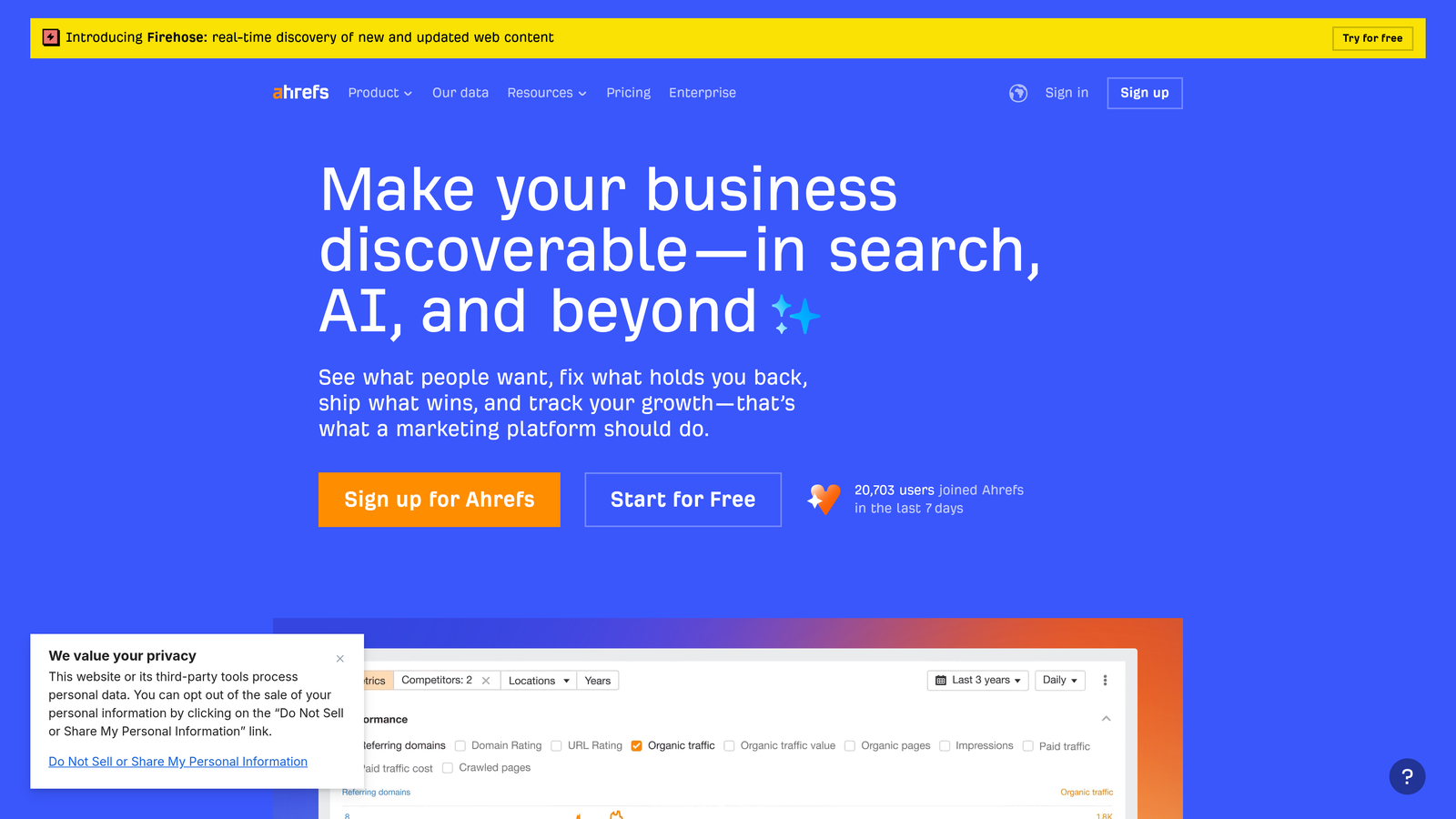
Ahrefs built its reputation on having the web's second-largest backlink index after Google, and that foundation powers sophisticated automation features.
Where This Tool Shines
Ahrefs' Site Explorer automatically monitors your backlink profile and sends alerts when you gain or lose links—critical for catching negative SEO attacks or capitalizing on new link-building opportunities. The tool's crawl frequency is impressive: it updates backlink data every 15 minutes for popular sites, meaning you spot changes almost in real-time.
The Content Gap tool automates competitive analysis by showing keywords where 2-3 competitors rank but you don't. This reveals low-hanging fruit: topics where the market has validated demand but your content library has gaps. Combined with automated rank tracking that monitors SERP features (featured snippets, People Also Ask boxes), you get a complete picture of ranking opportunities.
Key Features
Automated Backlink Monitoring: Real-time alerts for new and lost backlinks, with Domain Rating changes and anchor text distribution tracking.
Site Explorer Scheduled Reports: Weekly or monthly crawl reports delivered via email, tracking changes in organic traffic, top pages, and referring domains.
Content Gap Analysis: Identifies keyword opportunities by comparing your site against up to 10 competitors simultaneously, with automated difficulty scoring.
Rank Tracker: Daily position updates with SERP feature monitoring, share of voice calculations, and historical ranking data visualization.
Automated Competitive Analysis: Tracks competitor content publication frequency, top-performing pages, and backlink acquisition patterns.
Best For
SEO professionals who prioritize link building and competitive intelligence. The backlink database quality makes it essential for agencies doing outreach campaigns or businesses in competitive niches where link profiles determine rankings. Also valuable for content teams using data-driven topic selection rather than intuition.
Pricing
Starts at $129/month for the Lite plan (5 projects, 750 keywords). Standard plan at $249/month adds more capacity. Annual billing offers two months free.
4. Surfer SEO
Best for: Real-time on-page optimization and automated content scoring
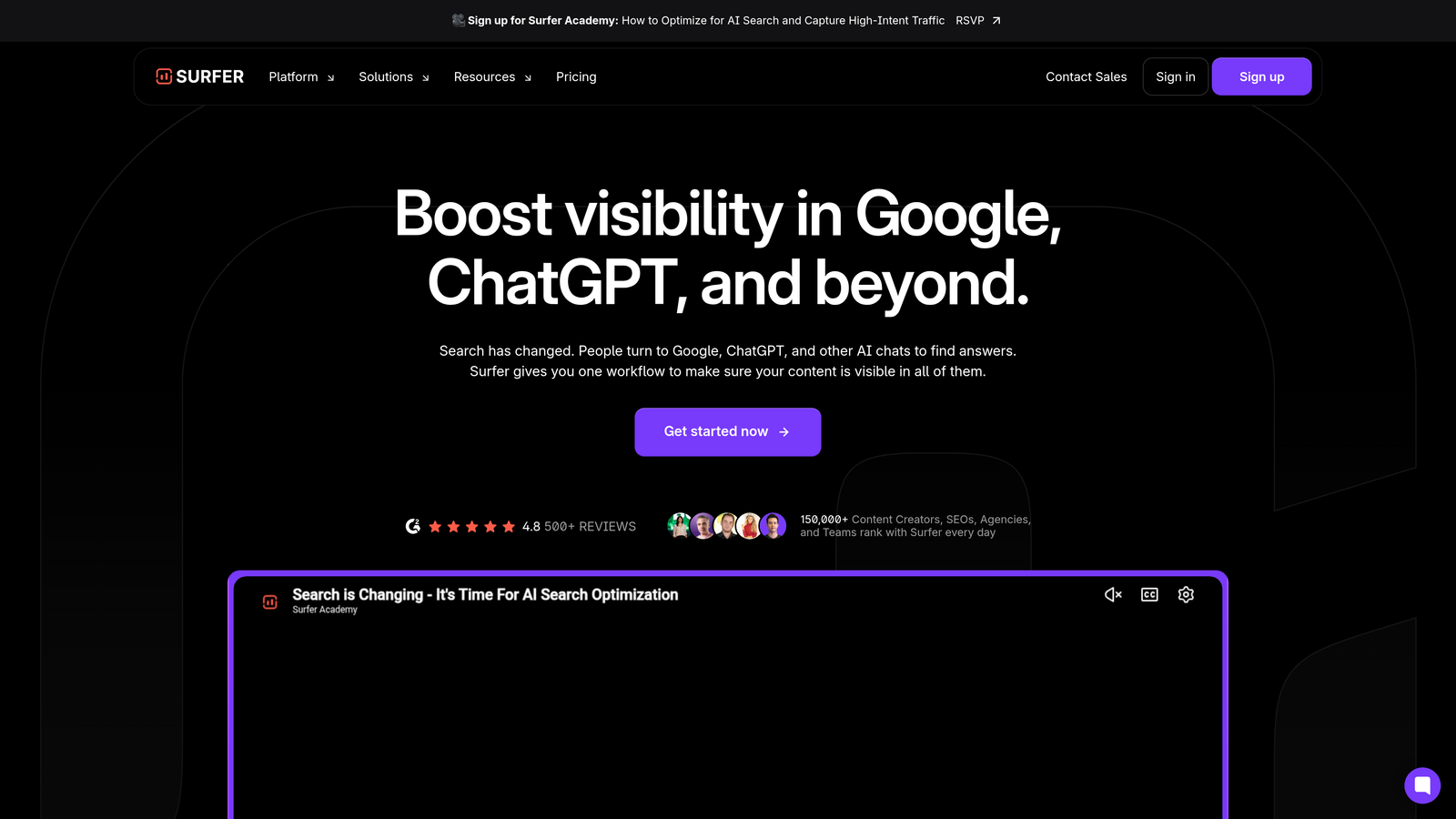
Surfer SEO uses AI to analyze top-ranking pages and generate specific optimization recommendations as you write.
Where This Tool Shines
Surfer's Content Editor provides a live optimization score that updates with every sentence you write. It analyzes the top 50 SERP results for your target keyword and tells you exactly how many times to use related terms, optimal article length, ideal heading structure, and even image count. This removes subjectivity from content optimization—you're matching patterns from pages that already rank.
The SERP Analyzer automates competitive content research by extracting common elements from top-ranking pages: word count ranges, heading hierarchies, keyword densities, and backlink profiles. Instead of manually reviewing 20 competitor articles, you get a data-driven content brief in minutes. This is particularly powerful for agencies producing high volumes of content where manual analysis doesn't scale.
Key Features
Real-Time Content Scoring: Live optimization feedback as you write, with specific recommendations for keyword usage, content structure, and readability.
Automated SERP Analyzer: Extracts ranking factors from top 50 results, generating content guidelines based on what actually works in your niche.
AI Content Outline Generator: Creates detailed article structures with recommended headings, questions to answer, and semantic keyword clusters.
Content Audit: Scans existing articles and provides automated improvement recommendations with priority scoring.
Google Docs Integration: Brings optimization scoring directly into your writing environment without switching tools.
Best For
Content teams and agencies producing SEO-optimized articles at scale. Writers who want data-driven guidance without becoming technical SEO experts. Also valuable for businesses where content quality directly correlates with rankings—think competitive informational keywords where on-page optimization makes the difference.
Pricing
Starts at $99/month for the Essential plan (30 articles/month). Advanced plan at $199/month adds content audit and API access. Enterprise plans available for agencies.
5. SE Ranking
Best for: Agency-focused automation with white-label reporting capabilities
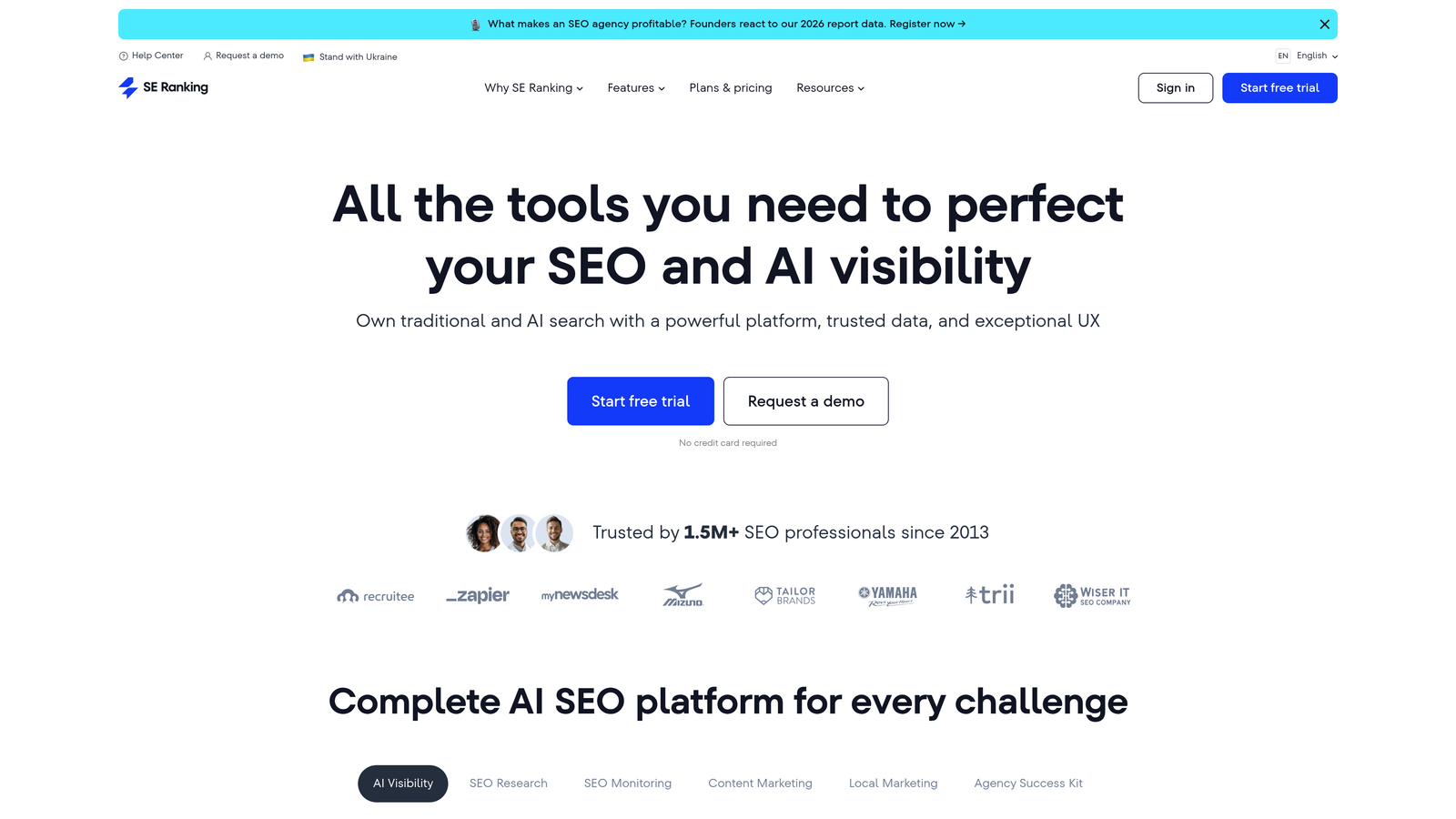
SE Ranking combines core SEO automation features with agency-specific tools like white-label reports and client management dashboards.
Where This Tool Shines
SE Ranking's white-label reporting automation is exceptionally polished. You can schedule weekly or monthly reports that automatically pull rank tracking data, site audit results, and backlink changes, then deliver them to clients with your agency branding. The reports are customizable—add your logo, choose which metrics to highlight, and even include custom commentary that gets inserted automatically.
The platform's pricing model is also agency-friendly. Instead of charging per project like most competitors, SE Ranking uses a credit system where different features consume different amounts of credits. This flexibility means you can allocate resources dynamically: run more frequent rank checks for high-priority clients and less frequent audits for maintenance accounts, all within the same subscription.
Key Features
White-Label Automated Reporting: Scheduled reports with agency branding, customizable metrics, and automated delivery to client email addresses.
Rank Tracking with Customizable Scheduling: Daily, weekly, or on-demand rank checks with local search tracking and mobile vs. desktop comparison.
Automated Site Audit: Weekly crawls with prioritized issue lists, historical tracking, and comparison against previous audits to show progress.
Competitor Monitoring: Automated alerts when competitors make significant ranking changes, launch new content, or acquire backlinks.
Lead Generation Widget: Embeddable SEO audit tool for agency websites that automatically captures leads and schedules follow-up reports.
Best For
Digital marketing agencies managing 10+ clients who need professional reporting without manual data compilation. The white-label capabilities and flexible pricing make it ideal for agencies scaling their SEO service offerings. Also strong for in-house teams managing multiple brands or regional sites under one umbrella.
Pricing
Starts at $65/month for the Essential plan (10 projects, 250 keywords). Pro plan at $119/month adds more capacity and API access. Annual billing offers significant discounts.
6. Screaming Frog SEO Spider
Best for: Technical SEO audits with scheduling and custom data extraction
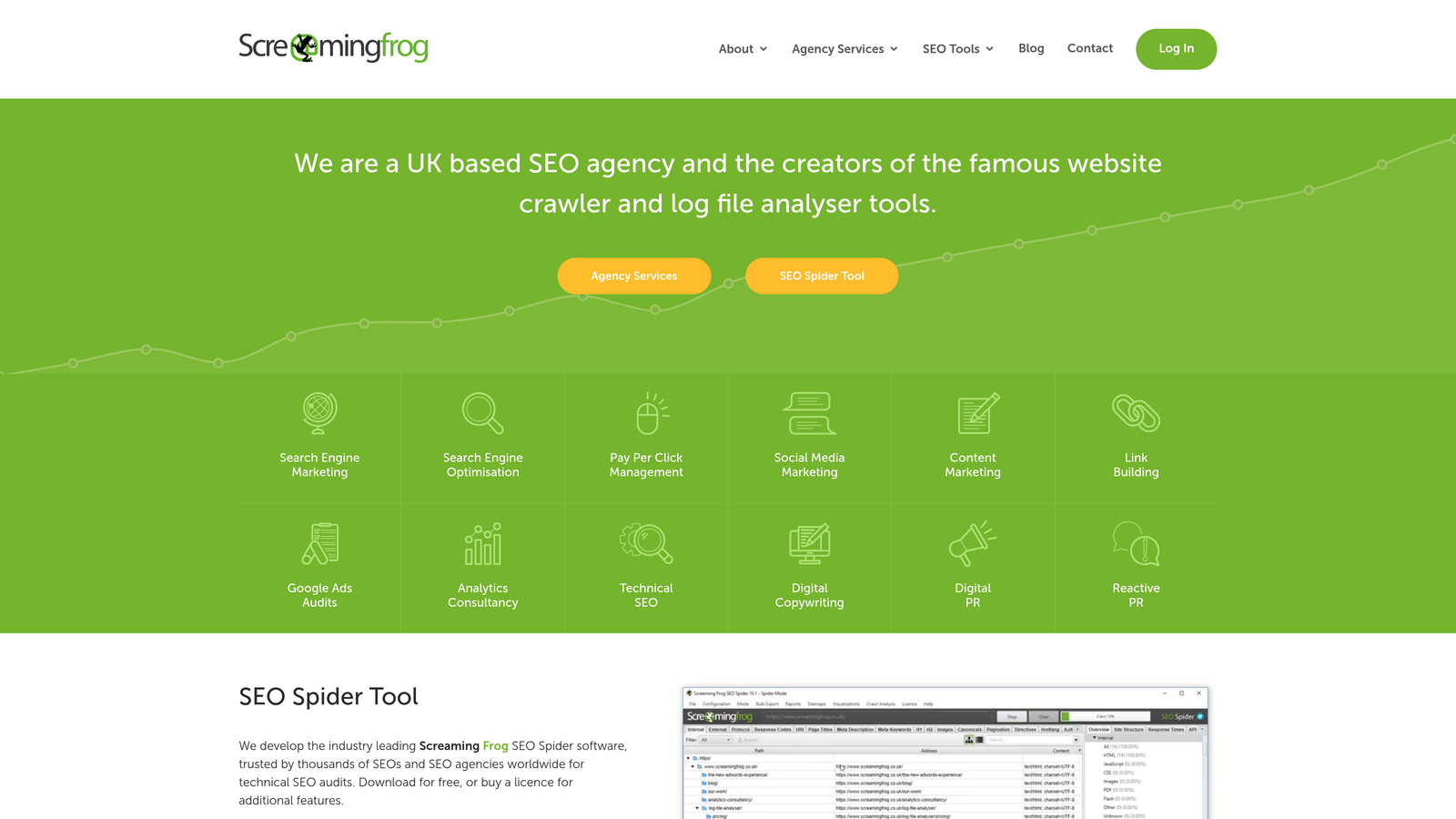
Screaming Frog SEO Spider is a desktop-based crawler that automates technical SEO analysis with powerful customization options.
Where This Tool Shines
Screaming Frog's scheduled crawls with change detection are invaluable for large sites. Set up automated weekly crawls, and the tool will alert you when it detects new 404 errors, redirect chains, duplicate content, or broken internal links. This proactive monitoring catches technical issues before they impact rankings—particularly important for e-commerce sites where product pages constantly change.
The custom extraction feature lets you automate data collection that other tools can't handle. Need to verify that all product pages have proper schema markup? Extract and validate structured data across thousands of URLs automatically. Want to check if every blog post has a specific meta tag? Create a custom extraction rule and get a complete report in minutes. This flexibility makes it essential for technical SEO work that goes beyond standard audits.
Key Features
Scheduled Crawls: Automated website crawling with change detection, comparing new crawls against previous ones to highlight what's different.
Custom Extraction: Extract any data from HTML using CSS selectors or XPath, automating validation of structured data, meta tags, or custom elements.
Log File Analysis: Automate analysis of server logs to see how search engines actually crawl your site, identifying crawl budget waste.
Google Analytics Integration: Combine crawl data with GA metrics to prioritize issues based on traffic impact rather than just technical severity.
Automated XML Sitemap Generation: Generate and update sitemaps automatically based on crawl results, with filtering rules for what to include.
Best For
Technical SEO specialists and developers who need deep control over crawl parameters and data extraction. Particularly valuable for large websites (10,000+ pages) where manual audits are impossible. Also essential for agencies doing technical audits as a service—the desktop software means you own the tool rather than paying per-project fees.
Pricing
Free version crawls up to 500 URLs. Paid license is £199/year (approximately $250) for unlimited crawling. One-time payment, no recurring subscription required.
7. BrightEdge
Best for: Enterprise SEO with AI-powered recommendations and opportunity detection
BrightEdge is an enterprise platform that uses AI to automate content recommendations, competitive tracking, and cross-channel performance analysis.
Where This Tool Shines
BrightEdge's DataMind AI continuously analyzes your content performance and automatically surfaces opportunities you're missing. It might identify that you rank #6 for a high-value keyword and need just 200 more words on a specific subtopic to break into the top 3. Or it detects that competitors are gaining traffic on topics you haven't covered yet, complete with recommended keywords and content angles.
The platform's share of voice automation is particularly valuable for enterprises tracking brand visibility across hundreds or thousands of keywords. It calculates your percentage of total SERP real estate compared to competitors, tracking changes over time and alerting you when competitors make significant gains. This high-level view helps executives understand SEO performance without diving into individual keyword rankings.
Key Features
DataMind AI: Automated content recommendations based on ranking opportunities, competitor gaps, and search trend analysis.
Share of Voice Tracking: Automated calculation of your brand's SERP visibility compared to competitors, with historical trending and alerts.
Real-Time Research: Continuous monitoring of search landscape changes with automated opportunity alerts when new keywords or topics emerge.
Automated Competitive Benchmarking: Tracks competitor content velocity, ranking changes, and backlink acquisition with comparative reporting.
Cross-Channel Attribution: Connects organic search performance to downstream conversions and revenue, automating ROI reporting.
Best For
Enterprise companies with large websites (50,000+ pages) and dedicated SEO teams. The platform's complexity and pricing make it overkill for small businesses, but for organizations where a 1% improvement in organic traffic represents millions in revenue, the AI-powered recommendations justify the investment. Also strong for companies managing SEO across multiple brands or international markets.
Pricing
Custom enterprise pricing, typically starting around $3,000/month with annual contracts. Implementation and training services add to total cost.
8. Conductor
Best for: Content intelligence and workflow automation for marketing teams
Conductor automates content performance tracking, editorial workflows, and organic marketing insights with a focus on content operations.
Where This Tool Shines
Conductor's workflow automation bridges the gap between SEO insights and content execution. The platform integrates with project management tools and CMS platforms, automatically creating content briefs when it detects ranking opportunities, assigning them to writers, and tracking progress through publication. This removes the manual coordination that typically slows content production—no more spreadsheets tracking what needs to be written and who's working on it.
The real-time SEO recommendations adapt as search landscapes change. If Google updates its algorithm and your rankings shift, Conductor automatically re-prioritizes your content queue to focus on pages most affected. This dynamic approach means your team always works on the highest-impact opportunities rather than following a static content calendar that might be outdated.
Key Features
Automated Content Performance Tracking: Monitors how every piece of content performs in search, with alerts when pages gain or lose visibility.
Workflow Automation: Creates content briefs, assigns tasks, and tracks progress automatically, integrating with tools like Jira and Asana.
Real-Time SEO Recommendations: Continuously updates content priorities based on ranking changes, algorithm updates, and competitive movements.
CMS Integration: Direct connections to WordPress, Drupal, and enterprise CMS platforms for seamless content publishing and tracking.
Competitive Content Analysis: Automatically identifies gaps where competitors have content you don't, with recommended topics and keywords.
Best For
Content marketing teams at mid-to-large companies where coordination between SEO strategists, writers, and editors creates bottlenecks. Particularly valuable for organizations producing 20+ pieces of content monthly where manual workflow management becomes unsustainable. Also strong for companies with complex content operations spanning multiple teams or departments.
Pricing
Custom pricing based on website size, content volume, and team size. Typically positions as an enterprise solution with annual contracts.
9. Moz Pro
Best for: Accessible SEO automation with extensive learning resources
Moz Pro combines core SEO automation features with an emphasis on education, making advanced techniques accessible to less technical users.
Where This Tool Shines
Moz's automated site crawls prioritize issues in a way that's particularly friendly for non-technical marketers. Instead of overwhelming you with every minor HTML validation error, the platform groups issues by impact and provides plain-language explanations of why each matters. The "Critical" issues get flagged with clear instructions on how to fix them, often including links to relevant Moz Academy tutorials.
The Domain Authority metric, while proprietary, has become an industry standard for quickly assessing site quality. Moz automates DA monitoring for your site and competitors, sending alerts when significant changes occur. This high-level metric helps marketers track progress without getting lost in hundreds of individual ranking movements—particularly useful for reporting to executives who want to understand SEO performance at a glance.
Key Features
Automated Weekly Site Crawls: Scans your site for technical issues with prioritized recommendations and historical tracking to show improvement over time.
Link Explorer: Automated backlink monitoring with spam score calculations, new/lost link alerts, and anchor text distribution analysis.
Domain Authority Monitoring: Tracks your DA score and competitors' scores with automated alerts when significant changes occur.
On-Page Optimization: Analyzes individual pages and provides specific recommendations for improving rankings, with priority scoring.
Automated Rank Tracking: Weekly or daily rank updates with SERP feature tracking and local search capabilities.
Best For
Small to mid-sized businesses and marketers who want powerful SEO automation without overwhelming complexity. The extensive documentation and learning resources make it ideal for teams building SEO expertise while getting work done. Also strong for agencies serving small business clients who appreciate the Domain Authority metric as a simple progress indicator.
Pricing
Starts at $99/month for the Starter plan (3 campaigns, 300 keywords). Standard plan at $179/month adds more capacity. Annual billing offers savings.
10. Botify
Best for: Enterprise technical SEO with crawl budget optimization at scale
Botify specializes in technical SEO automation for massive websites, with particular strength in crawl budget optimization and real-time indexing.
Where This Tool Shines
Botify's crawl budget optimization automation is unmatched for large sites. The platform analyzes your server logs to see exactly how search engines crawl your site, then identifies waste: low-value pages consuming crawl budget, redirect chains slowing crawlers down, or duplicate content causing confusion. It automatically generates recommendations for robots.txt rules, internal linking changes, and page consolidation that help search engines discover your important content faster.
The SpeedWorkers feature provides real-time indexing automation by instantly notifying search engines when you publish or update content. For e-commerce sites with thousands of product pages or news publishers with time-sensitive content, this ensures Google discovers changes within hours instead of days. Combined with automated monitoring of indexation status, you can identify and fix indexing problems before they impact traffic.
Key Features
Automated Crawl Budget Optimization: Analyzes log files to identify crawl waste and automatically recommends technical changes to improve search engine efficiency.
Real-Time Indexing with SpeedWorkers: Instantly notifies search engines of content changes, dramatically reducing time to indexation.
Log File Analysis at Scale: Processes millions of log entries to show exactly how search engines interact with your site, with automated anomaly detection.
Automated Technical Issue Detection: Continuous monitoring for broken links, redirect chains, duplicate content, and other technical problems.
Analytics Integration: Connects with Google Analytics and Adobe Analytics to correlate technical issues with traffic and revenue impact.
Best For
Enterprise websites with 100,000+ pages where technical SEO complexity requires specialized tools. E-commerce platforms with massive product catalogs, large publishers, and international sites with complex subdomain or subdirectory structures. The platform's depth makes it overkill for smaller sites, but for organizations where technical issues directly impact millions in revenue, it's essential.
Pricing
Custom enterprise pricing based on website size and crawl frequency. Typically requires annual contracts with implementation services.
11. MarketMuse
Best for: AI-driven content planning and automated topic modeling
MarketMuse uses AI to automate content brief generation, topic modeling, and content inventory analysis with a focus on topical authority.
Where This Tool Shines
MarketMuse's automated content brief generation goes beyond basic keyword research. The platform analyzes your entire content library and identifies topic clusters where you lack depth. It might reveal that you've written about "email marketing" but haven't covered critical subtopics like "email deliverability" or "A/B testing subject lines"—gaps that prevent you from ranking for broader terms because Google doesn't see you as a topical authority.
The Content Inventory automation is particularly valuable for sites with hundreds of existing articles. MarketMuse scans everything you've published, scores each piece for quality and relevance, then recommends which articles to update, consolidate, or remove. This data-driven approach to content maintenance ensures you're strengthening your best assets rather than randomly refreshing old posts and hoping for results.
Key Features
Automated Content Brief Generation: Creates detailed outlines with recommended topics, questions to answer, and semantic keywords based on top-ranking content.
AI-Powered Content Scoring: Analyzes articles in real-time and provides optimization recommendations to improve topical depth and relevance.
Topic Modeling: Maps your content library against topical clusters, automatically identifying gaps where you lack authority.
Content Inventory Automation: Scans existing content and recommends updates, consolidations, or removals based on performance and relevance.
Competitive Content Benchmarking: Compares your topical coverage against competitors, showing where they have content depth you're missing.
Best For
Content marketing teams focused on building topical authority rather than chasing individual keywords. Particularly valuable for B2B companies and SaaS businesses where demonstrating expertise through comprehensive content drives lead generation. Also strong for publishers and media companies managing large content libraries that need strategic pruning and optimization.
Pricing
Free plan available with limited features. Paid plans start at $149/month for individuals. Team and enterprise plans with custom pricing available.
Making the Right Choice
Choosing the right SEO automation software depends on where your biggest bottlenecks live. For teams prioritizing AI search visibility alongside traditional SEO, Sight AI offers a unique combination of AI model tracking and content automation that addresses how search behavior is actually evolving. You can't optimize for AI recommendations if you don't know when and how AI models mention your brand.
Enterprise teams managing massive sites should look at Botify or BrightEdge for technical scale and AI-powered recommendations that handle complexity most tools can't touch. These platforms justify their premium pricing when a 1% traffic improvement represents significant revenue.
Agencies juggling multiple clients will appreciate SE Ranking's white-label capabilities and flexible pricing model. The ability to schedule automated reports with your branding removes hours of manual work each week, letting you focus on strategy instead of data compilation.
Content-focused teams get the most value from Surfer SEO or MarketMuse. If your primary bottleneck is producing optimized content at scale, these tools automate the research and optimization work that traditionally consumed hours per article. Surfer excels at on-page optimization, while MarketMuse focuses on topical authority and content planning.
For comprehensive all-in-one needs, Semrush and Ahrefs remain industry standards. They bundle enough features that you can avoid juggling multiple specialized tools—valuable when you need rank tracking, site audits, competitive analysis, and backlink monitoring in one dashboard.
Start by identifying your primary pain point: Is it content creation? Technical audits? Rank tracking? AI visibility? Match that to the tool that automates that specific workflow best. Most platforms offer free trials—test 2-3 options with real projects before committing to annual contracts.
The search landscape is shifting toward AI-powered answers, and traditional SEO tools weren't built for this reality. Start tracking your AI visibility today and see exactly where your brand appears across top AI platforms—because you can't optimize for what you can't measure.