When someone asks ChatGPT for product recommendations, software suggestions, or industry expertise, your brand is either part of the conversation—or invisible. As AI-powered search becomes the default research method for millions of users, getting featured in ChatGPT responses has become a critical growth channel that most marketers are completely overlooking.
Unlike traditional SEO where you optimize for search engine crawlers, appearing in AI responses requires a fundamentally different approach: you need to become the kind of authoritative, well-documented source that large language models naturally reference when answering user queries.
Think of it this way: when ChatGPT recommends tools or explains concepts, it's synthesizing information from thousands of sources it encountered during training. Your goal isn't to trick the algorithm—it's to become such a credible, well-documented presence that AI models can't help but mention you when relevant queries come up.
This guide walks you through the exact steps to position your brand for AI visibility, from auditing your current presence to creating the type of content that AI models consistently cite. Let's get started.
Step 1: Audit Your Current AI Visibility Baseline
Before you can improve your AI visibility, you need to understand where you currently stand. This baseline audit reveals the gap between where you are and where you need to be.
Start by testing how ChatGPT responds to queries about your brand directly. Open ChatGPT and ask: "What is [Your Brand Name]?" Then try variations: "What are the best tools for [your category]?" or "Who are the leading companies in [your industry]?" Take screenshots and document exactly what appears—or doesn't appear.
The results might surprise you. Many brands discover that AI models either describe them inaccurately, mention outdated information, or skip them entirely in favor of competitors.
Next, run competitor queries. Ask ChatGPT: "What are alternatives to [Competitor Name]?" or "Compare the top solutions for [your use case]." Note which brands consistently appear in these responses. These competitors have already cracked the code on AI visibility, and their presence reveals what's possible.
Document the gaps you discover. Does ChatGPT describe your product category incorrectly? Does it emphasize features you no longer offer? Does it fail to mention your key differentiators? Write down every discrepancy between reality and AI perception.
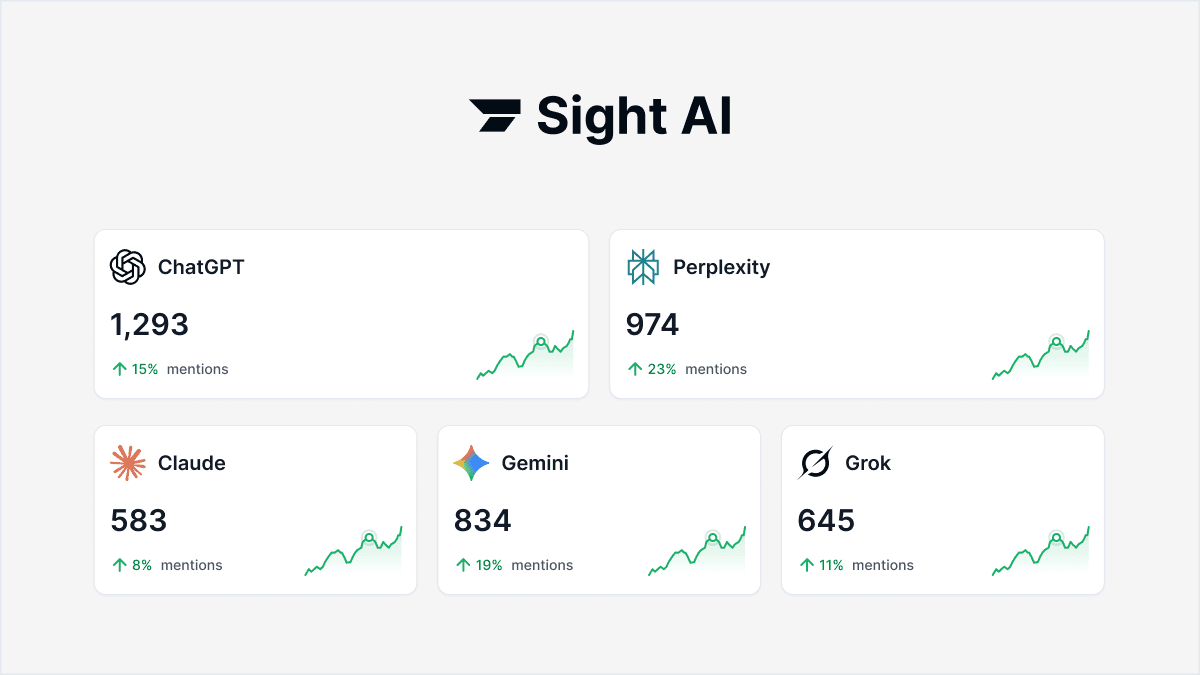
This is where AI visibility tracking tools become invaluable. Rather than manually testing queries every week, specialized platforms can monitor how multiple AI models describe your brand across hundreds of relevant prompts. They track sentiment, mention frequency, and competitive positioning—giving you quantifiable metrics instead of anecdotal observations.
Set specific benchmarks: How many times does your brand appear in responses about your category? What's the sentiment when you are mentioned? Which competitors dominate the conversation? These numbers become your starting point for measuring improvement.
The audit phase typically reveals an uncomfortable truth: most brands have virtually zero intentional AI visibility strategy. But that's actually good news—it means the opportunity is wide open for those who act now.
Step 2: Build Authoritative, AI-Readable Content Architecture
AI models don't cite sources they're uncertain about. They reference content that's clear, factual, and structured in ways they can confidently parse and synthesize. Your content architecture needs to reflect this reality.
Start by creating comprehensive resource pages that answer specific questions AI users commonly ask. Instead of generic "About Us" pages, develop detailed explainers: "What is [Your Solution] and How Does It Work?" or "Complete Guide to [Your Category]." These pages should read like encyclopedia entries—factual, thorough, and free of marketing fluff.
Clear Definitions Matter: AI models love content that starts with precise definitions. Begin key pages with straightforward statements: "[Your Product] is a [category] that helps [audience] achieve [outcome] through [method]." No jargon, no clever wordplay—just clarity.
Factual Statements Over Claims: Replace promotional language with verifiable facts. Instead of "the industry's most powerful platform," write "a platform that processes X data points and integrates with Y systems." AI models can cite the latter; they'll skip the former as unsubstantiated marketing.
Structure your content with clear hierarchical formatting. Use descriptive H2 and H3 headings that act as signposts: "How [Feature] Works," "Key Benefits of [Approach]," "When to Use [Method]." This formatting helps AI models understand the relationship between concepts and extract relevant information efficiently.
Implement structured data markup wherever possible. Schema.org markup for organizations, products, FAQs, and how-to content gives AI models machine-readable context about your content. While AI models don't exclusively rely on structured data, it reinforces the clarity of your information.
Focus on evergreen content rather than time-sensitive announcements. AI training data has cutoff dates, which means news about your latest feature release might not make it into model knowledge. But comprehensive guides to your product category, methodology, or approach have staying power across training cycles.
Create content clusters around core topics. If you're a project management tool, develop interconnected resources about project management methodologies, team collaboration best practices, and workflow optimization. This topical clustering signals depth of expertise—exactly what AI models look for when determining authoritative sources. Understanding how ChatGPT ranks websites can help you structure these clusters more effectively.
The goal isn't to write for robots. It's to write so clearly and authoritatively that AI models recognize your content as trustworthy reference material worth citing when users ask relevant questions.
Step 3: Expand Your Digital Footprint Across Trusted Sources
Here's the reality: AI models trust certain sources more than others. Your own website is important, but third-party validation from authoritative platforms carries exponentially more weight.
Wikipedia represents the gold standard for AI citations. If your brand or key executives have Wikipedia pages, you've dramatically increased your chances of AI visibility. But Wikipedia has strict notability requirements—you need significant coverage in independent, reliable sources before a page is warranted. Focus first on generating that coverage, then consider Wikipedia as a later-stage goal.
Industry publications and trade media should be your immediate priority. When established publications mention your brand, quote your executives, or cover your approach, they create the kind of authoritative references AI models value. Pitch expert commentary to journalists covering your space. Offer unique data or insights that make compelling story angles.
Platform Presence Matters: AI models frequently reference specific platforms when answering technical or professional queries. If you're in software, maintain active GitHub repositories with clear documentation. If you're in research, publish on academic platforms. If you're B2B, ensure robust profiles on Crunchbase, G2, and Capterra.
Guest contributions establish you as a recognized voice in your industry. Write for established blogs, contribute to industry reports, participate in expert roundups. Each appearance on a trusted platform reinforces your authority in AI training data.
Consistency across your digital footprint is critical. AI models look for consensus—when multiple sources describe your brand similarly, that information becomes reliable. Ensure your brand name, category description, and key offerings are consistent across LinkedIn, Crunchbase, your website, press releases, and directory listings.
This is the long game. You can't manufacture authoritative mentions overnight. But you can systematically pursue opportunities to get your brand documented on platforms that AI models trust. Start with the most accessible platforms in your industry, then work your way up to more prestigious publications. For a comprehensive approach, explore the best ways to get mentioned by AI models.
The brands that appear consistently in AI responses aren't always the biggest or best-funded—they're the ones with the most comprehensive, authoritative digital footprints across trusted sources.
Step 4: Optimize for Entity Recognition and Knowledge Graphs
AI models don't just process text—they understand entities and relationships. Your brand needs to be recognized as a distinct entity with clear associations to relevant categories, concepts, and industry terms.
Entity recognition starts with clarity about what you are. Create explicit statements that define your brand's category: "Sight AI is an AI visibility tracking platform" or "Acme Corp is a B2B SaaS company specializing in workflow automation." These categorical associations help AI models understand when your brand is relevant to specific queries.
Business profiles on major platforms serve as entity signals. Google Business Profile, Crunchbase, LinkedIn Company Page, and industry-specific directories all contribute to how AI models understand your brand. Keep these profiles complete, accurate, and regularly updated. Missing information or inconsistencies create entity ambiguity—the opposite of what you want.
Topical Authority Builds Entity Strength: When you consistently publish expert content about specific topics, AI models begin associating your brand with those concepts. If you publish extensively about AI search optimization, your brand becomes linked to that topic in the model's understanding. This association increases the likelihood of mentions when users ask related questions.
Connect your brand to relevant industry concepts through strategic content. If you're a CRM platform, create content that naturally references sales processes, customer retention strategies, and pipeline management. These connections help AI models understand the context where your brand belongs.
Entity relationships matter as much as individual entities. When your brand is mentioned alongside recognized industry leaders, standards, or methodologies, it strengthens your position in the knowledge graph. Collaborate with complementary brands, integrate with established platforms, and associate your approach with recognized frameworks or standards.
Think of entity optimization as teaching AI models the "who, what, and why" of your brand. Who you are (a company in X category), what you do (solve Y problem with Z approach), and why you matter (the unique value you provide). The clearer these associations, the more confidently AI models can reference you.
This isn't about gaming the system—it's about making your brand's identity and expertise unmistakably clear across every digital touchpoint where AI models might encounter information about you. Learning how to optimize content for ChatGPT recommendations can accelerate this process significantly.
Step 5: Generate Social Proof and Third-Party Validation
AI models don't just look for information—they look for credibility signals that indicate whether that information is trustworthy. Social proof and third-party validation provide exactly those signals.
Authentic reviews on established platforms carry weight. When users consistently praise your product on G2, Capterra, or Trustpilot, those reviews become part of the data landscape AI models consider when describing your brand. Encourage satisfied customers to share their experiences on these platforms—not with incentivized fake reviews, but through genuine requests for feedback.
Industry Recognition Matters: Awards, certifications, and formal recognitions from established industry bodies signal authority. When you win "Best [Category] Tool" from a recognized publication or earn certification from an industry standards organization, those accolades appear in the kind of authoritative sources AI models reference.
Case studies create citeable success stories. When you publish detailed case studies showing measurable results, and when third parties reference those results, you create validation that extends beyond your own marketing claims. The key is specificity and transparency—vague success stories don't carry the same weight as documented, verifiable outcomes.
Relationships with industry analysts and thought leaders amplify your credibility. When respected voices in your industry mention your brand, quote your executives, or reference your approach, they lend their authority to yours. This doesn't mean paying for endorsements—it means building genuine relationships through valuable contributions to industry conversations.
Media coverage, even in smaller publications, contributes to your credibility profile. Each mention in a trade publication, podcast appearance, or conference speaking slot adds another data point suggesting your brand is worth paying attention to. AI models synthesize these signals when determining which brands to reference.
The pattern that emerges from social proof isn't about volume—it's about consistency and quality. A brand with steady recognition from multiple trusted sources appears more credible than one with sporadic or self-generated validation. Build a portfolio of third-party credibility signals that collectively paint a picture of established authority. If you're struggling with visibility, understanding why ChatGPT is ignoring your company can reveal gaps in your validation strategy.
Step 6: Monitor, Measure, and Iterate Your AI Visibility Strategy
AI visibility isn't a set-it-and-forget-it initiative. AI models update, training data changes, and competitor strategies evolve. You need ongoing monitoring to understand what's working and where to focus next.
Set up systematic tracking of how AI responses about your brand change over time. Test the same core queries monthly: brand-specific questions, category comparisons, and industry expertise prompts. Document shifts in how you're described, which competitors appear alongside you, and whether your visibility is improving or declining. Implementing brand mention tracking in ChatGPT makes this process manageable at scale.
Analyze which content types generate the most AI mentions. Do comprehensive guides get cited more than blog posts? Do technical documentation pages appear in responses more than marketing content? These patterns reveal what AI models consider most valuable and should inform your content priorities.
Competitive Intelligence Guides Strategy: Track not just your own visibility but your competitors' as well. When a competitor suddenly appears more frequently in AI responses, investigate what changed. Did they publish new content? Earn media coverage? Launch a new product? Understanding competitive movements helps you stay ahead.
AI model behavior changes as new versions release and training data updates. What worked for GPT-4 might need adjustment for GPT-5. Monitor these shifts and be prepared to adapt your strategy as the landscape evolves. The brands that win long-term are those that treat AI visibility as an ongoing practice, not a one-time project.
Create a feedback loop between visibility data and content production. If AI models frequently mention you for Topic A but ignore you for Topic B—despite both being relevant to your business—that's a signal to increase content production around Topic B. Let data drive your content roadmap.
Measure beyond just mention frequency. Track sentiment (are mentions positive, neutral, or negative?), context (are you mentioned as a leader or an afterthought?), and competitive positioning (do you appear alongside the brands you want to be associated with?). These qualitative factors matter as much as raw visibility numbers. For platforms beyond ChatGPT, learn how to optimize for Perplexity AI to expand your reach.
The measurement phase is where many brands fall short. They invest in content and authority building but never establish systems to track whether those efforts translate into improved AI visibility. Don't make that mistake—what gets measured gets managed, and AI visibility is no exception.
Putting It All Together
Getting featured in ChatGPT responses isn't a one-time optimization—it's an ongoing strategy that requires consistent effort across content creation, authority building, and visibility monitoring. The brands that appear in AI responses didn't get there by accident. They systematically built the kind of authoritative, well-documented presence that AI models naturally reference.
Start by auditing where you stand today. Test how ChatGPT and other AI models currently describe your brand, document the gaps, and establish measurable benchmarks. This baseline becomes your roadmap for improvement.
Then systematically work through building authoritative content with clear definitions and factual statements, expanding your digital footprint across trusted third-party sources, optimizing for entity recognition through consistent business profiles, generating social proof through reviews and industry recognition, and establishing measurement systems that track progress over time.
The opportunity window is still open. Most brands haven't yet recognized AI visibility as a critical growth channel, which means early movers can establish dominant positions before the space becomes crowded. But that window won't stay open forever.
Use this checklist to track your progress: baseline audit complete, content architecture updated with AI-readable formats, third-party mentions secured on authoritative platforms, entity profiles optimized across major business directories, social proof expanded through reviews and recognition, and monitoring systems active for ongoing measurement.
The brands that invest in AI visibility now will capture the growing wave of users who rely on AI for recommendations and research. While your competitors are still figuring out that AI search exists, you can be building the foundation that makes your brand the default answer when users ask AI models for guidance in your category.
Stop guessing how AI models like ChatGPT and Claude talk about your brand—get visibility into every mention, track content opportunities, and automate your path to organic traffic growth. Start tracking your AI visibility today and see exactly where your brand appears across top AI platforms.