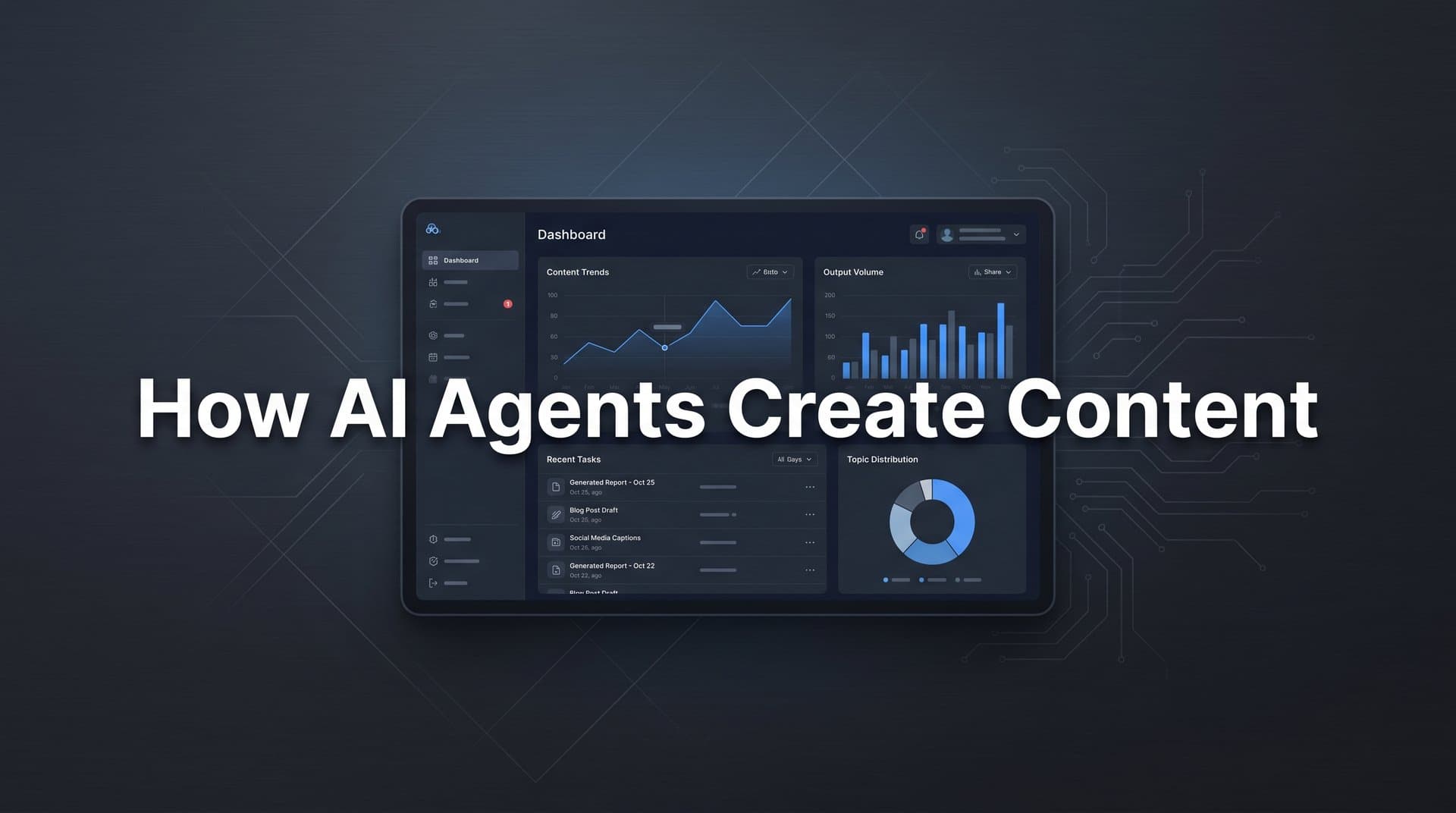
You've probably noticed the difference. When you ask ChatGPT to write an article, you get something generic—a surface-level piece that sounds like AI and reads like a template. But when you use a sophisticated AI content platform, the output feels different. It has depth, structure, and nuance. The secret? You're not dealing with a single AI anymore. You're working with a team of specialized AI agents, each handling a specific part of the content creation process.
This isn't just a marketing claim. Modern AI content systems have evolved from simple prompt-response tools into orchestrated networks of specialized agents. Think of it like the difference between asking one person to build an entire house versus coordinating a team of architects, electricians, plumbers, and carpenters. Each agent brings focused expertise to its specific task, and together they produce something far more sophisticated than any single component could create alone.
For marketers trying to scale content production without sacrificing quality, understanding how these agent systems actually work isn't just technical curiosity—it's a competitive advantage. This article breaks down the architecture, workflow, and practical implications of AI agent content creation, giving you the knowledge to evaluate tools effectively and leverage them strategically.
The Architecture Behind AI Agent Content Systems
At the foundation of every AI agent system sits a Large Language Model—the same technology powering ChatGPT, Claude, or similar tools. But here's where agent-based systems diverge from simple chatbots: instead of sending one prompt to one model and hoping for the best, agent architectures decompose content creation into distinct tasks, each handled by a specialized component.
The core architecture typically includes four types of agents working in concert. Planning agents analyze the content brief and create a strategic roadmap—determining structure, identifying key topics, and setting parameters for the other agents. Research agents gather relevant information, either by accessing knowledge databases or using retrieval-augmented generation to pull in current data. Writing agents handle the actual content generation, with different agents specialized for different content formats. Optimization agents refine the output for SEO, readability, and brand voice consistency.
What makes this system powerful is the structured communication between agents. Instead of one monolithic prompt, you have a workflow where each agent produces output that becomes input for the next stage. The planning agent might create an outline that the research agent uses to identify information gaps. The research agent's findings then inform the writing agent's content generation. The optimization agent reviews the draft and applies technical improvements.
This isn't just theoretical architecture—it's a fundamental shift in how AI handles complex tasks. Single-prompt systems struggle with long-form content because they're trying to juggle planning, research, writing, and optimization simultaneously. Agent systems separate these concerns, allowing each component to focus on what it does best. Understanding what AI content agents are helps clarify why this separation matters so much.
The technical implementation varies across platforms, but the principle remains consistent: decompose the complex task of content creation into manageable subtasks, assign each to a specialized agent, and orchestrate the workflow to ensure quality at each stage. This approach mirrors how human content teams actually work, which is why the outputs feel more natural and complete.
For marketers evaluating AI content tools, understanding this architecture matters. When a platform talks about "13+ specialized agents" or "multi-agent workflows," they're describing a fundamentally different approach than simple prompt engineering. The question isn't whether the platform uses AI—it's whether it uses AI intelligently, with specialized components working together rather than one generalist trying to do everything.
From Prompt to Published: The Agent Workflow in Action
Let's walk through what actually happens when you request an article from an agent-based system. The process reveals why these systems produce more sophisticated outputs than single-prompt tools.
It starts with topic analysis. When you input a target keyword or content brief, the planning agent doesn't immediately start writing. Instead, it analyzes search intent, identifies the type of content needed, and determines the optimal structure. For a keyword like "how to improve website speed," the planning agent recognizes this requires an explainer format with actionable steps, not a listicle or comparison guide. This initial analysis shapes everything that follows.
Next comes outline generation. The planning agent creates a detailed content structure with main sections, key points to cover, and the logical flow between topics. This isn't a simple bullet list—it's a strategic roadmap that ensures comprehensive coverage and natural progression. The outline becomes the blueprint that guides all subsequent agents.
The research phase activates next. Research agents use the outline to identify information needs for each section. They might pull relevant technical concepts, industry best practices, or contextual information that adds depth to the content. This is where retrieval-augmented generation often comes into play, allowing agents to access current information beyond their training data.
Now the writing agents take over—and here's where specialization really matters. An agent trained for listicle creation handles list-based content differently than an agent optimized for technical explainers. The listicle agent focuses on parallel structure, scannable formatting, and clear item delineation. The explainer agent prioritizes logical progression, concept building, and accessible technical explanation. The comparison agent emphasizes balanced analysis and decision criteria. Platforms using AI content writing with multiple agents leverage these specialized capabilities effectively.
As each section gets drafted, feedback loops activate. Quality control agents review the output against criteria like readability, coherence, and alignment with the outline. If a section lacks depth or strays from the topic, the system can trigger a redraft before moving forward. This iterative refinement happens automatically, catching issues that would otherwise reach human editors.
The assembly phase brings all sections together. Integration agents ensure smooth transitions between sections, consistent terminology throughout, and proper flow from introduction to conclusion. They check for redundancy, verify that promises made in the intro are fulfilled in the body, and ensure the conclusion synthesizes key points effectively.
Finally, optimization agents apply technical improvements. They verify keyword integration feels natural, check that headings follow a logical hierarchy, ensure paragraphs maintain optimal length, and confirm the content matches the target format specifications. For platforms with publishing capabilities, these agents can also generate meta descriptions, suggest internal linking opportunities, and format the content for specific CMS requirements.
The entire workflow happens in minutes, but it mirrors the multi-stage process a skilled content team would follow over hours or days. The difference? Agent systems can execute this workflow consistently at scale, applying the same quality standards to the first article and the hundredth.
Why Specialized Agents Outperform Generic AI Writing
The "jack of all trades, master of none" principle applies to AI just as it does to humans. When you ask a single AI model to handle every aspect of content creation in one go, you're asking it to simultaneously be a strategist, researcher, writer, and editor. The results reflect that divided attention.
Task decomposition is the key advantage of agent systems. By breaking content creation into discrete tasks—planning, research, drafting, optimization—each agent can apply focused expertise to its specific domain. A planning agent doesn't need to worry about word choice or sentence structure; it focuses entirely on strategic content architecture. A writing agent doesn't get distracted by SEO optimization; it concentrates on clear, engaging prose.
This specialization manifests in measurable quality improvements. Generic AI writing often struggles with structural coherence—it might start strong but lose focus midway through, or fail to maintain consistent depth across sections. Agent systems avoid this because the planning agent establishes the structure upfront, and quality control agents verify each section meets standards before proceeding. Teams looking to scale content production with AI find this consistency invaluable.
Consider how different content types require different approaches. A listicle needs parallel structure, scannable formatting, and clear item differentiation. An explainer requires logical concept building, accessible technical explanation, and progressive complexity. A comparison guide demands balanced analysis, clear evaluation criteria, and decision-oriented conclusions. A single-prompt system tries to handle all these formats with the same generic approach. Agent systems deploy specialized agents trained for each format's unique requirements.
The configuration flexibility of agent systems also matters for brand voice and industry context. Rather than fine-tuning an entire model—an expensive and complex process—platforms can configure specific agents with brand guidelines, industry terminology, and tone preferences. The writing agents incorporate these parameters while the research agents focus on domain-relevant information and the optimization agents apply industry-specific best practices.
This is why experienced marketers notice the difference immediately. Generic AI writing feels like a first draft that needs substantial revision. Agent-based content feels like a solid draft from a writer who understands the assignment—it still benefits from human review, but the foundation is fundamentally stronger.
The practical implication? When evaluating AI content tools, ask about their agent architecture. Platforms that rely on single-prompt generation will hit quality ceilings quickly. Systems with specialized agents can scale production while maintaining consistency and depth.
The SEO and GEO Optimization Layer
Modern content doesn't just need to read well—it needs to rank well and get cited by AI systems. This is where optimization agents add crucial value that generic AI writing typically misses.
SEO optimization starts with how agents incorporate keyword research into content structure. Rather than awkwardly stuffing keywords into finished text, optimization agents analyze search intent during the planning phase. They identify primary keywords, related terms, and semantic variations that should appear naturally throughout the content. The planning agent uses this analysis to structure sections around topics that align with search queries, ensuring the content addresses what users actually want to know. For a deeper dive into this process, explore how SEO content generation with AI agents actually works.
The emerging field of Generative Engine Optimization adds another layer of complexity. AI-powered search engines like Perplexity and Google's AI Overviews don't just index content—they synthesize information from multiple sources to answer queries. Getting cited by these systems requires content that's well-structured, authoritative, and easily extractable. Optimization agents format content to meet these requirements: clear headings that signal topic boundaries, concise paragraphs that can be quoted cleanly, and logical information architecture that AI systems can parse effectively.
Think about how AI search engines evaluate content. They prioritize sources that provide clear, direct answers to specific questions. They favor content with strong topical authority and comprehensive coverage. They look for structured information that can be easily extracted and cited. Optimization agents build these elements into content automatically—not as an afterthought, but as part of the core creation process. Learning how to optimize content for AI search has become essential for modern marketers.
Internal linking is another area where optimization agents add value. They can analyze your existing content library, identify relevant articles to link to, and suggest natural anchor text that strengthens topical relationships. This happens automatically during the assembly phase, creating a more interconnected content ecosystem without manual effort.
Meta descriptions, title tags, and structured data also fall under the optimization layer. These technical elements are easy to overlook but crucial for both traditional SEO and AI visibility. Optimization agents generate meta descriptions that accurately summarize content while incorporating target keywords. They verify title tags follow best practices for length and keyword placement. For platforms with advanced capabilities, they can even suggest schema markup that helps search engines understand content context.
The real advantage? This optimization happens before content reaches human editors, not as a cleanup step afterward. The content is born optimized, with SEO and GEO considerations baked into its structure from the start. Marketers can focus on strategic decisions and final polish rather than technical optimization tasks that agents can handle more consistently anyway.
Human-Agent Collaboration: Where Marketers Fit In
Understanding agent systems doesn't mean removing humans from content creation—it means redefining where human expertise adds the most value. The goal is strategic collaboration, not complete automation.
The ideal handoff points between AI agents and human editors occur at strategic decision moments and final quality gates. Humans should define content strategy: which topics to cover, what angle to take, who the target audience is, and what business goals the content serves. Agents execute the tactical work of research, drafting, and optimization based on these strategic inputs. Humans then review the output for accuracy, brand alignment, and strategic fit before publication.
This is fundamentally different from line-by-line editing. When marketers try to fix every sentence in AI-generated content, they're working inefficiently—doing the job agents should have done better in the first place. The smarter approach is guiding agent outputs through better strategic inputs. If the content misses the mark, the solution isn't heavy editing—it's refining the brief, adjusting the target keyword, or clarifying the audience parameters so the next generation hits closer to target. Mastering how to automate content creation workflow helps teams find this balance.
Quality control checkpoints should focus on what agents can't reliably evaluate. Factual accuracy requires human verification, especially for statistics, case studies, or technical claims. Brand voice nuance benefits from human judgment—while agents can match general tone, subtle brand personality often needs human refinement. Strategic alignment with current campaigns, messaging priorities, or market positioning requires human oversight that understands broader business context.
Human expertise remains essential for several specific areas. Original research and proprietary insights can't come from AI systems trained on public data. Industry expertise and professional judgment add perspectives that generic training data can't replicate. Creative differentiation and unique angles require human strategic thinking. Relationship building through authentic voice and personality benefits from genuine human expression.
The most effective content operations treat AI agents as a highly capable production team that needs good creative direction. Marketers who understand this shift their time from execution to strategy: developing content roadmaps, analyzing performance data, identifying content gaps, and refining the strategic inputs that guide agent systems toward better outputs.
This collaboration model scales differently than traditional content production. Instead of hiring more writers to produce more content, you refine your strategic inputs and quality control processes to get better outputs from the same agent system. The bottleneck shifts from production capacity to strategic oversight—a much more manageable constraint for most marketing teams.
Putting AI Agent Content Creation to Work
Now that you understand the technical foundation of agent-based content creation, let's connect these concepts to practical evaluation and implementation.
The key technical concepts marketers should internalize: Agent systems decompose content creation into specialized tasks handled by different components. Workflow orchestration ensures quality at each stage before proceeding to the next. Task specialization produces better outputs than generic single-prompt approaches. Optimization happens during creation, not as an afterthought. Human oversight focuses on strategy and final quality gates, not line-by-line editing.
When evaluating AI content platforms, ask specific questions about their agent architecture. How many specialized agents does the system use, and what tasks does each handle? How does information flow between agents during content creation? Can you customize agent behavior for brand voice or industry context? What quality control mechanisms operate between agents? How does the platform handle different content formats—does it use the same agents for everything or deploy format-specific specialists? Reviewing options like AI content writers with multiple agents can help clarify what to look for.
Platforms that can't clearly explain their agent architecture probably don't have one. They're likely using simple prompt engineering—which has its place but hits quality ceilings quickly. Systems built on true agent frameworks will have detailed answers about specialization, workflow, and quality control.
The practical outcomes of agent-based systems manifest in three key areas. Faster production comes from parallel processing and automated workflows that would take humans hours or days. Better rankings result from built-in SEO and GEO optimization that creates search-friendly content by default. Improved AI visibility happens when content is structured specifically for citation by AI-powered search engines and chatbots.
These outcomes compound over time. As you publish more agent-created content optimized for both traditional search and AI systems, you build topical authority that benefits all your content. As you refine your strategic inputs based on performance data, agent outputs improve without additional development work. As AI search continues growing, content built for AI citation gains increasing value. Understanding how to measure content performance becomes critical for tracking this progress.
The competitive advantage goes to marketers who understand these systems well enough to use them strategically. You're not just buying an AI writing tool—you're implementing a content production system that can scale with your needs while maintaining quality standards. The question isn't whether to use AI agents for content creation. The question is whether you understand them well enough to use them effectively.
The Future of Content Operations Is Already Here
Agent-based content creation represents a fundamental shift in how marketing teams approach content production. Understanding the architecture, workflow, and optimization layers of these systems gives you the knowledge to evaluate tools critically and implement them strategically. The platforms built on sophisticated agent frameworks will continue pulling ahead of simple AI writing tools as content demands grow more complex.
The marketers who thrive in this environment won't be those who resist AI or those who blindly automate everything. They'll be the ones who understand how agent systems work, where human expertise adds the most value, and how to orchestrate the collaboration between human strategy and AI execution. As AI-powered search engines become more prominent, content optimized for both traditional SEO and AI citation will become table stakes, not a competitive advantage.
Agent systems are becoming the standard for scalable content operations because they solve the core challenge: producing high-quality content consistently at scale. Single-prompt tools can't match the depth and sophistication that specialized agents working in concert can achieve. Human-only teams can't match the speed and consistency that well-orchestrated agent systems deliver.
But here's the piece most marketers miss: content creation is only half the equation. You also need visibility into how AI systems actually talk about your brand, what content opportunities exist, and whether your optimization efforts are working. Start tracking your AI visibility today and see exactly where your brand appears across top AI platforms—because creating great content means nothing if you can't measure its impact on AI-powered search and conversations.