Your brand is being discussed across AI chatbots, social media, news sites, and forums—often without your knowledge. Whether it's ChatGPT recommending your competitor or a Reddit thread praising your product, these conversations shape purchase decisions. Brand mention tracking platforms help you capture these signals, analyze sentiment, and respond strategically. Below are the top platforms for monitoring brand mentions across traditional channels and the emerging AI landscape, followed by a practical setup guide for tracking mentions inside ChatGPT, Claude, and Perplexity.
Quick Comparison
| Platform | Best for | Primary coverage | Starting price |
|---|---|---|---|
| Sight AI | AI assistant visibility | ChatGPT, Claude, Perplexity and 3+ other AI platforms | Free trial, paid plans |
| Brandwatch | Enterprise consumer intelligence | Social, web, historical archive | Custom (from ~$1,000/month) |
| Mention | Real-time alerts | Web, social, news, forums | $41/month |
| Brand24 | SMB social listening | Social, web, basic AI mentions | $79/month |
| Sprout Social | Monitoring plus publishing | Social platforms | $199/seat/month |
| Meltwater | PR and news coverage | News, broadcast, print, social | Custom (from ~$6,000/year) |
| Talkwalker | Visual logo recognition | Social, web, images, video | Custom (from ~$9,000/year) |
| Awario | Budget web-wide monitoring | Forums, blogs, news, social | $29/month |
| Google Alerts | Zero-budget monitoring | Google-indexed pages | Free |
1. Sight AI
Best for: Tracking brand mentions across AI models like ChatGPT, Claude, and Perplexity
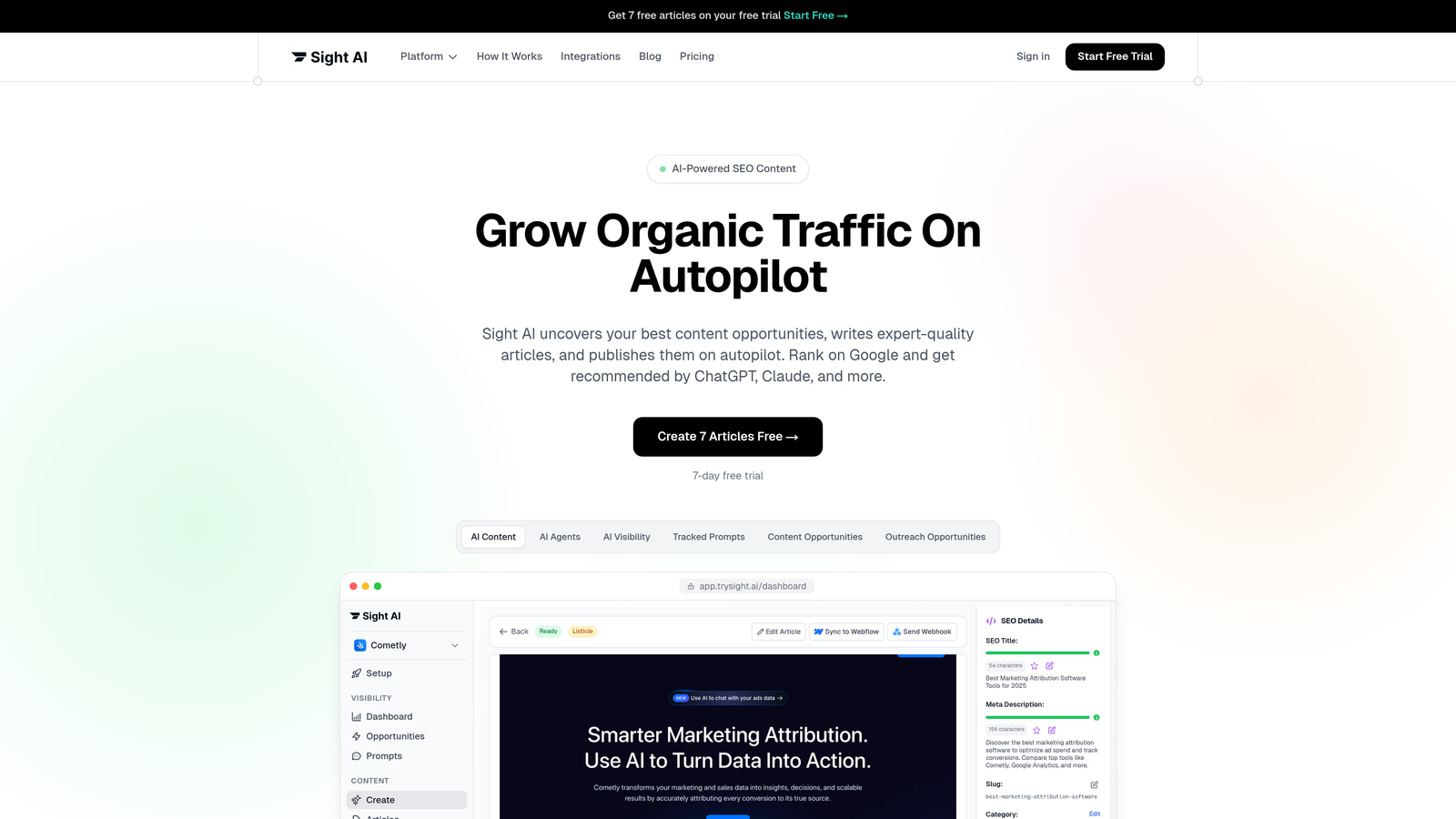
Sight AI addresses a monitoring gap that traditional tools miss: how AI assistants talk about your brand.
Where This Tool Shines
While most monitoring platforms focus on social media and news, Sight AI tracks brand mentions across 6+ AI platforms including ChatGPT, Claude, and Perplexity. This matters because millions of users now ask AI assistants for product recommendations and research, creating an entirely new category of brand visibility that traditional tools can't capture.
The platform goes beyond simple mention tracking by analyzing sentiment and tracking the specific prompts that trigger brand mentions. This helps you understand not just if you're mentioned, but how and why AI models recommend your brand—and where competitors appear instead of you. Because monitoring and content creation live in one place, you can move from a detected visibility gap straight to publishing content designed to close it.
Key Features
AI Visibility Score: Quantifies how frequently and favorably AI models mention your brand across different prompt types.
Multi-Platform Monitoring: Tracks mentions across ChatGPT, Claude, Perplexity, and other AI assistants from a single dashboard.
Sentiment Analysis: Identifies whether AI mentions are positive, neutral, or negative with context about why.
Competitor Tracking and Alerts: Flags when competitors appear alongside or instead of your brand, and notifies you when mention patterns shift.
Content Optimization Tools: 13+ specialized AI agents generate SEO/GEO-optimized content designed to increase brand mentions in AI responses.
Automated Indexing: Uses IndexNow integration to ensure new content gets discovered faster by search engines and AI models.
Best For
Marketers, founders, and agencies focused on organic traffic growth who want to understand and influence how AI assistants represent their brand. Particularly valuable for SaaS, B2B, and companies in competitive industries where AI recommendations can sway purchase decisions.
Pricing
Free trial available to test AI visibility tracking. Paid plans provide full access to monitoring, content generation, and indexing tools, scaling with the number of brands tracked.
2. Brandwatch
Best for: Enterprise teams needing deep historical data and advanced consumer intelligence
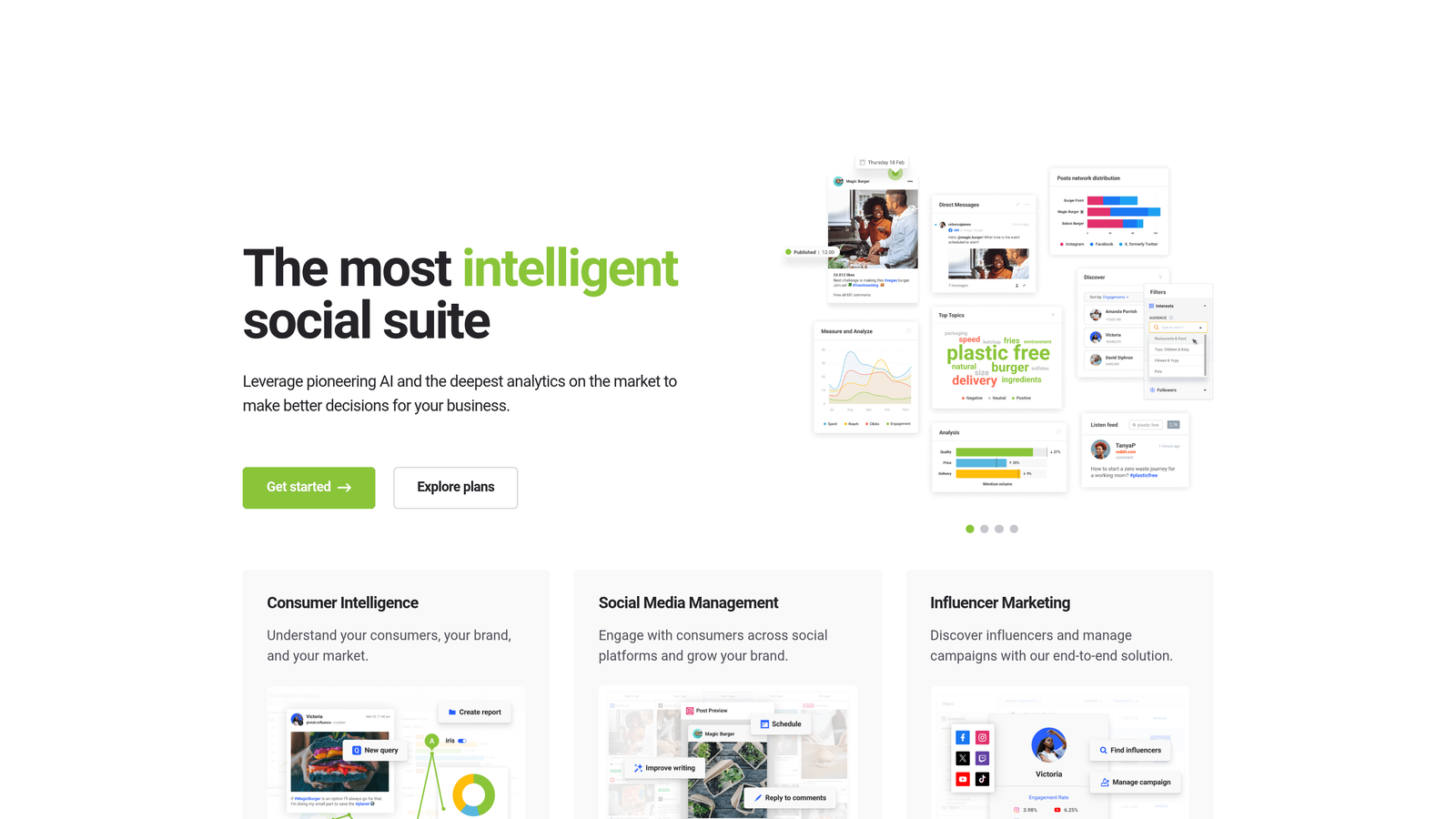
Brandwatch delivers enterprise-grade social listening with years of historical data and sophisticated analytics capabilities.
Where This Tool Shines
Brandwatch's standout feature is its access to historical social data going back years, allowing you to analyze long-term trends and compare current sentiment against past performance. This historical depth makes it invaluable for understanding how brand perception has evolved over time.
The platform's AI-powered analysis goes beyond basic sentiment to detect emotions like joy, anger, or fear in brand mentions. This emotional intelligence helps teams understand not just what people are saying, but how they feel about your brand. Enterprise security (SOC 2, GDPR) and custom alert escalation workflows suit organizations with strict compliance requirements.
Key Features
Historical Data Access: Query years of past social conversations to identify trends and benchmark current performance.
Emotion Analysis: AI detects emotional context in mentions beyond simple positive/negative sentiment.
Image Recognition: Automatically identifies your logo in images and videos across social platforms.
Custom Dashboards: Build tailored reporting views for different stakeholders with drag-and-drop simplicity.
Competitive Intelligence: Compare your brand's performance against competitors using the same sophisticated metrics.
Best For
Large marketing teams and agencies managing multiple brands who need comprehensive analytics and historical context. The depth of data and analysis justifies the investment for organizations where brand reputation drives significant revenue.
Pricing
Custom enterprise pricing based on monitoring needs and data volume, typically starting around $1,000 per month on annual contracts. Contact their sales team for a tailored quote.
3. Mention
Best for: Teams that need instant alerts for brand mentions across web and social
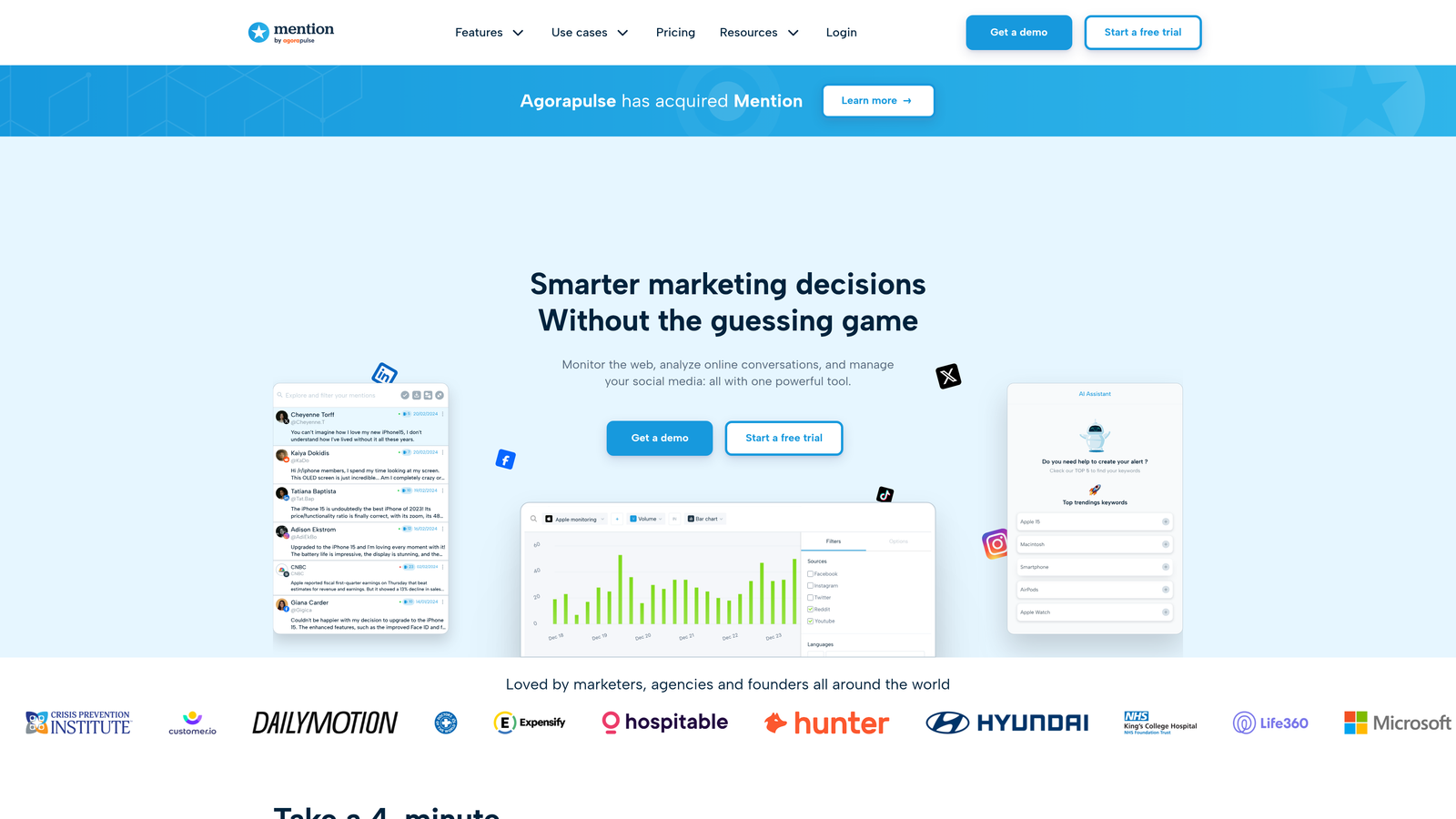
Mention focuses on speed, delivering real-time notifications the moment your brand appears online.
Where This Tool Shines
Mention excels at immediacy. When someone mentions your brand on Twitter, writes a blog post, or comments in a forum, you get notified within minutes. This speed is critical for crisis management, customer service, and timely engagement opportunities.
The platform covers an impressive range of sources beyond social media—news sites, blogs, forums, and review platforms—giving you a comprehensive view of brand conversations across the web. Boolean search operators let you create precise monitoring queries that filter out noise, which is essential if your brand name is also a common word.
Key Features
Real-Time Alerts: Get notified immediately when new mentions appear, with rules based on source, sentiment, or reach.
Boolean Search: Create sophisticated queries using AND, OR, and NOT operators for precise monitoring.
Competitive Tracking: Benchmark share of voice and sentiment against competitors to identify market positioning opportunities.
Team Collaboration: Assign mentions to team members, add internal notes, and track response workflows.
Multi-Source Coverage: Monitors social platforms, news, blogs, forums, and review sites in 42 languages, with API access for custom integrations.
Best For
Marketing and customer service teams that prioritize rapid response to brand mentions, and agencies coordinating responses across client accounts. Particularly valuable for brands in fast-moving industries where timely engagement matters.
Pricing
Starts at $41/month for the Solo plan (up to 1,000 mentions). Pro ($83/month) and Company ($149/month) add more mentions and users; custom enterprise pricing is available.
4. Brand24
Best for: Small to mid-sized businesses seeking affordable social listening with influencer identification
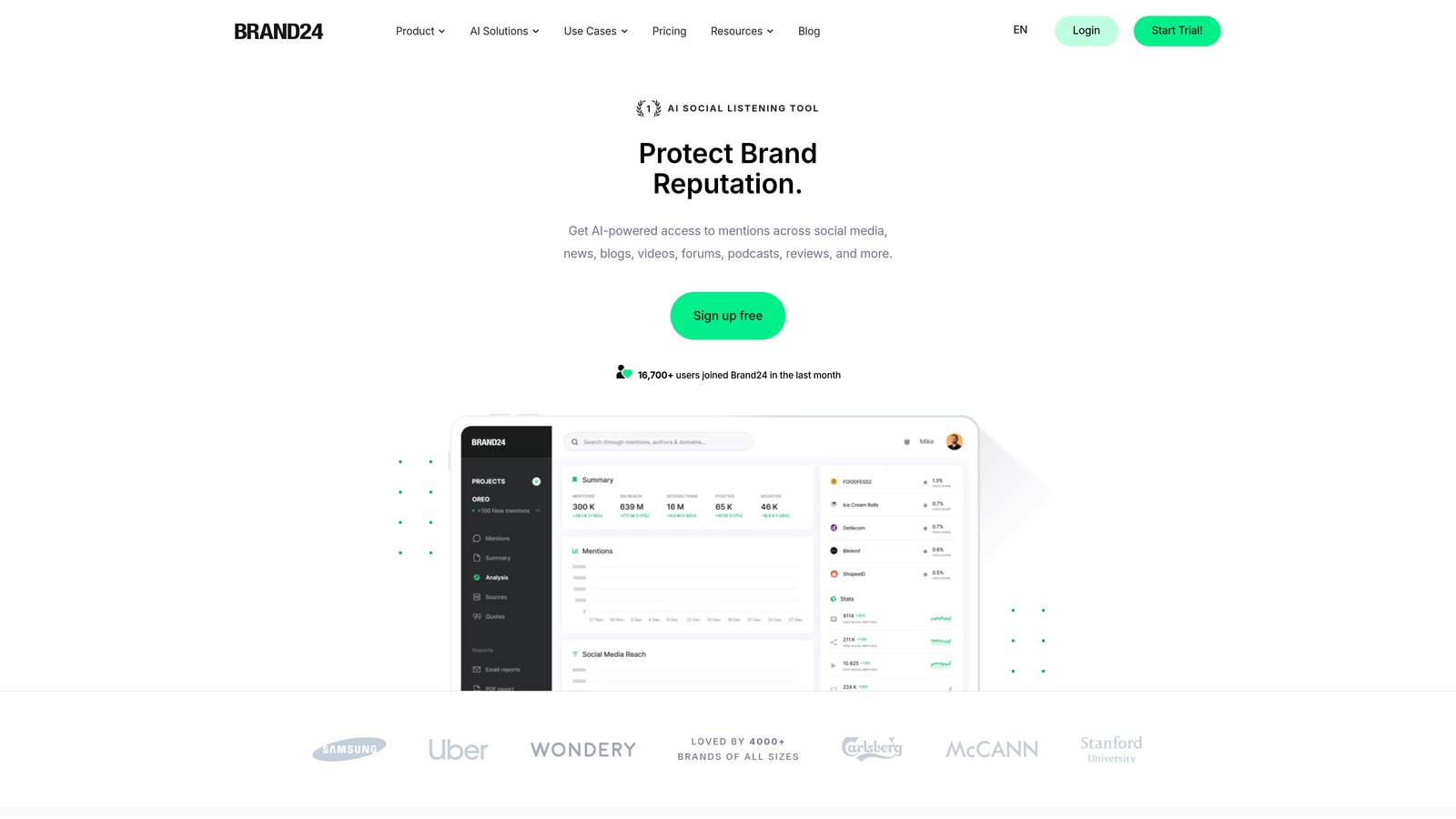
Brand24 delivers powerful monitoring capabilities at a price point accessible to smaller teams.
Where This Tool Shines
Brand24's discussion volume charts make it easy to spot when conversation about your brand spikes, helping you identify trending topics or potential crises early. The visual representation of mention volume over time provides immediate context that raw numbers miss.
The influencer score feature automatically identifies which users mentioning your brand have the largest reach and engagement. This helps you prioritize relationship-building with voices that matter most to your audience. Brand24 has also added basic AI mention monitoring, though it remains secondary to its social listening core.
Key Features
Volume Charts: Visual graphs show mention trends over time, making spikes and patterns immediately obvious.
Influencer Identification: Automatically scores users by reach and influence to help you find key voices.
Hashtag Tracking: Monitor branded hashtags and campaign-specific tags across social platforms.
Sentiment Analysis: Categorizes mentions as positive, negative, or neutral with context.
Integrations and Reporting: Push alerts to Slack, email, or mobile, and schedule white-label PDF reports for clients and stakeholders.
Best For
Growing businesses and small marketing teams that need professional monitoring features without enterprise pricing. The balance of capability and affordability makes it a popular choice for startups, SMBs, and agencies running multiple client projects.
Pricing
Starts at $79/month for the Individual plan. Team ($149/month) and Pro ($199/month) increase mention limits and add collaboration features; annual billing is discounted.
5. Sprout Social
Best for: Teams managing social media who want monitoring integrated with publishing and engagement
Sprout Social combines brand monitoring with full social media management in a unified platform.
Where This Tool Shines
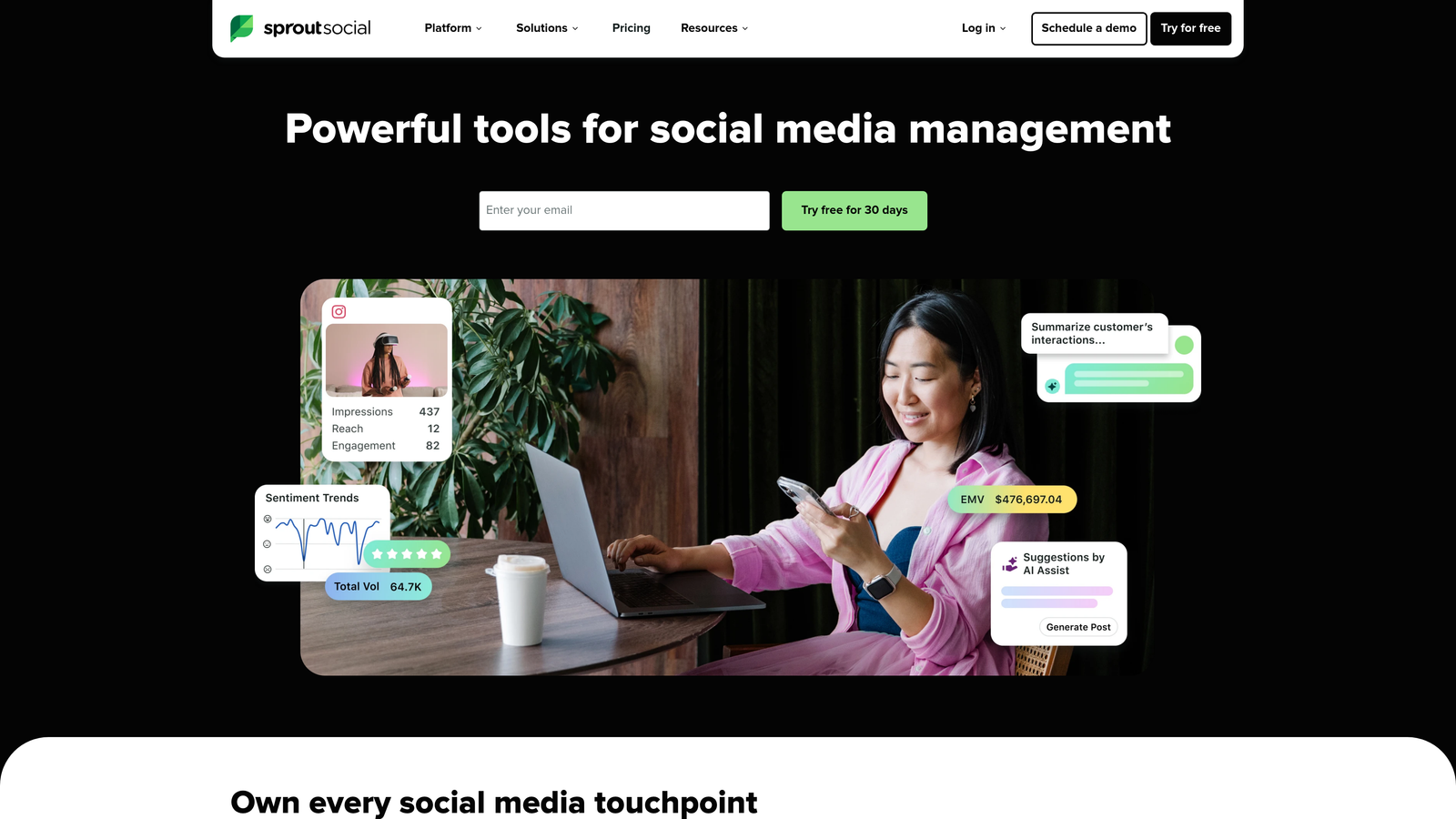
The unified smart inbox is Sprout's standout feature—it aggregates mentions, messages, and comments from all your social profiles into one stream. This eliminates the need to jump between platforms and ensures no mention goes unnoticed.
Because Sprout handles both monitoring and publishing, you can discover a brand mention and respond to it without switching tools. This seamless workflow saves time and ensures consistent engagement across all your social channels.
Key Features
Smart Inbox: All brand mentions and messages from every social platform appear in one prioritized feed.
Social Listening: Track keywords, hashtags, and brand mentions with sentiment analysis.
Publishing Tools: Schedule posts, manage content calendars, and respond to mentions from the same interface.
Analytics Suite: Comprehensive reporting on mention trends, engagement metrics, and competitor benchmarks.
Team Workflows: Assign conversations to team members, run approval processes, and track response times.
Best For
Social media teams that want an all-in-one solution for monitoring, engagement, and publishing. The integrated approach works best when your brand mention strategy focuses primarily on social platforms.
Pricing
Starts at $199/month per seat for the Standard plan, with Professional and Advanced tiers above it. The per-user pricing can add up quickly for larger teams.
6. Meltwater
Best for: PR teams tracking news coverage and media relationships
Meltwater specializes in media intelligence, focusing on news coverage, press mentions, and journalist relationships.
Where This Tool Shines
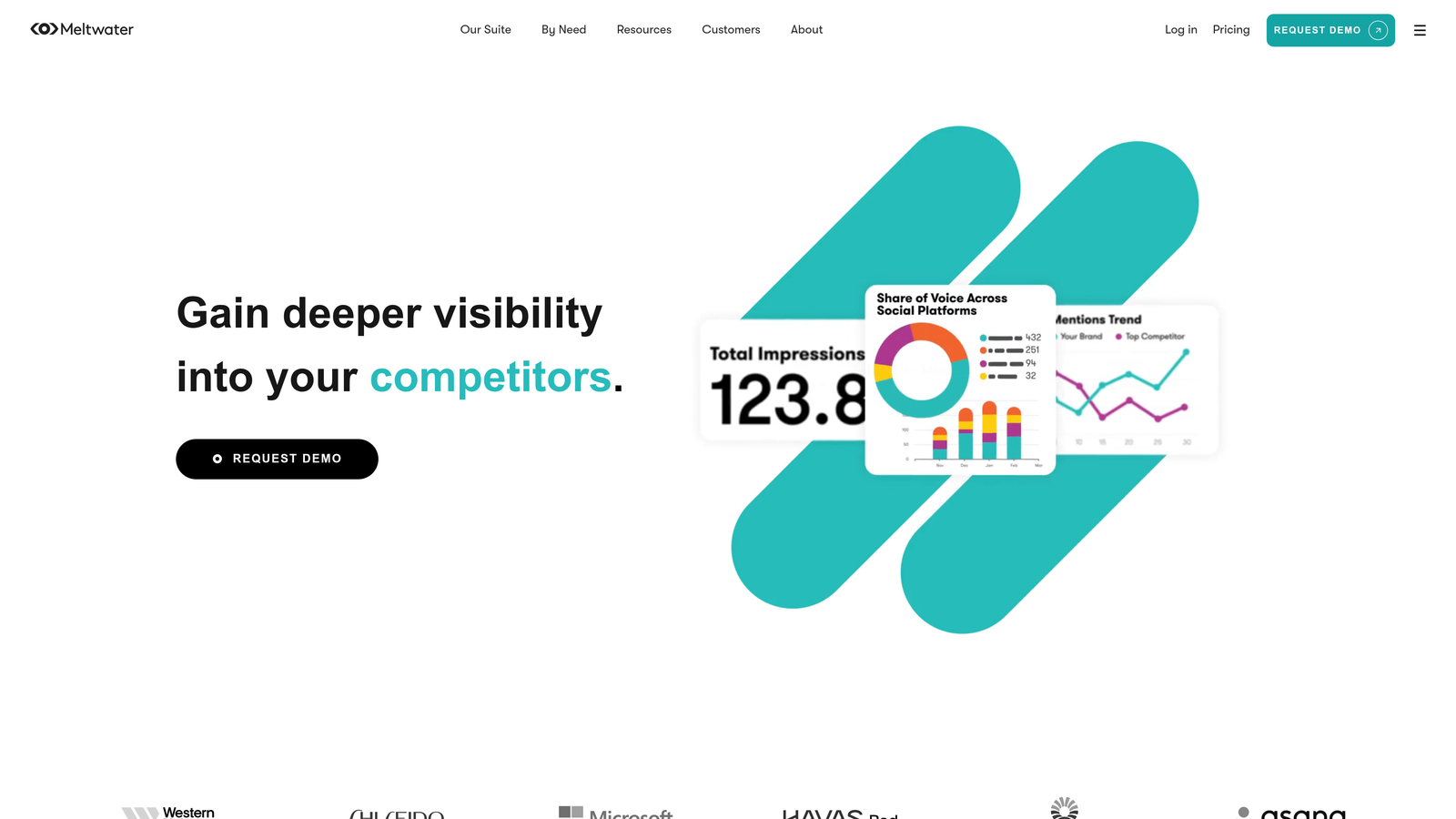
Meltwater's global news monitoring covers broadcast, print, and online news sources across multiple languages and countries, including TV and radio clips with transcripts. This makes it particularly valuable for brands with international presence or those where traditional media coverage drives reputation.
The platform's PR measurement tools help you quantify the impact of media coverage, tracking metrics like reach, sentiment, earned media value, and share of voice. This data proves invaluable when demonstrating PR ROI to stakeholders. Since media coverage feeds the sources AI models learn from, it also helps PR teams see how press work flows downstream into AI recommendations.
Key Features
Global News Monitoring: Track brand mentions across international news sources, broadcast media, print, and online publications.
PR Measurement: Quantify media coverage impact with reach, sentiment, and competitive benchmarking.
Competitive Intelligence: Compare your media presence against competitors to identify gaps and opportunities.
Influencer Discovery: Find journalists and influencers covering your industry, with a searchable media contact database.
Custom Reporting: Generate professional reports for executives and stakeholders.
Best For
PR professionals and communications teams where traditional media coverage matters as much as social conversation. Particularly valuable for B2B brands and industries where news coverage drives credibility.
Pricing
Custom pricing, typically starting around $6,000 per year for basic media monitoring, with comprehensive packages commonly running $12,000–$25,000+ annually.
7. Talkwalker
Best for: Brands needing visual recognition to track logo appearances in images and videos
Talkwalker uses visual AI to detect brand logos in images and videos across social media and the web.
Where This Tool Shines
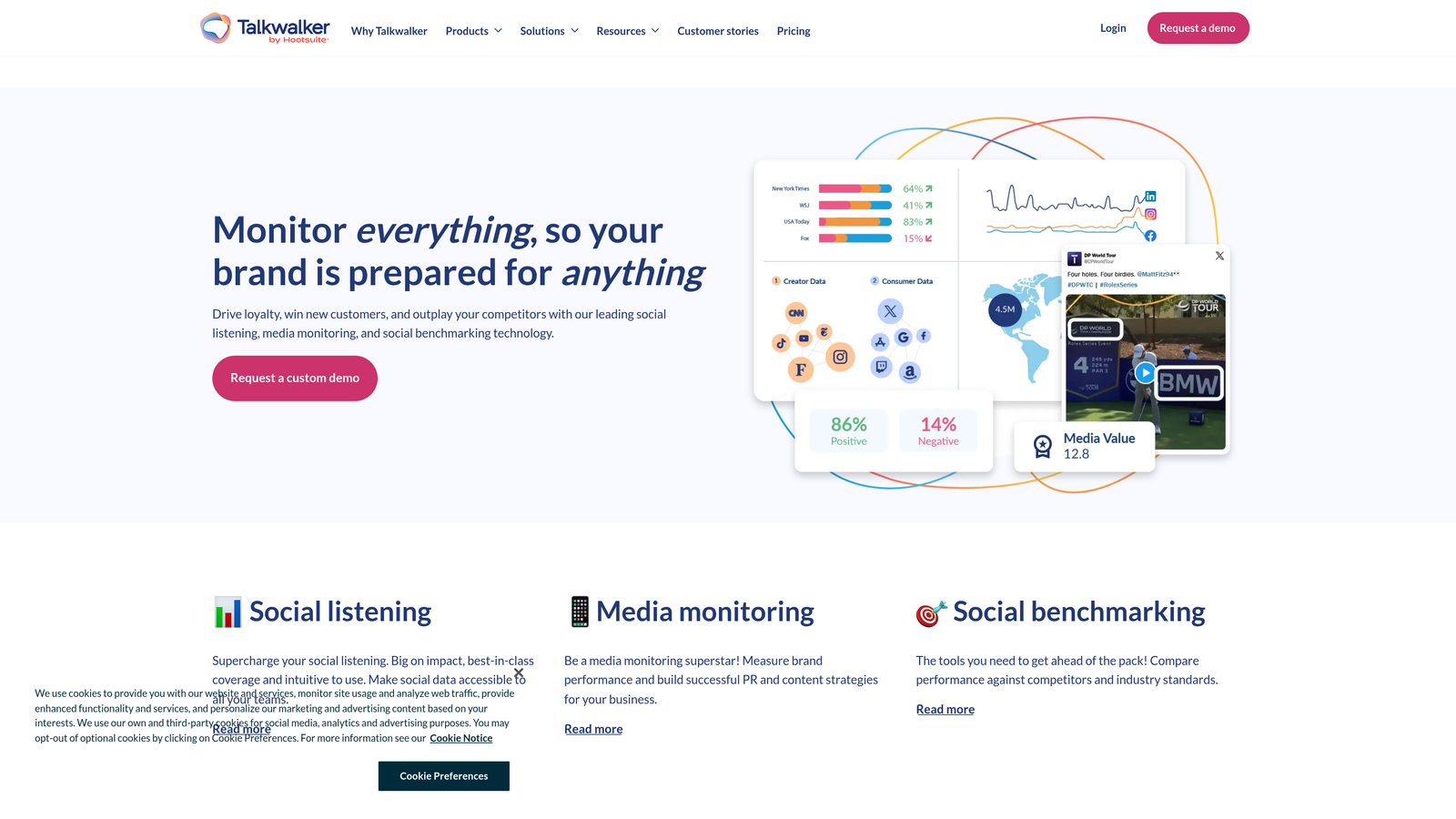
Talkwalker's visual recognition technology identifies your logo even when users don't mention your brand by name. Someone posts a photo wearing your product or a video featuring your storefront? Talkwalker catches it. This visual monitoring captures brand visibility that text-based tools completely miss.
The crisis alert system uses predictive analytics to identify when a brand mention pattern suggests an emerging issue. This early warning helps teams respond before small problems become major crises.
Key Features
Visual AI Recognition: Automatically detects your logo and products in images and videos across platforms.
Crisis Prediction: Identifies unusual mention patterns that may indicate emerging reputation issues.
Virality Mapping: Tracks how mentions spread across networks to understand conversation amplification.
Multi-Language Sentiment: Analyzes sentiment in over 180 languages for global brand monitoring.
Comprehensive Coverage: Monitors 150+ million sources, including social platforms, news sites, blogs, forums, and review sites.
Best For
Consumer brands where visual presence matters—fashion, food and beverage, consumer electronics, and retail. The visual recognition capabilities justify the investment when your brand identity is highly visual.
Pricing
Custom enterprise pricing, starting around $9,000 per year for basic packages; full-feature implementations typically range from $15,000 to $30,000+ annually. Request a demo to discuss your monitoring needs.
8. Awario
Best for: Budget-conscious teams needing strong coverage of forums, blogs, and non-social sources
Awario focuses on monitoring the broader web beyond major social platforms at an accessible price point.
Where This Tool Shines
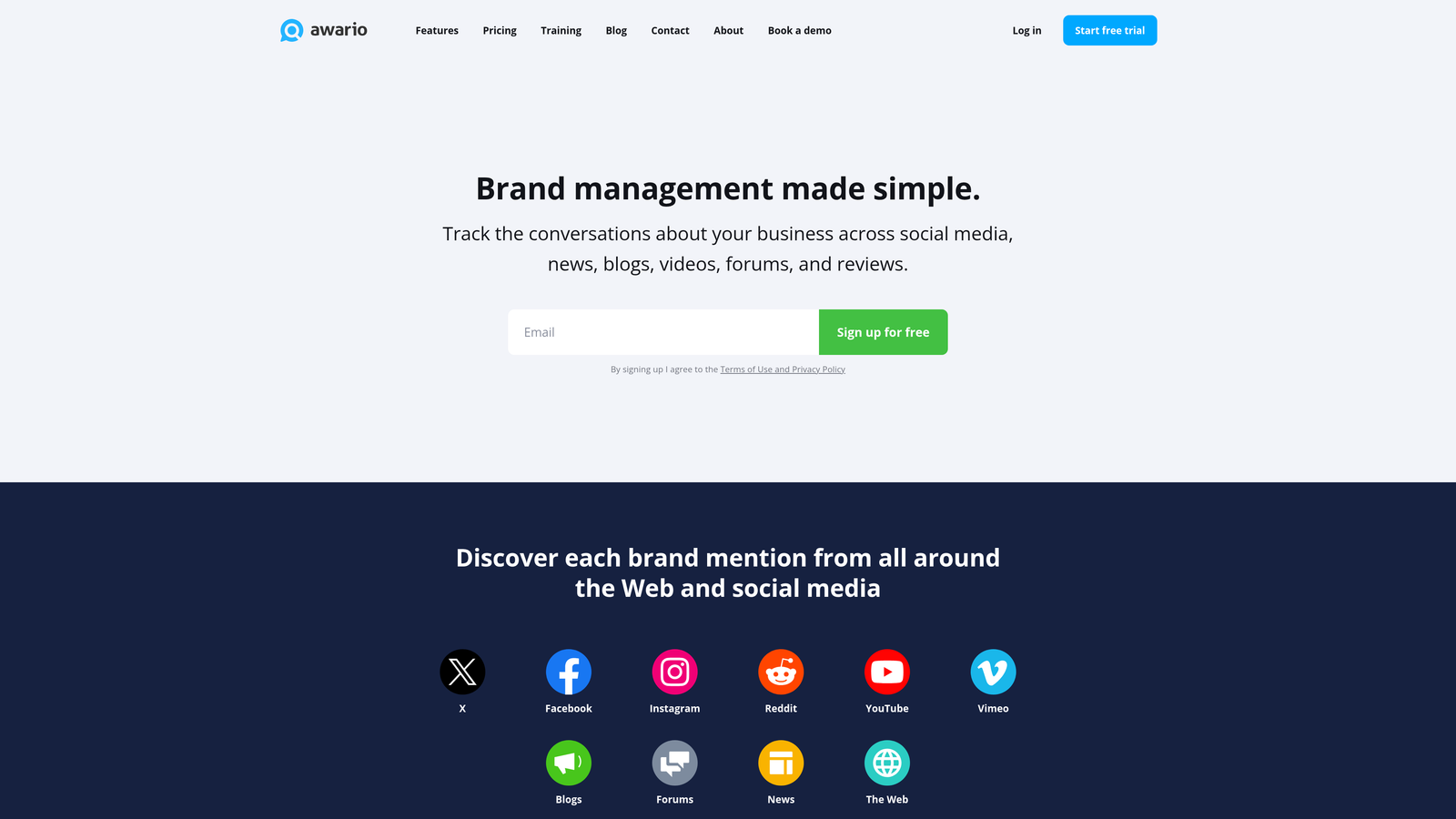
Awario runs its own web crawler rather than relying solely on social platform APIs, so it excels at finding brand mentions in places other tools miss—niche forums, comment sections, review sites, and blogs. While competitors focus primarily on Twitter, Facebook, and Instagram, Awario digs deeper into the long tail of web conversations.
The Leads feature turns monitoring into a sales tool by identifying people asking questions or expressing needs related to your product category. This helps sales teams find warm prospects already looking for solutions you provide.
Key Features
Broad Web Crawling: Monitors forums, blogs, news sites, and review platforms beyond mainstream social media.
Leads Identification: Finds people asking questions or expressing needs your product solves.
Boolean Search: Create precise monitoring queries to filter relevant mentions from noise.
White-Label Reports: Generate branded reports for clients if you're an agency.
Sentiment Analysis: Automatically categorizes mentions by sentiment to prioritize responses.
Best For
Small businesses, startups, and agencies that need comprehensive monitoring without enterprise pricing. The lead generation feature makes it particularly valuable for B2B companies and sales-driven organizations.
Pricing
Starts at $29/month for the Starter plan (3 topics, 30,000 mentions). Pro ($89/month) and Enterprise ($299/month) add capacity; annual billing includes two months free.
9. Google Alerts
Best for: Basic monitoring needs with zero budget
Google Alerts provides free email notifications when your brand appears in Google-indexed content.
Where This Tool Shines
Google Alerts costs nothing and requires minimal setup—you create an alert with your brand name, and Google emails you when new results appear. For basic monitoring needs or supplementing a paid tool, this simplicity and zero cost make it universally accessible.
Because Google indexes billions of web pages, Alerts can catch mentions on news sites, blogs, and forums that might not appear in social-focused tools. It's particularly effective for monitoring published articles and formal content. It does not cover social media or AI assistant responses, and offers no sentiment analysis.
Key Features
Zero Cost: Completely free with no limitations or trial periods.
Email Delivery: Receive alerts as they happen, as a daily digest, or as a weekly summary.
Google Index Coverage: Monitors any content Google indexes, including news, blogs, and web pages.
Simple Setup: Create alerts in seconds without complex configuration.
Multiple Alerts: Set up different alerts for brand name, products, executives, and competitors.
Best For
Solopreneurs, small businesses, and anyone starting their monitoring journey with limited budget. Also useful as a backup monitoring layer alongside paid tools to catch mentions they might miss.
Pricing
Completely free. No paid tiers or upgrade options—Google provides this as a basic search feature.
Other Platforms Worth Considering
- Sprinklr: Unified customer experience platform covering 30+ channels, with listening tied to care and advertising workflows. Enterprise pricing typically starts around $20,000 per year.
- Synthesio (Ipsos): Research-grade social intelligence with semantic topic detection and 80+ languages, suited to market research teams.
- YouScan: Visual insights specialist that recognizes logos, scenes, and product usage in photos; plans start at $299/month.
- Semrush: Adds AI mention tracking to an existing SEO workflow, correlating backlinks and content with AI recommendations; Business plans start at $499/month.
- Digimind: Competitive intelligence focus—how AI assistants position you against competitors and which categories they associate with your brand.
- Profound and Peec: AI-search-native tools; Profound targets enterprise answer engine reporting across brands and markets, while Peec benchmarks AI share of voice against named competitors.
How AI Assistants Decide Which Brands to Mention
Understanding the mechanics explains why AI mention tracking needs its own tooling. An AI answer typically names only three to five brands—there is no page two. Models draw on two knowledge sources: training data ingested during development, and, on some platforms, real-time web retrieval. ChatGPT and Claude lean primarily on training data, so their base knowledge changes only when new model versions ship, often months apart. Perplexity searches the web for every query and cites sources, so fresh content can influence its answers almost immediately.
Across both modes, the same signals drive inclusion: frequent, positive mentions in authoritative third-party sources (reviews, industry publications, comparison sites), clear and factual product information that's easy to extract, publicly accessible (ungated) content, and up-to-date pages. Sentiment in those sources shapes how you're described—if reviews consistently call you "best for enterprise teams," AI models learn that association.
How to Track Brand Mentions in ChatGPT and Other AI Assistants
Unlike keyword rankings, AI responses vary by phrasing, conversation context, and platform, so tracking requires a systematic process:
- Define tracking parameters. List your brand name, variations and misspellings, product names, 5–10 competitors, category terms, and executives who act as industry voices. Start with 15–25 terms.
- Prioritize platforms. Pick 3–5 assistants your buyers actually use—ChatGPT, Claude, Perplexity, Gemini, Copilot—based on your audience and vertical.
- Build a prompt library. Write 20–30 natural prompts across the buyer journey: direct ("What is [Brand]?"), comparison ("[Brand] vs [Competitor]", "alternatives to [Competitor]"), recommendation ("best CRM for small sales teams"), and problem-solving prompts that name no brands. Include phrasing variants, since "best CRM software" and "top-rated CRM tools" can return different answers.
- Capture a baseline. Run every prompt multiple times per platform, recording whether you're mentioned, context, sentiment, competitors named, and the date. Save the raw responses so you can diagnose later changes.
- Automate and set alerts. Run core prompts weekly and secondary prompts monthly. Alert on mention-frequency drops of more than 20% week-over-week, sentiment falling below a set threshold, or a competitor gaining share, and route alerts to Slack or the relevant team.
- Act on gaps. For prompts where competitors appear and you don't, study what the model says about them, then publish structured, factual content—use case guides, honest comparisons, updated pricing and feature pages—and pursue third-party coverage that fills the gap.
Manual testing works for a baseline, but 20 prompts across four platforms means 80+ conversations every week, which is why dedicated AI visibility trackers exist.
Metrics That Matter
- Mention rate: Share of relevant prompts that include your brand, segmented by prompt category (e.g., 60% for "marketing automation" but 15% for "email marketing tools" reveals a specific gap).
- Sentiment: How you're characterized when mentioned—premium, budget, best for a specific segment.
- Context quality: A simple 1–3 score: passing list mention, substantive inclusion, or featured recommendation.
- Share of voice: Your mention rate versus each competitor across the same prompts.
A composite such as (Mention Rate × 40%) + (Sentiment × 30%) + (Context Quality × 30%) gives a single trend line. Review weekly, but judge progress monthly or quarterly—AI visibility shifts gradually as models update and authority builds. Indirect signals like branded search volume and direct traffic help connect AI visibility to business outcomes.
Choosing a Brand Mention Tracker for Agencies
Agencies need multi-brand projects, client-ready reporting, and workflow controls. Awario and Brand24 offer white-label reports at accessible prices; Mention adds mention assignment, internal notes, and resolution tracking across accounts; Brandwatch and Meltwater suit agencies serving enterprise clients with complex reporting needs. For clients asking how they appear in ChatGPT or Perplexity, pair one of these with an AI visibility platform like Sight AI so reports cover both social and AI channels.
Making the Right Choice
Your ideal brand mention tracking platform depends on where your audience talks and what you need to do with that data.
If AI assistants influence your industry's purchase decisions, Sight AI addresses a monitoring gap traditional tools miss—tracking how ChatGPT, Claude, and Perplexity talk about your brand. For enterprise teams needing deep historical analysis and emotion detection, Brandwatch delivers sophisticated consumer intelligence. When speed matters most, Mention provides real-time alerts across web and social channels.
Budget considerations matter too. The market breaks into three tiers: budget tools ($29–$199/month) such as Awario, Mention, and Brand24, which cap mention volume and historical data; mid-market platforms (roughly $1,000–$10,000/year), including purpose-built AI visibility tools; and enterprise suites ($10,000+/year) such as Brandwatch, Talkwalker, Meltwater, and Sprinklr, which bring custom pricing, longer implementations, and annual contracts. Avoid paying for enterprise data volume when you track a handful of keywords—and avoid the cheapest option if you'll hit mention limits within weeks. Sprout Social makes sense when you want monitoring integrated with social media management. For PR-focused teams, Meltwater and Talkwalker specialize in news coverage and visual recognition respectively.
Think about your primary use case. Are you tracking customer service issues that need immediate response? Mention or Sprout Social excel at real-time engagement. Building relationships with influencers? Brand24's influencer scoring helps prioritize outreach. Need to prove PR ROI? Meltwater quantifies media coverage impact. Concerned about visual brand presence? Talkwalker's AI catches logo appearances others miss.
The monitoring landscape now spans two distinct categories: traditional social and web tracking, plus emerging AI visibility. Most brands will benefit from coverage across both. Traditional tools capture social conversations, news coverage, and forum discussions. AI visibility tracking reveals how millions of users receive brand recommendations through ChatGPT and similar assistants. Retrofitted social listening tools generally add only basic AI coverage, so if AI recommendations matter to your pipeline, a purpose-built tracker offers better value.
Start with clear goals. What decisions will this data inform? How quickly do you need to respond to mentions? Which channels matter most to your audience? Your answers will point toward the right platform for your specific needs.
Frequently Asked Questions
Can I track brand mentions in ChatGPT for free?
Yes, manually: run a fixed set of prompts on a schedule and log results in a spreadsheet. Google Alerts and social listening tools won't capture AI responses. Manual tracking becomes impractical beyond a few dozen prompts, which is where automated AI visibility tools take over.
Where can I get real-time alerts for brand mentions in AI search platforms?
Dedicated AI visibility platforms such as Sight AI run your prompt library automatically across ChatGPT, Claude, Perplexity, and other assistants and alert you when mention frequency, sentiment, or competitor presence changes. Mention and Brand24 provide real-time alerts for web and social mentions.
How much do brand mention services cost?
From free (Google Alerts) to $29–$199/month for SMB tools, roughly $1,000–$10,000/year for mid-market platforms, and $10,000–$200,000+ per year for enterprise suites, depending on data volume, seats, and modules.
Start tracking your AI visibility today and see exactly where your brand appears across top AI platforms. Stop guessing how AI models like ChatGPT and Claude talk about your brand—get visibility into every mention, track content opportunities, and automate your path to organic traffic growth.