Picture this: A potential customer opens ChatGPT and types, "What's the best project management tool for remote teams?" Within seconds, the AI delivers a confident recommendation—but your company isn't mentioned. Meanwhile, three of your competitors are praised by name, complete with specific features and use cases. This interaction just happened thousands of times today, and you had no idea.
Welcome to the new reality of brand discovery. Consumers aren't just Googling anymore—they're asking AI assistants like ChatGPT, Claude, and Perplexity for recommendations, comparisons, and advice. These conversations happen in private, generate no analytics trail, and shape purchasing decisions in real-time. The critical question every marketer must answer: Do you know what these AI models are telling millions of users about your brand right now?
The stakes couldn't be higher. When a traditional search engine displays results, you can see your ranking, click on your listing, and understand exactly how you're positioned. But AI responses are different—they're generated dynamically, vary by context, and often include or exclude brands based on patterns invisible to traditional monitoring tools. Most companies are flying blind in this new landscape, unaware that their brand reputation is being shaped by algorithms they can't see or control.
This guide will demystify brand monitoring in LLMs (Large Language Models), explaining what it means, why it's become essential for modern marketers, and how to implement a systematic approach that gives you visibility into this critical new channel. By the end, you'll understand how to track, analyze, and ultimately improve how AI models represent your brand to potential customers.
The New Battleground: How AI Models Shape Brand Perception
To understand why brand monitoring in LLMs matters, you first need to grasp how these models actually generate responses about your company. It's fundamentally different from traditional search, and that difference changes everything about reputation management.
When someone asks ChatGPT, Claude, or Perplexity about products in your category, the AI doesn't simply retrieve a pre-written page. Instead, it synthesizes an answer by drawing from multiple sources: its training data (which includes vast amounts of web content up to a certain cutoff date), real-time retrieval systems that pull current information, and learned associations between concepts. The model identifies patterns across thousands of documents, weighs relevance signals, and generates a response that feels authoritative—even when it's based on incomplete or outdated information.
Here's where it gets interesting. Traditional search gives you control over your own listing. You optimize your website, earn backlinks, and influence how you appear in results. But with AI responses, the model controls the narrative. It decides whether to mention your brand at all, how to describe it, and whether to recommend it alongside competitors. You're not managing a single asset anymore—you're trying to influence how an algorithm interprets and synthesizes information about you across countless sources.
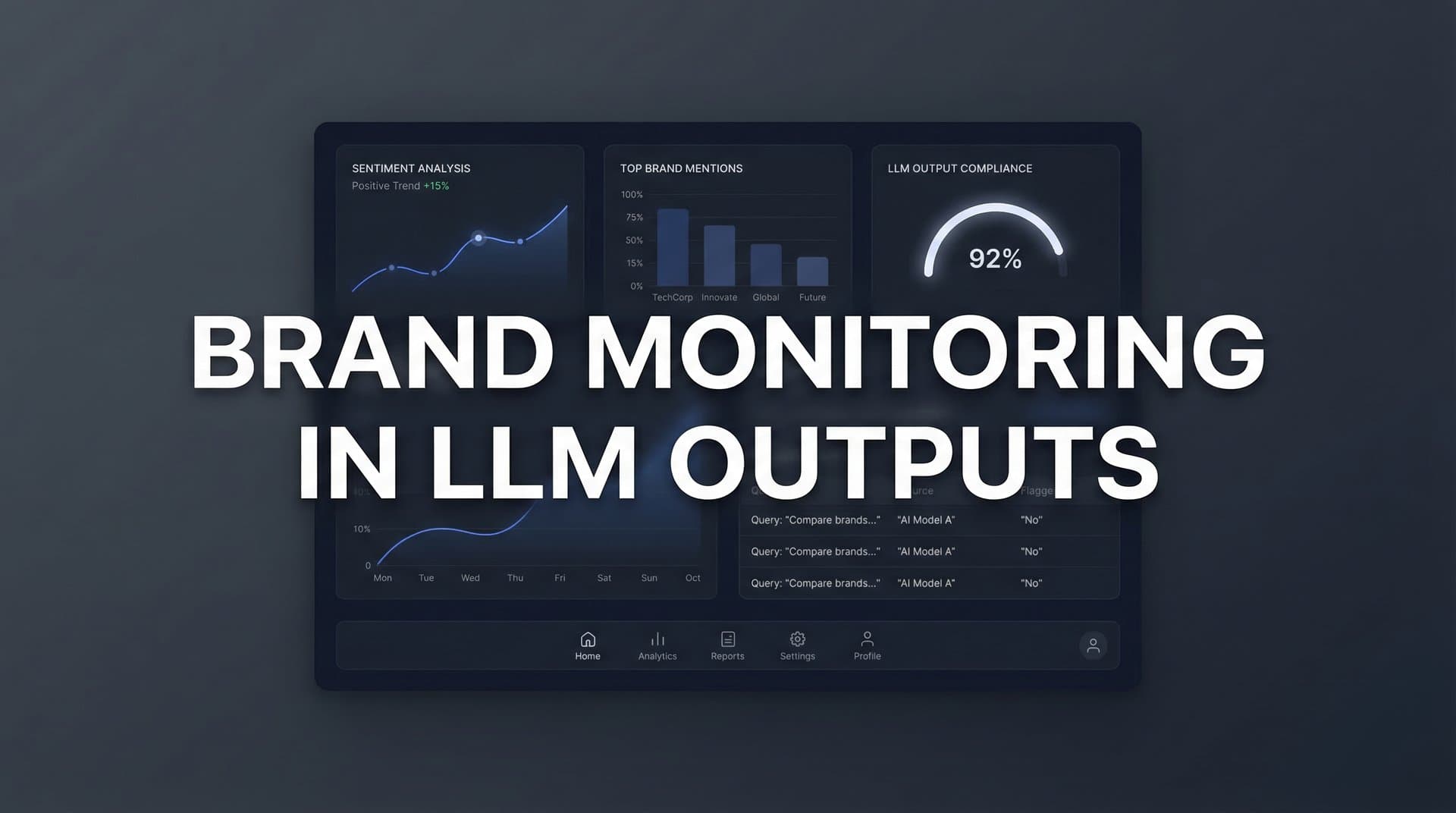
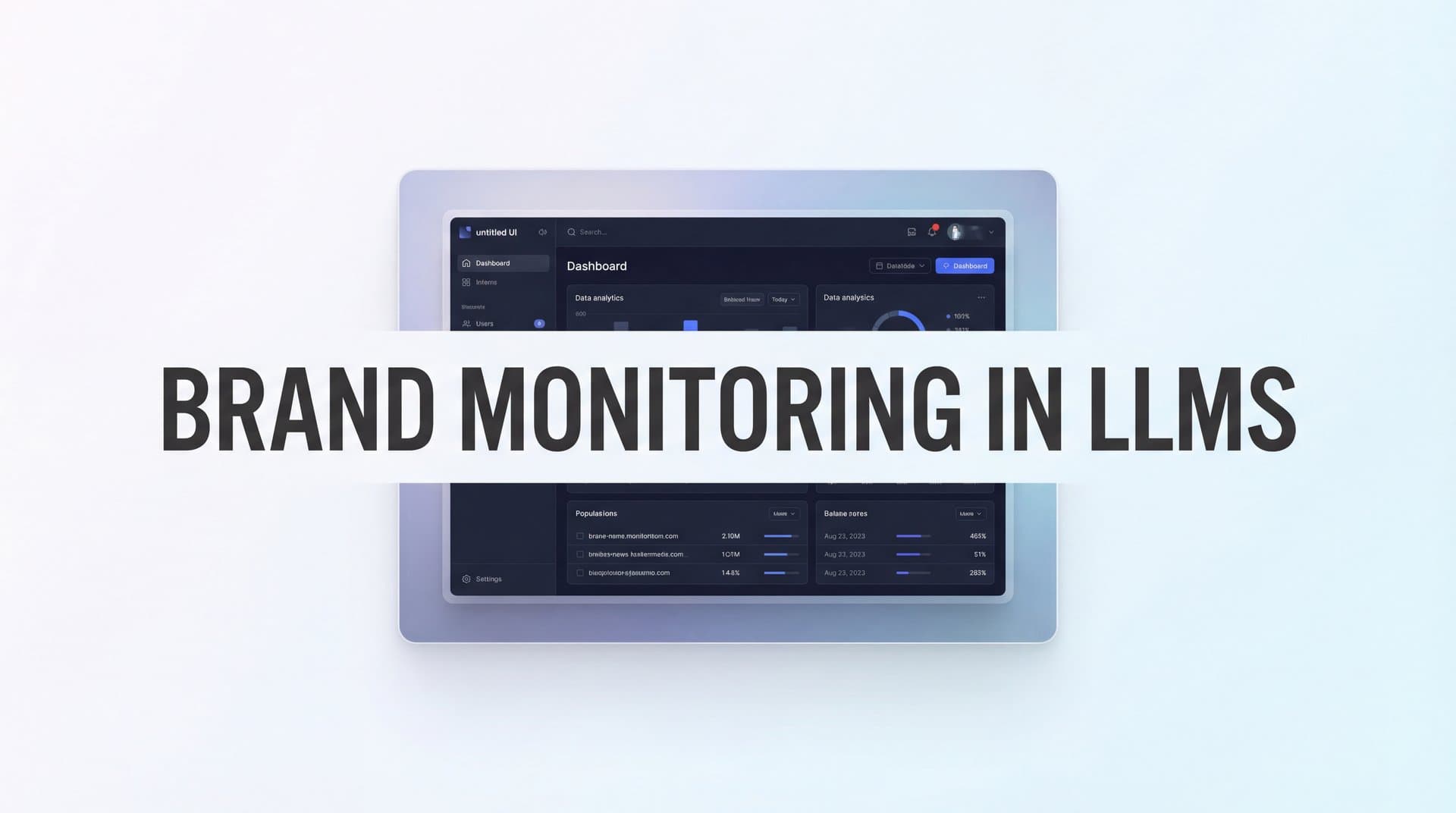
This is what we mean by brand monitoring in LLMs: systematically tracking how AI models mention, describe, and recommend your brand across different prompts and contexts. It's about understanding the stories these models tell about you—stories that reach users in moments of high intent, when they're actively seeking solutions.
Think of it like this: If traditional SEO is about winning the race to the top of search results, LLM brand monitoring is about ensuring you're even invited to the race. When an AI model generates a response about "best email marketing platforms" or "top alternatives to [competitor]," your absence from that response is invisible to you—but highly visible to the potential customer who never learns you exist. Understanding why AI models recommend certain brands is the first step toward ensuring you're included in those conversations.
The shift is already underway. Many companies find that users increasingly arrive at their websites through conversational queries, often phrased as natural questions rather than keyword searches. These queries frequently pass through AI interfaces first, where initial brand impressions form before a user ever clicks through. The AI's framing—whether it positions you as a premium option, a budget alternative, or doesn't mention you at all—shapes the entire customer journey from that first moment of discovery.
Why Traditional Monitoring Tools Miss the Mark
If you're thinking, "Can't I just use my existing social listening or media monitoring tools to track this?"—you're not alone. But here's the problem: those tools were built for a different world, and they're blind to what's happening inside AI conversations.
Social listening platforms excel at tracking mentions across Twitter, Facebook, Reddit, and news sites. They monitor public, persistent content—posts and articles that exist at specific URLs and remain accessible over time. But AI-generated responses are fundamentally different: they're ephemeral and personalized. When ChatGPT tells one user about your brand, that response exists only in that conversation. It's not published to a public URL, it's not indexed by search engines, and your traditional monitoring tools have no way to capture it.
The challenges go deeper than just ephemerality. AI responses vary dramatically based on how questions are phrased. Ask "What's the best CRM for small businesses?" and you might get mentioned. Rephrase it as "Which CRM should a 10-person startup use?" and suddenly you're absent from the response. The same model, on the same day, can tell completely different stories about your brand depending on subtle variations in user queries.
User context matters too. Some AI platforms tailor responses based on conversation history, user location, or inferred preferences. The answer a model gives to a technical user might emphasize different features than it presents to a business executive. This personalization means there's no single "AI response" to monitor—there are thousands of variations, each potentially telling a different story about your brand.
Model versions add another layer of complexity. When OpenAI updates ChatGPT or Anthropic releases a new version of Claude, the way these models talk about brands can shift overnight. A model update might change which sources it prioritizes, how it weighs different types of information, or even its general tendency to recommend specific categories of products. These shifts happen without announcement, and by the time you notice your brand has disappeared from recommendations, weeks of customer conversations have already passed.
This creates a dangerous visibility gap. While you're monitoring traditional channels, your competitors might be dominating AI recommendations—capturing mindshare with potential customers before those users ever visit a website or see a social media post. You're fighting a battle you can't see, on a battlefield you don't have access to. If you've noticed your brand missing from AI searches, you're already experiencing this challenge firsthand.
The traditional approach of spot-checking—occasionally asking ChatGPT about your brand to see what it says—is like checking your website ranking once a month and assuming it stays constant. It misses the variation, the trends, and the competitive dynamics that determine whether AI models position you as a leader or leave you out entirely.
Core Components of Effective LLM Brand Monitoring
So what does comprehensive brand monitoring in LLMs actually look like? It's built on three interconnected pillars that work together to give you complete visibility into your AI presence.
Prompt Tracking: Understanding Your Share of AI Conversations
The foundation of LLM monitoring is systematic prompt tracking—monitoring how your brand appears across different types of queries that matter to your business. This isn't about randomly asking AI models about your company. It's about building a structured library of prompts that mirror how your actual customers seek information.
These queries typically fall into distinct categories. Comparison prompts ask models to evaluate you against competitors: "Compare [Your Brand] vs. [Competitor A] for enterprise teams." Recommendation prompts seek suggestions: "What's the best marketing automation tool for B2B SaaS companies?" Informational prompts look for specific details: "How does [Your Brand] handle data security?" Each category reveals different aspects of your AI presence—whether you're considered in competitive sets, recommended proactively, or recognized as authoritative on specific topics. Implementing prompt tracking for brand mentions gives you the systematic visibility you need.
Effective prompt tracking means running these queries consistently across multiple AI platforms. ChatGPT might give different responses than Claude or Perplexity, and each platform reaches distinct user segments. You need visibility into all the channels where your customers are actually asking questions.
Sentiment Analysis: Decoding How AI Models Frame Your Brand
Being mentioned is just the starting point. What matters is how AI models talk about you when they do include your brand. This is where sentiment analysis becomes critical—understanding whether mentions are positive, negative, or neutral, and identifying the specific attributes models associate with your company.
AI models develop implicit "opinions" based on the patterns in their training data. If most sources discuss your brand in the context of affordability, the model might consistently frame you as a budget option—even if you've repositioned toward premium markets. If negative reviews dominate certain topics in the model's training data, those associations can surface in responses, potentially deterring prospects before they even visit your website. Tracking brand sentiment in AI responses reveals these hidden patterns.
Sentiment tracking reveals these patterns. It shows you whether AI models emphasize your strengths or lead with limitations. It identifies which features get highlighted and which get ignored. Most importantly, it exposes misrepresentations—cases where models describe your product inaccurately or attribute characteristics to you that belong to competitors.
Competitive Benchmarking: Measuring Your AI Market Position
The third pillar is competitive benchmarking—tracking your share of voice against competitors in AI-generated recommendations. This answers the strategic question: When AI models discuss solutions in your category, how often are you mentioned compared to rivals?
Competitive benchmarking requires systematic tracking of category-level prompts. For each major use case in your market, you monitor which brands get recommended, in what order, and with what context. Over time, this reveals your competitive position in the AI landscape—whether you're consistently included in top recommendations, mentioned as an alternative, or absent from consideration entirely.
This intelligence is actionable. If competitors dominate certain query types, you can investigate what content or signals they've established that you're missing. If you're winning in some categories but absent in others, you can prioritize content creation to address those gaps. The goal is to understand not just your absolute AI presence, but your relative position in the competitive landscape that shapes customer decision-making. Leveraging LLM brand tracking software makes this competitive analysis manageable at scale.
Setting Up Your LLM Monitoring Strategy
Understanding the components is one thing—actually implementing brand monitoring requires a structured approach. Here's how to build a monitoring strategy that delivers actionable insights without overwhelming your team.
Prioritize Your AI Platform Coverage
Start by identifying which AI platforms matter most for your audience. ChatGPT dominates general consumer queries and has the broadest user base. Perplexity attracts users conducting research-heavy searches, often in professional contexts. Claude appeals to technical users who value nuanced responses and longer context windows. Each platform has distinct user demographics and use patterns.
Rather than trying to monitor everything at once, prioritize based on where your customers are actually asking questions. B2B SaaS companies might focus heavily on Claude AI brand monitoring, where technical buyers research solutions. Consumer brands might prioritize ChatGPT, where the mass market asks for recommendations. The key is strategic coverage—monitoring the platforms that drive actual business impact for your category.
Build Your Prompt Library
Your monitoring is only as good as the prompts you track. This requires creating a systematic library of queries that mirror how customers actually seek information about solutions in your space. Start by analyzing your existing customer research—what questions do prospects ask during sales calls? What search queries drive traffic to your website? What topics come up repeatedly in support conversations?
Translate these patterns into structured prompts across multiple categories. Create comparison queries for each major competitor. Develop recommendation prompts for different customer segments and use cases. Build informational queries around your key features and differentiators. The goal is comprehensive coverage—ensuring you're monitoring all the ways potential customers might encounter your brand through AI.
Your prompt library should evolve over time. As new competitors emerge, add comparison prompts. When you launch new features, create queries that would naturally surface those capabilities. If customer language shifts—perhaps adopting new terminology for problems you solve—update your prompts to match. This library becomes a living asset that keeps your monitoring aligned with market reality.
Establish Baseline Metrics and Tracking Cadence
Before you can identify changes, you need to know where you stand today. Run your full prompt library across your priority platforms to establish baseline metrics: current mention rate, typical sentiment, competitive positioning, and which query types generate strong vs. weak presence.
Then determine your tracking cadence. Real-time brand monitoring across LLMs is ideal for catching shifts before they compound—AI models can change behavior with updates, and competitive dynamics shift as companies publish new content. Daily tracking creates a detailed record that lets you correlate changes in AI responses with specific events: your content publications, competitor announcements, or model updates.
If daily monitoring isn't feasible, weekly tracking still provides valuable trend data. The key is consistency—sporadic checking misses the patterns that reveal what's actually driving your AI presence. Establish a schedule and stick to it, treating LLM monitoring with the same rigor you apply to website analytics or social listening.
From Monitoring to Action: Improving Your AI Visibility
Data without action is just noise. The real value of brand monitoring in LLMs comes when you translate insights into concrete improvements in how AI models represent your brand. This is where monitoring becomes the foundation for strategic optimization.
Connect Monitoring Insights to Content Strategy
When monitoring reveals that AI models misrepresent your brand or omit key capabilities, it's pointing directly to content gaps you need to address. If models consistently describe your product as lacking a feature you actually offer, it signals that this capability isn't well-documented in authoritative sources the AI can access. The solution: create comprehensive, technically detailed content that clearly establishes this capability.
This works because LLMs learn about brands primarily through the content they can access during training and retrieval. If authoritative information about your strengths is sparse or buried, models won't surface it in responses. But when you publish clear, well-structured content that search engines index and AI systems can retrieve, you increase the likelihood that models will incorporate this information into future responses.
The connection should be direct. Each monitoring insight should generate a content hypothesis. If you're absent from recommendations for a specific use case, create detailed case studies and guides addressing that scenario. If competitors are mentioned more favorably, analyze what content they've published that you haven't. If sentiment is negative around particular topics, address those concerns head-on with transparent, informative content. Learning how to improve brand mentions in AI responses starts with this content-first approach.
Optimize for AI Discovery Through Strategic Content Design
Not all content is equally visible to AI models. To improve brand visibility in AI, focus on creating content with characteristics that make it valuable for AI systems to reference: structured information architecture, authoritative sourcing, and semantic clarity.
Structured content uses clear headings, logical organization, and explicit statements of key facts—making it easy for AI systems to extract relevant information. Rather than burying important details in narrative prose, call them out explicitly. Use consistent terminology that aligns with how customers actually describe problems and solutions. This semantic clarity helps models understand context and relevance when generating responses.
Authoritative sourcing matters because AI systems often weight information based on source credibility. Publishing on your own domain establishes primary source authority. Earning coverage in industry publications creates secondary validation. The combination builds a pattern of authoritative information that models can confidently reference when discussing your brand.
Create the Feedback Loop: Continuous Optimization
The most sophisticated approach treats monitoring and optimization as a continuous feedback loop. You monitor AI responses to identify gaps, create content to address those gaps, then monitor again to measure impact. This cycle of measurement, action, and re-measurement is the essence of effective GEO (Generative Engine Optimization).
Track specific metrics over time: mention rate in key query categories, sentiment trends, competitive position shifts. When you publish new content, watch for changes in how models discuss related topics. This helps you understand which content investments actually move the needle on AI visibility—and which types of content matter less than you might expect.
The feedback loop also reveals model behavior patterns. You might discover that certain content formats (like detailed comparison tables or technical specifications) influence AI responses more than others. Or that responses change more quickly on some platforms than others, suggesting different update cycles or retrieval mechanisms. These insights let you refine your approach, focusing effort on tactics that demonstrably improve your AI presence. Using a dedicated LLM monitoring platform streamlines this entire process.
This isn't a one-time project—it's an ongoing practice. As AI models evolve, as competitors publish new content, and as your own product capabilities expand, the landscape shifts. Continuous monitoring keeps you aware of these changes. Systematic optimization based on monitoring data keeps you moving forward, steadily improving how AI models represent your brand to potential customers.
Moving Forward: Making AI Visibility a Strategic Priority
Brand monitoring in LLMs isn't a nice-to-have capability for forward-thinking marketers—it's essential infrastructure for the AI-first era we're already living in. Every day, thousands of potential customers ask AI assistants about solutions in your category. The responses they receive shape their consideration sets, influence their perceptions, and often determine whether they ever learn your brand exists.
The companies that thrive in this new landscape will be those that treat AI visibility with the same strategic importance they've long given to search rankings and social presence. They'll monitor systematically, optimize deliberately, and build the feedback loops that drive continuous improvement. They'll understand that being invisible to AI models means being invisible to a growing segment of high-intent prospects—prospects who are actively seeking solutions but never encounter your brand in their discovery process.
The key takeaway is simple: visibility into AI responses enables proactive reputation management and competitive advantage. When you know what AI models say about you, you can address misrepresentations before they shape thousands of customer conversations. When you track competitive positioning, you can identify opportunities to differentiate and capture mindshare. When you connect monitoring insights to content strategy, you create a systematic path to improving your AI presence over time.
The alternative is flying blind—hoping that AI models represent you accurately and favorably, without any data to confirm or refute that hope. In an era where AI-mediated discovery is becoming the norm rather than the exception, that's a risk most companies can't afford to take.
Start tracking your AI visibility today and see exactly where your brand appears across top AI platforms. Stop guessing how AI models like ChatGPT and Claude talk about your brand—get visibility into every mention, track content opportunities, and automate your path to organic traffic growth. The conversation about your brand is already happening in AI systems. The only question is whether you're listening.