The modern content creator faces a paradox: while audiences crave fresh, engaging blog content more than ever, the technical complexity of publishing has never been higher. Between managing multiple platforms, optimizing for search engines, tracking performance metrics, and maintaining consistent branding, many creators find themselves spending more time on logistics than actual writing.
Today's blog publishing landscape demands tools that can streamline every aspect of content creation and distribution. Whether you're a solo blogger building your personal brand or a marketing team managing enterprise-level content operations, the right publishing platform can transform your workflow from chaotic to systematic.
The challenge isn't just finding a tool that publishes content—it's finding one that integrates seamlessly with your existing workflow while providing the advanced features modern content marketing requires. From AI-powered automation capabilities to sophisticated analytics, today's best platforms offer comprehensive solutions that extend far beyond basic publishing.
Here are the leading blog publishing tools that are defining content creation in 2026. Each platform offers unique strengths, whether you prioritize ease of use, advanced customization, team collaboration, or cutting-edge AI features.
1. Sight AI
Best for: AI-powered content creation with automated SEO optimization and multi-platform publishing workflows
Sight AI represents a fundamental shift in how content teams approach blog publishing by combining intelligent content generation with sophisticated automation capabilities.

Where This Tool Shines
Sight AI excels at eliminating the friction between content ideation and publication. The platform's AI agents handle research, outline creation, writing, SEO optimization, and scheduling—transforming what typically takes hours into minutes. Unlike traditional publishing tools that simply distribute content you've already created, Sight AI actively participates in the creation process itself.
The platform's unique strength lies in its ability to maintain brand voice consistency while scaling content production. Through brand voice training and custom guidelines, teams can ensure every piece of content aligns with their established tone and messaging, even when producing multiple articles simultaneously.
Key Features & Capabilities
AI Content Generation: Creates comprehensive, SEO-optimized articles based on target keywords and content briefs.
Automated SEO Optimization: Integrates keyword research, meta descriptions, and on-page optimization without manual intervention.
Multi-Platform Publishing: Distributes content across websites, social media channels, and email newsletters from a single dashboard.
Brand Voice Training: Learns and replicates your specific writing style, tone, and messaging preferences.
Performance Analytics: Tracks content performance with real-time metrics and actionable insights for optimization.
Team Collaboration Tools: Provides approval workflows, content calendars, and role-based permissions for seamless team coordination.
Best For / Ideal Users
Content marketing teams and digital agencies that need to scale production without proportionally increasing headcount. The platform particularly benefits businesses where consistent, SEO-optimized content directly impacts growth metrics.
Solo creators and founders who want professional-quality content but lack dedicated writing resources will find the AI assistance invaluable for maintaining consistent publishing schedules.
Organizations managing multiple brands or client accounts benefit from the platform's ability to maintain distinct brand voices while centralizing content operations.
Pricing
Custom pricing based on content volume requirements and team size, with enterprise solutions available for organizations with large-scale content operations.
2. WordPress
Best for: Maximum customization and control with extensive plugin ecosystem for complex publishing needs
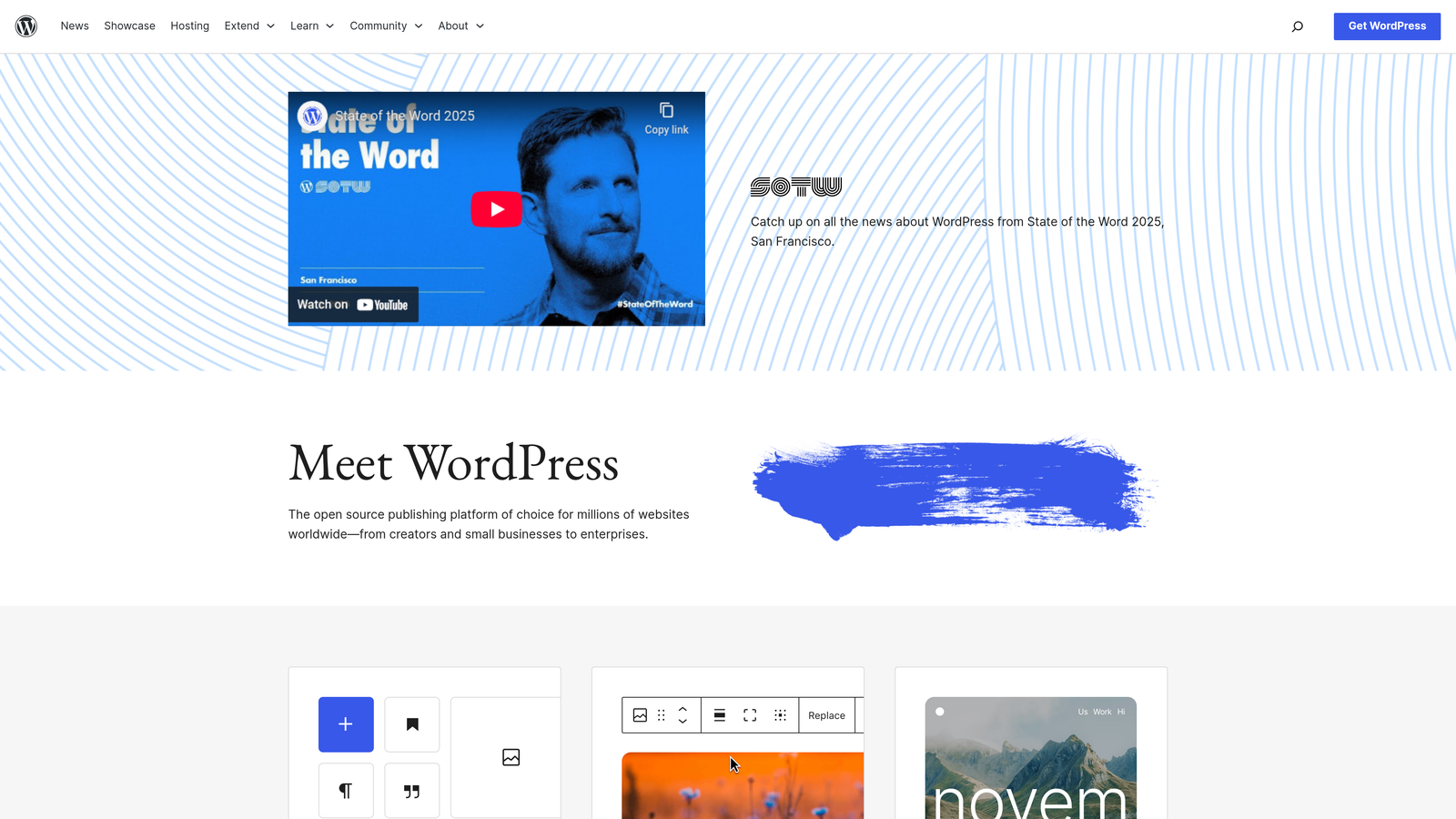
WordPress powers a significant portion of websites globally, establishing itself as the most versatile content management system available.
Where This Tool Shines
WordPress excels when you need a publishing platform that can evolve with your business. Its open-source architecture means virtually any feature imaginable can be added through its vast ecosystem of themes and plugins. Unlike closed platforms that limit what you can build, WordPress treats your content infrastructure as infinitely customizable.
The platform's real strength emerges in complex publishing scenarios—multi-author blogs with granular permission controls, e-commerce integration through WooCommerce, membership sites with gated content, or multilingual publications serving global audiences. Where other platforms say "you can't do that," WordPress typically has three plugins that can.
Key Features & Capabilities
Gutenberg Block Editor: Modern drag-and-drop interface for building rich content layouts without coding knowledge.
Extensive Plugin Library: Access to thousands of plugins covering SEO optimization, security hardening, performance enhancement, and specialized functionality.
Theme Customization: Choose from countless free and premium themes, or build completely custom designs that match your brand perfectly.
Advanced SEO Control: Plugins like Yoast and RankMath provide comprehensive optimization tools, from meta descriptions to XML sitemaps.
Multi-User Management: Sophisticated permission systems let you assign roles from contributor to administrator, perfect for team publishing workflows.
Custom Post Types: Extend beyond basic blog posts to create portfolios, testimonials, products, or any content structure your business requires.
Best For / Ideal Users
WordPress suits developers and agencies who need maximum flexibility for client projects. It's ideal for businesses planning long-term growth where publishing requirements will evolve beyond basic blogging.
The platform works best for users comfortable with technical setup—or those with budget to hire developers. If you need features like membership systems, course delivery, or complex integrations with business tools, WordPress provides the foundation to build exactly what you envision.
Content teams managing multiple authors benefit from WordPress's granular permission controls and editorial workflow capabilities. The platform scales from solo bloggers to enterprise publishers managing thousands of posts.
Pricing
WordPress.org software is free and open-source. You'll need separate hosting (typically $5-50/month) and domain registration. WordPress.com offers managed hosting from free basic plans to $45/month for business features with plugin access.
3. Medium
Best for: Built-in audience discovery and professional networking within a writing community
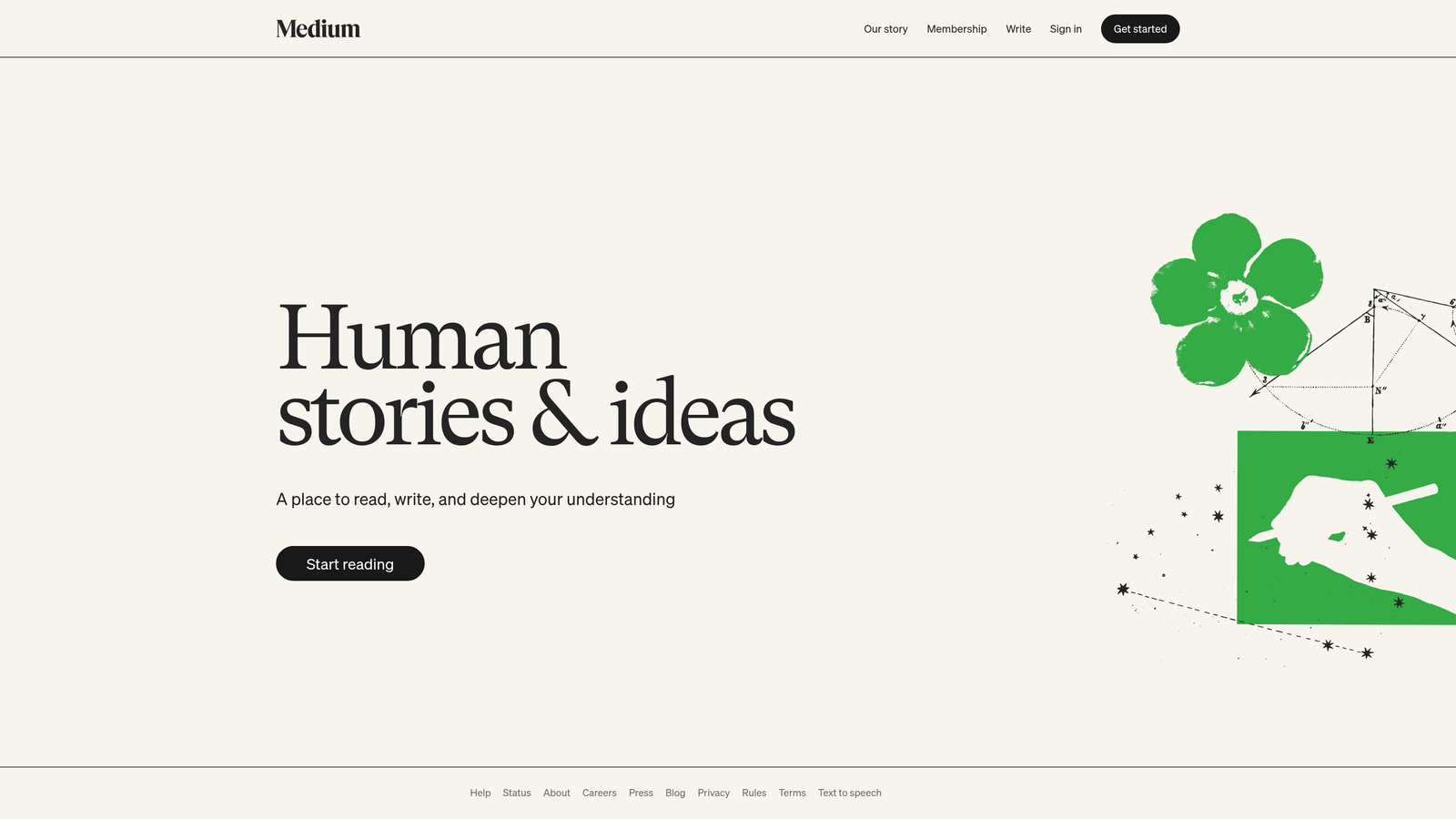
Medium offers a unique approach to blog publishing by combining personal publishing with social networking and content discovery features that actively promote quality content to relevant audiences.
Where This Tool Shines
Medium's greatest strength is its built-in audience and discovery mechanisms. Unlike traditional blogs that start with zero readers, Medium's algorithm actively promotes quality content to relevant audiences based on topic relevance, engagement signals, and reading patterns.
The platform's clean, distraction-free interface encourages focus on writing quality over technical concerns. Writers can publish within minutes without worrying about hosting, themes, or plugins. The social features help writers build professional networks and engage with readers directly through comments, responses, and the distinctive "clap" system that signals appreciation.
Key Features & Capabilities
Built-in Audience Discovery: Medium's recommendation algorithm surfaces your content to readers interested in your topics, providing immediate distribution without requiring an existing audience.
Clean Writing Interface: Distraction-free editor with simple formatting options lets you focus entirely on content creation without technical complexity.
Social Networking Features: Follow other writers, engage through comments and responses, and build professional connections within your niche community.
Partner Program Monetization: Earn money based on member reading time, allowing writers to generate income from engaged readers without managing subscriptions directly.
Publication System: Join or create publications to collaborate with other writers and reach broader audiences through collective readership.
Reader Analytics: Track views, reads, read ratio, and fan engagement to understand what resonates with your audience and refine your content strategy.
Best For / Ideal Users
Individual writers, thought leaders, and professionals looking to build personal brands through content. Perfect for those who prioritize writing and audience building over technical customization.
Particularly valuable for writers testing content ideas, building credibility in their field, or seeking professional networking opportunities within a community of engaged readers and fellow creators.
Pricing
Free for basic publishing. Medium membership costs $5/month or $50/year for unlimited reading access and enhanced features. Partner Program available to monetize content.
4. Ghost
Best for: Professional publishers building membership-based content businesses with integrated newsletter and subscription management
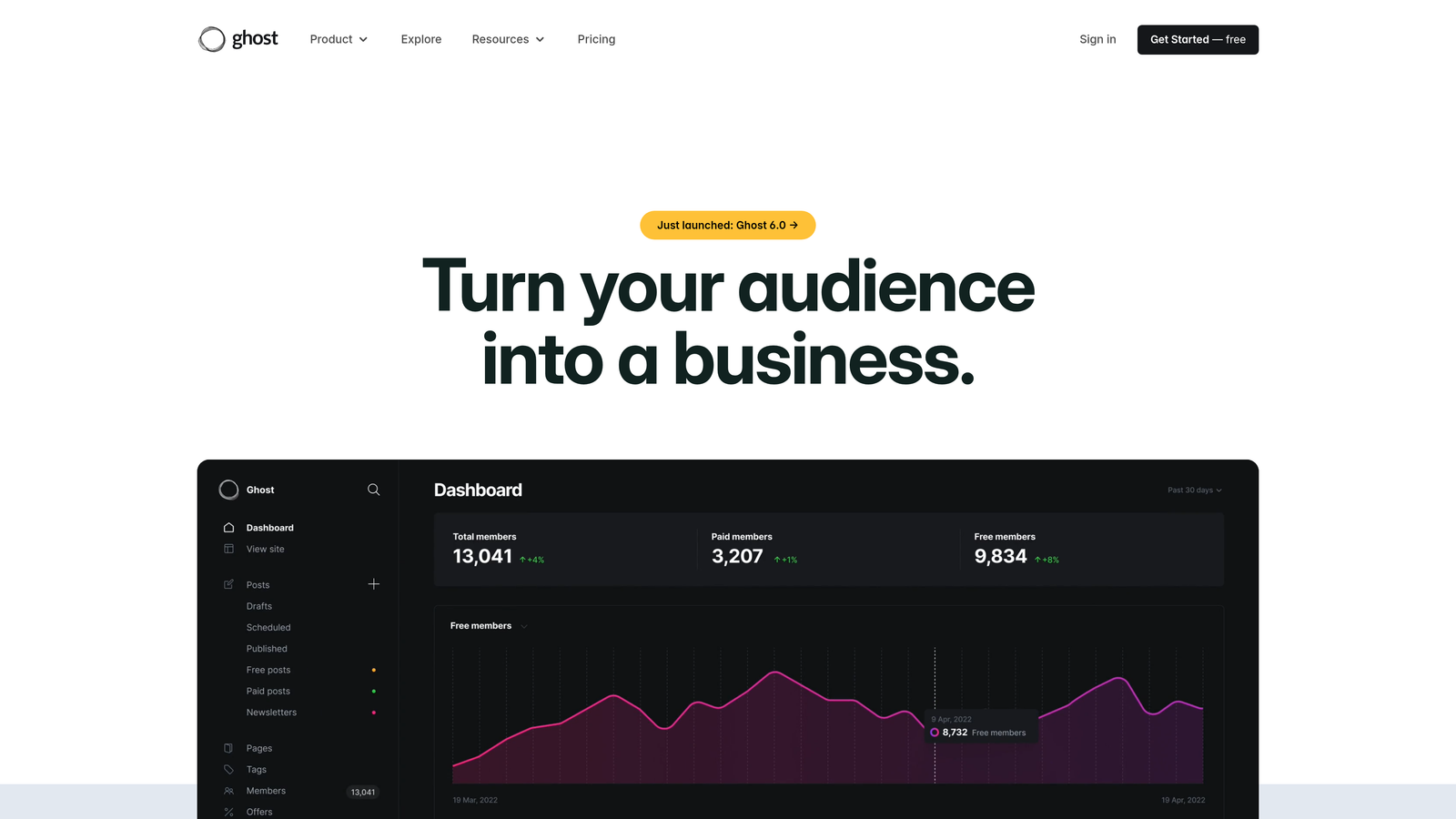
Ghost is an open-source publishing platform specifically designed for creators who want to monetize content through direct reader relationships rather than advertising revenue.
Where This Tool Shines
Ghost excels at bridging the gap between traditional blogging and modern creator monetization. The platform treats memberships and email newsletters as core features rather than afterthoughts, making it exceptionally powerful for building subscription-based content businesses. Unlike platforms that bolt on membership features, Ghost's entire architecture is designed around the creator economy model.
What sets Ghost apart is its performance-first approach combined with professional publishing tools. The platform delivers exceptional site speed out of the box while providing sophisticated content management capabilities. Publications like Platformer, 404Media, and The Browser use Ghost to manage their subscription businesses, collectively facilitating over $100 million in creator revenue.
Key Features & Capabilities
Built-in Membership System: Native subscription management with multiple membership tiers, allowing you to offer free and paid content access levels without third-party plugins.
Integrated Email Newsletters: Send newsletters directly from the platform with full control over design, segmentation, and scheduling—no external email service required.
Advanced SEO Tools: Comprehensive meta data control, automatic sitemaps, and structured data markup ensure your content ranks well in search results.
Custom Theme Development: Build unique site designs using Handlebars templating system, giving you complete control over reader experience while maintaining performance.
Native Analytics Dashboard: Track member growth, newsletter engagement, and content performance without relying on external analytics tools or invasive tracking scripts.
Multi-Author Collaboration: Manage editorial workflows with role-based permissions, content scheduling, and collaborative editing features for team publishing.
Best For / Ideal Users
Independent journalists and writers building sustainable content businesses through paid subscriptions. The platform's newsletter-first approach makes it ideal for creators who prioritize direct reader relationships.
Professional publishers and media organizations that want modern publishing infrastructure without the complexity of traditional content management systems. Ghost's clean interface and performance optimization appeal to teams focused on content quality.
Content creators transitioning from ad-supported models to subscription revenue. The integrated membership tools eliminate the need for multiple platforms while maintaining complete control over subscriber relationships and data.
Pricing
Ghost starts at $9/month for the Starter plan supporting up to 500 members, scaling to $31/month for Creator (up to 1,000 members) and $199/month for Team plans accommodating high-volume publishers with advanced features.
5. Substack
Best for: Newsletter-first publishing with direct subscriber relationships and zero technical barriers
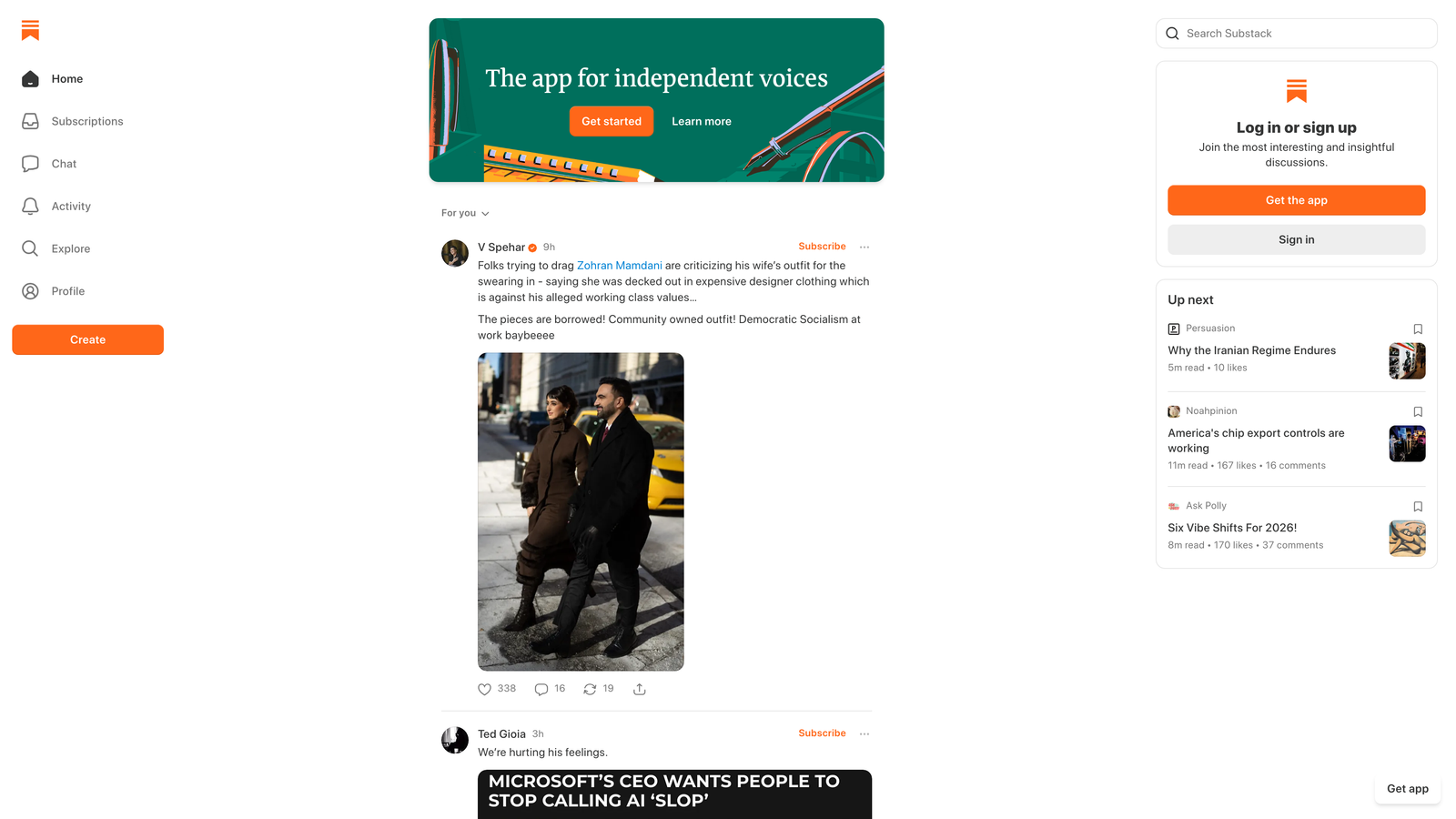
Substack transforms blog publishing by treating email newsletters as the primary content format, with web archives serving as secondary distribution.
Where This Tool Shines
Substack removes every technical obstacle between writers and readers. The platform's radical simplicity means you can start publishing within minutes—no hosting setup, no theme selection, no plugin configuration. This newsletter-first approach builds direct relationships that bypass algorithmic dependencies entirely.
The platform excels at helping writers monetize through paid subscriptions while maintaining complete ownership of subscriber lists. Unlike platform-dependent models, you can export your entire subscriber base and migrate elsewhere at any time. This portability creates genuine creator independence.
Key Features & Capabilities
Newsletter-First Publishing: Email delivery is primary, with automatic web archive creation for discoverability and sharing.
Integrated Payment Processing: Built-in Stripe integration handles paid subscriptions, invoicing, and revenue management without additional setup.
Subscriber Management: Track subscriber growth, engagement metrics, and revenue analytics through clean dashboard interface.
Community Engagement: Comment system and discussion threads foster direct conversations between writers and readers.
Podcast Integration: Native podcast hosting and distribution extends content format beyond written newsletters.
Mobile App Experience: Dedicated iOS and Android apps provide seamless reading experience for subscribers.
Best For / Ideal Users
Writers prioritizing direct subscriber relationships over web traffic metrics. Perfect for journalists transitioning to independent publishing who want to maintain editorial control.
Content creators who value simplicity and want to focus entirely on writing rather than platform management. Ideal for those building sustainable income through reader support.
Thought leaders and experts who prefer email-based distribution over social media algorithms and search engine optimization.
Pricing
Free for all writers. Substack takes 10% of paid subscription revenue plus payment processing fees. No upfront costs or monthly platform fees.
6. ConvertKit
Best for: Creator-focused email marketing with integrated blog publishing and automation
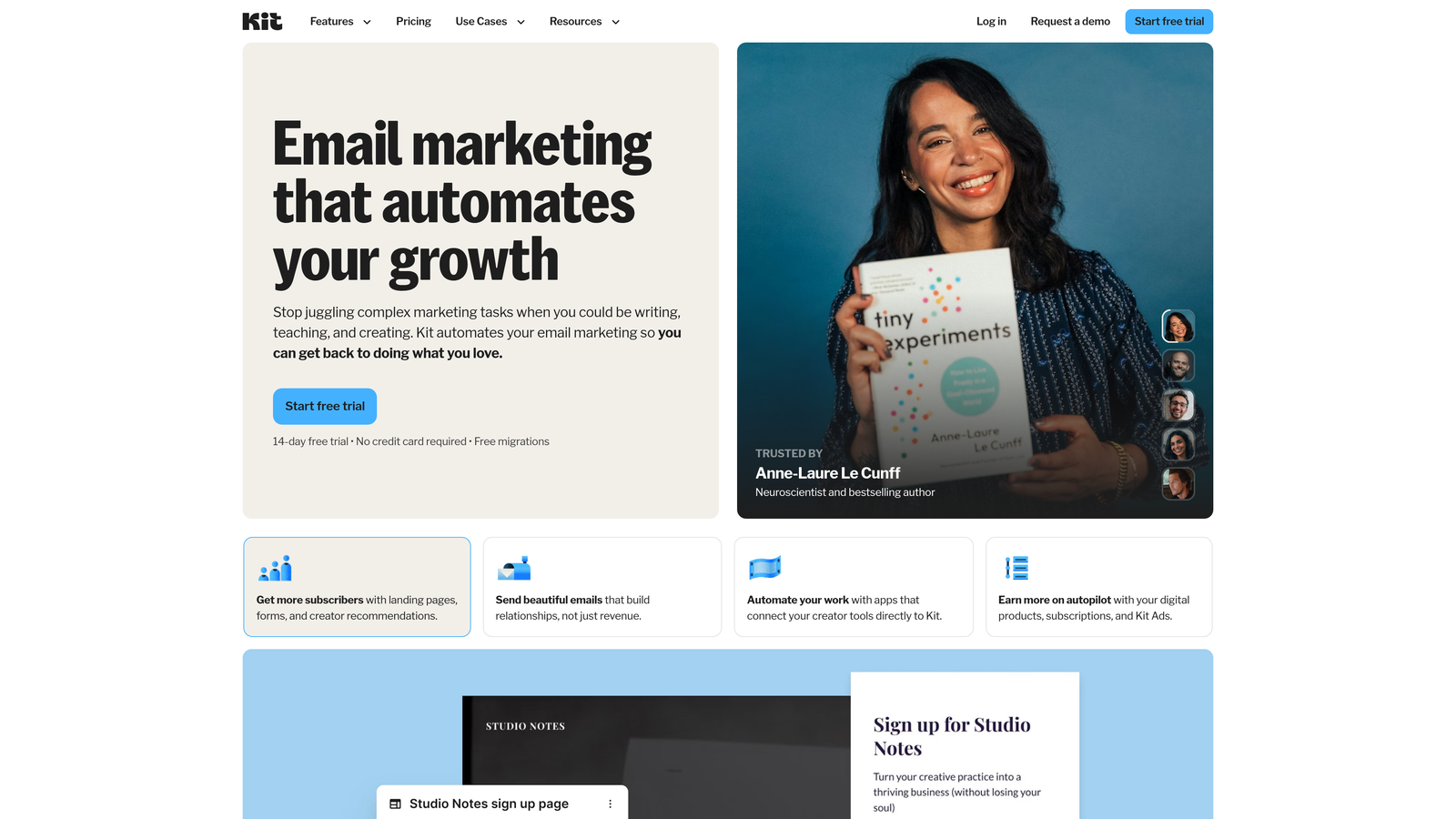
ConvertKit combines email marketing automation with blog publishing tools designed specifically for content creators and online entrepreneurs.
Where This Tool Shines
ConvertKit bridges the gap between blog publishing and email marketing by treating both as integrated parts of a creator's business strategy. The platform excels at converting blog readers into email subscribers through sophisticated automation and lead magnets.
Its creator-focused features include landing page builders, course delivery systems, and e-commerce integrations that turn content into revenue streams. Unlike traditional email platforms that treat blogs as afterthoughts, ConvertKit positions published content as the primary tool for list building and audience nurturing.
Key Features & Capabilities
Advanced Email Automation: Create sophisticated subscriber journeys based on behavior, tags, and engagement patterns without complex technical setup.
Landing Page Builder: Design high-converting opt-in pages and lead magnets directly within the platform using customizable templates.
Integrated Blog Publishing: Publish SEO-optimized blog posts that automatically connect to your email sequences and subscriber segmentation.
E-commerce Integration: Sell digital products, courses, and memberships directly through your content with built-in payment processing.
Subscriber Tagging System: Track reader interests and behaviors to deliver personalized content and targeted email campaigns.
Best For / Ideal Users
Content creators who prioritize email list building as their primary business asset. Perfect for online course creators, digital product sellers, and coaches who use content marketing to drive business growth.
Entrepreneurs building personal brands through educational content will find ConvertKit's automation capabilities particularly valuable for nurturing leads from blog readers to paying customers.
Pricing
Free up to 1,000 subscribers with basic features. Paid plans start at $29/month and scale based on subscriber count, with creator-friendly pricing that grows with your audience.
7. Notion
Best for: All-in-one workspace combining blog publishing with project management and team collaboration
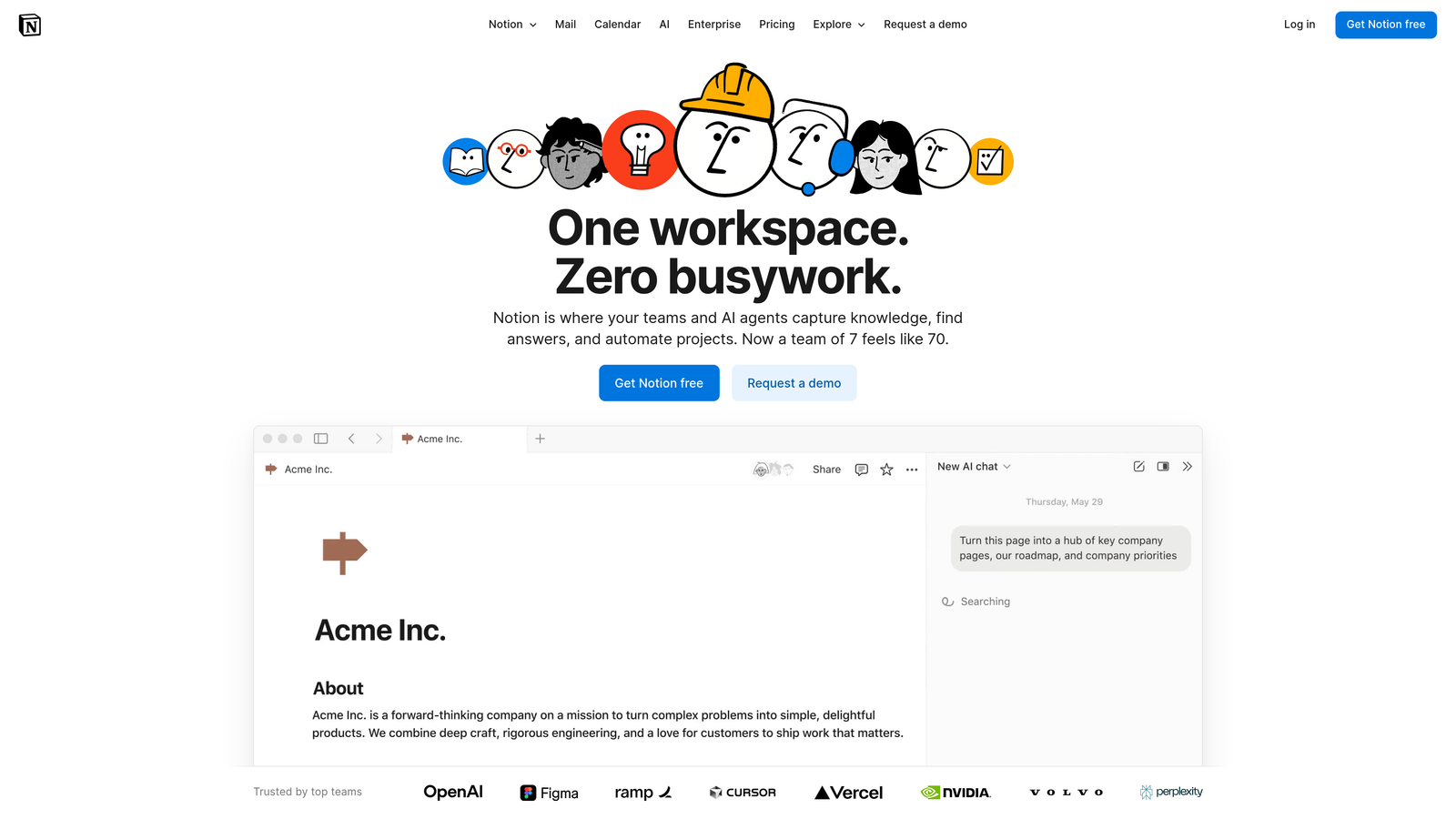
Notion transforms traditional blog publishing by integrating it within a comprehensive workspace that handles everything from content planning to team collaboration.
Where This Tool Shines
Notion's unique strength lies in its ability to serve as both a content creation environment and a publishing platform. Teams can brainstorm ideas, create editorial calendars, collaborate on drafts, and publish finished content all within the same workspace.
The platform's database functionality allows for sophisticated content organization and workflow management that traditional blog platforms can't match. You can track content status, assign tasks, set deadlines, and manage entire editorial processes without switching between multiple tools.
Key Features & Capabilities
Custom AI Agents: Build workflow automation that handles repetitive tasks and streamlines content operations.
Enterprise Search: Search across all your connected apps in one place, making research and content planning more efficient.
Database-Driven Organization: Create custom content databases with filters, views, and properties that match your workflow.
Real-Time Collaboration: Multiple team members can work simultaneously with commenting and editing capabilities.
Public Page Publishing: Turn any Notion page into a published blog post with custom domain support.
Template System: Create reusable templates for consistent content structure across all posts.
Best For / Ideal Users
Content teams that need integrated project management alongside publishing capabilities. Perfect for agencies managing multiple client blogs who want to centralize all content operations in one platform.
Organizations that value the ability to plan, create, collaborate, and publish without switching between separate tools. Particularly valuable for teams that already use Notion for project management and want to add publishing capabilities.
Pricing
Free for personal use with unlimited pages and blocks. Team plans start at $8 per user per month, with enterprise options available for larger organizations requiring advanced security and admin controls.
Making the Right Choice
Selecting the ideal blog publishing tool depends on your specific goals, technical comfort level, and business model. Each platform we've explored offers distinct advantages that align with different creator needs and publishing strategies.
For creators prioritizing AI-powered efficiency and automated workflows, Sight AI provides unmatched capabilities in content generation and SEO optimization. Its intelligent approach to publishing makes it perfect for scaling content operations without sacrificing quality.
WordPress remains the gold standard for those who need maximum customization and control, while Medium offers the simplest path to audience discovery for new writers. Ghost and Substack excel in different approaches to monetization—Ghost for membership sites and Substack for newsletter-based businesses.
ConvertKit bridges content and email marketing for creator entrepreneurs, while Notion provides the most comprehensive workspace integration for teams managing complex content operations.
Consider your primary objectives: Are you building a personal brand, growing a business, or managing team content? Do you prioritize ease of use, customization options, or built-in monetization? Your answers will guide you toward the platform that best supports your content goals.
The most successful content creators often start with one primary platform and gradually integrate additional tools as their needs evolve. Whether you choose AI-powered automation or traditional platforms for control, the key is selecting a solution that removes friction from your creative process while supporting your long-term publishing objectives.
Ready to transform your content workflow with intelligent automation?