Starting a blog often feels like shouting into the void. You publish, you wait, and you hear nothing back. The old advice to 'write great content and they will come' is no longer sufficient. Success in the current environment isn't about passion alone; it's about strategy, technology, and understanding a new ecosystem where discovery happens on Google and across AI models like ChatGPT and Gemini.
This guide moves beyond generic advice to offer a modern, data-driven framework. We've compiled a list of actionable blog beginner tips designed for founders, marketers, and editors who need to see a return on their content investment. Instead of vague encouragement, you'll find a clear blueprint for building a blog that generates traffic and establishes authority.
Forget the fluff. This article provides a direct path to:
- Pinpointing a profitable niche using data instead of guesswork.
- Creating SEO-focused content that performs well in search engines and AI answers.
- Building a sustainable workflow with editorial calendars and smart automation.
- Promoting your articles to reach the right audience effectively.
- Analyzing performance to make informed decisions that drive real growth.
We will cover the essential steps to build a blog that doesn't just add to the noise but becomes a valuable asset. The following sections break down exactly how to find your audience, create content that resonates, and measure your success from day one. Let's get started.
1. Define Your Niche and Target Audience with AI-Powered Insights
One of the most impactful blog beginner tips is to move beyond guesswork when choosing your focus. Instead of picking a broad topic and hoping an audience finds you, a data-driven approach ensures your content is in demand from day one. Before diving into content creation, it's paramount to understand how to find your niche market and succeed, laying the foundation for all subsequent efforts.
Modern tools allow you to analyze not just search engine results but also the outputs of generative AI models. This reveals what information is being surfaced to users asking questions in platforms like Gemini or ChatGPT. By monitoring your competitors' visibility in these systems, you can identify high-value content gaps where your expertise can satisfy unmet user needs.
How AI-Powered Niche Analysis Works
This strategy involves using AI visibility platforms, such as Sight AI, to see which topics, articles, and websites are frequently cited or recommended by AI models. This uncovers the precise questions your potential audience is asking and the answers they are currently receiving. This intelligence allows you to create better, more detailed content that fills critical information gaps.
For example, a SaaS startup in the project management space might discover that while AI models frequently mention "agile methodology," they rarely provide practical, step-by-step guides for small teams. This insight presents a clear opportunity to create a definitive guide that directly answers this specific audience's pain point.
Key Insight: Analyzing AI model outputs shows you the "demand" side of the content equation. You see what people are asking and what answers are currently considered authoritative, giving you a blueprint for where to compete and win.
Actionable Steps for Implementation
To put this into practice, start by identifying 5-10 direct and indirect competitors in your desired space. From there, you can begin gathering intelligence.
- Track Competitor Rankings: Use a visibility dashboard to see which of your competitors' articles are most often cited by AI models for key topics.
- Identify Recurring Questions: Search for your main topics in various AI models and note the recurring follow-up questions or related queries that appear. These are content goldmines.
- Map Pain Points to Topics: Connect the audience problems you uncover to specific, actionable blog post ideas. For instance, if you see questions about "calculating marketing ROI," plan an article with a downloadable spreadsheet template.
- Perform Quarterly Reviews: Audience needs and AI model outputs change. Revisit this analysis every few months to stay ahead of new trends and content opportunities.
By using this data-first method, you ensure every piece of content you create has a built-in audience, setting your new blog up for sustainable growth. If you're unsure where to begin, exploring resources on how to decide what topics to write about can provide a solid starting point.
2. Create SEO and AI-Optimized Content at Scale with AI Agents
One of the most significant challenges for beginner bloggers is publishing high-quality content consistently. The manual effort of research, outlining, writing, and formatting can quickly lead to burnout. This is where AI content generation agents offer a powerful solution, allowing you to produce long-form, SEO-optimized articles at a volume that was previously impossible for solo founders or small teams.
These systems can handle the entire production workflow, from initial research to drafting a 2,500–4,500 word article complete with proper headers, images, and on-page SEO best practices. Platforms like Sight AI even push finished content directly to your Content Management System (CMS), enabling an "Autopilot mode" that compounds your blog's growth without constant manual intervention.
How AI Content Agents Work
AI agents function as automated content teams. You provide them with topics or keywords, and they execute a series of tasks to create a complete article. This includes analyzing top-ranking competitors, building a logical outline, writing the content section by section, and sourcing relevant media. The final output is a publish-ready draft that meets specific SEO criteria.
For instance, an e-commerce brand could use an AI agent to generate 50 product comparison articles in a month. This strategy allows them to capture a wide array of long-tail search traffic that competitors, burdened by manual content creation, often ignore. This is one of the most effective blog beginner tips for achieving rapid authority in a crowded market.
Key Insight: AI agents shift your role from a content creator to a content strategist. Instead of spending hours writing, you focus on topic selection, performance analysis, and adding unique brand insights to AI-generated drafts.
Actionable Steps for Implementation
To integrate this strategy effectively, you need a clear process that balances automation with quality control. This approach helps maintain brand integrity while maximizing output.
- Activate Autopilot Mode: Start by setting up a daily publishing schedule for a core topic cluster. This builds immediate momentum and provides a steady stream of traffic data.
- Enhance with Proprietary Data: Use the AI-generated outline as a foundation. Inject your own unique case studies, customer stories, or internal data to create content that competitors cannot replicate.
- Establish a Quick Review Process: Dedicate 15-20 minutes to review each article before it goes live. This lightweight check is for catching any brand tone misalignments or factual inaccuracies.
- Analyze and Double Down: Monitor your analytics to see which AI-generated topics drive the most traffic and engagement. Use these insights to inform your future content strategy and focus on high-performing clusters.
By systematizing content production, you can focus on other critical growth activities. To see how this works in practice, you can find more information about content generation with AI agents and how it accelerates results.
3. Monitor AI Model Citations and Visibility to Inform Content Strategy
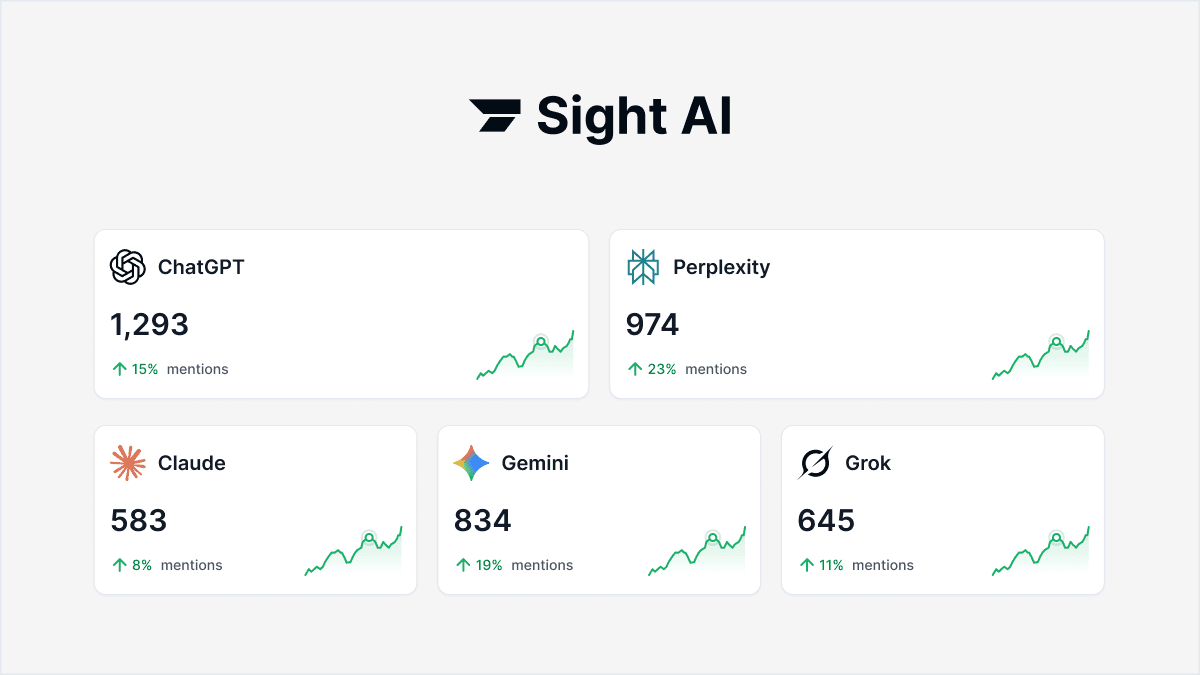
Traditional SEO has trained bloggers to fixate on Google rankings, but this is now only half the picture. One of the most forward-thinking blog beginner tips is to recognize that audiences increasingly discover information through generative AI models like Gemini, ChatGPT, Claude, and Perplexity. Ignoring this shift means you're missing a massive discovery channel.
By tracking how AI models cite, mention, and rank your content against competitors, you gain a complete visibility picture. This reveals emerging topics, sentiment trends, and positioning gaps across both AI and search. It allows you to create a content strategy that optimizes for discovery wherever your audience is looking for answers.
How AI Visibility Monitoring Works
This approach involves using platforms that analyze the outputs of large language models to see how often your brand and content are mentioned compared to competitors. This goes beyond simple keyword tracking and measures your actual influence within AI-generated responses, showing you what the models consider authoritative information in your niche.
For example, an e-commerce brand might find that when users ask for "sustainable product recommendations," ChatGPT frequently names its top three competitors but never mentions them. This is a critical visibility gap, signaling an urgent need to create content that highlights their environmental benefits and product materials to influence future model outputs.
Key Insight: AI visibility is the new brand authority. If AI models aren't citing your content as a source or recommending your brand, you are invisible to a growing segment of your target audience.
Actionable Steps for Implementation
To integrate this into your blogging workflow, you need to treat AI visibility as a core metric alongside traditional SEO analytics. This ensures you're building a brand that's discoverable everywhere.
- Benchmark Against Competitors: Identify who the AI models see as the authority on your key topics. A B2B SaaS company might discover Claude mentions a competitor three times more often for ROI-related queries, providing a clear directive for a new content series.
- Address AI Citation Gaps: Create content that directly answers the top questions for which AI models cite your competitors. Use these gaps as ready-made content briefs for your editorial pipeline.
- Track Sentiment Trends: Review mentions monthly. A sudden increase in negative mentions within AI outputs is an early warning system, signaling an opportunity to publish reputation-recovery content.
- Combine with SEO Data: Review your AI visibility metrics weekly alongside Google Analytics and Search Console. This combined view helps you identify patterns and understand the full customer discovery journey.
By actively monitoring your presence in AI, you stop just guessing and start strategically building your authority on the platforms that are shaping the future of information discovery. For a deeper understanding of this process, you can explore the specifics of tracking AI brand mentions and how they impact your content strategy.
4. Maintain Consistent Publishing Schedules with Editorial Calendar and Automation
Inconsistent publishing is one of the quickest ways for a new blog to lose momentum. To build a loyal audience and signal authority to search engines, a predictable publishing cadence is essential. This is one of the most critical blog beginner tips because it shifts your efforts from sporadic inspiration to a repeatable system that compounds organic traffic growth over time.

Modern content platforms with built-in automation and CMS integration remove the friction of manual posting. These tools allow bloggers to batch-create content and schedule it to go live on autopilot. This consistency not only builds reader habits but also sends positive signals to search engines and AI models that your blog is a reliable source of fresh information.
How Automated Publishing Cadence Works
This strategy centers on using an editorial calendar to plan content weeks or months in advance, then using automation to handle the actual publishing. Instead of logging in to your CMS multiple times a week, you can load a queue of finished articles and let the system publish them on your predefined schedule. This frees up your time for promotion, research, and strategy.
For instance, an e-commerce brand could use an automation tool like Sight AI's Autopilot to schedule a series of category guides to publish every Tuesday morning. This ensures new content is consistently added to the site, steadily improving search rankings without daily manual effort. This consistency helps build topical authority and keeps the site fresh.
Key Insight: Consistency matters more than frequency. Publishing one high-quality article on the same day every week is far more effective for long-term growth than publishing five articles one week and none for the next three.
Actionable Steps for Implementation
To establish a consistent schedule, you need a plan and the right tools. Your first step should be learning how to create an editorial calendar that aligns with your content goals.
- Start with a Realistic Cadence: Commit to a schedule you can maintain, such as 2-3 articles per week. You can always increase the frequency later.
- Build a Content Buffer: Before enabling any automation, write and finalize at least 30 days' worth of content. This buffer prevents panic if other priorities arise.
- Schedule for Peak Activity: Analyze your audience data to find when they are most active. For many B2B blogs, this is around 10 AM or 2 PM on weekdays.
- Combine Automation with Manual Promotion: Use your newfound free time to promote each new article as it goes live. Share it on social media, in newsletters, and with relevant communities for maximum reach.
By systemizing your publishing, you turn a common failure point for beginner blogs into a powerful engine for sustainable growth and audience engagement.
5. Conduct Keyword Research and Topic Clustering for SEO Authority
A common mistake for new bloggers is publishing articles on random topics without understanding search demand or how content relates. This approach fails to build authority. One of the most effective blog beginner tips is to strategically group your content into topic clusters, signaling deep expertise to search engines and AI models.
This method involves creating a central, comprehensive guide (a pillar page) on a broad topic and surrounding it with more specific articles (cluster content) that are all internally linked. This structure shows search engines that you are an authority on an entire subject, not just a single keyword, improving your rankings across a whole category of terms. It prevents wasted effort on topics with no audience and builds a strong SEO foundation.
How Topic Clustering Works
The core idea is to organize your blog's architecture like a wheel, with the pillar content as the hub and the cluster articles as the spokes. This organized linking structure makes it easy for search engine crawlers to discover all your related content and understand the topical depth of your site. This is a significant shift from the old method of targeting one-off keywords.
For instance, an e-commerce site focused on eco-friendly products might identify "sustainable clothing" as a pillar topic. They would then create cluster articles on subjects like "best organic cotton t-shirts," "how to wash linen clothes," and "recycled fabric pros and cons." Each of these articles links back to the main "sustainable clothing" guide, creating a powerful, interconnected web of content that dominates search results for that category.
Key Insight: Topic clustering moves your strategy from winning individual keyword battles to winning the entire topical war. It tells search engines you are the definitive resource for a subject, leading to higher rankings and more qualified traffic.
Actionable Steps for Implementation
To build your own topic clusters, you must start with data-driven research to identify the right pillar topics for your business.
- Identify Pillar Topics: Brainstorm 3-5 broad topics that are central to your business offerings and have significant search demand.
- Find Content Gaps: Use competitive analysis tools to see which topics competitors rank for and, more importantly, where they are weak. Look for high-demand, low-competition subject areas.
- Build Out Your Clusters: For each pillar, plan 10-15 related cluster articles that answer specific user questions. These articles should target long-tail keywords.
- Implement a Smart Linking Strategy: Ensure every cluster article links up to its corresponding pillar page using descriptive anchor text. Interlink related cluster articles where it makes sense for the reader. If you want to understand the mechanics further, you can explore detailed guides on what keyword clustering is and how it organizes your content.
- Monitor and Refine: Track your keyword rankings and organic traffic monthly. Use this data to identify successful clusters and find opportunities to expand them or create new ones.
6. Optimize Articles for Both Search Engines and AI Model Discoverability
One of the most important blog beginner tips for the modern era is to recognize that visibility is no longer a one-dimensional game. Content must be optimized to rank in traditional search engines like Google and also be discoverable by AI models like Gemini and ChatGPT. These two discovery channels value different signals, and a dual-optimization strategy is essential for maximizing reach.
Google's algorithm famously weighs factors like backlinks and overall domain authority, while generative AI models prioritize clear citations, structured data, and content that directly answers user prompts. Ignoring AI discoverability means you are missing a massive and growing traffic channel. Successful content today incorporates both technical SEO fundamentals and the specific formatting AI models prefer when sourcing information.
How Dual-Channel Optimization Works
This strategy involves creating content that satisfies the criteria of both search engine crawlers and AI language models. It means structuring your articles not just for keyword density and topical relevance, but also for clarity, citability, and directness. An AI model "crawls" information to synthesize answers, and it is more likely to reference content that is easy to parse, well-organized, and authoritative.
For instance, a publisher using schema markup for FAQs on a "how-to" article might see that content appear in a Google featured snippet. Simultaneously, an AI model like Claude could pull those same structured Q&As into its response when a user asks a related question, citing the publisher as the source and driving direct traffic.
Key Insight: Optimizing for AI is not about "tricking" the model. It's about making your content exceptionally clear, well-structured, and easy to cite. This approach naturally benefits your traditional SEO efforts by improving user experience and demonstrating expertise.
Actionable Steps for Implementation
To put this into practice, you need to adjust your on-page SEO checklist to account for AI model preferences. This ensures your content is prepared for both types of discovery from the moment you hit publish.
- Add a 'Key Takeaways' Section: Place a concise summary or a bulleted list of key takeaways near the top of your article. AI models frequently pull from these sections for quick, citable summaries.
- Write Question-Based Headers: Structure your H2 and H3 headings as direct answers to specific questions (e.g., "How Does Keyword Research Impact SEO?"). Both Google and AI models extract these for featured snippets and direct answers.
- Prioritize Unique Data: Include original research, statistics, or proprietary insights. AI models are designed to find and credit unique sources of information to provide more valuable answers.
- Focus on Technical Health: Ensure your site has a sub-3-second page load speed and is fully mobile-responsive. Both systems penalize poor technical performance and user experience.
7. Measure, Analyze, and Iterate Based on Performance Data
One of the most critical blog beginner tips is to treat publishing not as the final step, but as the starting line. Many new bloggers publish content and move on, failing to measure what works. A data-driven iteration process is what separates blogs that grow exponentially from those that stagnate, ensuring every piece of content becomes an asset that informs future strategy.
This approach means going beyond vanity metrics and focusing on data that signals audience engagement and business impact. By regularly analyzing performance, you can make informed decisions about your content calendar, optimization efforts, and overall direction, turning your blog into a predictable growth engine.

How Data-Driven Iteration Works
This strategy involves using analytics tools like Google Analytics, Google Search Console, and AI visibility platforms to track key performance indicators (KPIs). The goal is to understand how users find your content, how they interact with it, and whether it achieves its intended purpose, such as generating leads or sales. This continuous feedback loop allows you to double down on successful content formats and topics while pruning underperformers.
For instance, an e-commerce site might discover its "How to" guides consistently rank faster and attract more qualified traffic than its "Best of" listicles. This insight allows them to pivot their production budget toward creating more high-value tutorials, directly improving their content's return on investment.
Key Insight: Data transforms blogging from a creative guessing game into a scientific process. By measuring what matters, you can systematically improve performance, allocate resources effectively, and prove the value of your content efforts to stakeholders.
Actionable Steps for Implementation
To put this into practice, establish a simple monthly or quarterly review cadence to analyze your data and plan your next steps.
- Review Search Console Monthly: Identify keywords where you rank in positions 4-10. These articles are on the cusp of page one and represent low-hanging fruit for optimization. Update them with fresh information, improve internal linking, and refine on-page SEO.
- Track AI and Search Visibility: Use a unified dashboard like Sight AI to monitor AI citation frequency alongside traditional search rankings. Articles frequently cited by AI models often drive more qualified, high-intent traffic.
- Calculate Content ROI: For each article, divide the revenue it generated (or leads it influenced) by its production cost. This simple calculation helps you kill low-ROI topics and confidently invest more in high-ROI themes.
- A/B Test Key Elements: Systematically test different title formats, article lengths, and call-to-action placements. Apply the winning variations across your blog to lift overall performance.
7-Point Comparison: AI-Powered Blog Beginner Tips
| Item | Implementation complexity | Resource requirements | Expected outcomes | Ideal use cases | Key advantages |
|---|---|---|---|---|---|
| Define Your Niche and Target Audience with AI-Powered Insights | Medium — tool setup and data analysis required | Subscription to AI visibility platform, time for competitor analysis | Targeted topic list, reduced guesswork, higher-qualified initial traffic | New blogs, startups launching content strategies | Data-driven gap discovery; faster audience fit from launch |
| Create SEO and AI-Optimized Content at Scale with AI Agents | Medium–High — templates, agent configuration, CMS integration | Platform subscription, initial template setup, lightweight human review | High volume of long-form, SEO-ready articles; rapid content scale | Solo founders, small teams needing frequent publishing | Automates production; cuts costs and time; enables daily publishing |
| Monitor AI Model Citations and Visibility to Inform Content Strategy | Medium — monitoring setup and ongoing review | AI visibility tool, continuous monitoring time | Visibility into AI mentions/citations; early topic & sentiment signals | Brands shifting beyond Google-only discovery; reputation monitoring | Reveals AI-specific gaps and early warnings; informs cross-channel strategy |
| Maintain Consistent Publishing Schedules with Editorial Calendar and Automation | Low–Medium — calendar setup and automation configuration | Scheduling tools/CMS integration, content buffer, planning time | Predictable publishing cadence, faster indexing, compounded traffic growth | Blogs aiming for regular cadence; publishers and agencies | Removes scheduling friction; accelerates indexing; builds reader habits |
| Conduct Keyword Research and Topic Clustering for SEO Authority | Medium — research, mapping and pillar content creation | Keyword/SEO tools, time to create pillar (3,000+ words) and clusters | Improved topical authority, better rankings across related keywords | Sites building long-term authority and topic hubs | Focuses effort on demand; improves internal linking and authority |
| Optimize Articles for Both Search Engines and AI Model Discoverability | Medium–High — requires SEO + AI-specific optimizations | Technical SEO knowledge, schema/structured data tooling, citation practices | Higher SERP visibility and AI citations; improved CTRs and discoverability | Content targeting both Google and AI-driven recommendations | Future-proofs content; increases AI citation frequency and multi-channel reach |
| Measure, Analyze, and Iterate Based on Performance Data | Medium — integrations and regular analysis workflow | Analytics and AI visibility integrations, analyst time monthly | Data-driven content improvements, higher ROI, prioritized topics | Teams focused on growth, optimization, and ROI measurement | Identifies high-ROI topics; reduces wasted effort; speeds learning loops |
Your Next Step: Stop Blogging and Start Building a Content Engine
You've just absorbed a significant amount of information, a collection of blog beginner tips designed not just to help you start, but to help you succeed in a competitive space. We've moved beyond the generic advice of "write what you love" and delved into the mechanics of what makes a blog a powerful asset. The path from a blank page to a thriving online presence is no longer just an art; it's a science, and it’s powered by a systematic approach.
The traditional idea of a blogger- as a lone writer typing away on a keyboard- is outdated. The modern, successful blogger is an architect, a strategist, and an operator. They aren’t just creating posts; they are building a content engine. This engine is a repeatable, scalable system that consistently produces high-quality, targeted content that attracts the right audience and achieves specific business goals.
From Checklist to Engine: The Mental Shift
The core difference lies in your mindset. A checklist is something you complete once. An engine is something you build, maintain, and continuously improve. Let’s recap the critical components of your new engine, framing them not as one-off tasks but as ongoing processes.
- Fueling Your Engine (Niche & Audience): Your initial AI-powered niche and audience research isn't a "set it and forget it" task. This is your fuel source. You must regularly revisit it, analyzing performance data and market shifts to ensure you’re always creating content for an audience that exists and has a problem you can solve.
- The Assembly Line (Content Creation): Relying on AI agents for content creation and optimization is about building an assembly line, not just a single tool. This system allows you to maintain a consistent publishing schedule without sacrificing quality. It turns content production from a bottleneck into a streamlined, predictable output.
- The GPS and Dashboard (SEO & Analytics): Keyword research, topic clustering, and performance analysis are the guidance systems for your engine. They tell you where to go (what to write about) and how well you're driving (what's working). Ignoring this data is like driving with your eyes closed; you might move forward, but you’ll inevitably crash.
Thinking in these terms transforms blogging from a series of disjointed actions into a cohesive strategy. You stop asking, "What should I write today?" and start asking, "How can I refine my engine to produce better results this month?" This is the fundamental shift that separates hobby blogs from content-driven businesses.
The True Value of Mastering These Tips
By implementing these modern blog beginner tips, you are fundamentally de-risking your venture. The high failure rate among new blogs is almost always tied to a lack of system. Bloggers burn out from inconsistent results, get discouraged by the slow pace of organic growth, and give up because they're pouring effort into a bucket with holes.
Your content engine plugs those holes. It creates a feedback loop where every action is informed by data and every piece of content serves a strategic purpose.
Key Takeaway: Success isn't about writing the one perfect blog post. It's about building a system that can produce hundreds of effective posts over time, each one contributing to your authority, visibility, and goals.
The journey ahead will still require dedication and patience. SEO takes time, and building an audience is a marathon. But with a powerful engine at your disposal, you’re no longer just hoping for success; you're engineering it. The tools and strategies are here. It’s time to stop thinking like a blogger and start building your engine.
Ready to build the most critical part of your content engine? The strategies we've discussed, from AI-driven topic discovery to measuring content visibility, are precisely what Sight AI is designed for. Stop guessing and start building a data-backed content strategy with Sight AI.