Distributing content across multiple channels manually is a growth bottleneck most marketing teams hit sooner than expected. You've created great content, but reaching your audience means publishing to your blog, sharing on six social networks, syndicating to Medium, notifying search engines, and coordinating it all without missing a beat. That's where automated content syndication platforms transform your workflow—handling the distribution heavy lifting while you focus on strategy and creation.
The right platform depends on your primary distribution channels and automation needs. Some excel at social media scheduling, others specialize in paid content amplification through publisher networks, and newer AI-powered tools combine content creation with intelligent distribution. We've evaluated platforms across automation depth, channel coverage, analytics capabilities, and pricing to help you choose the best fit for your content strategy.
1. Sight AI
Best for: AI-first content operations with automated SEO/GEO optimization and multi-platform publishing
Sight AI takes a fundamentally different approach to content syndication by combining AI-powered content generation with automated publishing and search engine notification in a single platform.

Where This Tool Shines
Unlike traditional syndication tools that only distribute existing content, Sight AI generates SEO and GEO-optimized articles using 13+ specialized AI agents, then automatically publishes them to your CMS and notifies search engines via IndexNow integration. This end-to-end approach eliminates the gap between content creation and distribution.
The platform's AI Visibility tracking monitors how models like ChatGPT, Claude, and Perplexity mention your brand, helping you identify content opportunities that actually improve your visibility in AI search results. This feedback loop between visibility tracking and content creation is particularly valuable as AI search becomes a primary discovery channel.
Key Features
13+ Specialized AI Agents: Generate listicles, guides, explainers, and other content formats optimized for both traditional SEO and generative engine optimization.
CMS Auto-Publishing: Publish directly to WordPress and other content management systems without manual file transfers or copy-pasting.
IndexNow Integration: Automatically notify search engines about new content for faster indexing and discovery.
AI Visibility Tracking: Monitor brand mentions across ChatGPT, Claude, Perplexity, and other AI platforms with sentiment analysis.
Autopilot Mode: Run content operations hands-off with intelligent scheduling and automated publishing workflows.
Best For
Marketing teams and agencies focused on organic traffic growth through AI-optimized content, brands wanting to track and improve their visibility in AI search results, and content operations that need end-to-end automation from creation through distribution and indexing.
Pricing
Contact for pricing with tiered plans available for different team sizes and content volume requirements.
2. AmpiFire
Best for: Done-for-you content creation and automated distribution across 300+ sites and platforms
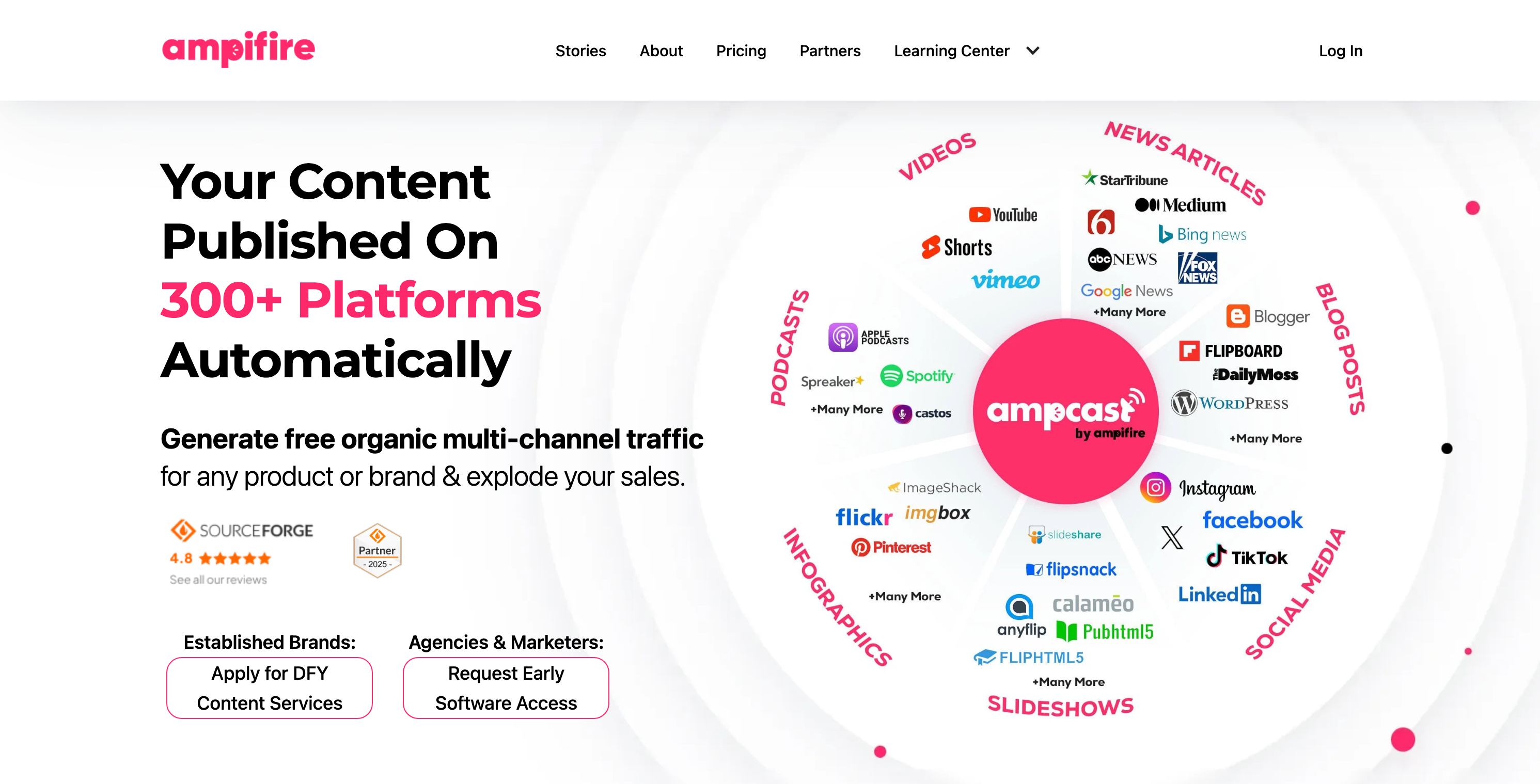
AmpiFire approaches syndication from the opposite direction of most tools on this list: instead of distributing content you've already produced, it creates the content and handles the distribution in one automated pipeline.
Where This Tool Shines
Start with a topic, a source URL, or an idea from its built-in topic research tools, and AmpiFire's AmpCast engine turns it into up to eight formats—news articles, blog posts, videos, shorts, podcast episodes, infographics, slideshows, and social posts—then publishes the campaign across a network of more than 300 sites and platforms. That multi-format spread is built to capture social, Google, and AI search traffic at the same time rather than betting everything on a single channel.
Key Features
Multi-Format Repurposing: One topic becomes up to eight content types automatically, each adapted to its format rather than copy-pasted across channels.
300+ Platform Distribution: Campaigns publish across news sites, blogs, video platforms, podcast directories, and social channels in a few clicks.
Topic Research Tools: Surfaces high-demand, low-competition content ideas based on the questions buyers are actually asking before they purchase.
Done-for-You Services: Established brands can hand the entire research, creation, and distribution pipeline to AmpiFire's team.
Best For
Established brands and agencies that want content created and syndicated for them end to end, rather than a scheduling tool for content they already produce in-house.
Pricing
Application-based access: done-for-you content services for established brands and early software access for agencies and marketers, with pricing discussed on a call.
3. Buffer
Best for: Small teams needing straightforward social media scheduling across major platforms
Buffer built its reputation on simplicity, offering a clean interface for scheduling and analyzing social media content without overwhelming users with complex features.

Where This Tool Shines
Buffer's browser extension makes content curation effortless—you can share articles, images, or videos to your queue with a single click while browsing. The platform handles the scheduling logic, determining optimal posting times based on your audience engagement patterns.
For teams that value collaboration without bureaucracy, Buffer's approval workflows keep everyone aligned without slowing down your publishing cadence. The analytics dashboard focuses on actionable metrics rather than vanity numbers, helping you understand what content actually drives engagement.
Key Features
Multi-Platform Scheduling: Publish to Instagram, Facebook, Twitter, LinkedIn, and Pinterest from a unified calendar interface.
Browser Extension: Share content to your Buffer queue instantly while browsing without switching contexts.
Team Collaboration: Set up approval workflows that match your team structure and content review process.
Analytics Dashboard: Track engagement metrics, reach, and clicks with clear visualizations that highlight trends.
AI Assistant: Generate caption suggestions and optimize post copy for different social platforms.
Best For
Small marketing teams and solopreneurs who need reliable social scheduling without enterprise complexity, content creators managing personal brands across multiple networks, and teams transitioning from manual posting to automated workflows.
Pricing
Free tier supports up to three social channels with basic scheduling. Paid plans start at $6 per month per channel with expanded features and analytics.
4. Hootsuite
Best for: Enterprise teams requiring comprehensive social media management with advanced permissions
Hootsuite positions itself as the command center for enterprise social media operations, supporting 35+ networks with sophisticated monitoring and team management capabilities.

Where This Tool Shines
Hootsuite's social listening tools go beyond basic scheduling, monitoring brand mentions, competitor activity, and industry conversations in real-time. The sentiment analysis helps you identify potential PR issues before they escalate and spot opportunities for engagement.
The platform's granular permission system lets you structure access by team, region, or campaign—critical for large organizations where multiple departments manage social presence. Custom analytics reports can be tailored to different stakeholders, from CMOs wanting high-level metrics to social managers tracking campaign-specific performance.
Key Features
35+ Network Support: Manage major social platforms plus niche networks from a single dashboard.
Social Listening: Monitor keywords, hashtags, and brand mentions with sentiment analysis and trend identification.
Advanced Permissions: Configure team access by network, content type, and approval requirements for enterprise governance.
Custom Analytics: Build reports with specific metrics and visualizations tailored to different audience needs.
Content Library: Store approved assets, brand guidelines, and frequently used media for consistent content creation.
Best For
Enterprise marketing teams managing social presence across multiple brands or regions, agencies handling numerous client accounts with different approval workflows, and organizations requiring detailed social listening and competitive intelligence.
Pricing
Professional plan starts at $99 per month for one user and 10 social accounts. Enterprise pricing requires custom quotes based on team size and feature requirements.
5. CoSchedule
Best for: Marketing teams integrating content planning with social distribution in a visual calendar
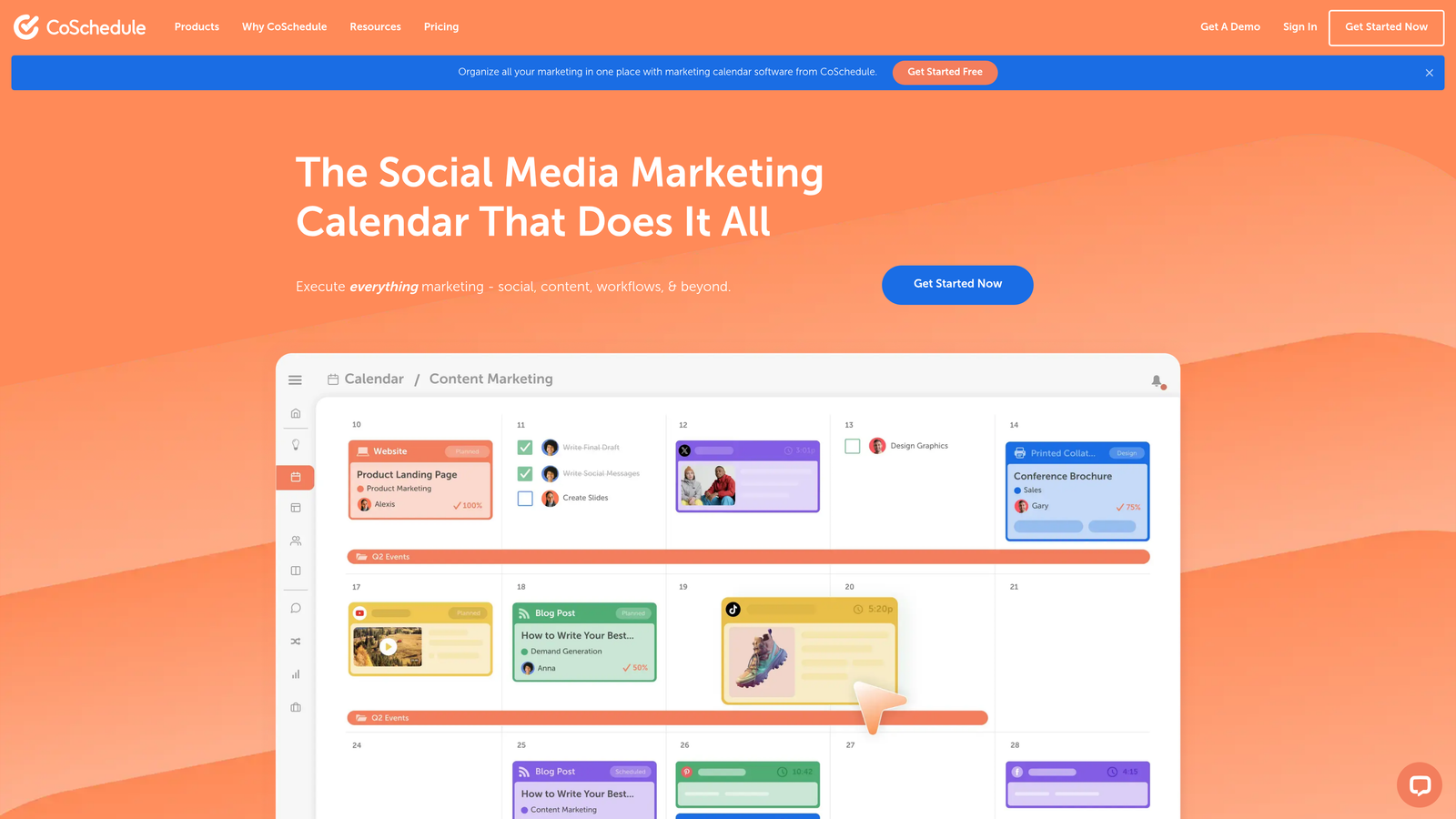
CoSchedule approaches syndication through the lens of marketing project management, connecting blog posts, social campaigns, and team tasks in a unified calendar view.
Where This Tool Shines
CoSchedule's ReQueue feature intelligently recycles your best-performing content, automatically filling gaps in your social calendar with posts that previously drove strong engagement. This evergreen content strategy maximizes ROI from high-quality posts without manual republishing.
The platform treats social syndication as part of broader marketing campaigns rather than isolated posts. When you publish a blog article, CoSchedule can automatically generate and schedule supporting social posts across networks, maintaining consistent messaging throughout your campaign lifecycle.
Key Features
Marketing Calendar: Drag-and-drop interface visualizing all content, social posts, and marketing activities in one timeline.
ReQueue: Automatically republish top-performing content to fill scheduling gaps and maintain consistent posting frequency.
Campaign Integration: Connect blog posts with social promotion, email sends, and other marketing activities for coordinated launches.
Workflow Management: Assign tasks, set deadlines, and track project progress alongside content scheduling.
Headline Analyzer: Optimize blog post and social headlines for engagement before publishing.
Best For
Content marketing teams coordinating blog publishing with social promotion, marketing departments running multi-channel campaigns that need centralized planning, and teams wanting intelligent content recycling to maximize evergreen asset value.
Pricing
Free marketing calendar available with basic features. Marketing Suite starts at $29 per month per user with full scheduling and analytics capabilities.
6. Outbrain
Best for: Paid content amplification through native advertising on premium publisher sites
Outbrain distributes content through recommendation widgets on major publisher websites, positioning your articles alongside editorial content for higher engagement than traditional display ads.

Where This Tool Shines
Outbrain's publisher network includes premium sites where your content appears as recommended reading rather than obvious advertising. This native format typically generates higher click-through rates because recommendations blend naturally with the user's content consumption experience.
The platform's performance optimization algorithms continuously test different headlines, images, and targeting parameters to improve campaign efficiency. Brand safety controls ensure your content appears only on sites aligned with your brand values and audience expectations.
Key Features
Premium Publisher Network: Distribute content through recommendation widgets on established news sites and industry publications.
Interest-Based Targeting: Reach audiences based on content consumption patterns and demonstrated interests rather than just demographics.
Performance Optimization: Automated testing of creative elements and audience segments to maximize engagement and conversions.
Brand Safety Controls: Specify approved publisher categories and exclude sites that don't align with brand standards.
Conversion Tracking: Measure downstream actions beyond clicks, including form submissions, purchases, and content engagement.
Best For
B2B and B2C brands looking to expand content reach beyond owned channels, publishers monetizing their content through syndication to other sites, and marketing teams with budget for paid amplification of high-value content assets.
Pricing
CPC-based pricing model where you pay per click on recommended content. Minimum spend requirements vary by geographic region and campaign objectives.
7. Taboola
Best for: Large-scale content discovery campaigns across a global publisher network
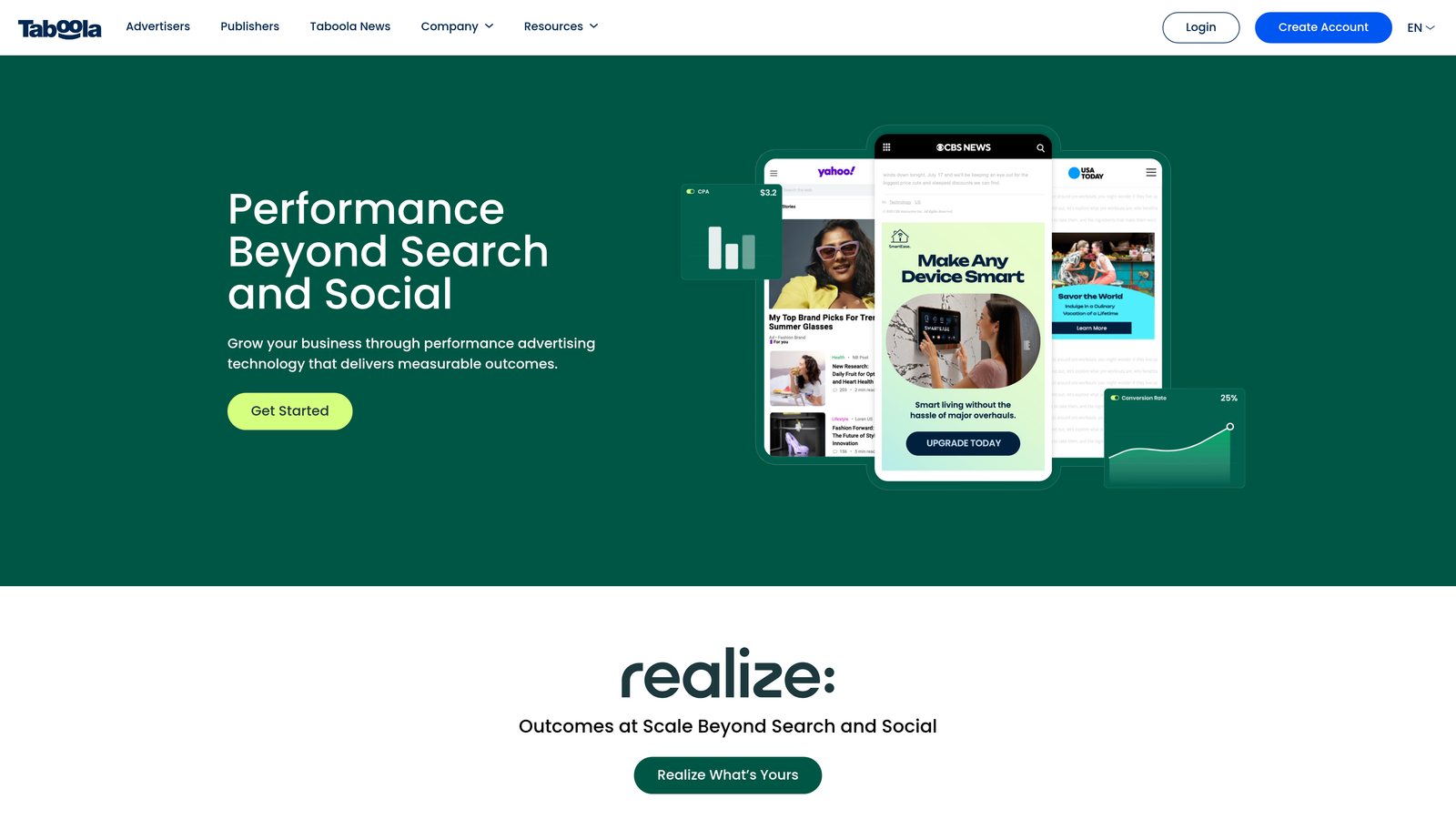
Taboola operates one of the web's largest content recommendation networks, reaching over 500 million daily active users through partnerships with major publishers worldwide.
Where This Tool Shines
Taboola's scale makes it particularly effective for brands needing broad reach across diverse audience segments. The platform supports both article syndication and video content, adapting recommendations based on user behavior and content performance patterns.
Attentive Audiences uses behavioral targeting to identify users most likely to engage with your content based on their browsing history and content consumption patterns. This goes beyond basic demographic targeting to reach audiences demonstrating genuine interest signals in your topic area.
Key Features
Massive Daily Reach: Access to over 500 million daily active users across a global network of publisher sites.
AI-Powered Targeting: Machine learning algorithms optimize content delivery based on user behavior and engagement patterns.
Video and Display Support: Promote video content alongside articles through native recommendation placements.
Attentive Audiences: Behavioral targeting that identifies high-intent users based on content consumption signals.
Real-Time Optimization: Continuous campaign adjustments to improve performance metrics and reduce cost per engagement.
Best For
Brands requiring significant scale in content distribution, e-commerce companies driving traffic to product content and buying guides, and media companies expanding audience reach for sponsored or owned content.
Pricing
CPC model with pricing varying by competition and targeting parameters. Contact Taboola for minimum spend requirements and enterprise package options.
8. Zapier
Best for: Custom content syndication workflows connecting disparate apps without coding
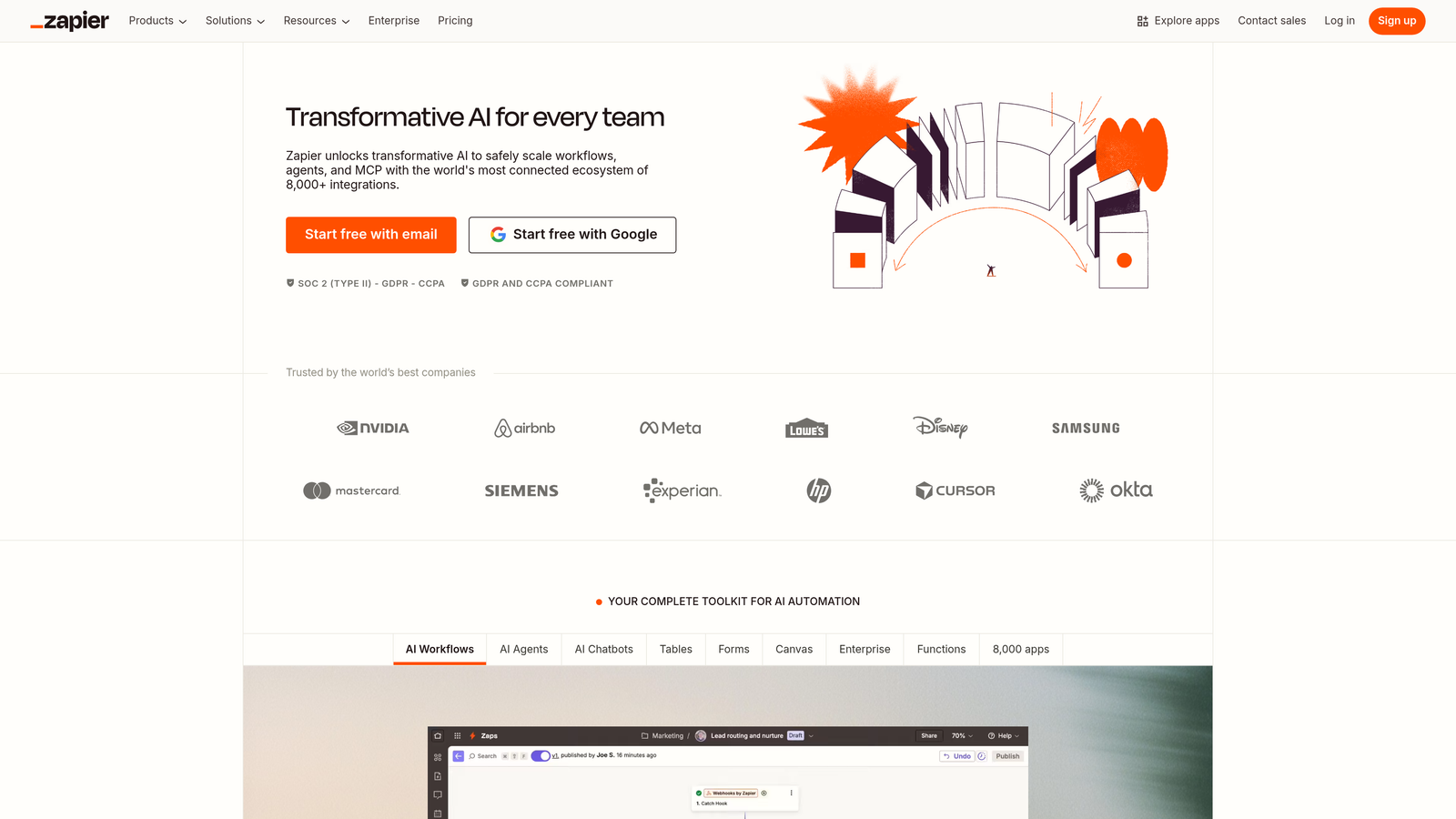
Zapier enables you to build automated content distribution pipelines by connecting 6,000+ apps through simple trigger-action workflows called Zaps.
Where This Tool Shines
Zapier's flexibility lets you create syndication workflows that match your specific tech stack and distribution strategy. For example, automatically publish new WordPress posts to Medium, share them across social networks, add them to your email newsletter queue, and notify your team in Slack—all triggered by hitting publish.
Multi-step Zaps with conditional logic handle complex scenarios like "if blog post contains 'case study' tag, share to LinkedIn but not Instagram" or "if engagement exceeds threshold, trigger paid promotion campaign." This level of customization is impossible with most dedicated syndication tools.
Key Features
6,000+ App Integrations: Connect virtually any marketing tool, CMS, social platform, or analytics service in your stack.
Multi-Step Workflows: Chain multiple actions together so one trigger cascades through your entire distribution process.
Conditional Logic: Add filters and branching paths that adapt workflows based on content type, performance, or other criteria.
Scheduled Automation: Run workflows on time-based triggers in addition to event-based triggers for recurring tasks.
Data Formatting: Transform data between apps, extract text, format dates, and manipulate content during syndication.
Best For
Marketing teams with unique tool combinations not covered by standard syndication platforms, operations managers automating complex content workflows across multiple departments, and technical marketers comfortable building and maintaining custom automation.
Pricing
Free tier includes 100 tasks per month with single-step Zaps. Paid plans start at $19.99 per month with increased task limits and multi-step workflow support.
9. Sprout Social
Best for: Social media management with integrated CRM for deeper audience relationships
Sprout Social combines content publishing with customer relationship management features, treating social channels as both distribution and engagement platforms.
Where This Tool Shines
Sprout's unified social inbox consolidates messages, comments, and mentions from all networks into a single view, making it easier to engage with your audience alongside content distribution. The platform maintains contact profiles that track interaction history, helping teams provide personalized responses and identify your most engaged community members.
ViralPost analyzes your audience's engagement patterns to determine optimal posting times for each network. Rather than using generic "best time to post" recommendations, it calculates timing based on when your specific followers are most active and likely to engage.
Key Features
Unified Social Inbox: Manage all social conversations from a single interface with team assignment and response tracking.
ViralPost Timing: AI-powered scheduling that identifies optimal posting times based on your audience's actual engagement patterns.
Social CRM: Build contact profiles tracking interaction history, sentiment, and engagement level for personalized community management.
Competitor Analysis: Benchmark your social performance against competitors with comparative metrics and trend identification.
Employee Advocacy: Enable team members to share approved content through their personal networks for expanded organic reach.
Best For
Brands prioritizing audience engagement alongside content distribution, customer service teams managing social support inquiries, and marketing departments wanting deeper insights into community sentiment and competitor positioning.
Pricing
Standard plan starts at $249 per month for one user and five social profiles. Professional plan at $399 per month adds competitive reports and message spike alerts.
Choosing Your Content Syndication Stack
Your ideal platform depends primarily on where your audience lives and how you create content. If you're focused on AI visibility and want end-to-end automation from content creation through search engine notification, Sight AI's integrated approach eliminates the gaps between generation, publishing, and indexing that slow down traditional workflows.
For teams primarily distributing existing content across social networks, Buffer offers simplicity for small teams while Hootsuite provides enterprise-grade management for larger organizations. Sprout Social adds CRM capabilities if audience engagement is as important as content distribution.
When paid amplification is part of your strategy, Outbrain and Taboola extend content reach beyond owned channels through native advertising on publisher networks. These platforms work best for high-value content assets where paid distribution ROI justifies the investment.
Zapier serves teams with unique tech stacks or complex workflows that standard syndication tools can't accommodate. If your distribution process involves conditional logic or connects unusual app combinations, the flexibility justifies the steeper learning curve.
Most sophisticated content operations use multiple tools in combination—AI-powered content creation feeding into social schedulers, with workflow automation connecting the pieces. The key is ensuring your tools integrate smoothly rather than creating disconnected silos that require manual data transfer.
Start tracking your AI visibility today and see exactly where your brand appears across top AI platforms. Stop guessing how AI models like ChatGPT and Claude talk about your brand—get visibility into every mention, track content opportunities, and automate your path to organic traffic growth.