Picture a potential customer sitting at their desk, typing into ChatGPT: "What's the best email marketing platform for small businesses?" In seconds, they receive a confident, well-structured answer listing three or four brands with brief explanations of each. Your competitor's name appears first. Yours doesn't appear at all.
This scenario is playing out millions of times daily across ChatGPT, Claude, Perplexity, and other AI assistants. The fundamental way people discover brands has shifted. Instead of scrolling through ten blue links on Google, users increasingly trust AI models to synthesize information and deliver direct recommendations. They ask conversational questions and receive authoritative-sounding answers that shape purchase decisions before they ever visit a website.
Here's the unsettling reality: most marketers have absolutely no idea what AI models say about their brand. You might have spent years perfecting your SEO strategy, climbing search rankings, and optimizing for featured snippets. But when someone asks Claude to recommend project management tools or queries Perplexity about CRM platforms, do you even know if your brand gets mentioned? What context surrounds that mention? Is it positioned as a top choice or an afterthought?
AI visibility analytics has emerged as the discipline that answers these questions with data instead of guesswork. It's the systematic practice of tracking, measuring, and optimizing how AI models perceive and recommend your brand across different platforms, prompt types, and competitive contexts. This guide will walk you through the fundamentals of AI visibility analytics, the metrics that matter, and how to build a measurement framework that translates into actual marketing impact.
The New Battleground: Why AI Recommendations Matter More Than Rankings
Traditional search engines present information. AI assistants make recommendations. That distinction changes everything about how users discover and evaluate brands.
When someone searches Google for "best CRM software," they see a list of links, ads, and maybe a featured snippet. They click through multiple websites, read reviews, compare features across tabs. The discovery process is active, comparative, and requires effort. Users maintain agency throughout—they're clearly researching, not receiving advice.
AI assistants fundamentally alter this dynamic. When that same person asks ChatGPT for CRM recommendations, they receive what feels like expert guidance. The model synthesizes information from its training data, structures a coherent response, and presents options with apparent confidence. Users perceive this as advice from a knowledgeable source, not as algorithmic output. The psychological impact is profound: AI recommendations carry implicit trust that traditional search results don't.
This creates what marketers call the "black box problem." With traditional SEO, you have visibility. You can track your position for target keywords, monitor click-through rates, analyze which pages drive traffic. You know when you're ranking on page one versus page three. You can measure progress and connect optimization efforts to traffic outcomes.
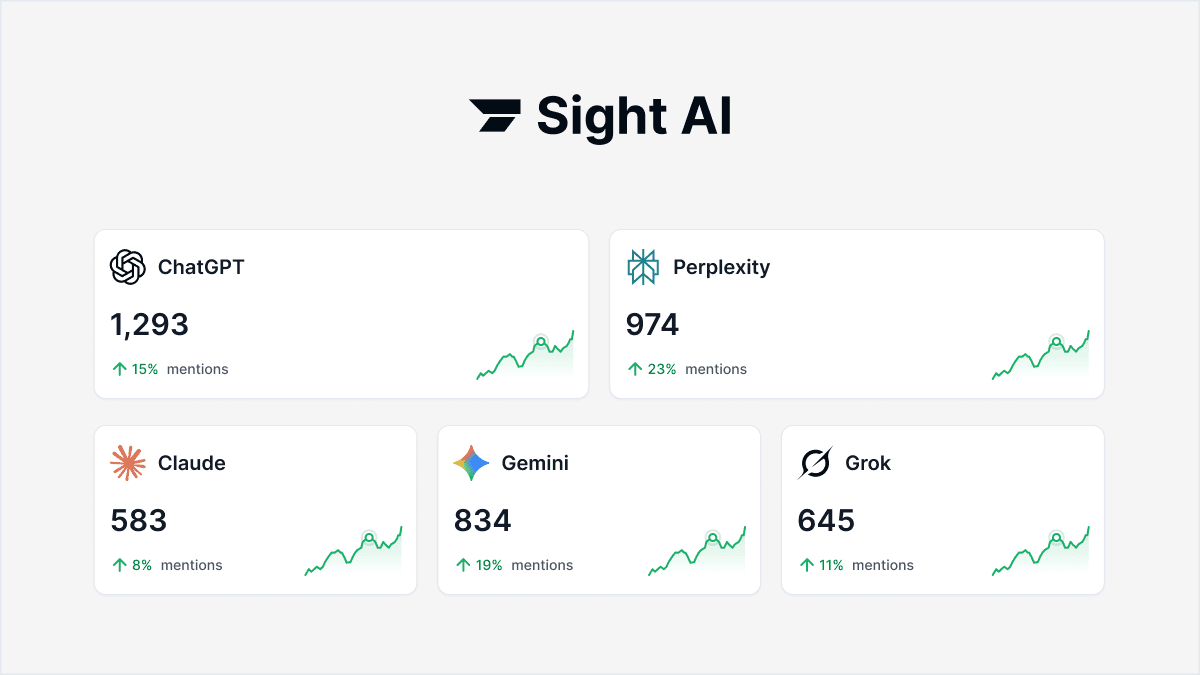
AI visibility operates differently. Most AI platforms don't provide analytics about brand mentions. You can't log into a dashboard and see that your brand appeared in 47% of project management queries this month, up from 31% last month. You don't know which competitor gets mentioned most frequently or what language the AI uses to describe your product category. You're operating blind in a channel that's capturing an increasing share of the discovery journey. This is why brand visibility analytics for AI has become essential for modern marketing teams.
The business impact extends beyond awareness. AI recommendations often drive purchase decisions without users visiting your website at all. Someone asks Claude for marketing automation recommendations, receives a response that positions HubSpot and Mailchimp as the clear leaders, and proceeds directly to those sites to sign up. They never see your carefully optimized landing pages, your comparison charts, your customer testimonials. The battle for mindshare happened entirely within the AI interaction, and you weren't part of the conversation.
Consider the user intent shift. People ask AI assistants questions they'd never type into Google. They're more specific, more conversational, more context-rich. "I'm a solo consultant launching a coaching business—what's the most cost-effective way to manage client relationships?" This query reveals budget consciousness, business stage, and use case in ways that keyword-based search rarely captures. AI models can parse this context and provide tailored recommendations. If your brand isn't positioned to match these specific scenarios in the AI's understanding, you're invisible regardless of your generic category rankings.
Core Metrics That Define AI Visibility Analytics
Measuring AI visibility requires new metrics that capture how AI models represent your brand across different contexts and platforms.
The foundational metric is your AI Visibility Score—a composite measure of how frequently and favorably AI models mention your brand across various prompt types. Think of it as the AI equivalent of share of voice in traditional marketing. If you query ten different AI platforms with twenty relevant prompts each, and your brand appears in 65 of those 200 responses, you have 32.5% visibility in that sample. The score becomes more sophisticated when you weight mentions by position, prompt relevance, and platform importance. An AI visibility analytics dashboard can help you track these metrics systematically.
Raw mention frequency tells only part of the story. A brand mentioned in every response isn't necessarily winning if those mentions are unfavorable comparisons or cautionary examples. This is where sentiment analysis becomes critical in the AI context.
AI sentiment analysis tracks whether mentions position your brand as a recommended solution, a neutral reference point, or a negative comparison. When Claude responds to "what's the easiest analytics platform?" and lists your product first with detailed benefits, that's a positive recommendation. When it mentions your brand in a list of five options without differentiation, that's neutral visibility. When it says "while Platform X offers features, users often prefer competitors for ease of use," that's negative framing even if technically factual.
The challenge is that AI-generated sentiment is nuanced. Models don't simply say "good" or "bad." They weave brand mentions into contextual narratives. Your brand might be recommended for enterprise use cases but not for small businesses. It might be positioned as feature-rich but complex. These qualitative distinctions matter enormously for understanding your actual AI positioning versus your desired positioning.
Prompt tracking adds another critical dimension. Not all queries are created equal. Understanding which types of questions trigger brand mentions reveals where you have AI visibility and where you're invisible.
Comparison queries ("Asana vs Monday.com") represent direct competitive scenarios. "Best of" prompts ("best project management tools for remote teams") test category leadership positioning. Problem-solution queries ("how to manage client projects more efficiently") evaluate whether AI models associate your brand with specific pain points. Feature-specific questions ("project management with time tracking") reveal whether the AI understands your product capabilities.
Tracking mention patterns across these prompt types exposes visibility gaps. You might appear frequently in direct comparison queries but rarely in problem-solution contexts, suggesting the AI recognizes your brand name but doesn't strongly associate it with solving specific problems. Or you might dominate generic category queries but disappear when prompts include qualifiers like "for small businesses" or "with strong mobile apps," indicating the AI lacks nuanced understanding of your positioning.
Platform-by-Platform: Where to Track Your AI Presence
AI visibility isn't monolithic. Each major platform has distinct characteristics that affect how and when brands get mentioned.
ChatGPT represents the largest user base and arguably the most influential AI assistant for product discovery. Its training data, knowledge cutoff dates, and real-time web browsing capabilities (in certain versions) all influence brand mentions. ChatGPT tends to provide structured, comprehensive responses that often include multiple brand recommendations with brief explanations. Understanding your visibility here is essential given the platform's market dominance.
Claude, developed by Anthropic, often provides more nuanced, context-aware responses. Users frequently report that Claude offers more balanced comparisons and is less likely to default to the most well-known brands. This makes Claude visibility particularly valuable for emerging companies or those targeting sophisticated users who appreciate detailed analysis. Claude's responses tend to be longer and more thoughtful, which can mean more opportunities for brand mentions within a single response.
Perplexity operates differently by explicitly citing sources and providing real-time web access. This platform's responses often include direct links and source attribution, making it a hybrid between traditional search and AI assistance. Perplexity visibility correlates more directly with your web presence and recent content, as the platform actively retrieves current information rather than relying primarily on training data.
Gemini, Google's AI platform, brings the search giant's vast knowledge graph and real-time data access to conversational AI. Its integration with Google's ecosystem means visibility here may correlate with your broader Google presence, from search rankings to Google Business Profile optimization. Gemini responses often leverage Google's structured data understanding, making schema markup and entity optimization particularly relevant.
Cross-platform tracking matters because each AI model has different training data, knowledge cutoffs, and recommendation patterns. A brand might have strong visibility in ChatGPT based on extensive coverage in its training data but weak visibility in Perplexity if recent web content is sparse. Conversely, a newer company with strong recent content might perform better in Perplexity than in models with older knowledge cutoffs. Implementing multi-platform AI visibility monitoring ensures you capture the complete picture.
The challenge intensifies with model updates. When OpenAI releases GPT-5 or Anthropic updates Claude, recommendation patterns can shift dramatically. Training data changes, knowledge cutoffs advance, and the weighting of various information sources may evolve. A brand that enjoyed strong visibility in one model version might find itself less frequently mentioned in the next, with no clear explanation or recourse.
This volatility makes historical tracking essential. You need baseline measurements before model updates to understand how changes affect your visibility. Without this historical context, you can't distinguish between normal fluctuation, competitive displacement, or model-driven shifts in recommendation patterns.
From Data to Action: Using Analytics to Improve AI Mentions
AI visibility data becomes valuable when it drives content and optimization decisions that improve how models represent your brand.
Start by identifying visibility gaps through competitive analysis. Query AI platforms with prompts relevant to your category and track which brands appear, in what contexts, and with what positioning. If competitors consistently get mentioned for specific use cases where you offer strong solutions, you've found a content opportunity. The AI lacks information connecting your brand to those scenarios, which means your existing content doesn't effectively communicate that positioning in ways the AI can parse and retrieve.
This is where Generative Engine Optimization differs fundamentally from traditional SEO. Search engines index pages and match queries to keywords. AI models synthesize information from multiple sources to construct responses. They need clear entity definitions, structured information, and authoritative sourcing to confidently recommend brands.
GEO-optimized content makes it easy for AI models to understand what your product does, who it serves, and how it compares to alternatives. This means explicit category definitions, clear feature descriptions, and specific use case documentation. Instead of marketing copy that implies benefits, you need content that states them directly. Rather than assuming readers understand your positioning, you articulate it clearly because AI models need that explicit context to generate accurate recommendations. For marketers looking to scale this approach, an AI SEO platform for marketers can streamline the optimization process.
Content structure matters enormously for AI consumption. Models parse information hierarchically, giving weight to headings, introductions, and clearly structured sections. A blog post titled "10 Ways to Improve Team Collaboration" that buries your product mention in paragraph seven is less likely to influence AI recommendations than a page titled "Project Management for Remote Teams: How [Your Product] Helps Distributed Teams Collaborate" with structured sections covering specific features and benefits.
The feedback loop works like this: publish GEO-optimized content that clearly positions your brand for specific use cases, track changes in AI mentions over subsequent weeks, and iterate based on results. If you publish comprehensive content about your analytics capabilities but still don't appear when users query AI about analytics platforms, the content may lack the authority signals AI models require, or competitors may have stronger information density on that topic.
Authority signals in the AI context include citations from reputable sources, mentions in industry publications, and structured data that helps models understand your credibility. If TechCrunch, Forbes, or industry-specific publications have covered your product, ensuring that coverage is well-structured and entity-rich increases the likelihood AI models will reference it when constructing recommendations.
Prompt engineering your own content helps too. Think about the questions users actually ask AI assistants, then create content that directly answers those questions with your brand as the solution. If users ask "what's the easiest CRM for solopreneurs," and you serve that market, create content titled exactly that with clear, structured answers. AI models often pull from content that matches query patterns closely.
Building Your AI Visibility Measurement Stack
Effective AI visibility analytics requires tools and frameworks that make tracking scalable and actionable.
When evaluating AI visibility platforms, multi-platform monitoring is non-negotiable. A tool that only tracks ChatGPT gives you partial visibility at best. You need coverage across ChatGPT, Claude, Perplexity, Gemini, and emerging platforms to understand your complete AI presence. The platform should automate prompt testing across these environments, as manually querying multiple AI assistants with dozens of prompts isn't sustainable. Reviewing the best AI visibility tracking platforms can help you identify the right solution for your needs.
Historical tracking capabilities separate basic tools from strategic platforms. You need to see how your visibility changes over time, correlate shifts with content publication or model updates, and identify trends before they become problems. A snapshot of current visibility is useful. A twelve-month trend line showing steady improvement or concerning decline is actionable.
Competitive benchmarking functionality lets you measure visibility relative to key competitors. Absolute visibility scores matter less than relative positioning. If your visibility increased from 25% to 35% but your main competitor grew from 40% to 60%, you're losing ground despite improvement. Benchmarking helps you understand whether you're gaining share of AI recommendations or falling behind.
Integration requirements depend on your existing marketing stack. AI visibility data should connect with your content management system to correlate publication timing with mention changes. Integration with analytics platforms helps you understand whether AI visibility correlates with brand search volume, direct traffic, or other awareness metrics. If you're tracking traditional search rankings, comparing SEO performance with AI visibility reveals whether the channels move together or independently. A robust content performance analytics platform can unify these insights.
Reporting frameworks translate raw AI visibility metrics into stakeholder-friendly insights. Marketing leaders don't need to know that your brand appeared in 47 of 150 test prompts across six platforms. They need to understand that your AI visibility increased 23% quarter-over-quarter, you now appear in 15% more competitive comparison responses, and sentiment improved from 62% positive to 71% positive. Connect these metrics to business outcomes: higher AI visibility often correlates with increased brand search volume and improved conversion rates for branded traffic.
Build dashboards that show visibility trends, competitive positioning, and prompt-level performance. Include sections for wins (new prompt types where you're gaining mentions), risks (declining visibility in important categories), and opportunities (high-volume prompts where competitors appear but you don't). Make the data scannable and the implications clear. For detailed guidance on setting up effective reporting, explore brand visibility reporting for AI.
The most sophisticated measurement stacks connect AI visibility to content ROI. Track which content pieces correlate with visibility improvements, measure the cost of creating that content, and calculate the value of incremental AI mentions based on their traffic and conversion impact. This closed-loop measurement justifies continued investment in GEO optimization and demonstrates marketing impact beyond traditional channels.
Putting It All Together
AI visibility analytics has evolved from an experimental metric to an essential component of modern marketing measurement. As AI assistants capture an increasing share of the discovery journey, brands that lack visibility in these platforms are simply invisible to a growing segment of potential customers.
The marketers who start tracking and optimizing now are building advantages that compound over time. Every piece of GEO-optimized content you publish, every authority signal you establish, every entity relationship you clarify makes it easier for AI models to understand and recommend your brand. The inverse is also true: delay means falling further behind competitors who are actively shaping their AI positioning.
The strategic imperative is clear. AI recommendations aren't replacing traditional search immediately, but they're capturing mindshare in high-intent discovery moments. When someone asks an AI assistant for product recommendations, they're often further along the buying journey than someone typing a generic search query. These are valuable interactions happening in channels where most brands currently have zero visibility.
Begin with an audit. Query major AI platforms with twenty to thirty prompts relevant to your category—comparison queries, problem-solution questions, "best of" prompts, feature-specific searches. Document which brands appear, in what contexts, and with what sentiment. This baseline reveals your starting position and identifies immediate opportunities.
From there, build a systematic approach. Create GEO-optimized content that addresses visibility gaps. Establish measurement cadences that track changes across platforms and prompt types. Connect AI visibility metrics to your broader marketing analytics so you can demonstrate impact and justify continued investment.
The brands that will dominate AI-driven discovery aren't necessarily those with the biggest marketing budgets or the longest market tenure. They're the ones that understand how AI models synthesize information, create content optimized for AI consumption, and systematically track their visibility across platforms. This is a new game with new rules, and early movers have a significant advantage.
Stop guessing how AI models like ChatGPT and Claude talk about your brand—get visibility into every mention, track content opportunities, and automate your path to organic traffic growth. Start tracking your AI visibility today and see exactly where your brand appears across top AI platforms.