Writesonic is a strong AI writing platform for high-volume, multi-format content, but it is primarily a content generator. If you also need AI visibility tracking, GEO optimization and automated indexing, pair it with or replace it by a tool built for AI search: Sight AI for an all-in-one stack, Profound for enterprise monitoring, Peec for lightweight tracking, AirOps for custom workflows, or Promptwatch for prompt-level gap analysis.
Brands are now discovered inside ChatGPT, Claude and Perplexity as well as Google, so an SEO tool has to do more than write. This comparison covers six platforms, judged on content quality, AI visibility features, indexing capabilities, ease of use and pricing transparency. If generative engine optimization is new to you, start with our primer on what GEO is and how it differs from traditional SEO.
Quick comparison: Writesonic vs. AI SEO tools
| Tool | Primary function | Content generation | AI visibility tracking | Best for |
|---|---|---|---|---|
| Sight AI | All-in-one AI SEO/GEO | Yes (13+ agents) | Yes (6+ AI platforms) | Marketers, founders, agencies |
| Writesonic | AI writing | Yes (broad format library) | Not a core feature | High-volume content teams |
| AirOps | Workflow automation | Via custom workflows | No | Content ops teams |
| Profound | AI answer monitoring | No | Yes (enterprise) | Enterprise brand teams |
| Peec | AI visibility monitoring | No | Yes (lightweight) | Startups, SMBs |
| Promptwatch | Prompt-level monitoring | No | Yes (gap analysis) | GEO content strategists |
1. Sight AI
Best for: All-in-one AI visibility tracking, SEO/GEO content generation, and automated indexing
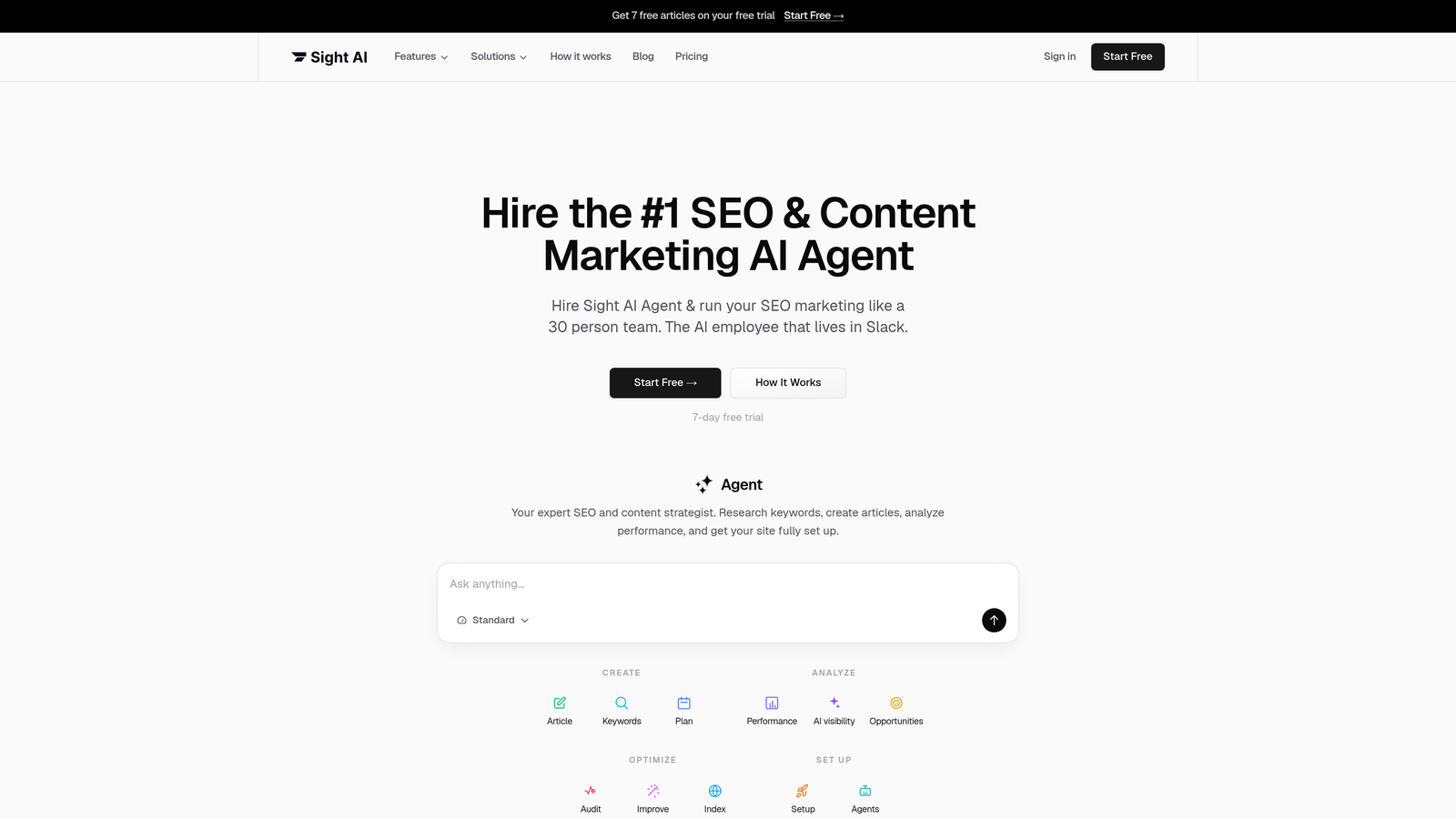
Sight AI combines AI brand monitoring, specialized content generation and automated website indexing in one platform.
Where This Tool Shines
Most AI SEO tools make you choose between a content generator and a visibility tracker. Sight AI does both. Its AI Visibility Score shows in real time how your brand appears across six or more AI platforms, including ChatGPT, Claude and Perplexity, and attaches sentiment context to every mention.
For content, 13+ specialized AI agents handle different article formats, from listicles to explainers to long-form guides. Each is optimized for both traditional SEO and GEO. Autopilot Mode runs the content pipeline with minimal manual work, which matters most for teams publishing at scale.
Key Features
AI Visibility Score: Tracks brand mentions across 6+ AI platforms, with sentiment analysis and prompt-level tracking that show exactly how AI models describe your brand.
13+ Specialized AI Agents: Dedicated agents for listicles, guides, explainers and other SEO/GEO-optimized formats, rather than a single generalist model.
Autopilot Mode: Hands-free pipeline management that cuts the manual work of briefing, writing, reviewing and publishing.
IndexNow Integration: Automated sitemap updates and IndexNow submission, so search engines and AI crawlers discover new content faster.
CMS Auto-Publishing: Connects content generation directly to your CMS with no extra manual steps.
Best For
Sight AI fits marketers, founders and agencies who want one platform to monitor their AI search presence and produce GEO-optimized content consistently. It is designed to replace a stack of separate tools for content, tracking and indexing.
Pricing
Multiple pricing tiers are available. Pricing is updated regularly, so check trysight.ai for current plans.
2. Writesonic
Best for: High-volume AI content generation across multiple formats and channels
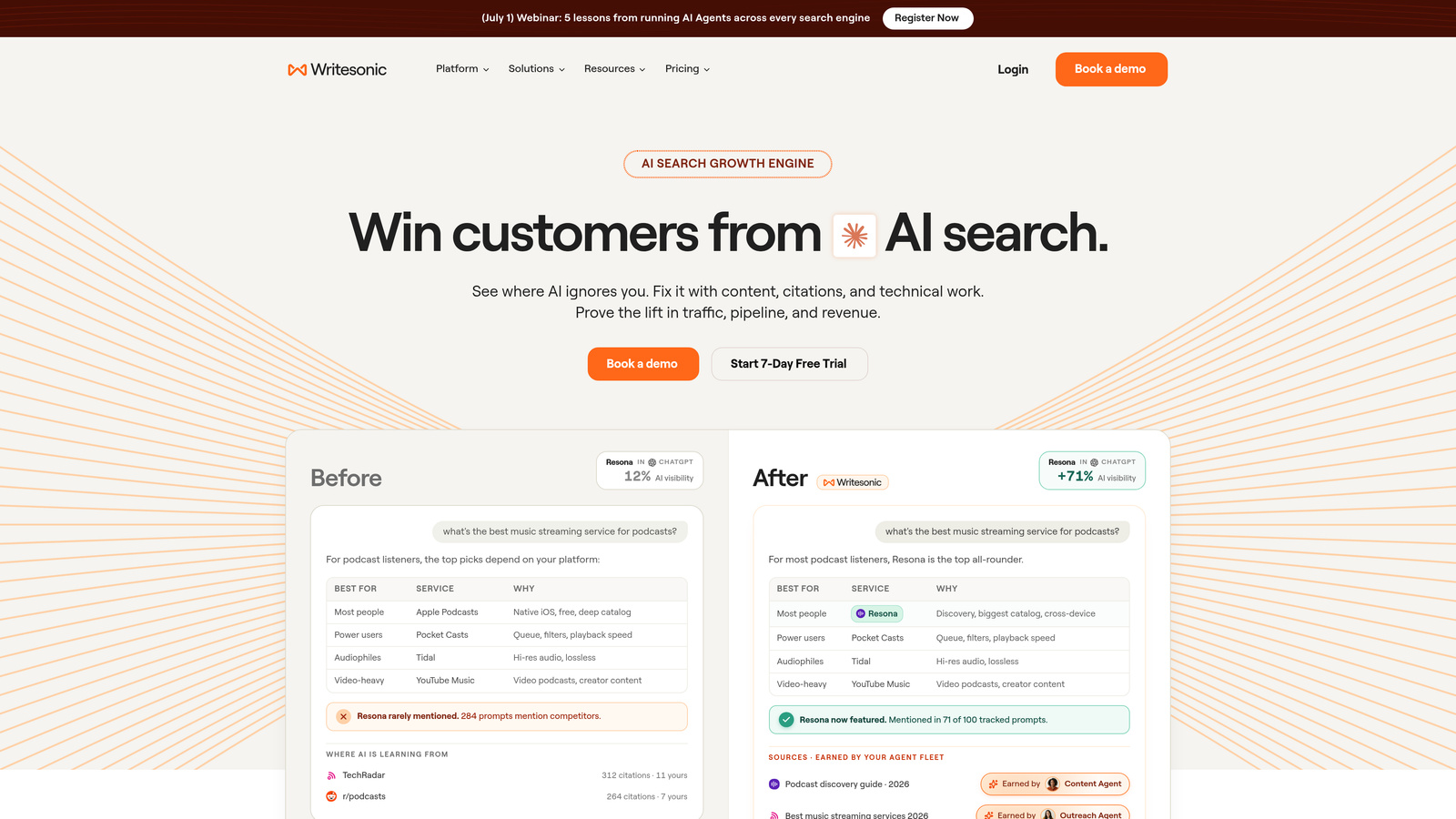
Writesonic is an established AI writing platform. It supports a wide range of formats, from long-form blog posts to ads, landing pages and social content.
Where This Tool Shines
Writesonic's main strength is format versatility. Teams producing content for several channels at once can switch use cases through its template library and the Chatsonic interface without rebuilding their workflow. Real-time web search helps ground articles in current information, which improves factual accuracy on fast-moving topics.
For teams that mainly need volume and variety, Writesonic delivers. The platform is focused on content generation, though. Native AI visibility monitoring, GEO optimization tracking and brand mention analysis in AI model outputs are not core features as it currently stands.
Key Features
Chatsonic: A ChatGPT-style conversational interface with real-time web access for factually grounded content.
Botsonic: A custom AI chatbot builder for embedding brand-specific assistants on websites.
SEO Article Generation: Keyword-targeted long-form content, with an SEO mode that gives on-page optimization guidance.
Content Format Library: Ads, emails, social posts, landing pages and long-form articles from a single platform.
Brand Voice Customization: Lets teams define a tone and keep it consistent across generated content.
Best For
Writesonic suits content marketing teams and agencies that need to produce large volumes of varied content quickly. It works best when the priority is output speed and format flexibility, not AI visibility monitoring or GEO-specific optimization.
Pricing
A free plan is available. Paid plans start at approximately $16/month. Tiers change periodically, so verify current pricing at writesonic.com.
3. AirOps
Best for: Teams building custom AI content workflows connected to internal data and CMS platforms
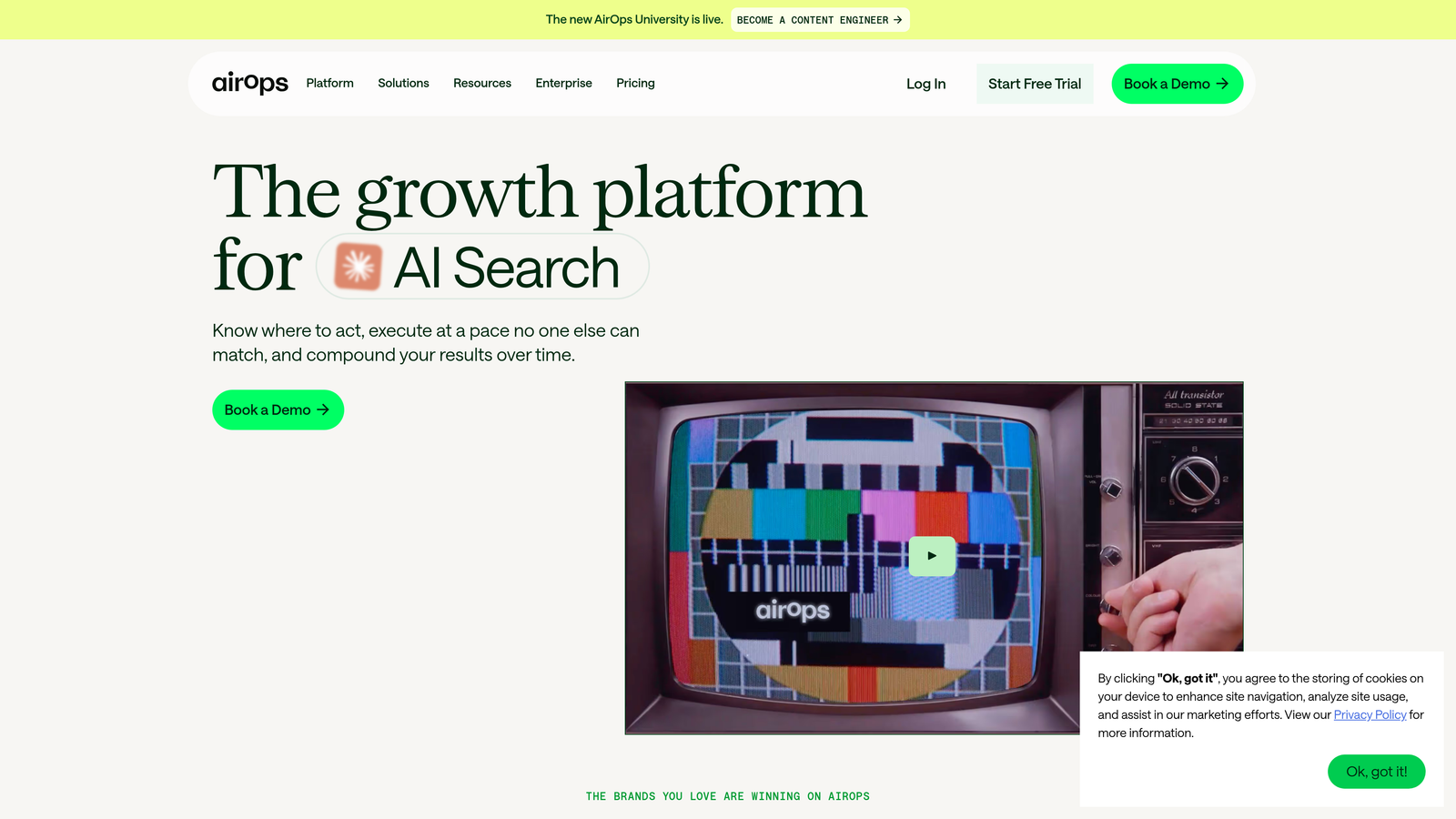
AirOps is a no-code AI workflow automation platform. It is designed for teams that need repeatable, customized content pipelines rather than pre-built templates.
Where This Tool Shines
AirOps is less a content tool than a content infrastructure tool. If your team relies on specific data sources, proprietary information or approval workflows that off-the-shelf tools can't handle, AirOps lets you build pipelines that connect LLMs to your actual systems without writing code.
Its LLM-agnostic architecture is a practical advantage. You are not locked into one underlying model, so you can route each task to the provider that best fits its cost, quality or capability requirements. That flexibility suits content operations teams with sophisticated, repeatable workflows.
Key Features
No-Code Workflow Builder: Visual pipeline construction that connects AI models to internal data, CMS platforms and third-party tools without engineering support.
LLM-Agnostic Architecture: Connects to multiple AI models, so you choose which model powers each workflow step.
Data Enrichment: Transforms and enriches input data before generation, which produces more contextually accurate output.
CMS and Spreadsheet Integrations: Connects directly to publishing platforms and data sources for scalable content operations.
SEO Template Library: Pre-built workflow templates for common SEO content tasks speed up setup.
Best For
AirOps is the right choice for content operations teams and agencies whose complex, repeatable workflows need more customization than standard content generators offer. It is less suited to teams that want out-of-the-box AI visibility monitoring.
Pricing
Team and enterprise tiers are available. Check airops.com for current pricing details.
4. Profound
Best for: Enterprise teams tracking brand visibility and competitive share of voice in AI-generated search
Profound is an enterprise-grade AI answer monitoring platform. It tracks how brands appear in AI-generated search responses across major LLMs and generative search engines.
Where This Tool Shines
Profound is built for the monitoring side of GEO. Content tools help you create assets; Profound shows whether those assets actually change how AI models represent your brand. Its competitive share-of-voice analytics give enterprise teams a structured way to benchmark AI visibility against competitors.
Its reporting dashboards are designed for enterprise stakeholders, which makes it easier to explain AI search performance to leadership teams unfamiliar with GEO. The trade-off is that Profound is an analytics and monitoring tool, not a content generation platform.
Key Features
AI Answer Monitoring: Tracks brand mentions across AI-powered search engines and LLM outputs, showing how and when your brand appears.
Competitive Share-of-Voice: Benchmarks your brand's AI visibility against competitors across generative search channels.
Sentiment and Context Analysis: Evaluates the tone and framing of AI-generated brand mentions, not just their frequency.
Enterprise Reporting Dashboards: Structured reporting for marketing leadership and cross-functional stakeholders.
Prompt and Query Analysis: Identifies which queries surface or miss your brand, highlighting visibility gaps.
Best For
Profound suits enterprise marketing and brand teams with dedicated budgets for AI search analytics. It is especially relevant in categories where AI-generated answers heavily influence purchase decisions.
Pricing
Profound uses an enterprise pricing model. Contact Profound directly or visit profound.ai for current plan details.
5. Peec
Best for: Startups and smaller teams starting to measure AI brand visibility without enterprise complexity
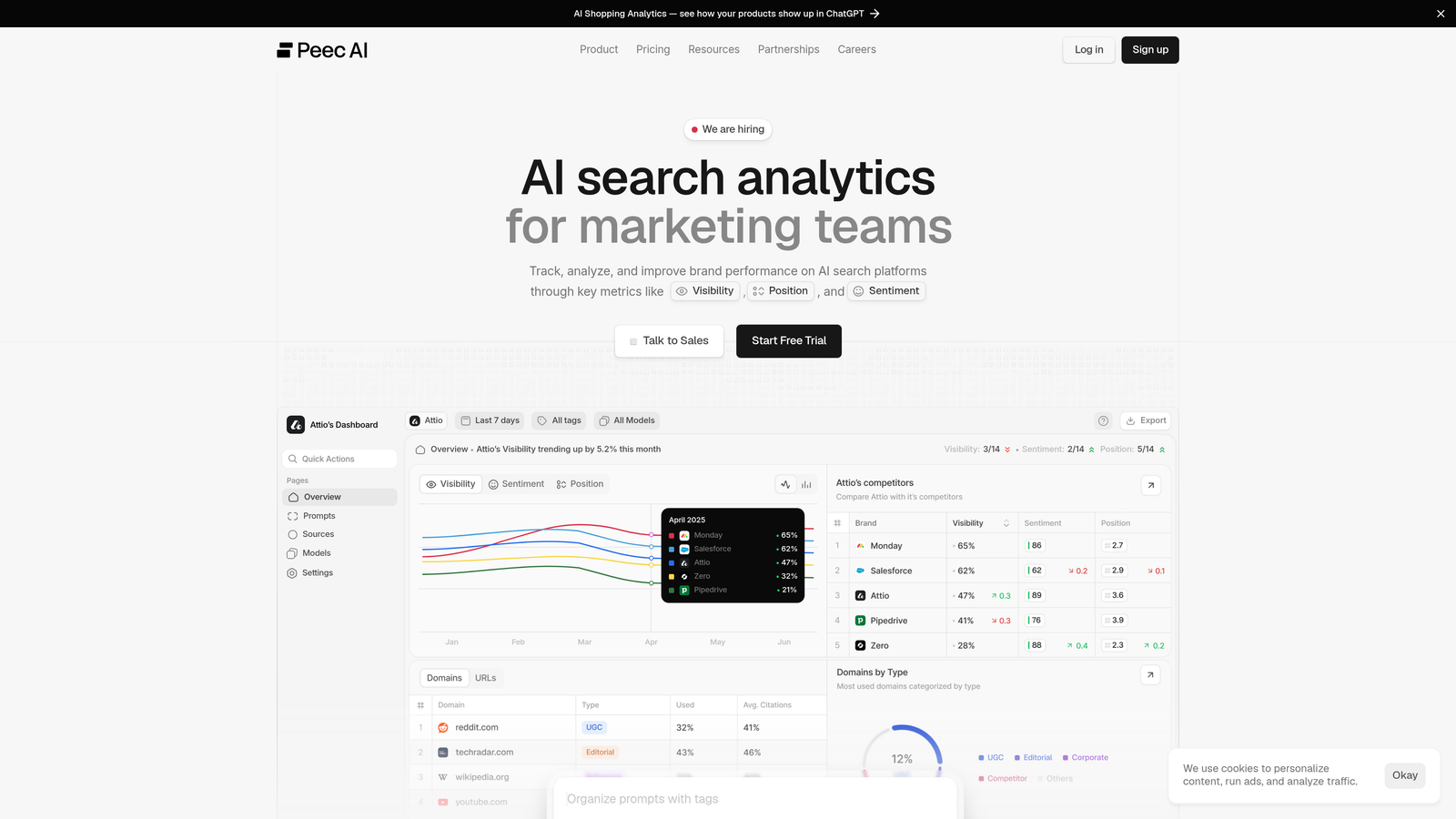
Peec is a lightweight AI visibility monitoring tool. It tracks brand and keyword mentions in AI model outputs without the setup overhead of enterprise platforms.
Where This Tool Shines
Peec's appeal is accessibility. For teams just starting to understand their AI search presence, a manageable learning curve and a lower price point remove the barrier to entry. You don't need a dedicated analytics team to get useful data from it.
It monitors multiple AI platforms, and its reports are simple enough for small teams to act on without much interpretation. It doesn't try to be an enterprise analytics suite, and for many smaller organizations that is the right fit.
Key Features
Brand and Keyword Monitoring: Tracks how your brand and target keywords appear in AI model responses across multiple platforms.
Accessible Setup: Built for non-technical users, with onboarding that doesn't require developer involvement.
Multi-Platform Coverage: Monitors mentions across several major AI models rather than a single platform.
Simplified Reporting: Clear, actionable reports for smaller teams without dedicated data analysts.
Affordable Entry Point: Priced for startups and growing teams early in their AI visibility work.
Best For
Peec is a practical starting point for startups, small businesses and marketing teams that want to measure AI visibility without enterprise-level tooling or pricing. It is ideal for teams new to GEO.
Pricing
Pricing tiers are designed to be accessible for smaller teams. Check peec.ai for current plans.
6. Promptwatch
Best for: Content strategists identifying GEO content gaps through prompt-level AI visibility analysis
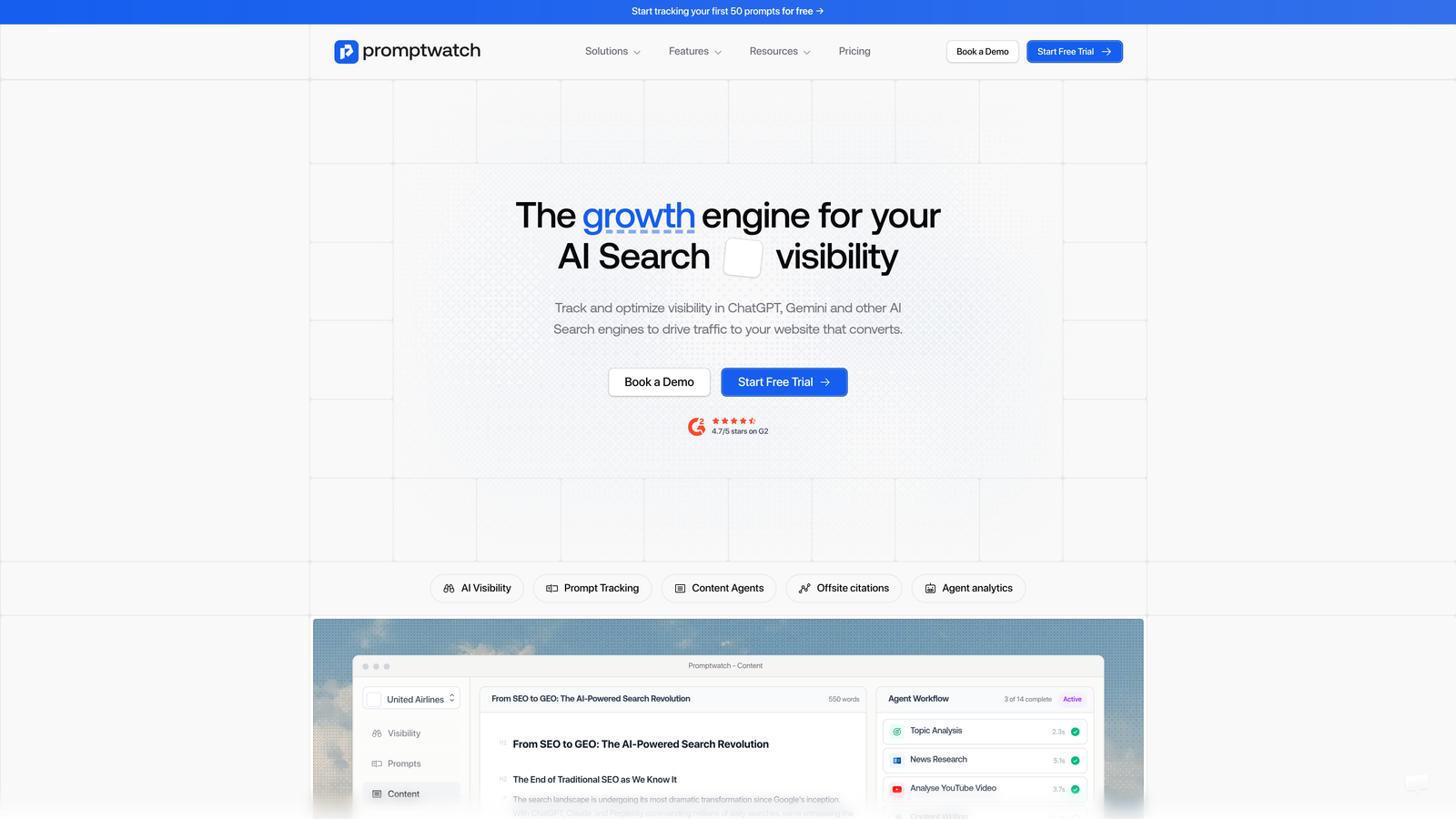
Promptwatch is a prompt-centric AI visibility tool. It monitors which user queries surface or miss a brand in AI model responses, so teams can identify specific GEO optimization opportunities.
Where This Tool Shines
Promptwatch works at the prompt level. Instead of only reporting whether your brand appeared in AI responses, it shows which queries trigger mentions and which represent gaps where your brand should appear but doesn't. That tells content strategists where to focus their GEO work next.
The gap analysis converts directly into content briefs. If a set of high-intent prompts consistently fails to surface your brand, you have a clear target for new content. This is a more strategic use of visibility data than counting mentions.
Key Features
Prompt-Level Tracking: Identifies which queries trigger or fail to trigger brand mentions in AI model responses.
GEO Gap Analysis: Surfaces content opportunities by showing AI-generated answers your brand is missing from.
Multi-Model Monitoring: Tracks brand visibility across major AI models rather than a single platform.
Actionable Content Insights: Turns visibility data into concrete content and SEO recommendations.
Visibility Trend Tracking: Monitors prompt-level visibility over time to measure the impact of GEO work.
Best For
Promptwatch is most valuable for SEO strategists and content teams building a GEO content strategy who need data on which topics and query patterns to target next.
Pricing
Check promptwatch.io for current pricing and plan tiers.
Which Tool Is Right for Your Workflow?
The right choice depends on the problem you're trying to solve. Use this breakdown to match tool to need.
All-in-one AI SEO and visibility platform: Sight AI is the strongest option if you want content generation, AI brand monitoring and automated indexing in one place, without stitching together multiple tools.
High-volume content output across formats: Writesonic suits content teams that need varied content at scale, especially when format flexibility and speed come first.
Custom workflow automation: AirOps fits teams whose complex, repeatable pipelines must connect AI models to internal data sources and CMS platforms without code.
Enterprise AI visibility monitoring: Profound is built for enterprise marketing teams that need structured reporting, competitive share-of-voice analytics and stakeholder-ready dashboards.
Lightweight AI tracking for smaller teams: Peec gives startups and growing teams an accessible way to start measuring AI visibility without enterprise cost or complexity.
Prompt-level GEO strategy: Promptwatch is the right tool for strategists who want to know exactly which query gaps to fill next.
Whichever tool you pick, define how you'll measure success before you buy. Our 6-step framework for measuring AI visibility performance covers the metrics, prompt sets and reporting cadence to set up first.
One broader trend stands out: the AI search landscape is changing quickly, and tools that combine content generation with AI visibility tracking are building a compounding advantage. Creating content is only half the job. Single-function tools can't tell you whether that content is actually changing how AI models represent your brand.
Frequently asked questions
Is Profound or Writesonic better for AI visibility and AI SEO?
They solve different problems. Profound is a monitoring platform that tracks how AI engines mention your brand, with share-of-voice and sentiment analytics. Writesonic is mainly a content generator, and visibility tracking is not its core feature. For measuring AI visibility, Profound is the stronger tool. For producing content, Writesonic wins. If you need both in one platform, an all-in-one tool like Sight AI covers monitoring and GEO content generation together.
Which is better for SMBs: Profound or Writesonic?
For most small and mid-sized businesses, neither is the complete answer on its own. Profound's enterprise pricing and dashboards are built for large brand teams. Writesonic is affordable, with a free plan and paid plans from about $16/month, but it doesn't track AI visibility. SMBs usually get more value from a lighter monitoring tool like Peec, or from a combined platform that pairs tracking with content production.
How does Writesonic compare to Clearscope?
Writesonic generates content: it drafts articles, ads and emails with AI. Clearscope is a content optimization tool that grades drafts against the terms and topics top-ranking pages cover. Teams often draft in a generator and refine in an optimizer. Neither is built primarily for tracking brand mentions in ChatGPT or Perplexity, so if GEO matters to you, add a dedicated AI visibility tool.
Writesonic vs. Peec AI: which should I choose?
Pick based on the job. Writesonic creates content. Peec monitors how your brand and keywords appear in AI model responses, without generating content. Choose Writesonic if your bottleneck is output volume. Choose Peec if you need affordable AI visibility measurement. Many teams run one tool of each type, or consolidate both into a single platform.
Is Writesonic good for SEO?
Writesonic handles SEO content production well. It offers keyword-targeted long-form articles, an SEO mode with on-page guidance, and real-time web search to keep content current. It is weaker on measurement: it is not built for rank tracking or AI visibility monitoring. For rankings, pair it with a dedicated tracker; see our roundup of the best rank checking software for Google and AI search.
If you're ready to see where your brand appears across ChatGPT, Claude, Perplexity and other AI platforms, and to build the content that improves that presence, Start tracking your AI visibility today with Sight AI and get a clear picture of your brand's AI search footprint.