The search landscape has fundamentally changed. Traditional SEO tactics—keyword stuffing, basic backlink building, manual content optimization—are rapidly becoming obsolete as AI reshapes how search engines understand and rank content. Google's Search Generative Experience, Bing's AI integration, and emerging platforms like Perplexity have created an entirely new playing field where visibility depends on understanding machine learning algorithms and semantic search patterns.
The challenge? Most SEO professionals are still using tools built for yesterday's search engines. They're manually analyzing keywords, guessing at content gaps, and making optimization decisions based on intuition rather than AI-driven insights. Meanwhile, competitors leveraging AI-powered SEO platforms are automating technical audits, predicting algorithm changes, and generating content strategies that align perfectly with how AI systems evaluate relevance and authority.
The right AI-powered SEO tool doesn't just save time—it fundamentally changes what's possible in terms of competitive analysis, content performance, and ranking velocity. We've researched and tested the leading platforms available in December 2025, focusing specifically on tools that use machine learning for predictive insights, natural language processing for content optimization, and automation for technical SEO tasks.
Here are the top AI-powered search engine optimization tools transforming how brands compete for visibility.
1. Sight AI
Best for: AI visibility tracking and GEO-optimized content creation for emerging AI search platforms
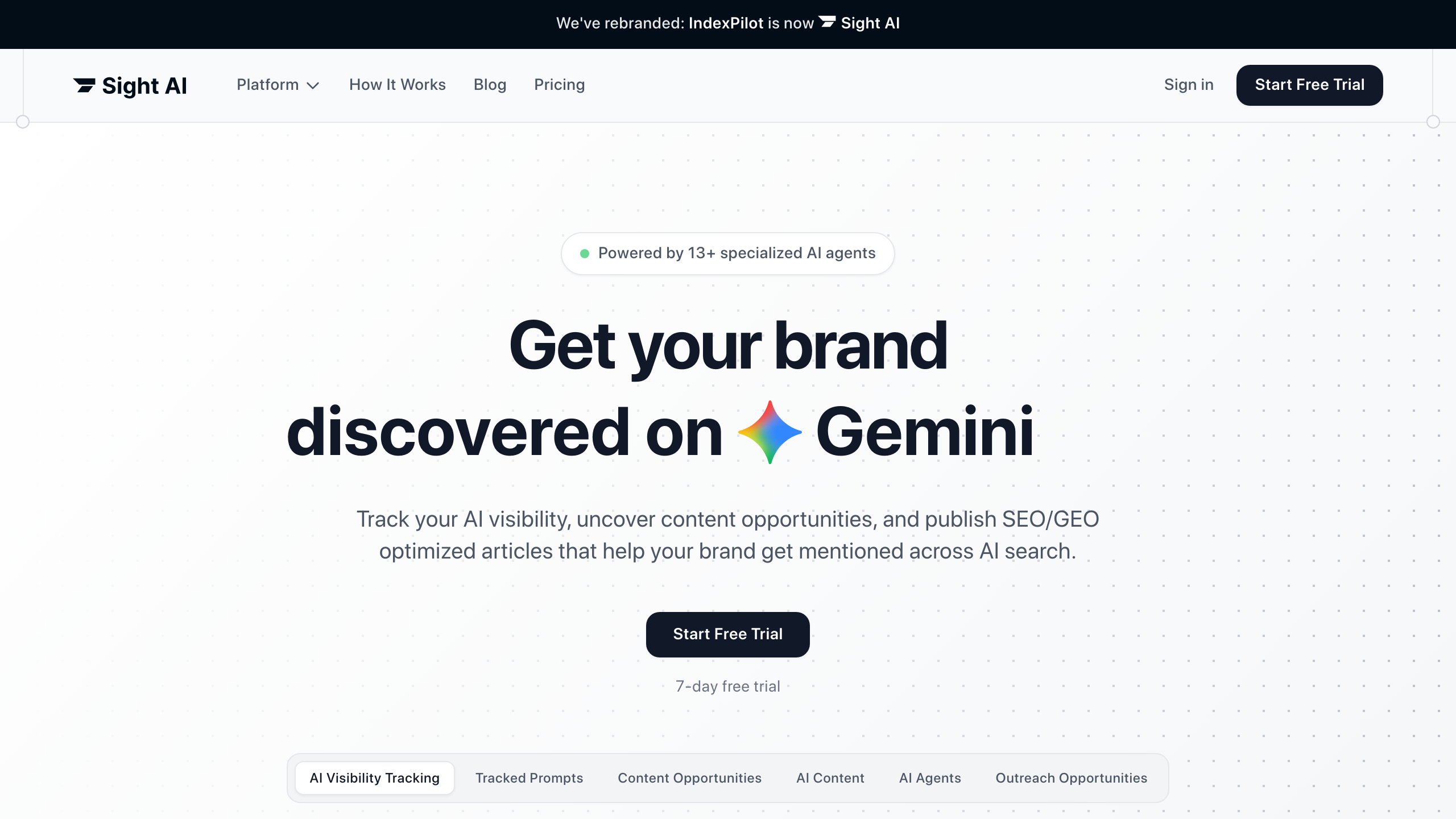
Sight AI addresses the most critical shift in search since Google's founding—the rapid emergence of AI-powered search platforms that fundamentally change how users discover information and how brands establish visibility.
Where This Tool Shines
While traditional SEO tools optimize for conventional search engines, Sight AI focuses on Generative Engine Optimization (GEO)—ensuring your content gets discovered, understood, and cited by AI systems like ChatGPT, Perplexity, Claude, and the growing ecosystem of AI-powered search platforms. This matters because the search landscape is fundamentally fragmenting. Users increasingly turn to AI platforms for direct answers rather than traditional search results, and brands invisible in these AI responses are losing significant mindshare and traffic.
The platform's visibility monitoring reveals where your brand appears in AI-generated responses across multiple platforms, providing intelligence that traditional rank tracking cannot capture. This visibility data exposes an entirely new competitive landscape—you might rank #1 on Google but never get mentioned in AI responses, or conversely, you might have modest traditional rankings but strong AI citation presence that drives awareness and authority.
Sight AI's content creation system generates articles structured specifically for AI comprehension and citation. The platform understands that AI systems evaluate content differently than traditional search algorithms—prioritizing authoritative depth, clear structure, and verifiable information over traditional SEO signals. Content created through Sight AI balances both optimization approaches, ensuring visibility across the complete search ecosystem.
The citation analysis reveals which content elements make your pages worthy of AI references, from structural clarity to topic depth to source quality. This intelligence helps you understand what separates content that AI systems cite from content they ignore—insights that become increasingly valuable as AI-powered search gains adoption.
Key Features & Capabilities
Cross-Platform AI Visibility Monitoring: Tracks brand mentions across ChatGPT, Perplexity, Claude, and other AI platforms, showing where and how you appear in AI-generated responses to relevant queries.
GEO-Optimized Content Generation: Creates articles structured for both traditional SEO and AI system comprehension, ensuring visibility across the fragmenting search landscape.
Citation Intelligence Analysis: Reveals which content characteristics make your pages citation-worthy for large language models, from depth and structure to authority signals.
Content Gap Discovery: Identifies queries where AI systems lack authoritative sources, revealing opportunities for establishing early visibility before competitors recognize the space.
Competitive AI Presence Analysis: Shows how competitors appear in AI search results, helping you understand the citation landscape and positioning opportunities in your niche.
Automated Publishing Workflow: Streamlines content creation from research through optimization to publication, with integrated best practices for both traditional and AI search optimization.
Multi-Platform Performance Dashboard: Unified view of visibility across traditional search engines and AI platforms, revealing the complete picture of your search presence.
Best For / Ideal Users
Forward-thinking marketing leaders who recognize that search visibility is no longer defined by Google alone will find Sight AI essential for establishing presence in AI-powered search experiences. The platform is particularly valuable for B2B companies, SaaS platforms, and professional service firms where AI citations provide credibility and authority that traditional advertising cannot match.
Brands in competitive spaces where traditional SEO requires significant resources can gain strategic advantage by optimizing for AI search before competitors recognize its importance. Early visibility in AI platforms establishes authority that compounds as these channels grow.
Content teams focused on thought leadership and brand authority benefit from understanding how AI systems perceive and reference their expertise. Companies building long-term content strategies need visibility into both current traditional rankings and emerging AI search performance to allocate resources effectively.
Enterprise organizations managing large content libraries will appreciate the ability to identify which existing content pieces earn AI citations and which remain invisible, enabling prioritized optimization efforts based on emerging search behavior rather than legacy metrics alone.
Pricing
Pricing starts at $49 /month up to $999 /month plus there are Enterprise plans available upon request. Pricing is based on article and tracked prompt usage.
2. Surfer SEO
Best for: AI-driven content optimization and SERP analysis with real-time scoring
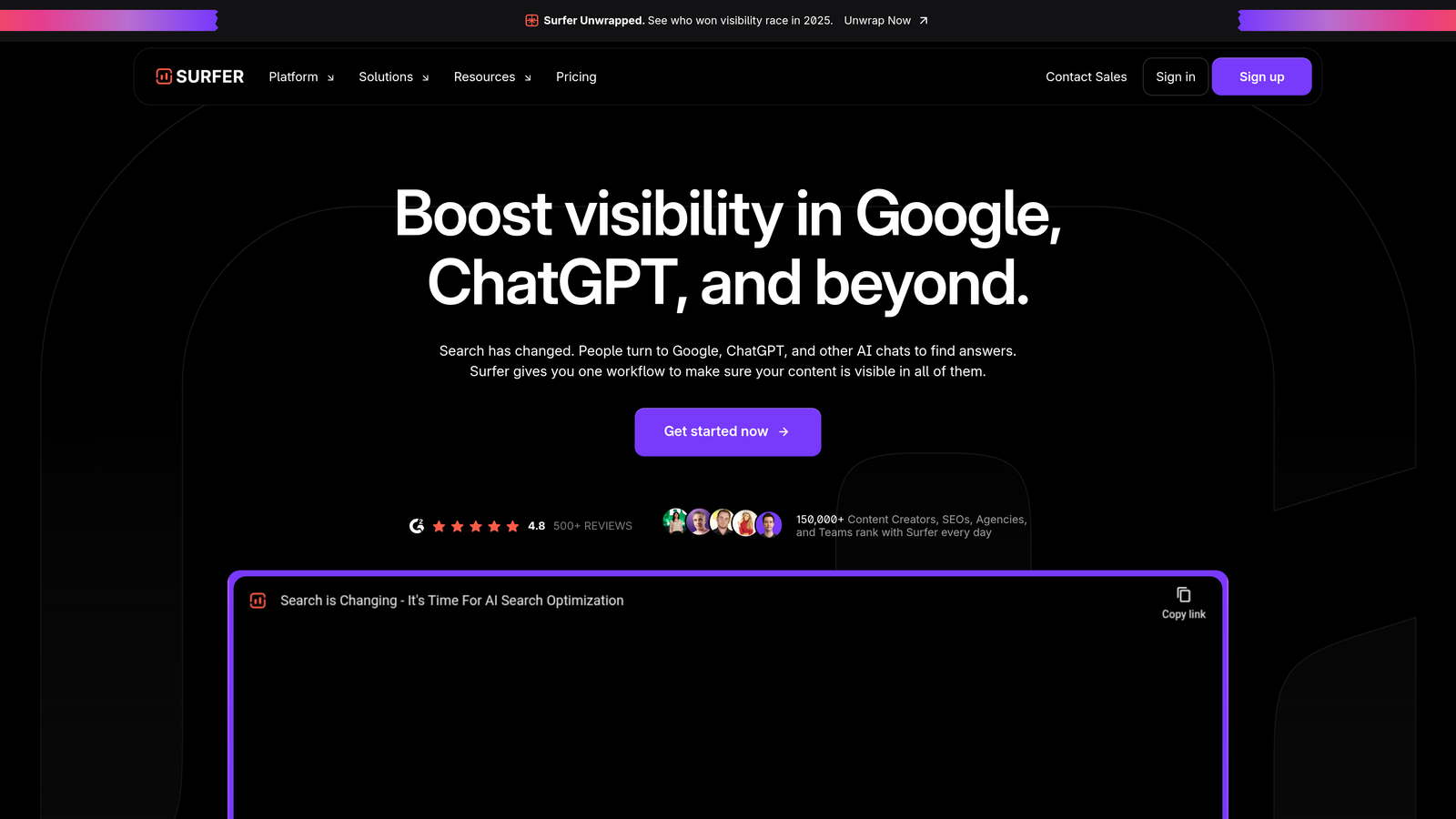
Surfer SEO has evolved from a basic content editor into a comprehensive AI-powered optimization platform that helps over 150,000 content creators, SEOs, and agencies boost visibility in both Google and AI chats like ChatGPT.
Where This Tool Shines
Surfer's AI analyzes hundreds of ranking factors across top-performing pages to generate data-driven content briefs that go far beyond simple keyword density. Their Content Score algorithm uses natural language processing to evaluate semantic relevance, topic coverage, and content structure against actual ranking pages.
The platform's real-time optimization suggestions adapt as you write, ensuring every paragraph aligns with what search engines reward. Their AI Outline Generator creates hierarchical content structures based on competitor analysis, while the SERP Analyzer identifies content gaps and opportunities that manual research would miss.
Key Features & Capabilities
AI Content Editor: Real-time optimization scoring with semantic keyword suggestions that guide your writing without forcing unnatural phrasing.
SERP Analyzer: Reverse-engineers top-ranking pages using machine learning to identify patterns in structure, depth, and topic coverage.
AI Outline Generator: Creates data-driven content structures by analyzing how competitors organize information and what subtopics they cover.
Keyword Research Tool: Clusters related keywords and classifies search intent to help you target the right queries with appropriate content types.
Content Audit System: Identifies optimization opportunities across existing pages, prioritizing refresh efforts based on ranking potential.
Automatic Internal Linking: Inserts contextually relevant internal links throughout your content to strengthen site architecture.
AI Search Visibility Monitoring: Tracks how your content appears in AI-powered search tools like ChatGPT, preparing you for the future of search.
Best For / Ideal Users
Content marketers and SEO teams who need to scale content production without sacrificing quality will find Surfer indispensable. It's particularly valuable for agencies managing multiple clients, in-house teams producing dozens of articles monthly, and solo practitioners who need enterprise-level optimization insights without the enterprise budget.
The platform works best for those who understand SEO fundamentals but want AI to handle the tedious analysis and optimization tasks. Writers who prefer integrated workflows—where optimization happens during drafting rather than as a separate revision phase—will appreciate the real-time feedback system.
Pricing
Plans start at $89/month for the Essential plan (30 articles),
3. Clearscope
Best for: AI-powered content relevance optimization and competitive intelligence
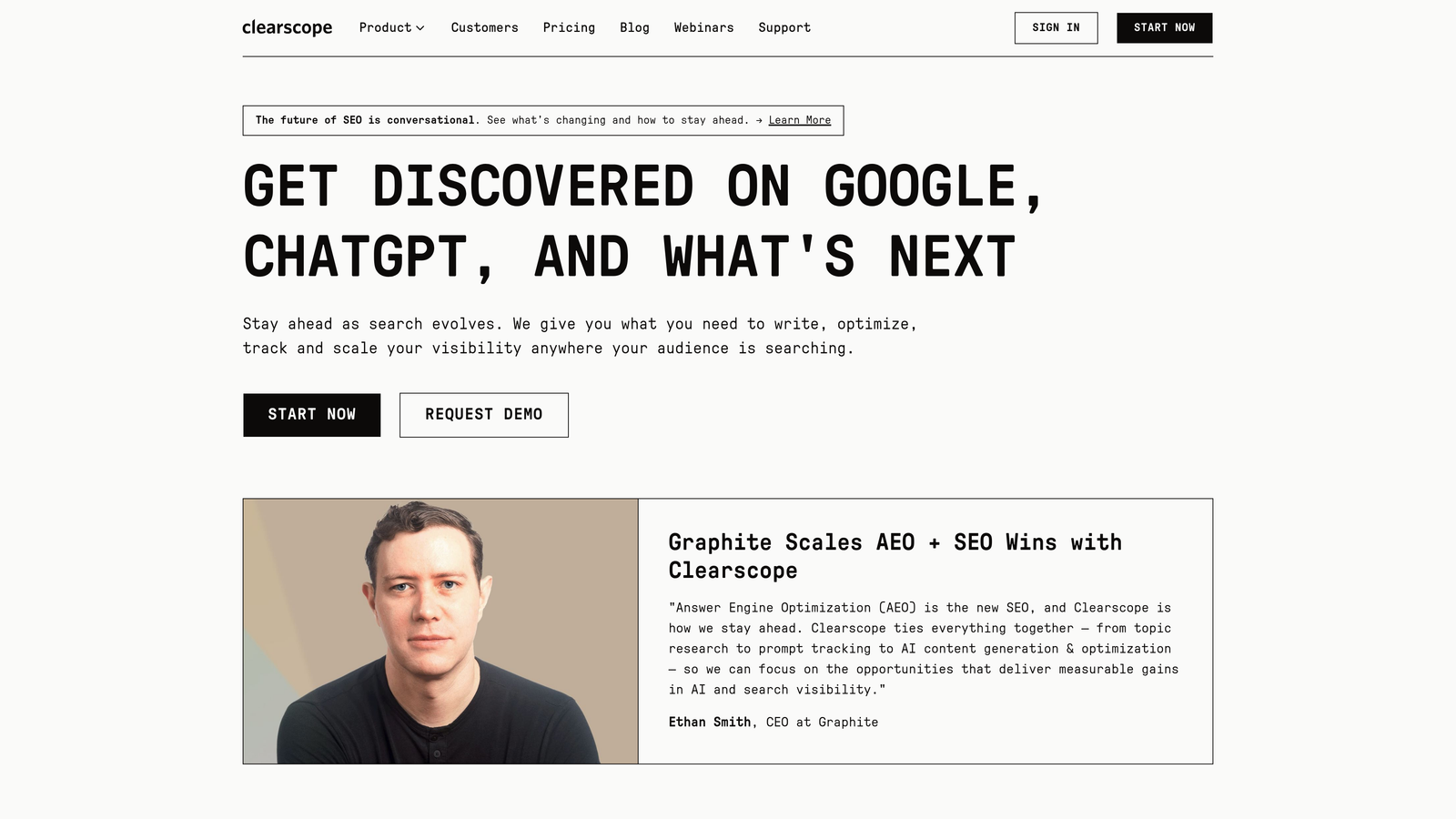
Clearscope uses natural language processing to decode exactly what search engines consider relevant for any target keyword.
Where This Tool Shines
Clearscope's AI doesn't just identify keywords—it maps the entire semantic landscape of a topic by analyzing how top-ranking content covers related concepts, entities, and subtopics. Their relevance scoring system evaluates content against machine learning models trained on actual search results, providing a single grade that correlates strongly with ranking potential.
The platform excels at identifying content gaps where competitors are weak, suggesting related topics that strengthen topical authority, and ensuring comprehensive coverage without keyword stuffing. Their Google Docs integration means writers get real-time optimization feedback without switching tools, while the Content Inventory feature uses AI to audit existing content and prioritize refresh opportunities based on ranking potential.
Key Features & Capabilities
AI-Driven Content Grading: Measures relevance against top-ranking pages using machine learning models.
Semantic Keyword Recommendations: Natural language processing identifies related terms and concepts beyond exact-match keywords.
Real-Time Optimization: Google Docs and WordPress integration provides live feedback during content creation.
Competitive Intelligence: Shows exactly how top pages structure content and cover topics.
Content Inventory System: AI-powered audits identify which existing pages need optimization based on ranking potential.
Topic Modeling: Identifies related concepts that strengthen topical authority and improve search visibility.
Readability Analysis: Ensures content matches target audience comprehension levels while maintaining optimization.
Best For / Ideal Users
Editorial teams at content-driven companies where quality directly impacts revenue will appreciate Clearscope's focus on relevance over keyword density. SEO consultants managing premium clients benefit from the platform's ability to justify optimization recommendations with data-driven insights.
Enterprise marketing departments producing high-value content for competitive keywords find the investment worthwhile when ranking improvements translate to significant traffic gains. It's ideal for organizations where content is a primary growth channel and where ranking for competitive, high-value keywords justifies sophisticated optimization tools.
Pricing
Clearscope starts at $170/month for the Essentials plan, with Business plans at $1,200/month offering unlimited users and advanced features. Custom enterprise pricing is available for large teams requiring dedicated support and API access.
4. MarketMuse
Best for: AI content planning and topical authority building at scale
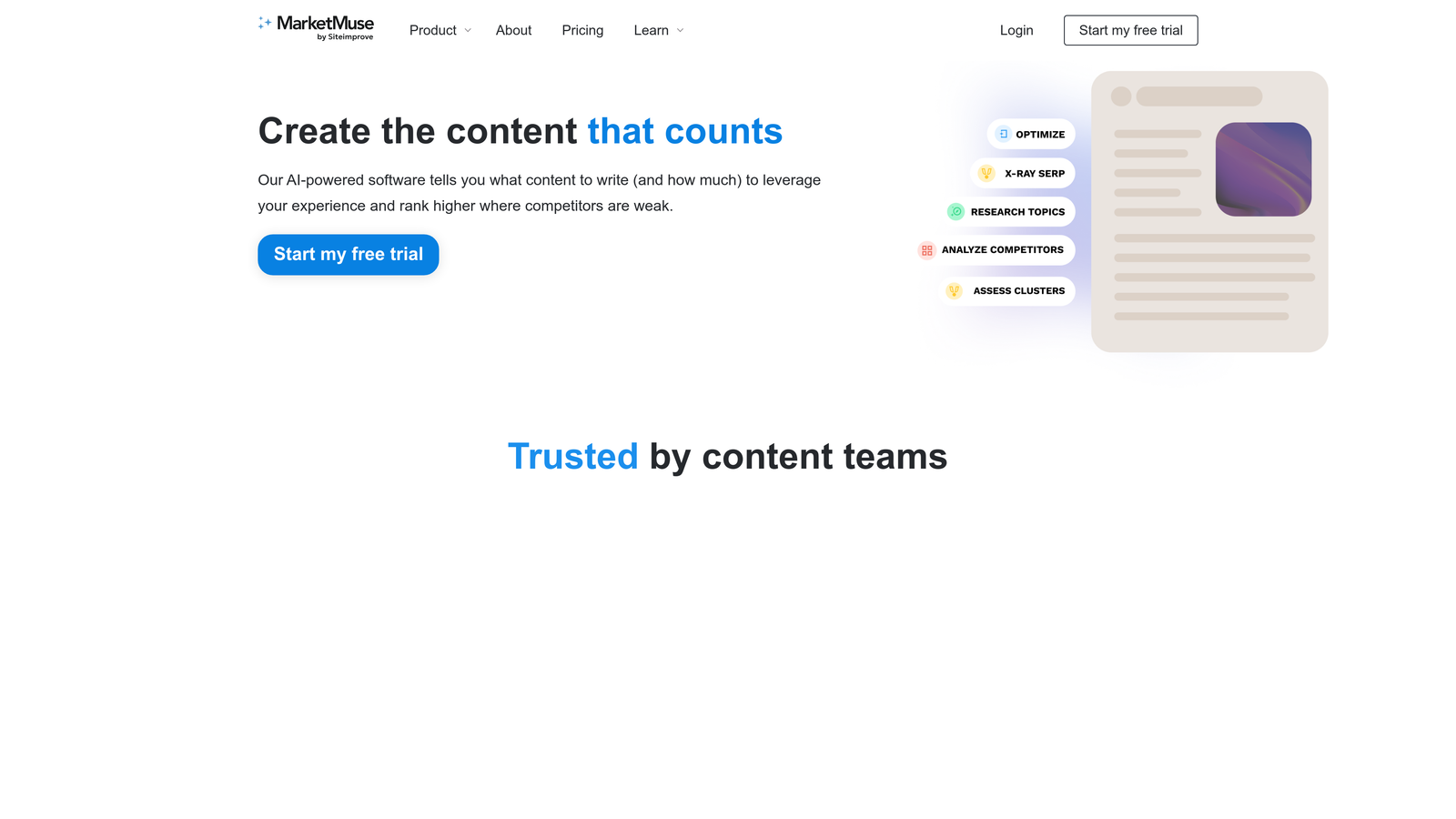
MarketMuse is an AI-powered content intelligence platform that analyzes your entire content library against competitors to identify exactly where you need to build authority.
Where This Tool Shines
MarketMuse's AI creates a comprehensive content inventory that maps your topical authority against competitors, revealing exactly which topics you're under-covering and where you have opportunities to dominate. Their Content Brief Builder generates detailed outlines based on AI analysis of hundreds of ranking pages, specifying not just keywords but the depth of coverage needed for each subtopic.
The platform's predictive analytics estimate ranking difficulty and traffic potential before you write a single word, helping prioritize content investments. For enterprise SEO teams, MarketMuse's ability to analyze thousands of pages simultaneously and generate strategic content plans makes it invaluable for large-scale content operations where manual planning would be impossible.
Key Features & Capabilities
AI-Powered Content Inventory: Analyzes topical authority across your entire site, identifying strengths and weaknesses in your content coverage.
Competitive Content Gap Analysis: Reveals opportunities competitors are missing and shows where they're outperforming you.
Automated Content Brief Generation: Creates detailed outlines with AI-determined topic depth requirements based on ranking page analysis.
Predictive Difficulty Scoring: Estimates keyword ranking difficulty based on your domain's current authority, helping prioritize efforts.
Content Optimization Recommendations: Provides specific suggestions for improving existing page performance through topic expansion.
Topic Modeling: Maps semantic relationships between content pieces to strengthen overall topical authority.
Content Planning Dashboard: Prioritizes content opportunities by potential impact, showing which topics to create or update first.
Best For / Ideal Users
Enterprise content teams managing hundreds or thousands of pages will find MarketMuse's strategic planning capabilities essential for maintaining content quality at scale. Large agencies managing complex SEO strategies across multiple clients benefit from the platform's ability to quickly assess content gaps and create data-driven roadmaps.
Companies building comprehensive resource hubs or establishing thought leadership in competitive niches need MarketMuse's topical authority mapping to ensure complete coverage. The platform is particularly valuable when managing content across multiple domains or brands where strategic planning prevents redundancy and identifies synergies.
Pricing
MarketMuse offers a free plan with limited features for testing the platform. Standard plans start at $149/month per user, while Team and Premium plans begin at $399/month with expanded analysis capabilities.
5. Frase
Best for: AI content research and question-based optimization
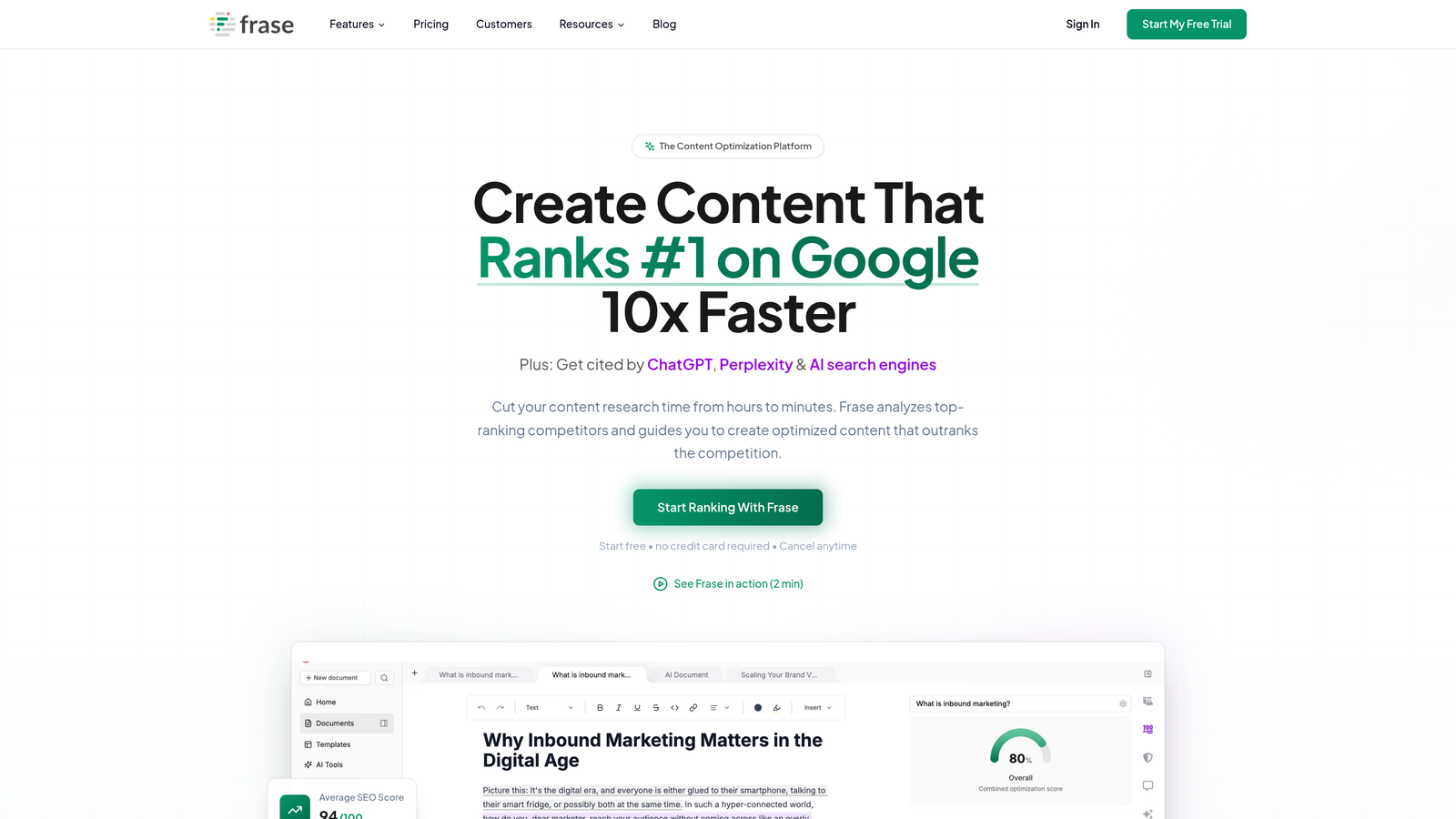
Frase combines AI-powered research with content optimization, specifically excelling at answering the questions your target audience is actually asking.
Where This Tool Shines
Frase's AI automatically extracts questions, statistics, and key concepts from top-ranking content, creating comprehensive research briefs in minutes rather than hours. The platform's question-based optimization approach aligns perfectly with how modern search engines prioritize content that directly answers user queries.
The real differentiator is Frase's dual optimization capability—it provides real-time SEO scoring for traditional search engines while simultaneously optimizing content to get cited by ChatGPT, Perplexity, and other AI search platforms. This GEO optimization ensures your content appears in AI-generated responses, not just traditional SERPs. The platform's AI Writer generates content sections based on your brief, while the optimization panel provides real-time feedback on topic coverage and semantic relevance as you write.
Frase excels at identifying "People Also Ask" opportunities and structuring content to capture featured snippets. For teams creating FAQ pages, knowledge bases, or informational content, Frase's ability to map the question landscape of any topic is unmatched. The platform's competitor content breakdown shows exactly how top-ranking pages address user questions, revealing gaps in your coverage.
Key Features & Capabilities
AI Research Assistant: Automatically extracts key information, statistics, and concepts from top-ranking pages to build comprehensive content briefs.
Question Discovery Tool: Identifies what audiences are actually asking about your topic, perfect for creating content that matches search intent.
Real-Time SEO and GEO Scoring: Tracks optimization for both traditional search engines and AI platforms like ChatGPT as you write.
AI Content Generator: Creates optimized sections based on research briefs, accelerating content production while maintaining quality.
SERP Analysis: Shows exactly how competitors structure their content and which questions they answer.
Performance Monitoring: Daily alerts notify you when content performance declines, enabling proactive optimization.
Answer Engine Optimization: Creates FAQ sections specifically optimized for featured snippets and AI citations.
Best For / Ideal Users
Content creators who spend significant time on research will find Frase transformative—the platform compresses hours of manual analysis into minutes. Customer support teams building knowledge bases benefit from the question-mapping capabilities that ensure comprehensive coverage of user concerns.
Marketers targeting question-based queries and featured snippets will appreciate how Frase structures content for maximum visibility.
6. Alli AI
Best for: Automated technical SEO and on-page optimization at scale
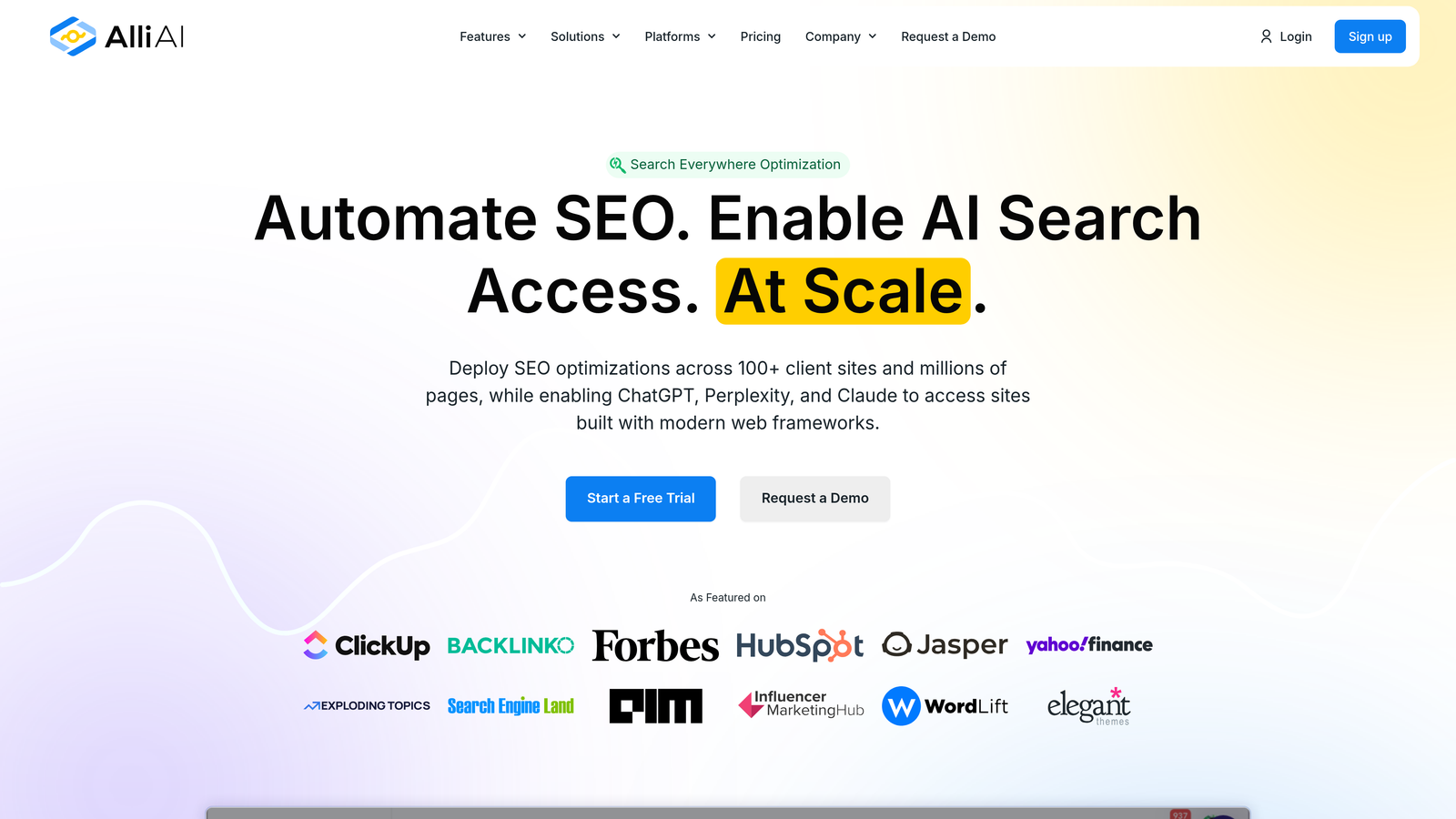
Alli AI automates technical SEO changes across your entire website without requiring developer resources, while simultaneously enabling visibility across 50+ AI search platforms.
Where This Tool Shines
Alli AI solves two critical challenges simultaneously: automating traditional SEO optimization at scale and ensuring your site is accessible to emerging AI search platforms. The platform's code injection system deploys optimization changes instantly across thousands of pages without touching your site's source code. This means you can optimize title tags, meta descriptions, header tags, and schema markup portfolio-wide in seconds rather than weeks.
What sets Alli AI apart is its dual focus on both Google optimization and AI search enablement. While traditional SEO tools optimize for conventional search engines, Alli AI ensures your content is crawlable and accessible to ChatGPT, Perplexity, Claude, and 50+ other AI platforms. Their unified dashboard shows performance across both traditional and AI search channels, providing visibility into the complete search landscape.
Key Features & Capabilities
AI Crawler Enablement Platform: Makes your site accessible to 50+ AI search platforms beyond traditional search engines, ensuring visibility in the emerging AI search ecosystem.
Portfolio-Wide SEO Automation: Deploy optimization changes across multiple websites simultaneously from a single dashboard, ideal for agencies and businesses managing multiple domains.
Live Editor with Real-Time Changes: Modify on-page elements instantly without editing source code, with A/B testing capabilities to validate optimization impact before full deployment.
AI Schema Markup Generator: Automatically creates and implements structured data across your site, helping search engines understand your content without manual coding.
Automated Internal Linking: Uses semantic analysis to identify and create relevant internal links across your site, strengthening topical authority and crawl efficiency.
Technical SEO Monitoring: Continuously scans for issues like broken links, missing alt text, and duplicate content, automatically resolving problems before they impact rankings.
Best For / Ideal Users
E-commerce managers with large product catalogs who need to optimize thousands of pages without manual editing will find Alli AI's automation capabilities transformative. The platform eliminates the bottleneck of implementing technical changes at scale.
Marketing agencies managing SEO for multiple clients benefit from the portfolio-wide deployment feature, allowing them to implement optimization strategies across all client sites simultaneously from a unified dashboard.
Enterprise SEO teams managing multiple domains or international sites appreciate the ability to deploy consistent optimization standards across their entire web presence without coordinating with multiple development teams.
7. NeuronWriter
Best for: AI content optimization with semantic analysis and competitor comparison
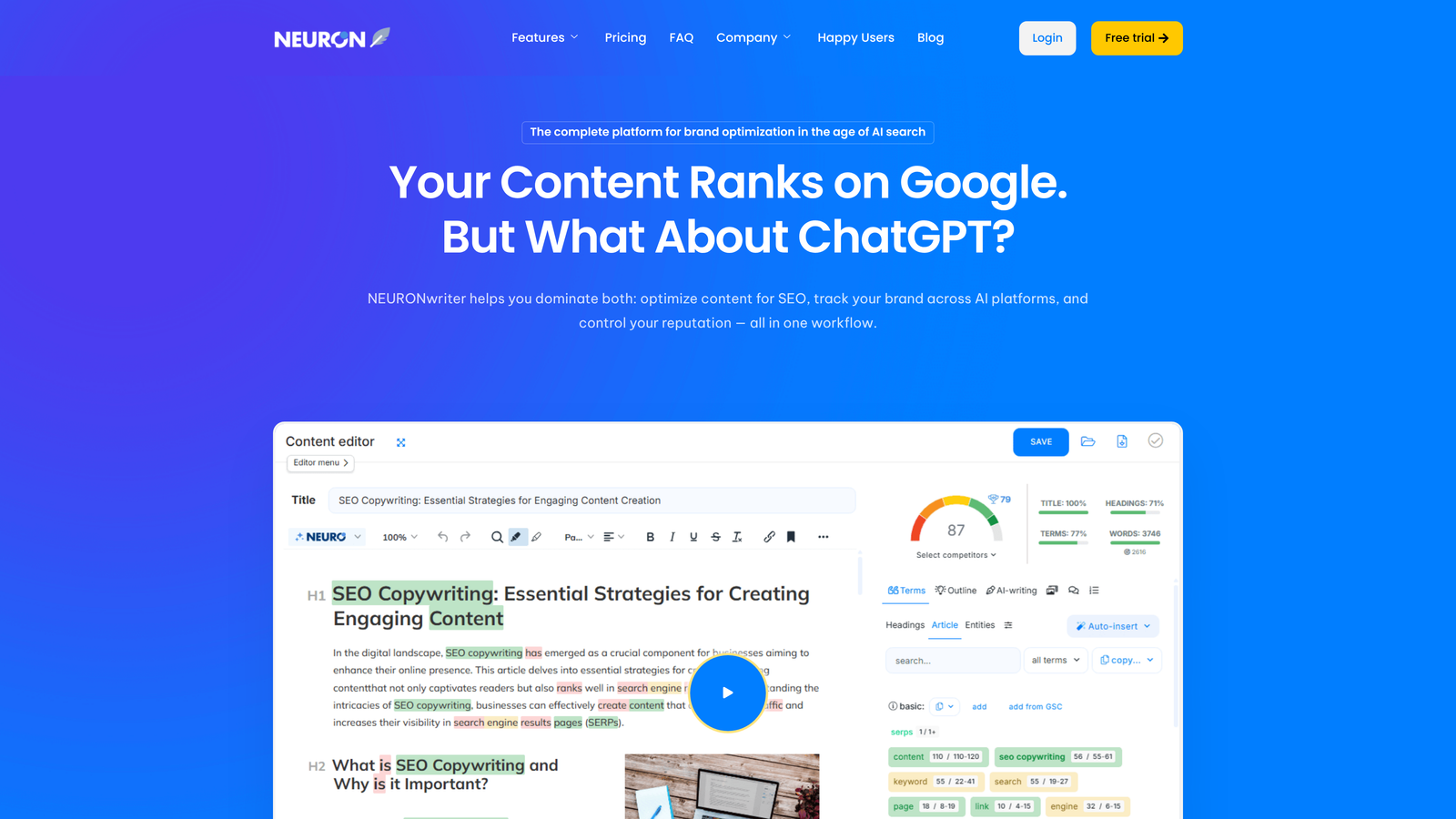
NeuronWriter combines natural language processing with competitive SERP analysis to create content that ranks through comprehensive topic coverage rather than keyword manipulation.
Where This Tool Shines
NeuronWriter's semantic models analyze how top-ranking pages structure information and cover related concepts, then translate those patterns into actionable optimization guidance. The platform goes beyond surface-level keyword matching to understand topic relationships—identifying which subtopics, entities, and concepts strengthen your content's relevance in search engines' eyes. Their real-time content editor shows exactly how your draft compares to competitors across dozens of semantic factors, highlighting coverage gaps that manual analysis would miss.
The platform excels at creating content that satisfies both algorithmic evaluation and human readers by focusing on comprehensive topic exploration rather than keyword density targets. Their outline generator builds hierarchical structures based on how successful content organizes information, giving you a data-driven framework before you write a single word.
Key Features & Capabilities
Semantic Analysis Engine: Uses NLP to identify topic relationships and concept coverage beyond simple keyword matching.
Competitor Content Comparison: Shows exactly how your content stacks up against top-ranking pages across relevance factors.
Real-Time Content Editor: Provides optimization scoring and suggestions as you write, with immediate feedback on semantic gaps.
AI-Powered Outline Generator: Creates hierarchical content structures based on analysis of top-ranking page organization.
Internal Linking Intelligence: Suggests relevant internal links based on semantic relationships between your content pieces.
Content Planning Dashboard: Manages multiple projects and keywords with organized workflow for teams.
Google Search Console Integration: Tracks performance metrics to validate optimization impact on rankings.
Best For / Ideal Users
SEO content writers and small agencies who need sophisticated semantic optimization without enterprise-level pricing will find NeuronWriter delivers exceptional value. The platform works particularly well for teams that understand SEO fundamentals but want AI to handle the detailed analysis and ensure nothing is missed in the optimization process.
Marketing teams producing regular content who need consistent optimization quality across multiple writers will appreciate the standardized framework NeuronWriter provides. It's ideal for those who recognize that modern search engines reward comprehensive topic coverage over keyword manipulation.
Pricing
NeuronWriter starts at $23/month for the Bronze plan with 25 content analyses, scaling to $57/month for Silver (75 analyses) and $97/month for Gold (150 analyses). Platinum plans offer unlimited analyses with team collaboration features for agencies managing multiple clients.
Putting It All Together
The AI-powered SEO landscape offers specialized solutions for every optimization challenge. Surfer SEO and Clearscope lead in content optimization with sophisticated scoring systems that eliminate guesswork from the writing process. MarketMuse excels when you need strategic content planning across large libraries, while Frase accelerates research for question-based content and featured snippet opportunities.
For technical SEO at scale, Alli AI's automation capabilities handle what would otherwise require extensive developer resources. NeuronWriter delivers enterprise-level semantic analysis at accessible pricing for smaller teams. And Sight AI addresses what traditional tools miss entirely—visibility in AI-powered search experiences that are rapidly becoming as important as Google rankings.
Your choice depends on your primary bottleneck. Content teams focused on production quality should prioritize Surfer SEO or Clearscope. Enterprise operations managing thousands of pages need MarketMuse's strategic planning or Alli AI's automation. Agencies balancing sophistication with budget constraints will find NeuronWriter offers exceptional value.
But here's what forward-thinking SEO teams recognize: the search landscape is splitting into traditional engines and AI-powered experiences. Optimizing for Google alone means missing the growing percentage of searches happening through ChatGPT, Perplexity, and other AI platforms. Start tracking your AI visibility today to ensure your content strategy addresses both current rankings and the future of search discovery.