When someone opens ChatGPT and asks "What's the best project management software for remote teams?" or queries Claude about "top email marketing platforms for SaaS companies," an invisible selection process happens in milliseconds. AI recommendation algorithms sift through their training data, evaluate countless brands, and decide which names make the final cut. Your brand either appears in that answer, or it doesn't.
For the 73% of B2B buyers who now use AI tools during their research process, these recommendations carry significant weight. Getting mentioned by AI assistants has become as critical as ranking on Google's first page once was.
The challenge? Most marketers have no visibility into how these algorithms perceive their brand. You can't optimize what you can't measure, and traditional SEO metrics don't translate directly to AI recommendation performance.
This guide provides a systematic approach to improving how AI recommendation algorithms evaluate and prioritize your brand. You'll learn how to establish your current baseline, structure content that AI models can comprehend and cite, build the authority signals these algorithms value, and create a measurement framework that tracks real progress.
Whether you're a SaaS founder watching competitors get recommended while your product stays invisible, or an agency managing AI visibility for multiple clients, these six steps offer a practical path from obscurity to consistent AI recommendations.
Step 1: Audit Your Current AI Visibility Baseline
You can't improve what you don't measure. Before optimizing anything, you need a clear picture of your current AI visibility across major platforms.
Start by querying ChatGPT, Claude, and Perplexity with the exact prompts your target audience would use. If you sell CRM software, don't just search for your brand name. Ask "What are the best CRM tools for small businesses?" or "Recommend affordable CRM options with strong automation features." These natural language queries reveal whether AI models include you in recommendation contexts.
Document every mention systematically. Create a spreadsheet tracking which models mention your brand, in what context, and with what sentiment. Note the position of your mention—first recommendation carries more weight than fifth. Pay attention to how AI models describe your product, what features they highlight, and whether the information is accurate. For a deeper dive into this process, explore our guide on how to track AI recommendations effectively.
The competitor analysis matters just as much as your own visibility. When AI models recommend alternatives, they're showing you the brands they consider authoritative in your space. Study these recommendations carefully. What do competitors who consistently appear have in common? Look at their content depth, how they describe their offerings, where they get mentioned across the web.
Sentiment analysis reveals critical insights. A mention isn't always positive. If Claude describes your platform as "powerful but difficult to set up," that's valuable feedback about how AI models have learned to characterize your brand. Neutral mentions that simply list your name without context suggest weak authority signals. Understanding sentiment analysis for AI recommendations helps you interpret these nuances accurately.
This baseline audit typically takes 3-4 hours done thoroughly, but it establishes the foundation for everything that follows. Run queries across different use cases, price points, and feature sets. Test variations of how people might describe their needs. Save screenshots and exact responses—you'll compare against these in Step 6.
The goal isn't just to know where you stand today. You're identifying the specific recommendation contexts where you're invisible, understanding why competitors appear instead, and pinpointing the gaps in how AI models understand your brand.
Step 2: Structure Content for Algorithmic Comprehension
AI models don't read content the way humans do. They parse structure, extract entities, and map relationships. Your content needs to speak their language.
Start with clear entity definitions. On your homepage and key product pages, explicitly state what your company does in the first paragraph. Not marketing fluff—concrete descriptions. "Sight AI is a SaaS platform that tracks brand mentions across AI models including ChatGPT, Claude, and Perplexity" works better than "Sight AI revolutionizes how modern brands understand their digital presence." AI models need unambiguous entity relationships to build accurate representations.
Schema markup provides structured data that AI training processes favor. Implement Organization schema with your company details, Product schema for your offerings, and Article schema for content. While schema was originally designed for search engines, the structured format helps AI models extract and verify information accurately. Many AI models trained on web data learned to weight schema-marked information as more reliable.
Create comprehensive, authoritative content that directly answers questions your audience asks AI assistants. Think beyond blog posts. Develop detailed product comparison pages, feature explanation guides, use case documentation, and implementation resources. AI models pulling from retrieval-augmented generation need substantial, well-organized content to cite.
Format matters more than you'd expect. Use clear heading hierarchies with H2s and H3s that outline your content structure. Break complex topics into digestible sections. Include definitions for technical terms. Create FAQ sections that address common questions. This hierarchical structure helps AI models parse your content, understand topic relationships, and extract relevant segments for recommendations. Mastering semantic search optimization techniques accelerates this process significantly.
The content depth principle applies here. A single 800-word blog post about "email marketing tips" won't establish authority. A comprehensive 3,500-word guide covering strategy, implementation, measurement, and common challenges signals expertise. AI models appear to favor thorough, authoritative sources over surface-level content.
Consistency across your digital presence reinforces algorithmic comprehension. Use the same product descriptions, feature lists, and company positioning across your website, documentation, and third-party profiles. Conflicting information confuses AI models and weakens your authority signals.
Update existing content regularly. AI models with retrieval capabilities favor recent, maintained content over outdated resources. A pricing page last updated in 2023 signals neglect. Fresh content demonstrates active authority in your domain.
Step 3: Build Authority Signals AI Models Recognize
AI recommendation algorithms don't just evaluate your own content. They synthesize information from across the web to determine which brands deserve mention. Authority comes from external validation.
Develop consistent brand mentions across authoritative third-party sources. This means getting featured in industry publications, appearing in software directories like G2 and Capterra, contributing expert commentary to relevant blogs, and participating in industry reports. Each mention reinforces to AI models that your brand belongs in recommendation contexts. Learn proven strategies to improve brand mentions in AI responses through systematic outreach.
Quality trumps quantity here. A mention in TechCrunch or a detailed review in a respected industry publication carries more weight than dozens of low-quality directory listings. AI models trained on web data learned to recognize authoritative sources and weight information from trusted publications more heavily.
Create content that gets cited and referenced by other publications. Original research, comprehensive guides, and unique perspectives naturally attract citations. When other sites link to your content as a reference, you're building the citation network that AI models use to evaluate authority. Think of it as the AI equivalent of academic citations—the more your work gets referenced, the more authoritative you become.
Establish topical authority through comprehensive coverage of your domain. If you sell project management software, publish extensively about project management methodologies, team collaboration, workflow optimization, and related topics. AI models assess whether you're a genuine authority or just another vendor. Comprehensive topical coverage signals expertise. Our AI recommendation optimization guide covers this authority-building process in detail.
Brand information consistency across all digital touchpoints matters more for AI than traditional SEO. Ensure your company description, product features, and positioning remain consistent across your website, LinkedIn, Crunchbase, product directories, press releases, and guest posts. Inconsistencies create confusion for AI models trying to build accurate brand representations.
The timeline for authority building extends beyond quick wins. Unlike on-page SEO changes that can show results in weeks, building genuine authority signals takes months of consistent effort. Focus on sustainable strategies: regular content publication, ongoing relationship building with industry publications, and continuous improvement of your product and its documentation.
Step 4: Optimize for Conversational Query Patterns
People ask AI assistants questions differently than they type into Google. Understanding these conversational patterns unlocks better recommendation visibility.
Research how your audience phrases questions to AI tools. Instead of typing "best CRM software," they ask "I'm running a 15-person sales team and need a CRM that integrates with Gmail and Slack. What do you recommend?" These detailed, context-rich queries require content that addresses specific use cases, not just generic feature lists. Implementing conversational search optimization techniques helps you capture these natural language queries.
Create content that directly answers natural language queries. Build pages around questions like "What's the best [product category] for [specific use case]?" rather than just "[Product Category] Features." A page titled "Best Project Management Software for Remote Teams with Distributed Time Zones" targets a specific conversational query pattern. Include the question itself in your content, then provide a comprehensive answer.
Comparison content positions your brand in recommendation contexts. When someone asks an AI assistant "Should I choose [Your Product] or [Competitor]?" you want authoritative content that AI models can reference. Create honest, detailed comparison pages that acknowledge competitor strengths while clearly articulating your differentiators. AI models favor balanced, informative comparisons over obvious sales pitches.
Address the specific problems and use cases AI users describe. People don't just ask for product recommendations—they describe their challenges. "I'm struggling with team communication across three time zones and need better asynchronous collaboration tools." Content that addresses these specific pain points, explains how your solution solves them, and provides implementation guidance becomes highly relevant for AI recommendations.
The conversational content format differs from traditional SEO content. Use second person ("you") throughout. Include transitional phrases that mirror natural speech patterns. Answer follow-up questions within the same content. If someone asks about pricing, anticipate they'll next wonder about implementation time, support options, and contract terms.
Test your content by asking AI assistants questions and seeing whether they cite your pages. If you've published a comprehensive guide about remote team project management but AI models never reference it when asked about that topic, something's missing. Either the content lacks authority signals, isn't indexed properly, or doesn't match the conversational patterns users actually employ.
Step 5: Accelerate Content Discovery and Indexing
Even perfect content can't influence AI recommendations if algorithms haven't discovered it yet. The gap between publishing and indexing represents lost opportunities.
Implement IndexNow for instant content submission to search engines. This protocol allows you to notify search engines immediately when you publish or update content, rather than waiting for traditional crawling cycles. Microsoft Bing, Yandex, and other search engines support IndexNow, and faster indexing means AI models with retrieval capabilities can discover your content sooner. Explore instant website indexing methods to implement this effectively.
Maintain always-updated sitemaps that reflect your latest content. Many sites generate sitemaps once and forget them. Dynamic sitemaps that automatically update when you publish new content ensure search engines and AI retrieval systems always have current information about your site structure. Include lastmod dates so systems can prioritize recently updated content. Understanding the automated sitemap generation benefits helps you implement this correctly.
Reduce the lag between publishing and AI model awareness. Traditional indexing could take days or weeks. For AI recommendation algorithms, especially those with real-time or near-real-time retrieval capabilities, faster discovery means faster inclusion in recommendation contexts. When you publish a comprehensive guide addressing a trending topic, you want AI models aware of it immediately, not three weeks later.
Monitor indexing status to ensure new content enters the recommendation pool. Use Google Search Console to verify pages are indexed. Check whether your content appears in Bing. For AI-specific visibility, query the major AI models directly after publishing important content to see how quickly they become aware of it. Our guide on how to improve content indexing speed provides detailed implementation steps.
The technical implementation matters less than the consistency. Whether you use automated tools, manual submissions, or a combination, the goal remains the same: minimize the time between content publication and algorithmic awareness. Every day your content remains undiscovered is a day of potential recommendations lost.
Consider content update velocity as well. When you update existing content with new information, ensure those updates get re-indexed quickly. AI models pulling from retrieval systems need to access your latest information, not outdated cached versions.
Step 6: Monitor, Measure, and Iterate on Results
Improving AI recommendation performance requires ongoing measurement and adjustment. Set up systems that track progress and inform strategy refinements.
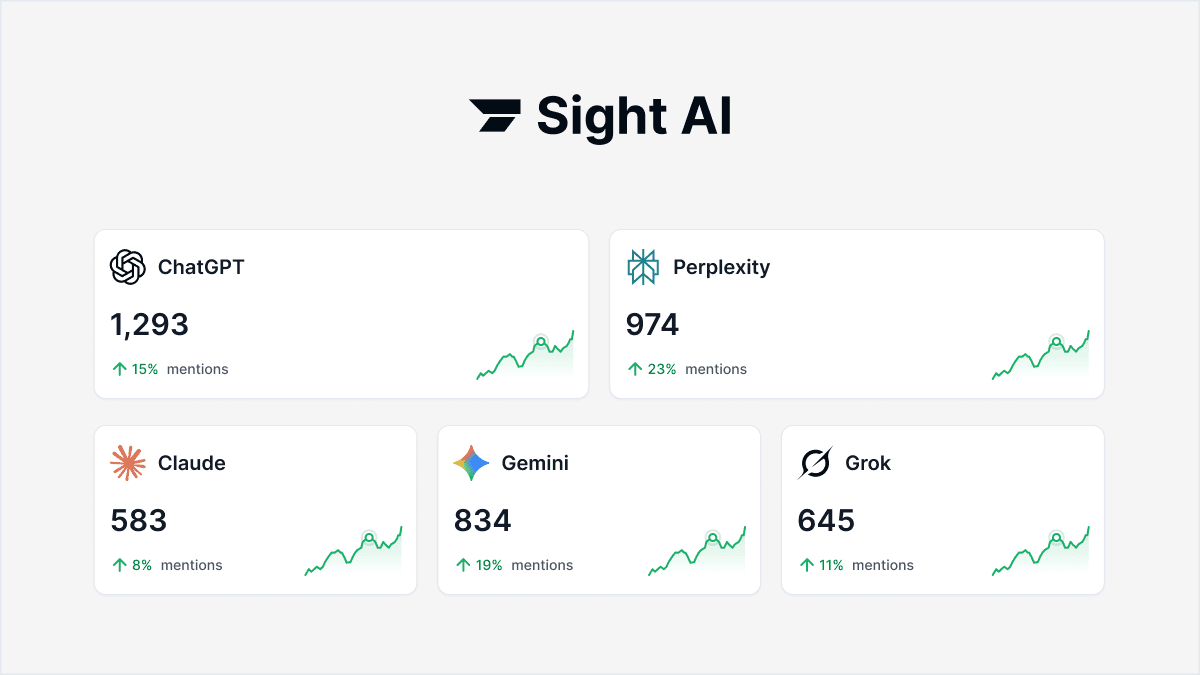
Establish regular AI visibility tracking across multiple models. Run the same queries you tested in Step 1 on a consistent schedule—weekly for competitive categories, monthly for more stable markets. Track changes in mention frequency, position, sentiment, and context. Create a dashboard that shows visibility trends over time. Tools for real-time brand monitoring across LLMs make this process manageable at scale.
Analyze which content improvements correlate with better recommendations. When you publish comprehensive comparison content and suddenly start appearing in competitive recommendation queries, you've identified a successful tactic. When you implement schema markup on product pages and notice more accurate AI descriptions of your offerings, that's actionable feedback. Connect your optimization efforts to measurable visibility changes.
Track prompt variations to understand recommendation triggers. The same product might get recommended for "best CRM for small businesses" but not for "affordable CRM with strong automation." These variations reveal which contexts AI models associate with your brand and which remain gaps. Expand content to cover underperforming query patterns. Learn more about how to monitor AI-generated recommendations systematically.
Adjust strategy based on competitive movement and algorithm updates. AI models get updated regularly, and competitors continuously optimize their presence. What worked last quarter might become less effective. Stay flexible and responsive to changes in the recommendation landscape.
The measurement framework should include both quantitative and qualitative metrics. Quantitative: mention frequency across models, position in recommendation lists, number of query types triggering mentions. Qualitative: accuracy of AI descriptions, sentiment of mentions, relevance of recommendation contexts.
Document what you learn. When a specific content format drives visibility improvements, replicate that approach. When certain authority-building tactics show no impact, redirect those resources. AI recommendation optimization is still an emerging discipline—your measurement data becomes your competitive advantage.
Your Path to Better AI Recommendations
Improving how AI recommendation algorithms perceive and prioritize your brand isn't a one-time project. It's a systematic approach that builds over time: audit your baseline to understand current visibility, structure content so AI models can comprehend and cite it, build authority signals through external validation, optimize for the conversational patterns people actually use, accelerate content discovery to minimize indexing lag, and continuously monitor results to refine your strategy.
Use this checklist to track your progress:
☐ Baseline audit complete with documented competitor analysis across ChatGPT, Claude, and Perplexity
☐ Content restructured with schema markup and clear entity definitions
☐ Third-party mentions and citations growing through authoritative sources
☐ Conversational content addressing natural language queries your audience uses
☐ Automated indexing ensuring rapid content discovery
☐ Regular AI visibility tracking in place with trend analysis
Start with Step 1 today. Understanding where you currently stand in AI recommendations provides the foundation for every improvement that follows. Query the major AI models with your target audience's questions. Document which competitors appear and why. Establish your baseline metrics.
The brands that will dominate AI recommendations over the next few years are the ones taking action now, while most competitors remain unaware this channel even exists. Start tracking your AI visibility today and see exactly where your brand appears across top AI platforms, what content opportunities exist, and how to systematically improve your presence in the recommendations that matter most to your growth.