When someone asks ChatGPT for the best project management tools or queries Claude about top email marketing platforms, does your brand show up in the response? For most companies, the answer is no—and they don't even know it. AI-powered search engines are fundamentally changing how people discover brands, and the traditional playbook of ranking on Google's first page no longer guarantees visibility where conversations are actually happening.
Think of AI models as the world's most influential word-of-mouth network. When these systems recommend products or services, they're not pulling from paid ads or sponsored content. They're synthesizing information from across the web to form opinions about which brands deserve mention. Your brand either exists in that knowledge base with strong, positive associations—or it's invisible when potential customers ask for recommendations.
The challenge? AI visibility doesn't follow the same rules as traditional SEO. You can't simply optimize for keywords and build backlinks. AI models evaluate content differently, weighing factors like entity recognition, cross-source validation, and content structure in ways that many marketers haven't adapted to yet.
This guide breaks down the exact process for getting AI models to recognize, trust, and recommend your brand. You'll learn how to audit your current visibility, create content that AI systems can actually parse and cite, build the external validation these models look for, and monitor your progress as AI behavior evolves. By the end, you'll have a concrete action plan for positioning your brand where the next generation of search is happening right now.
Step 1: Audit Your Current AI Visibility Baseline
You can't improve what you don't measure. Before making any changes, you need to understand exactly how AI models currently perceive your brand—or if they recognize it at all.
Start by testing your brand across the major AI platforms: ChatGPT, Claude, Perplexity, and Google Gemini. But don't just ask "What is [Your Brand]?" That's too direct and won't reveal how you appear in real-world discovery scenarios. Instead, use prompts that mirror how your potential customers actually search.
If you sell project management software, try prompts like "What are the best project management tools for remote teams?" or "Compare top project management platforms for agencies." If you're a marketing consultant, test "Who are the leading experts in B2B content strategy?" Watch carefully—does your brand appear? Where does it rank compared to competitors? What specific attributes or use cases does the AI associate with your brand?
Document everything systematically. Create a spreadsheet tracking which prompts trigger mentions, which don't, and the exact context in which your brand appears. This reveals critical content gaps. If AI mentions you for one use case but not others you serve, that's a signal about where your content authority is weak.
Here's where competitive intelligence becomes valuable: Run the same prompts for your top three competitors. Notice patterns in how AI describes them, what sources it cites, and which features or benefits it emphasizes. AI models aren't creating these associations randomly—they're pulling from content patterns across the web. If competitors consistently get mentioned and you don't, their content strategy is better aligned with how AI chatbots mention brands.
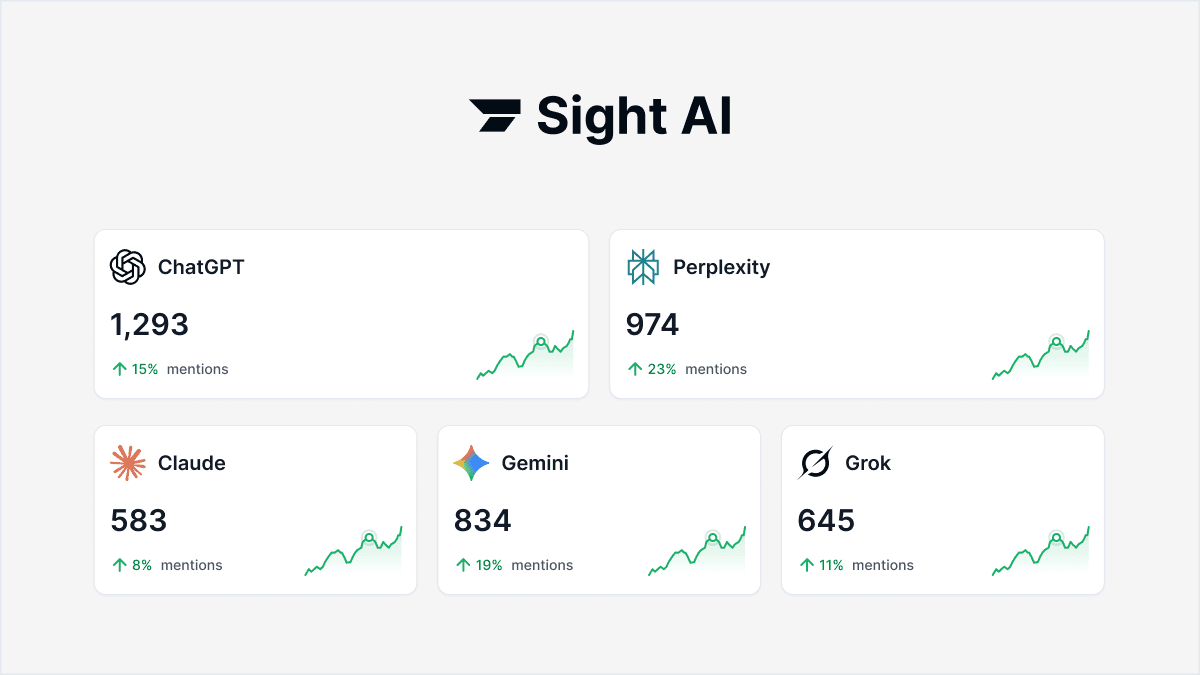
Manual testing gives you qualitative insights, but you need quantitative tracking for ongoing optimization. AI brand mentions tracking tools monitor your brand mentions across platforms automatically, tracking changes over time and alerting you to new mention patterns. This baseline data becomes your benchmark—the starting point against which you'll measure every optimization effort that follows.
The most important outcome of this audit isn't just knowing where you stand today. It's identifying the specific prompts and contexts where you should appear but don't. Those gaps become your content roadmap for the next steps.
Step 2: Create Entity-Rich Content That AI Models Can Parse
AI models don't read content the way humans do. They extract entities, relationships, and factual claims they can cite with confidence. If your content doesn't explicitly state what your brand does, who it serves, and what problems it solves, AI systems struggle to include you in relevant responses.
Start with clear, definitive statements about your brand and offerings. Instead of clever marketing copy like "We help teams work smarter," write "Acme Project Manager is a task management platform designed for remote teams of 10-50 people, featuring real-time collaboration, automated workflows, and integrated time tracking." AI models can extract and cite that second version because it contains specific, factual claims.
Structure your content to answer direct questions. Create dedicated pages or sections that address "What is [Your Product]?", "How does [Your Service] work?", and "Who should use [Your Solution]?" This Q&A format aligns perfectly with how people query AI systems and how those systems extract information to formulate answers.
Topic clusters establish domain authority that AI models recognize. Instead of scattered blog posts about random topics, build comprehensive content hubs around your core expertise areas. If you're a cybersecurity company, create an interconnected cluster covering "network security," "threat detection," "compliance frameworks," and "incident response"—with your brand positioned as the authoritative source throughout.
Each piece in your cluster should link to related content, creating a semantic web that signals expertise depth. When AI models crawl your site, this structure helps them understand not just individual pages, but your overall authority in the domain. The more comprehensive and interconnected your coverage, the more likely AI systems will reference you as a credible source.
Technical implementation matters too. Implement schema markup—structured data that explicitly tells AI systems what your content represents. Use Organization schema to define your brand, Product schema for offerings, and FAQ schema for question-answer content. While schema was originally designed for search engines, AI models leverage this structured information to understand context and relationships.
Write with specificity and avoid vague claims. "Our platform increases productivity" is weak. "Our platform reduces project completion time by streamlining task assignment and eliminating status update meetings" gives AI models concrete attributes to associate with your brand. The more specific and factual your content, the more confidently AI systems can cite you.
One often-overlooked element: use cases and examples. AI models frequently pull from case study content and real-world application examples. When you document how specific customer types use your solution to solve specific problems, you're creating exactly the kind of contextual information AI needs to recommend you appropriately. Understanding how AI models choose brands to recommend helps you create content that meets their criteria.
Step 3: Build Authoritative Backlinks and Third-Party Mentions
AI models don't just trust what you say about yourself. They cross-reference information across multiple sources, and external validation carries significant weight in their recommendation algorithms.
Think about how you evaluate a new restaurant. One glowing review on the restaurant's own website means little. But when you see consistent positive mentions across food blogs, local news coverage, and review platforms, you trust the consensus. AI models operate similarly—they look for corroboration across independent sources before confidently recommending a brand.
Industry publications and authoritative media sites provide the strongest signals. A mention in TechCrunch, Forbes, or a respected trade publication tells AI models that credible third parties recognize your brand. Pursue guest posting opportunities, expert commentary requests, and journalist queries in your industry. Each published mention becomes a data point in the AI model's understanding of your authority.
Review platforms and business directories matter more than you might think. G2, Capterra, Trustpilot, and industry-specific directories often appear in AI training data. Claim and fully optimize your profiles on these platforms. Complete every field, upload media, and actively collect reviews. When AI models see your brand consistently represented across these trusted platforms, it reinforces your legitimacy.
Strategic partnerships and co-marketing create natural mention opportunities. When you collaborate with complementary brands on content, webinars, or joint solutions, you generate cross-references that AI models recognize. These aren't just backlinks—they're contextual associations that help AI understand your brand's ecosystem and relevance.
Quality trumps quantity in every dimension. One mention in a highly authoritative industry publication carries more weight than dozens of low-quality directory listings. AI models have become sophisticated at evaluating source credibility, similar to how traditional search engines assess link quality. Focus your efforts on earning mentions from sources that your target audience actually trusts and references.
Expert positioning through thought leadership creates persistent associations. When you consistently contribute insights to industry discussions—whether through quoted expertise in articles, speaking engagements covered by media, or original research cited by others—you build a pattern of authority that AI models recognize and reference.
The goal isn't just getting your brand name mentioned. It's ensuring those mentions appear in contexts that associate your brand with the specific problems, solutions, and use cases you want to be known for. Strategic external validation shapes how AI models categorize and recommend your brand when relevant queries arise. If you're struggling with visibility, explore best ways to get mentioned by AI to accelerate your progress.
Step 4: Optimize Technical Discoverability for AI Crawlers
Even the best content won't influence AI models if those systems can't efficiently access and understand it. Technical optimization ensures your content makes it into the knowledge bases that AI models reference.
The llms.txt file is emerging as a standard specifically designed for AI systems. This simple text file, placed in your site's root directory, provides AI-friendly summaries of your site's purpose, key pages, and content structure. Think of it as a roadmap that helps AI crawlers quickly understand what your site offers and where to find authoritative information. Include clear descriptions of your brand, main product categories, and links to your most important content.
Fast indexing determines how quickly new content influences AI models. Implement IndexNow, a protocol that instantly notifies search engines and AI systems when you publish or update content. Instead of waiting for crawlers to discover changes, you're proactively pushing updates. This matters because AI models periodically refresh their knowledge bases—the faster your content gets indexed, the sooner it can influence AI responses. Learn more about how to get indexed faster by Google to improve your discoverability.
Your sitemap serves as a comprehensive inventory of your content. Keep it updated automatically, ensure it includes all important pages, and submit it to search engines regularly. AI crawlers use sitemaps to efficiently discover and prioritize content for inclusion in their training data.
URL structure and metadata signal content relevance. Use descriptive URLs that clearly indicate page topics—/solutions/project-management-for-agencies is better than /product-page-7. Write meta descriptions that concisely explain page content, as AI systems often use this metadata to understand context before processing full content.
Remove technical barriers that block AI crawlers. Check your robots.txt file to ensure you're not accidentally preventing AI systems from accessing important content. Monitor for broken links, redirect chains, and server errors that create friction in the crawling process. Site speed matters too—faster sites get crawled more efficiently and thoroughly.
Mobile optimization isn't just for human users. Many AI crawlers prioritize mobile-friendly content, reflecting the reality that much of the web is now mobile-first. Ensure your content renders properly on all devices and that your mobile experience doesn't hide or degrade important information.
The technical foundation you build here doesn't create AI visibility on its own. But it ensures that all the content work you're doing in other steps actually reaches the AI systems you're trying to influence. Think of technical optimization as removing friction from the path between your content and AI model knowledge bases.
Step 5: Develop Consistent Brand Messaging Across All Channels
AI models are exceptional at spotting inconsistencies. When your website describes your company one way, your LinkedIn profile says something different, and press releases use yet another positioning, AI systems struggle to form a coherent understanding of your brand—and that confusion leads to omission.
Start with your core brand description. Write a definitive 2-3 sentence explanation of what your company does, who you serve, and what makes you different. This becomes your canonical description that appears identically across every platform: your website's About page, social media bios, business directory listings, and press materials.
Value propositions and key messaging need the same consistency. If you claim to be "the fastest project management platform" in one place and "the most intuitive collaboration tool" in another, AI models don't know which attribute to associate with your brand. Choose your core differentiators and use identical language everywhere.
Terminology consistency matters more than you might expect. If you sometimes call your offering a "platform," sometimes a "tool," and sometimes a "solution," AI models see these as potentially different things. Standardize your terminology and stick with it. This doesn't mean your content should be robotic—it means your core product and feature names should remain consistent even as you vary surrounding language.
Audit your existing content for contradictions. Many companies evolve their positioning over time without updating older content. The result is a confusing mix of old and new messaging scattered across the web. Update outdated blog posts, refresh old press releases if they're still indexed, and ensure archived content doesn't contradict your current positioning.
Social media profiles deserve special attention because they're frequently referenced by AI systems. Your LinkedIn company page, Twitter/X bio, and other social profiles should mirror your website's core messaging. These platforms often appear in AI training data, so inconsistencies here directly impact how AI models understand your brand.
Employee communications create another consistency layer. When your team members describe the company differently in their social posts, guest articles, or speaking engagements, it adds noise to the signal AI models are trying to interpret. Provide your team with approved brand messaging they can adapt while maintaining core consistency.
The goal isn't to make all your content sound identical. It's to ensure that the fundamental facts about your brand—what you do, who you serve, what problems you solve—remain consistent across every source AI models might reference. This consistency builds confidence in AI systems that they're accurately representing your brand when they mention you. If your brand is not mentioned by AI, inconsistent messaging could be a contributing factor.
Step 6: Monitor, Measure, and Iterate Your AI Visibility Strategy
AI visibility isn't a set-it-and-forget-it achievement. AI models continuously update their knowledge bases, competitor strategies evolve, and new content patterns emerge. Ongoing monitoring turns your initial efforts into a sustainable competitive advantage.
Establish a regular testing schedule for the prompts you identified in Step 1. Monthly testing across major AI platforms reveals trends: Are you gaining mentions? Losing ground? Appearing in new contexts? These patterns guide your content priorities. If you're suddenly getting mentioned for a use case you barely cover, that's an opportunity to create more authoritative content in that area.
Sentiment analysis adds crucial depth beyond simple mention tracking. Getting mentioned is good, but how AI models describe you matters enormously. Are the mentions positive and accurate? Do they highlight your strengths or focus on limitations? If AI consistently mentions a competitor's advantage over you, that signals a content gap you need to address with comparative content that tells your side of the story. Learn how to track brand sentiment online to understand the full picture.
Track new prompt patterns as they emerge. The questions people ask AI systems evolve constantly. Set up alerts for industry trends and new search behaviors in your space. When you notice new query patterns gaining traction, create content that positions your brand as the answer before competitors do.
Competitive monitoring remains essential throughout. What new content are competitors publishing? Where are they earning new mentions? What associations are AI models forming with their brands? This intelligence helps you identify gaps in your own strategy and opportunities to differentiate.
Measure content performance through the AI visibility lens. Which pieces of content correlate with increased AI mentions? Which formats and topics generate the entity-rich signals AI models favor? Double down on what's working and phase out content approaches that aren't moving the needle.
AI model behavior changes over time as systems are retrained and updated. A content strategy that works brilliantly with one version of ChatGPT might need adjustment when the next version launches. Stay informed about major AI model updates and test your visibility immediately after significant changes to understand impact.
Create a feedback loop between monitoring and content creation. Use visibility gaps you discover to inform your editorial calendar. When you notice competitors mentioned for topics where you have equal or better expertise, that becomes a content priority. When you see your brand mentioned but with incomplete or inaccurate information, create definitive content that gives AI models better source material. Tools that monitor brand mentions across AI platforms make this process systematic and scalable.
The brands winning in AI visibility aren't necessarily those with the biggest budgets or most content. They're the ones treating AI visibility as an ongoing optimization discipline—measuring systematically, learning from data, and continuously refining their approach based on what actually influences AI model behavior.
Putting It All Together: Your Path to AI Visibility
Getting AI models to mention your brand requires a systematic approach that combines content strategy, technical optimization, and external validation. It's not about gaming algorithms or finding shortcuts—it's about building the genuine authority and clear positioning that AI systems need to confidently recommend you.
Start with your audit to understand where you stand today. That baseline data reveals exactly where to focus your efforts for maximum impact. Then move methodically through creating entity-rich content that AI can parse, building the external validation that signals credibility, optimizing your technical foundation, and ensuring consistency across every touchpoint.
The monitoring piece is what separates temporary gains from sustainable visibility. AI-powered search is still evolving rapidly, and the brands that adapt as it changes will dominate recommendations while others wonder why they're invisible. Treat AI visibility as an ongoing discipline, not a one-time project.
Remember that AI mentions compound over time. Each piece of authoritative content you publish, each external mention you earn, and each technical improvement you make builds on previous efforts. The brands investing in AI visibility now are establishing positions that will be increasingly difficult for competitors to overcome as AI-powered search becomes the primary way people discover solutions.
The opportunity is still wide open. Most companies haven't started thinking strategically about AI visibility, which means early movers can establish dominant positions before their markets become saturated. But that window is closing as more brands recognize that AI-powered search isn't the future—it's already reshaping discovery today.
Stop guessing how AI models like ChatGPT and Claude talk about your brand—get visibility into every mention, track content opportunities, and automate your path to organic traffic growth. Start tracking your AI visibility today and see exactly where your brand appears across top AI platforms.