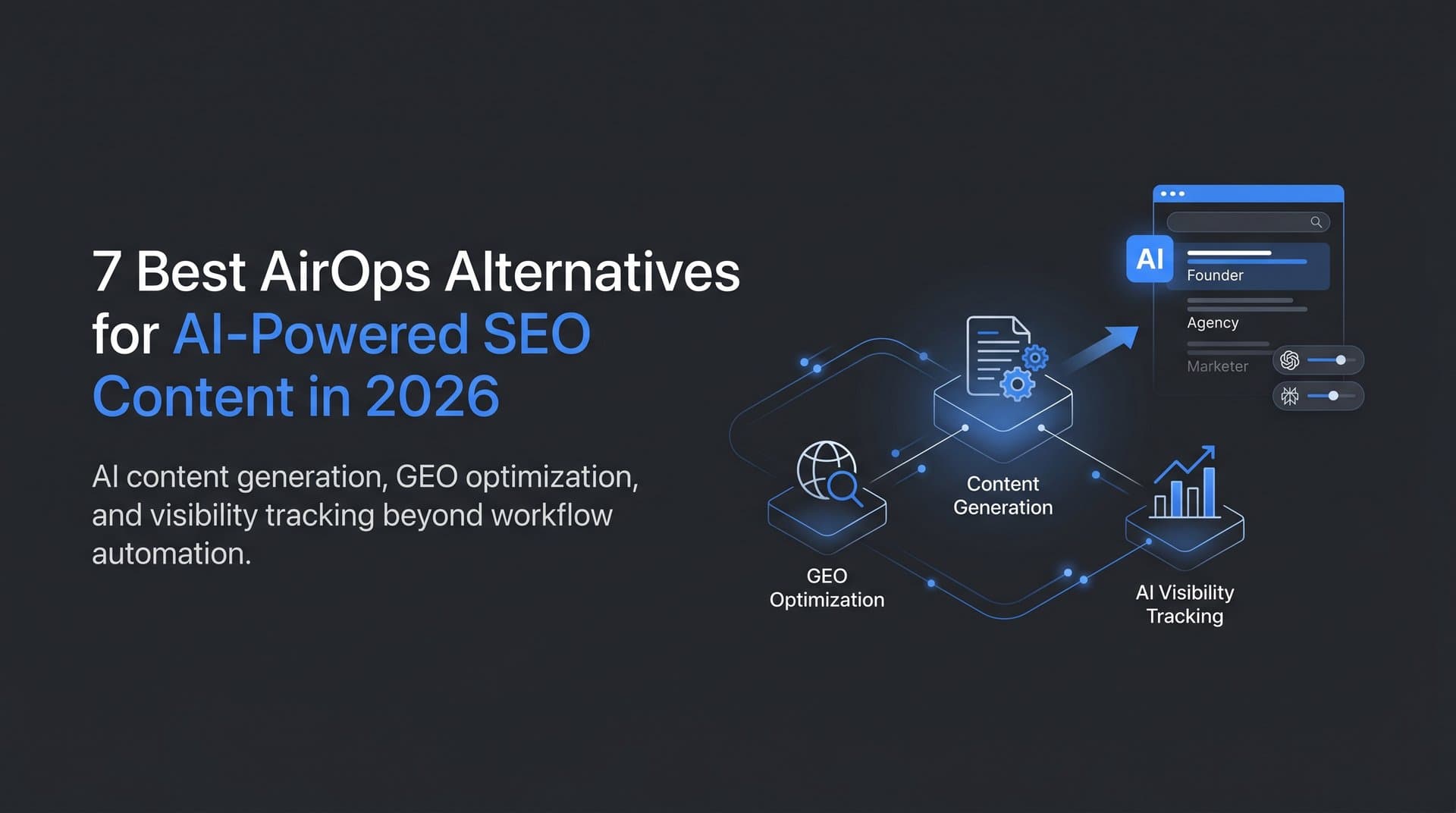
Content optimization tools have evolved dramatically since Frase IO first made waves in the SEO community. While Frase remains a solid choice for many teams, the landscape has shifted. AI search engines like ChatGPT, Claude, and Perplexity are changing how people discover content, and traditional SEO tools weren't built for this new reality.
Maybe you're hitting Frase's pricing ceiling as your team grows. Perhaps you need deeper AI capabilities or better integration with your existing stack. Or you've realized that ranking in Google isn't enough anymore—you need visibility in AI search results too.
The right alternative depends on your specific workflow. Are you primarily optimizing existing content, or generating new pieces at scale? Do you need enterprise-grade collaboration features, or are you a solopreneur looking for straightforward tools? And critically: are you preparing for the future of search, where AI models become primary discovery channels?
We've evaluated seven alternatives based on their core strengths: content generation capabilities, optimization accuracy, AI search readiness, pricing structure, and integration ecosystem. Each tool excels in different scenarios, and understanding these distinctions will help you make the right choice for your content operation.
1. Sight AI - The AI Visibility Pioneer
The Challenge It Solves
Traditional SEO tools show you where you rank in Google, but they can't tell you if ChatGPT recommends your product or if Claude mentions your brand. As AI search adoption accelerates, this blind spot becomes critical. You're creating content without knowing if it's actually making your brand visible in the channels where your audience is increasingly searching.
Most content teams are flying blind when it comes to AI visibility. They optimize for traditional search engines while missing the conversation happening in AI models that millions of users consult daily.
The Strategy Explained
Sight AI approaches content optimization from a fundamentally different angle. Instead of just helping you rank in Google, it tracks how AI models like ChatGPT, Claude, and Perplexity talk about your brand across thousands of prompts. You get an AI Visibility Score that shows exactly where your brand appears, with sentiment analysis and specific prompt tracking.
The platform combines this visibility tracking with content generation capabilities designed specifically for AI search optimization. Thirteen specialized AI agents work together to create articles that don't just target keywords—they're structured to get your brand mentioned when people ask AI models for recommendations.
This dual approach means you're not just creating content and hoping it performs. You're tracking actual brand mentions in AI responses and generating new content strategically based on where opportunities exist.
Implementation Steps
1. Connect your brand to Sight AI's monitoring system to establish your baseline AI Visibility Score across major AI platforms.
2. Review the prompt tracking dashboard to identify which queries trigger brand mentions and which represent missed opportunities.
3. Use the AI Content Writer with Autopilot Mode to generate GEO-optimized articles targeting your opportunity gaps, then leverage IndexNow integration for immediate indexing.
Pro Tips
Focus on the sentiment analysis feature to understand not just where you're mentioned, but how AI models characterize your brand. This qualitative insight often reveals positioning opportunities that traditional keyword research misses. The platform's automatic sitemap updates and CMS publishing capabilities mean you can move from insight to published content faster than traditional workflows allow.
2. Surfer SEO - The SERP Analysis Powerhouse
The Challenge It Solves
You're staring at a blank document, wondering how long your article should be, which keywords to include, and how to structure your headers. Guesswork leads to content that misses the mark, requiring extensive revisions or worse—publishing pieces that never gain traction because they don't align with what's actually ranking.
Without data-driven guidance, content creation becomes a time-consuming cycle of writing, publishing, waiting for results, then revising based on performance. This reactive approach wastes resources and delays results.
The Strategy Explained
Surfer SEO analyzes the top-ranking pages for your target keyword and extracts patterns: optimal word count ranges, keyword density, heading structure, and semantic terms to include. As you write, the Content Editor provides real-time scoring, showing exactly how your draft compares to top performers.
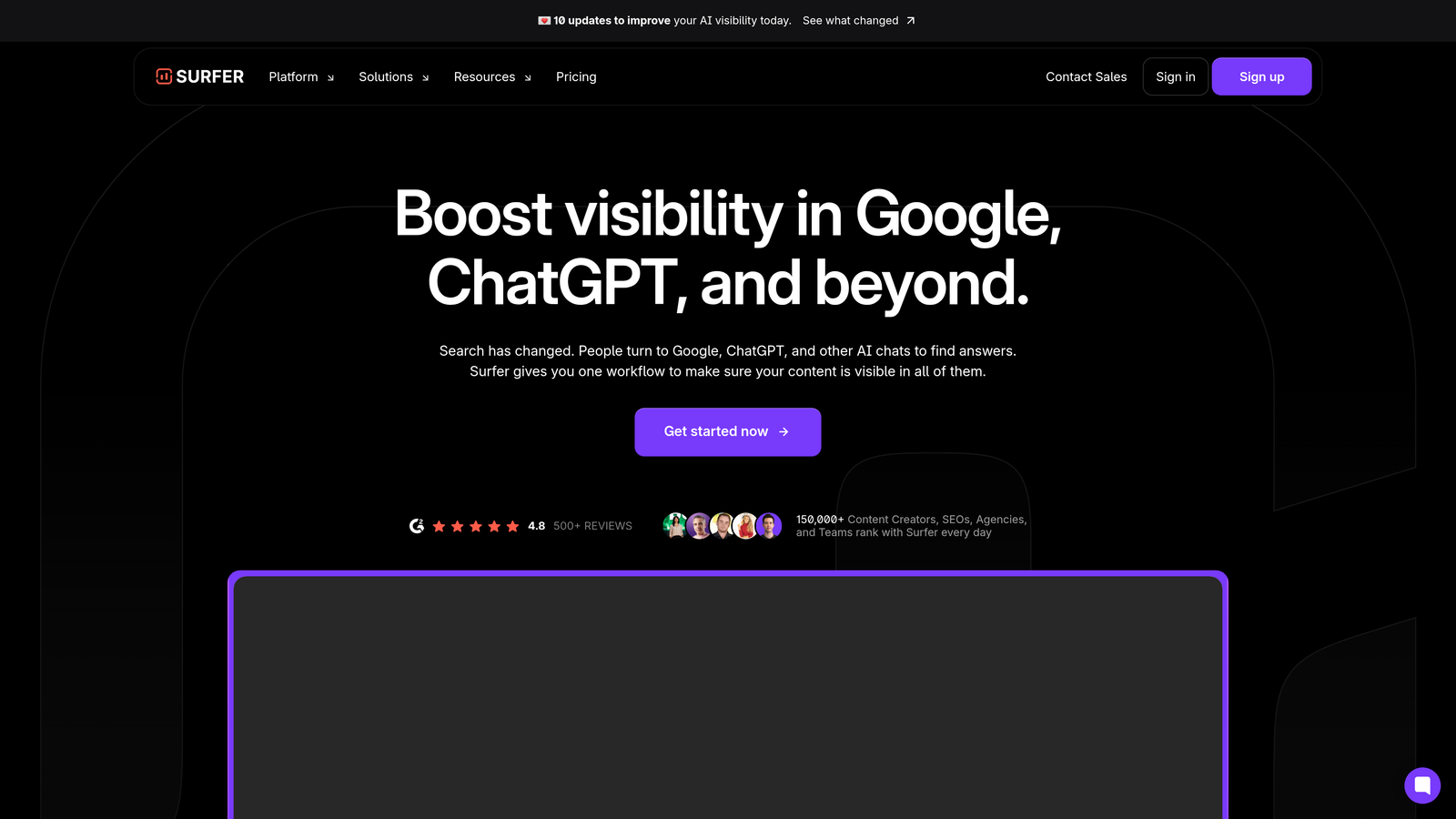
The platform's strength lies in its SERP-based approach. Rather than relying on generic SEO rules, it tells you what's actually working for your specific keyword right now. The Outline Builder suggests heading structures based on competitor analysis, while the keyword research tool identifies related terms that strengthen topical authority.
Integration with Google Docs and WordPress means you can optimize content directly in your existing workflow without copying between platforms.
Implementation Steps
1. Enter your target keyword in the Content Editor to generate an optimization blueprint based on current SERP analysis.
2. Review the suggested outline and keyword list, adapting recommendations to match your unique angle while maintaining topical coverage.
3. Write or paste your content into the editor, watching the real-time score and addressing specific recommendations until you reach the target range.
Pro Tips
Don't chase a perfect score at the expense of readability. Surfer's recommendations work best as guidelines rather than rigid requirements. Pay special attention to the NLP terms section—these semantic keywords often matter more than exact-match phrases for establishing topical authority. The Audit feature is particularly valuable for refreshing existing content that's slipping in rankings.
3. Clearscope - The Enterprise Content Intelligence Platform
The Challenge It Solves
Large content teams struggle with consistency. Different writers interpret briefs differently, editors lack objective standards for evaluating drafts, and there's no clear way to ensure every piece meets quality thresholds before publication. This inconsistency dilutes your content's effectiveness and makes scaling difficult.
Enterprise organizations need more than optimization tools—they need systems that enforce standards, facilitate collaboration, and integrate with existing content workflows across multiple departments and stakeholders.
The Strategy Explained
Clearscope provides comprehensive content grading that evaluates readability, keyword usage, and topical relevance against a consistent standard. The platform's strength lies in its collaboration features: multiple team members can review and comment on drafts, with clear grade thresholds that define when content is ready for publication.
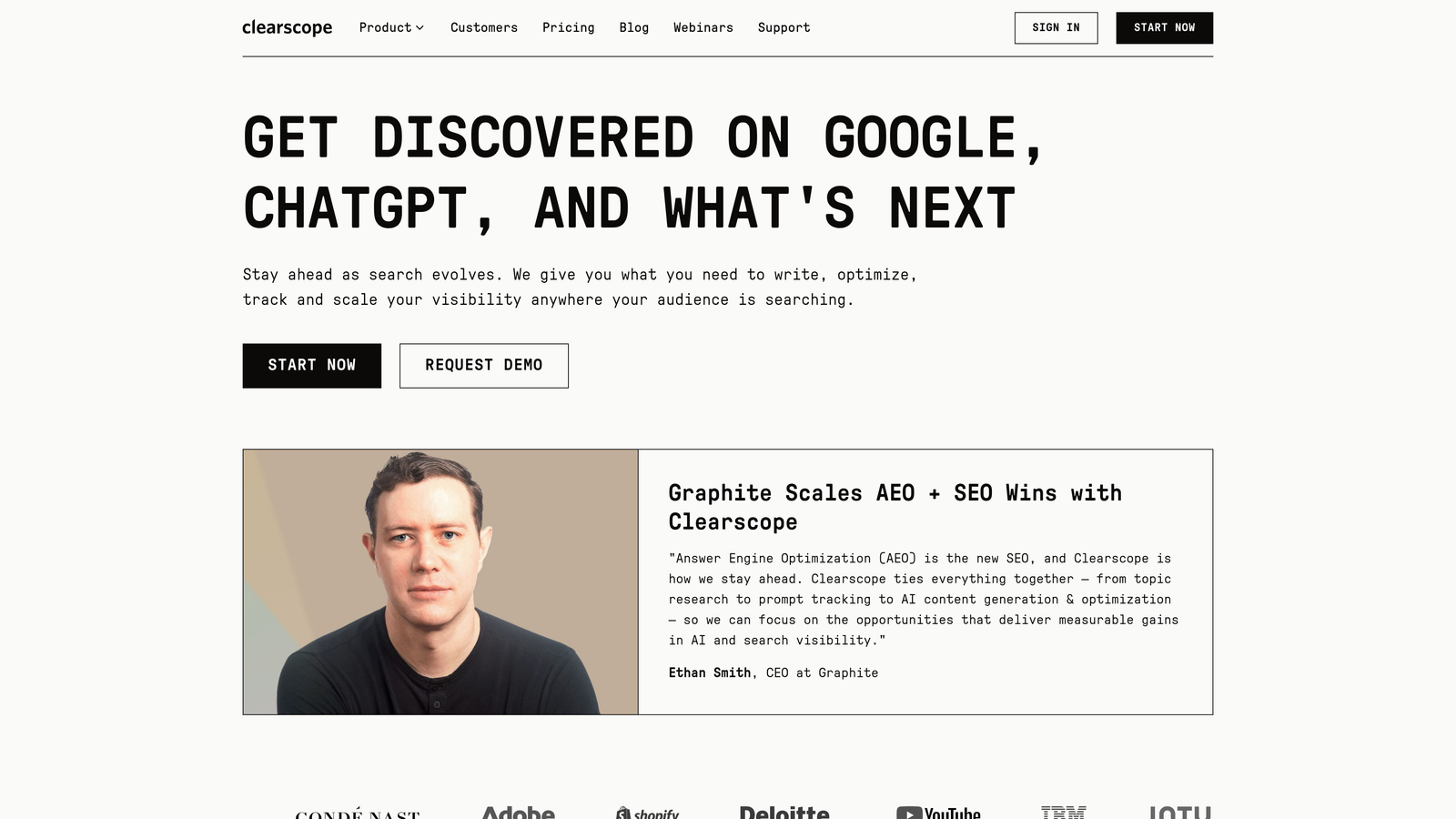
The Google Docs integration allows writers to work in familiar environments while editors monitor quality scores. Clearscope's reporting capabilities give content leaders visibility into team performance, identifying which writers consistently produce high-grade content and where additional training might help.
The platform emphasizes comprehensive topic coverage rather than keyword stuffing, analyzing semantic relationships between terms to ensure your content demonstrates genuine expertise.
Implementation Steps
1. Set up team access with defined roles for writers, editors, and stakeholders, establishing grade thresholds for different content types.
2. Create content briefs using Clearscope's research tool, which identifies must-have topics and relevant terms for comprehensive coverage.
3. Have writers draft in Google Docs with the Clearscope plugin active, allowing real-time optimization guidance without platform switching.
Pro Tips
Use Clearscope's reporting features to identify patterns in your content performance. If certain topics consistently score lower, it might indicate knowledge gaps in your team or areas where you need subject matter expert involvement. The platform works best when you establish clear grade expectations upfront—many teams set minimum thresholds of B+ for publication to maintain quality standards.
4. MarketMuse - The Content Strategy Architect
The Challenge It Solves
You're creating content reactively, responding to individual keyword opportunities without understanding how pieces fit together into a coherent topical strategy. This fragmented approach leaves gaps in your content coverage and misses opportunities to establish comprehensive authority on subjects that matter to your business.
Without strategic planning, content teams often duplicate efforts, miss important subtopics, or create shallow coverage across too many areas rather than building depth where it counts most.
The Strategy Explained
MarketMuse uses AI-powered topic modeling to analyze your entire content library and identify gaps in your topical coverage. Rather than focusing on individual keywords, it maps out comprehensive content clusters, showing you which pillar topics you should own and which supporting content pieces you need to build authority.
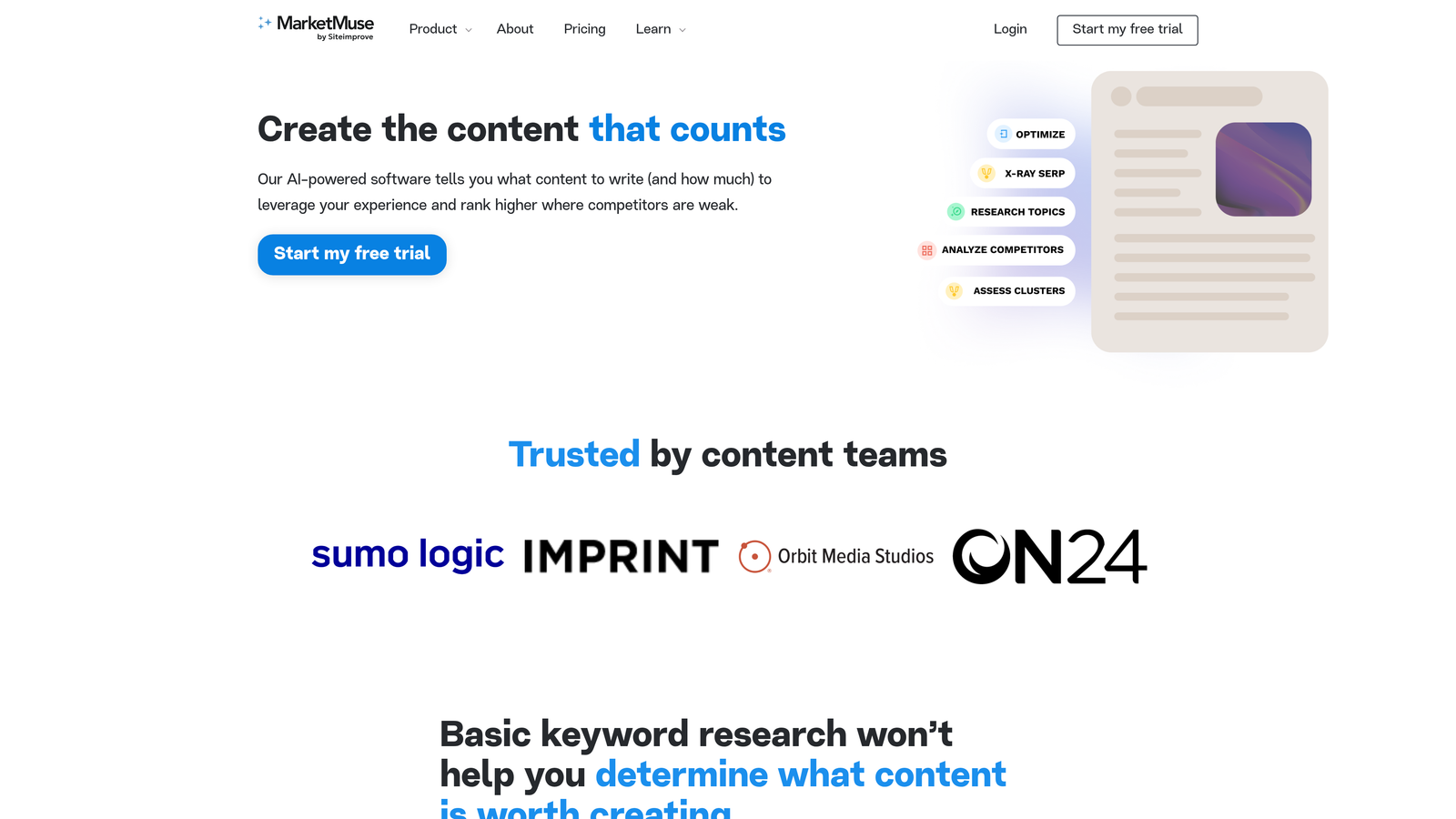
The platform's Content Brief generator goes beyond keyword lists, providing detailed outlines that ensure comprehensive topic coverage. It analyzes your existing content to identify opportunities for updates and expansion, helping you prioritize efforts based on potential impact.
MarketMuse's competitive analysis shows you not just where competitors rank, but where they have topical authority you lack, helping you make strategic decisions about which content battles are worth fighting.
Implementation Steps
1. Run a site audit to understand your current topical authority across key subject areas and identify immediate gaps.
2. Use the topic modeling feature to map out comprehensive content clusters around your most important business themes.
3. Generate detailed content briefs for priority gaps, using MarketMuse's recommendations to ensure each piece contributes to building topical authority.
Pro Tips
MarketMuse works best when you think in terms of topic clusters rather than individual articles. Start by identifying three to five pillar topics critical to your business, then use the platform to map out comprehensive coverage plans. The Optimize feature is particularly valuable for existing content—it often reveals quick wins where adding specific sections can significantly boost a page's topical authority.
5. Jasper AI - The High-Volume Content Generator
The Challenge It Solves
Your content calendar demands volume that your team can't sustain. Whether you're managing multiple client accounts, running an e-commerce site with hundreds of product pages, or maintaining a content-heavy blog, the math doesn't work. You need to produce more content without proportionally expanding your team or budget.
Traditional content creation bottlenecks at the drafting stage. Even with outlines and research completed, getting words on the page takes time that many businesses simply don't have at the scale they need to operate.
The Strategy Explained
Jasper AI focuses on content generation speed and volume. The platform can produce first drafts for blog posts, product descriptions, ad copy, and social media content in minutes rather than hours. Its strength lies in maintaining consistent brand voice across high-volume output through customizable tone settings and style guides.

The Boss Mode interface provides long-form content generation with more control than basic AI writing tools. You can guide the AI with specific instructions, expand on particular points, or regenerate sections that miss the mark. Templates for common content types speed up the process further, providing structure for everything from listicles to how-to guides.
Jasper's collaboration features allow teams to share templates and brand voice settings, ensuring consistency even when multiple writers use the platform.
Implementation Steps
1. Set up your brand voice profile by providing examples of existing content and defining tone parameters that match your style.
2. Create templates for your most common content types, building in your preferred structures and formatting requirements.
3. Generate first drafts using Boss Mode, providing clear instructions about angle, key points to cover, and any specific requirements for each piece.
Pro Tips
Treat Jasper's output as first drafts requiring human refinement rather than publish-ready content. The platform excels at getting you past the blank page, but your expertise and editing make the difference between generic AI content and valuable pieces. Use the command feature to maintain control—specific instructions like "write three paragraphs explaining X for a technical audience" produce better results than letting the AI run freely.
6. Writesonic - The Budget-Conscious Alternative
The Challenge It Solves
Enterprise-grade content tools price out solopreneurs, small agencies, and growing businesses that need AI assistance but can't justify premium subscriptions. You're caught between free tools that lack necessary features and professional platforms with pricing that doesn't align with your current scale.
Budget constraints force difficult choices: either invest heavily in tools that exceed your immediate needs, or make do with limited capabilities that slow your growth and force manual workarounds.
The Strategy Explained
Writesonic delivers AI content generation and optimization capabilities at price points accessible to smaller operations. The platform offers tiered pricing based on word count rather than flat monthly fees, allowing you to scale usage with your actual needs. This flexibility works particularly well for businesses with variable content demands.
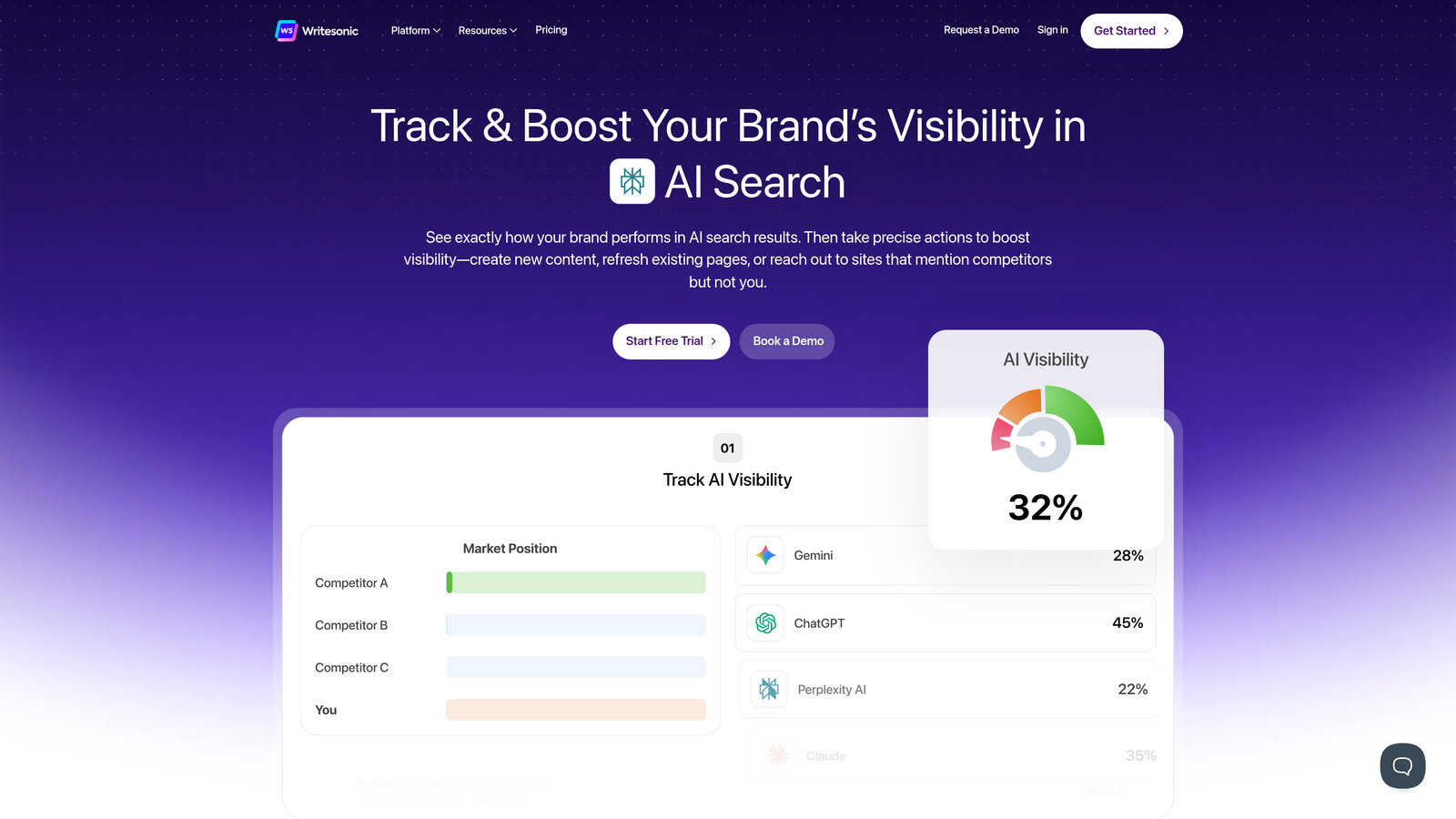
The platform includes article writing, paraphrasing tools, and SEO optimization features in even its lower-tier plans. The Sonic Editor provides a writing interface with AI assistance, while the SEO Checker analyzes content for optimization opportunities. Integration with Surfer SEO (available on higher plans) adds data-driven optimization without requiring separate subscriptions.
For businesses just beginning to scale content operations, Writesonic provides a stepping stone—capable enough to produce results without the commitment of enterprise pricing.
Implementation Steps
1. Start with a lower-tier plan to test the platform's capabilities against your specific content needs and quality standards.
2. Use the article writer for first drafts of standard content types, focusing on topics where your expertise allows quick refinement.
3. Leverage the paraphrasing tool to refresh existing content and the SEO Checker to identify optimization opportunities before publication.
Pro Tips
Writesonic works best when you have clear content briefs and outlines prepared. The more specific your input, the better your output quality. Consider using the platform primarily for high-volume, lower-stakes content like product descriptions or social posts while reserving more complex pieces for tools with deeper optimization capabilities. The word count-based pricing means you can experiment with different approaches without worrying about wasting a flat monthly fee.
7. NeuronWriter - The Semantic SEO Specialist
The Challenge It Solves
You understand that modern SEO requires more than keyword matching, but most tools either oversimplify semantic optimization or bury it in enterprise complexity. You need sophisticated analysis of how search engines understand topic relationships without the overhead of platforms designed for large teams.
Solopreneurs and small teams often lack access to semantic analysis tools that reveal how to build genuine topical authority rather than just hitting keyword density targets.
The Strategy Explained
NeuronWriter specializes in semantic SEO analysis, mapping the relationships between terms and concepts to help you build content that demonstrates comprehensive topic understanding. The platform analyzes top-ranking content to identify not just keywords, but the semantic clusters that signal expertise to search engines.
The Content Editor visualizes these semantic relationships, showing you which related concepts to include and how they connect to your main topic. This approach helps you create content that naturally covers a subject thoroughly rather than artificially stuffing keywords. The platform's NLP analysis identifies terms and phrases that strengthen topical authority.
For smaller operations, NeuronWriter provides enterprise-level semantic analysis without requiring team collaboration features or complex workflows you don't need.
Implementation Steps
1. Analyze your target keyword using NeuronWriter's semantic analysis to understand the full topic landscape beyond surface-level keywords.
2. Review the semantic clusters to identify which related concepts you should cover to demonstrate comprehensive understanding.
3. Use the Content Editor to write or optimize your content, ensuring you're naturally incorporating semantic terms that build topical authority.
Pro Tips
Pay special attention to the semantic relationships NeuronWriter reveals—these often uncover angles you wouldn't have considered through traditional keyword research. The platform works particularly well for informational content where demonstrating expertise matters more than hitting specific keyword densities. Use the competition analysis feature to understand not just what competitors write about, but how they structure semantic relationships within their content.
Choosing Your Ideal Path Forward
The right Frase IO alternative depends entirely on where your content operation is heading. If you're preparing for the future of search and need visibility into how AI models discuss your brand, Sight AI offers capabilities no traditional SEO tool provides. For teams focused on traditional search optimization with data-driven precision, Surfer SEO delivers reliable SERP-based guidance.
Enterprise organizations requiring collaboration and consistency should examine Clearscope's team-focused features. Those building comprehensive topical authority will find MarketMuse's strategic planning capabilities invaluable. High-volume operations need Jasper AI's generation speed, while budget-conscious businesses can start with Writesonic's flexible pricing. Solopreneurs seeking sophisticated semantic analysis without enterprise overhead should explore NeuronWriter.
Here's the critical consideration many teams overlook: traditional SEO tools optimize for where search was, not where it's going. As AI search adoption accelerates, the ability to track and optimize for AI visibility becomes increasingly important. You're not just competing for Google rankings anymore—you're competing for mentions in ChatGPT responses, Claude recommendations, and Perplexity citations.
The smartest approach? Choose tools that address both current optimization needs and future visibility requirements. Traditional SEO remains important, but AI search optimization is rapidly becoming essential. Start tracking your AI visibility today and see exactly where your brand appears across top AI platforms—because you can't optimize for conversations you can't see.
Your content stack should evolve with how people search. The platforms that help you understand and adapt to AI search behavior will deliver compounding advantages as these channels mature. Don't wait until AI visibility becomes a crisis—build it into your content strategy now.