You've published fresh content, optimized it for search, and now you're waiting. And waiting. Days pass, sometimes weeks, and your pages still aren't showing up in search results. This indexing delay isn't just frustrating—it's costing you traffic, leads, and competitive advantage.
When content sits in indexing limbo, competitors can publish similar topics and claim those rankings first. Every day your content remains invisible is a day you're losing potential customers who are actively searching for the solutions you offer.
The good news: slow indexing is almost always fixable.
This guide walks you through a systematic troubleshooting process to identify why your content isn't being indexed quickly and implement solutions that get your pages discovered faster. Whether you're dealing with crawl budget issues, technical barriers, or simply haven't signaled to search engines that your content exists, you'll find actionable steps to accelerate your indexing timeline from weeks to hours.
Think of search engine indexing like a massive library where the librarian needs to know your book exists before adding it to the catalog. If you don't tell them about it, leave it in a locked room, or bury it under thousands of other books, it might never get cataloged—no matter how valuable the content inside.
Step 1: Diagnose Your Current Indexing Status
Before you can fix slow indexing, you need to understand exactly what's happening with your content. Google Search Console's URL Inspection tool gives you the definitive answer about whether a page is indexed and, if not, why.
Open Google Search Console and navigate to the URL Inspection tool. Paste in the URL of a page that should be indexed but isn't showing up in search results. The tool will return one of several status messages that tell you exactly where your content stands in Google's indexing pipeline.
URL is on Google: Your page is indexed successfully. If it's not ranking, you have a content quality or competition issue, not an indexing problem.
Crawled but not indexed: Google found your page but decided not to include it in search results. This typically indicates content quality concerns, duplicate content, or thin pages that don't add unique value.
Discovered but not crawled: Google knows your page exists but hasn't visited it yet. This usually means low crawl priority due to limited crawl budget or lack of strong internal linking.
Blocked by robots.txt: Your robots.txt file is preventing crawlers from accessing this page. This is a technical barrier that needs immediate correction.
Run this diagnostic on multiple pages across your site, not just one. Check your newest content, older articles that should be indexed, and different content types like blog posts, product pages, and category pages. Document the patterns you discover.
Next, review the Pages report in Google Search Console. This shows site-wide indexing trends and groups pages by their indexing status. Look for patterns: Are all your blog posts indexing slowly while product pages index quickly? Are pages in certain directories consistently excluded? Understanding why content isn't indexed quickly helps you prioritize the right fixes.
This diagnostic phase is crucial because it determines which troubleshooting steps you need to prioritize. If most pages show "blocked by robots.txt," you have a technical configuration issue. If you see "discovered but not crawled" across the board, you have a crawl budget or internal linking problem.
Step 2: Audit Your Technical SEO Barriers
Technical barriers are the most common reason content doesn't get indexed quickly. These are the digital equivalent of locking your content in a room and wondering why no one can find it.
Start with your robots.txt file, which lives at yourdomain.com/robots.txt. This file tells search engines which parts of your site they can and cannot crawl. Open it in your browser and look for any "Disallow" directives that might be blocking important content.
Common robots.txt mistakes: Accidentally blocking entire directories like /blog/ or /products/, blocking CSS and JavaScript files that Google needs to render pages properly, or using wildcard patterns that catch more than intended.
If you find blocking rules that shouldn't be there, remove them immediately and request re-indexing through Search Console. The change takes effect as soon as you save the file.
Next, check for noindex tags. These are meta tags in your page's HTML that explicitly tell search engines not to index the page. View the page source of content that isn't indexing and search for "noindex" in the code. You might find it in a meta robots tag or in HTTP headers.
Noindex tags are sometimes added accidentally by plugins, staging environment settings that weren't removed before launch, or category-wide rules that catch individual pages unintentionally. If you find a noindex tag on content that should be indexed, remove it and submit the URL for re-indexing. For a deeper dive into these technical issues, explore how Google not indexing your site can stem from overlooked configuration problems.
Verify your canonical tags next. Canonical tags tell search engines which version of a page is the "master" copy when you have similar or duplicate content. Open your page source and look for the canonical tag in the header section.
The canonical URL should point to the page itself, not to a different URL. If your blog post at example.com/blog/post-title has a canonical tag pointing to example.com/different-page, Google will ignore your blog post and only index the canonical version.
Finally, test your page load speed using Google's PageSpeed Insights or Core Web Vitals report in Search Console. Pages that take longer than three seconds to load often get deprioritized in crawl queues because they consume more of Google's crawl budget. Understanding the content indexing speed impact on SEO helps you prioritize performance improvements.
If your pages are slow, focus on the biggest performance bottlenecks first: optimize images, minimize JavaScript, enable browser caching, and consider a content delivery network for faster global loading times.
Step 3: Optimize Your XML Sitemap Strategy
Your XML sitemap is your direct communication channel with search engines, telling them which pages exist and when they were last updated. A poorly maintained sitemap can significantly slow down indexing or cause search engines to miss new content entirely.
First, verify your sitemap is submitted to Google Search Console. Navigate to the Sitemaps section and check that your sitemap URL is listed and shows no errors. If you haven't submitted a sitemap yet, add it now—most sites use /sitemap.xml as the default location.
Open your sitemap in a browser to audit its contents. Your sitemap should include only indexable, canonical URLs. That means every URL in your sitemap should be a page you want indexed, with a 200 status code, no noindex tags, and no redirect chains.
Common sitemap pollution issues: Including 404 pages that no longer exist, listing redirected URLs instead of their final destinations, adding noindexed pages that search engines will skip anyway, or including non-canonical URLs when you have canonical versions elsewhere.
Clean up your sitemap by removing any URLs that shouldn't be there. This focuses search engine attention on your important content rather than wasting crawl budget on pages that can't be indexed anyway.
Add accurate lastmod dates to your sitemap entries. The lastmod tag tells search engines when a page was last updated, helping them prioritize recently changed content for crawling. Many content management systems automatically update this timestamp when you edit a page.
If your site has more than a few thousand pages, consider splitting your sitemap by content type. Create separate sitemaps for blog posts, product pages, and category pages, then link them together using a sitemap index file. This organization helps search engines understand your site structure and crawl different content types with appropriate frequency. For sites struggling with discovery, a website indexing speed optimization approach can transform your sitemap strategy.
Set up automatic sitemap updates so new content gets added immediately when published. Most modern CMS platforms handle this automatically, but verify that your system updates the sitemap and notifies search engines of the change.
Step 4: Implement IndexNow for Instant Notifications
Traditional indexing relies on search engines discovering your content through crawling, which can take days or weeks. IndexNow flips this model by allowing you to proactively notify search engines the moment you publish or update content.
IndexNow is a protocol supported by Microsoft Bing and Yandex that lets you push URLs directly to search engines. Instead of waiting for crawlers to discover your new blog post, you tell them it exists within seconds of publishing.
Setting up IndexNow requires generating an API key and configuring your site to send notifications when content changes. Many popular CMS platforms now have IndexNow plugins that handle this automatically. For WordPress, plugins like IndexNow or Rank Math include built-in IndexNow support.
If you're building a custom solution, the IndexNow API is straightforward. You make an HTTP POST request to the IndexNow endpoint with your API key and the URLs you want to notify about. The API returns a confirmation that your submission was received.
Configure automatic submissions for both new content and updates to existing content. When you publish a new article, your system should immediately ping IndexNow. When you update an old post with fresh information, ping IndexNow again to signal the change.
Verify successful submissions by checking your IndexNow dashboard or server logs. You should see confirmation responses for each URL submitted. If submissions are failing, check that your API key is correct and that your server can make outbound HTTPS requests to the IndexNow endpoint.
Here's the thing: IndexNow currently works with Bing and Yandex, not Google. Google still relies on traditional crawling and sitemap discovery. However, faster indexing on Bing means faster traffic from Bing search results, and the instant notification approach demonstrates best practices that benefit your overall indexing strategy. Understanding the differences between IndexNow vs traditional indexing helps you choose the right approach for each search engine.
For Google indexing, combine IndexNow with the other steps in this guide. Update your sitemap, strengthen internal linking, and use Google Search Console's manual URL inspection request feature for critical pages that need immediate indexing.
Step 5: Strengthen Internal Linking Architecture
Search engines discover new content by following links from pages they already know about. If your new article has no internal links pointing to it, crawlers might never find it—no matter how valuable the content is.
Link new content from high-authority pages that get crawled frequently. Your homepage, popular blog posts, and main category pages typically have the most "crawl equity" because search engines visit them often. Adding a link from one of these pages to your new content creates a direct path for crawlers to discover it.
When you publish a new article, immediately add contextual links to it from at least three to five existing pages. Choose pages that are topically related so the links make sense to both users and search engines. Use descriptive anchor text that signals what the linked content is about.
Create hub pages that connect related content and distribute crawl equity across your site. A hub page is a comprehensive resource that links to multiple related articles, creating a network of interconnected content. For example, a "Complete Guide to SEO" hub page might link to individual articles about keyword research, on-page optimization, and link building.
Hub pages serve two purposes: they help users find related content, and they create strong internal linking structures that help crawlers discover and understand the relationship between your pages.
Identify and fix orphan pages—content that has no internal links pointing to it. Run a crawl of your site using tools like Screaming Frog or check Google Search Console's internal linking report to find pages with zero internal links. These orphan pages might never get crawled because search engines have no path to discover them.
Add internal links to orphan pages from relevant existing content. Even a single link from a well-crawled page can bring an orphan page into the indexable content pool. Following proven SEO content writing tips ensures your internal linking strategy supports both discovery and rankings.
Use descriptive anchor text that signals content relevance. Instead of generic "click here" links, use phrases that describe what the linked page is about: "learn how to optimize page speed" or "see our guide to XML sitemaps." This helps both users and crawlers understand the context and relevance of the linked content.
Step 6: Build a Proactive Indexing Workflow
The best way to avoid slow indexing is to build systems that handle discovery and notification automatically every time you publish content. A proactive workflow eliminates the manual steps that often get forgotten and ensures consistent, fast indexing.
Create a post-publish checklist that runs every time new content goes live. This checklist should include: verify sitemap has been updated with the new URL, trigger IndexNow notification for supported search engines, add internal links from at least three high-authority pages, and submit the URL for manual inspection in Google Search Console if it's time-sensitive content.
Automate as many of these steps as possible. Modern CMS platforms can handle sitemap updates and IndexNow pings automatically. Configure your system so these actions happen without manual intervention the moment you click "Publish." Exploring content indexing automation tools can help you identify the right solutions for your workflow.
Set up monitoring alerts for indexing status changes in Google Search Console. Configure email notifications when pages are excluded from indexing, when crawl errors occur, or when indexing coverage drops significantly. Early detection of indexing problems prevents small issues from becoming site-wide disasters.
Establish a regular audit schedule to catch indexing issues before they compound. Set a monthly reminder to review your Search Console Pages report, check for new crawl errors, and verify that recent content is getting indexed within your target timeframe.
Track your indexing speed as a key performance metric. Document how long it takes from publication to indexing for different content types. If you notice indexing times increasing, investigate immediately rather than waiting for it to become a crisis. Implementing content indexing automation strategies ensures consistent execution without manual oversight.
Consider automation tools that handle sitemap updates and index requests automatically. Many SEO platforms and WordPress plugins can manage these tasks without manual intervention, ensuring consistent execution of your indexing workflow.
Build templates for common content types that include proper technical SEO elements by default. When your blog post template automatically includes proper canonical tags, meta descriptions, and schema markup, you eliminate technical barriers before they happen.
Your Path to Faster Indexing
Let's bring this together with a quick-reference checklist you can use right now. Run URL Inspection on problem pages to diagnose specific issues. Check for robots.txt blocks and noindex tags that might be preventing crawling. Verify your sitemap is current, clean, and submitted to Search Console.
Implement IndexNow for instant notifications to supported search engines. Add internal links from frequently-crawled pages to new content. Establish an automated monitoring workflow that catches issues early.
Most indexing delays stem from one of three issues: technical barriers blocking crawlers, lack of discovery signals telling search engines content exists, or low-quality signals causing search engines to deprioritize your pages. By working through these steps systematically, you'll identify your specific bottleneck and implement the right fix.
The patterns are usually obvious once you look. If URL Inspection shows "blocked by robots.txt" across multiple pages, you have a technical configuration problem. If you see "discovered but not crawled" consistently, you need stronger internal linking and better crawl budget management. If pages are "crawled but not indexed," focus on content quality and uniqueness.
The goal isn't just to solve today's indexing problem—it's to build a system where new content gets discovered within hours, not weeks. With proper technical foundations, proactive notification systems, and strong internal linking, you can dramatically accelerate how quickly your content becomes visible in search results.
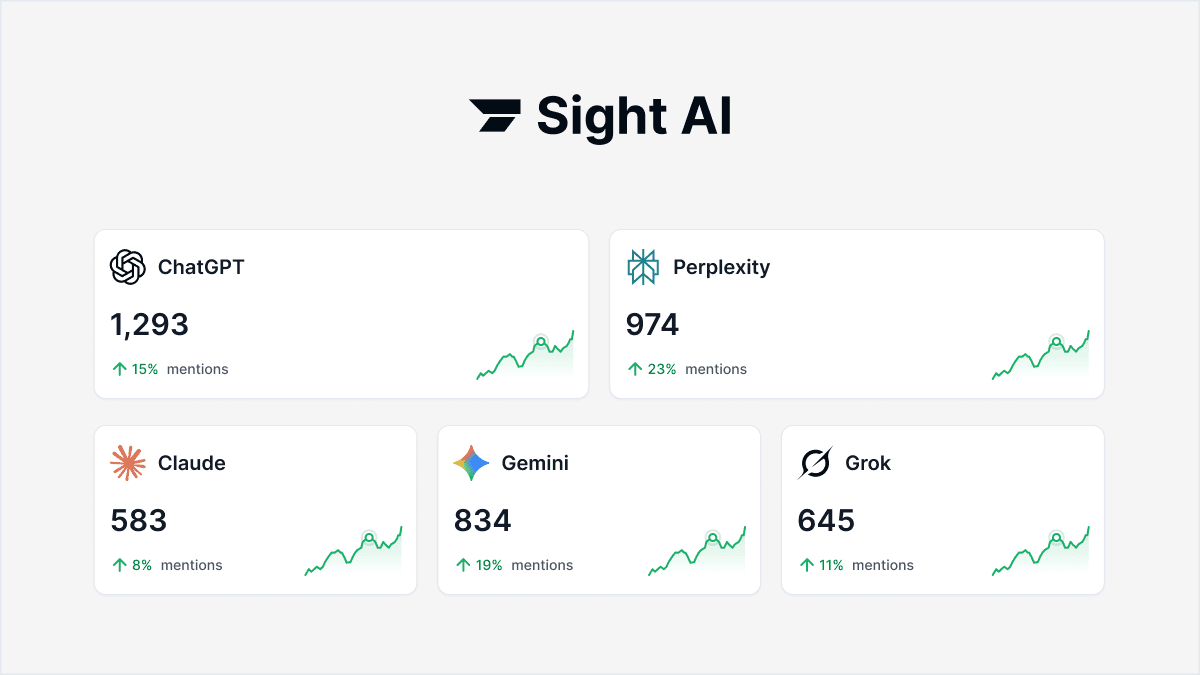
This matters more than ever in 2026, as AI-powered search experiences like ChatGPT, Claude, and Perplexity are changing how people discover content. Fast indexing gets your content into search results quickly, but understanding how AI models reference and recommend your brand requires a different kind of visibility.
Start tracking your AI visibility today and see exactly where your brand appears across top AI platforms. Stop guessing how AI models like ChatGPT and Claude talk about your brand—get visibility into every mention, track content opportunities, and automate your path to organic traffic growth.