You hit publish on what might be your best article yet. The research was solid, the writing was tight, and you know it answers exactly what your audience is searching for. Then you wait. And wait. Days turn into weeks, and your content sits in digital limbo—published on your site but invisible to search engines, generating zero traffic while your competitors' older, weaker content continues to dominate the rankings.
This isn't a content quality problem. It's a discovery problem.
The gap between publishing and ranking often comes down to one overlooked factor: how quickly search engines actually find and index your content. While most marketers obsess over keyword optimization and backlinks, they ignore the fundamental bottleneck that determines whether their content even gets a chance to compete. Content indexing services solve this problem by accelerating the discovery process, transforming what used to take weeks into a matter of hours. For marketers publishing at scale or competing in fast-moving markets, this speed advantage isn't just convenient—it's the difference between capturing traffic and watching opportunities evaporate.
The Hidden Bottleneck Between Publishing and Ranking
Before your content can rank for anything, search engines need to know it exists. This discovery process—called indexing—involves search engine crawlers finding your page, analyzing its content, and adding it to their massive database of web pages. Only after a page is indexed can it appear in search results. The problem? This process operates on the search engine's schedule, not yours.
Here's what actually happens when you publish content. Search engines maintain a crawl queue—essentially a prioritized list of URLs they plan to visit. Your new page doesn't automatically jump to the front of this queue. Instead, crawlers discover it through one of several pathways: following links from already-indexed pages on your site, checking your sitemap file during periodic crawls, or responding to explicit submission requests. Each pathway operates at different speeds and with varying reliability.
The distinction between crawling and indexing matters more than most marketers realize. Crawling is the discovery phase—when a search engine bot visits your URL and downloads the content. Indexing is the inclusion phase—when that content gets processed, evaluated, and added to the searchable database. A page can be crawled without being indexed if the search engine decides the content doesn't meet quality standards, duplicates existing content, or violates technical guidelines. Understanding why content is not indexed quickly helps you diagnose and fix these issues before they cost you traffic.
Why does some content get indexed in hours while other pages languish for weeks? The answer comes down to crawl priority, which search engines determine based on several factors. Sites with high domain authority and consistent publishing schedules get crawled more frequently. Pages linked from your homepage or other high-authority pages get discovered faster than orphaned content buried deep in your site structure. Fresh content on sites that update regularly receives priority over static sites that rarely change.
But here's the frustrating reality: even well-optimized sites with strong authority can experience indexing delays. If you publish multiple pages simultaneously, search engines might not crawl them all immediately. If your server responds slowly or your site has technical issues, crawlers might deprioritize your content. And if you're launching a new site or domain, you're starting with minimal crawl budget—the limited resources search engines allocate to crawling your site.
This waiting game creates real business consequences. Time-sensitive content loses relevance. Seasonal campaigns miss their window. Competitors who publish later but get indexed faster can capture rankings before you even enter the race. The traditional approach—publish and pray—leaves too much to chance in markets where speed determines winners.
How Content Indexing Services Accelerate Discovery
Content indexing services flip the traditional model from passive to active. Instead of waiting for search engines to eventually discover your content, these tools proactively notify search engines the moment you publish, dramatically compressing the discovery timeline. The technology behind this acceleration centers on direct communication protocols that bypass the normal crawl queue.
The IndexNow protocol represents the most significant advancement in content discovery since sitemaps. Developed as an open standard and supported by Microsoft Bing, Yandex, and other search engines, IndexNow allows websites to instantly ping search engines when content changes. Think of it as a direct notification system: when you publish, update, or delete a page, your site sends an immediate signal to participating search engines saying "hey, something changed here—come check it out now."
Here's what makes this powerful. Traditional crawling operates on a schedule determined by the search engine. IndexNow inverts this relationship, letting your site control when crawlers visit. When you publish a new article, your indexing service sends an API request to search engines containing the URL and a verification key proving you control the domain. Search engines receive this notification and prioritize crawling that specific URL, often within minutes rather than days.
The technical workflow happens in stages. First, your content management system publishes or updates a page. Immediately, your indexing service detects this change—either through CMS integration, sitemap monitoring, or webhook triggers. Within seconds, the service generates IndexNow notifications and submits them to multiple search engines simultaneously. These search engines queue your URL for priority crawling, typically visiting it within hours. After crawling, they evaluate the content and decide whether to index it based on quality and relevance factors.
Google operates differently, using its own Indexing API primarily for specific content types like job postings and livestream videos. For most content, Google relies on sitemap submissions and traditional crawling. However, automated sitemap updates serve a similar acceleration function—when your sitemap automatically updates to include new content, Google's next sitemap check discovers these pages faster than waiting for link-based discovery.
Modern indexing services enhance this core functionality with intelligent automation. They don't just submit URLs once—they monitor indexing status and can retry submissions if pages aren't picked up. They handle the technical complexity of API authentication, rate limiting, and error handling. They maintain always-current sitemaps that reflect your site's actual structure, eliminating the lag between publishing and sitemap updates that plagues manual processes. For a detailed breakdown of available solutions, check out this comparison of indexing tools for blogs.
The practical impact? Content that might take a week to get discovered through passive crawling can be indexed within hours. For high-volume publishers, this means hundreds of pages get into search results faster. For time-sensitive content, it means capturing traffic while topics are trending. For competitive keywords, it means your content enters the ranking race immediately instead of giving competitors a head start.
When Speed-to-Index Actually Matters for Your Strategy
Not every piece of content needs instant indexing. A comprehensive guide to project management fundamentals will be just as valuable next month as it is today. But certain content types and business strategies transform faster indexing from a nice-to-have into a competitive necessity. Understanding when speed matters helps you prioritize where to focus your indexing efforts.
Time-sensitive content lives or dies based on indexing speed. News articles covering breaking developments lose relevance within hours. Trend-jacking content that capitalizes on viral topics has a narrow window before the conversation moves on. Seasonal campaigns for holidays, events, or weather-dependent products need to be discoverable before the season peaks. When you publish content about Black Friday deals in early November, waiting two weeks for indexing means missing the entire shopping window. For these scenarios, every day of indexing delay represents lost traffic and revenue that you can never recover.
High-volume publishing strategies face a different challenge: scale. If you're publishing dozens or hundreds of pages monthly—whether through programmatic SEO, product catalogs, or content-at-scale approaches—manual submission becomes impossible. Traditional crawling can't keep pace with rapid publishing schedules, creating a growing backlog of undiscovered content. Companies running local landing pages for hundreds of cities or e-commerce sites adding new product pages daily need automated indexing to ensure their entire catalog becomes searchable. The content indexing speed impact on SEO becomes exponentially more significant when you're managing thousands of pages.
Competitive keyword scenarios reveal another dimension where speed creates advantage. When multiple sites target the same keyword, being first to publish AND index often correlates with ranking advantages. Search engines favor fresh content for many queries, and early indexing establishes your content as the reference point before competitors enter the space. This matters most for emerging topics where search intent is still being defined and for keywords with high commercial value where ranking positions translate directly to revenue.
Content refresh strategies also benefit from fast indexing. When you update existing content to improve quality or accuracy, you want search engines to re-crawl and re-evaluate quickly. Faster re-indexing means your improvements impact rankings sooner, accelerating the feedback loop between optimization and results. This becomes particularly important when you're responding to algorithm updates or fixing content that's underperforming—delays in re-indexing mean delays in recovery.
Conversely, some content types don't require indexing urgency. Evergreen resources, comprehensive guides, and reference documentation maintain their value over long timeframes. For these pieces, whether they're indexed in two days or two weeks rarely impacts their ultimate performance. Focus your indexing acceleration on content where timing directly impacts business outcomes.
Key Features That Separate Effective Indexing Tools
Not all indexing services deliver the same value. The difference between basic and sophisticated tools often determines whether you're truly automating discovery or just adding another manual step to your workflow. Understanding which features actually matter helps you choose solutions that integrate seamlessly into your content operations.
Automated Sitemap Generation and Real-Time Updates: The best indexing services don't just submit your existing sitemap—they generate and maintain it automatically. When you publish new content, the sitemap updates immediately to include those pages. When you delete or redirect content, those changes reflect instantly. This eliminates the common problem where your sitemap becomes outdated, causing search engines to waste crawl budget on non-existent pages or miss new content entirely. Look for services that create separate sitemaps for different content types and automatically split large sitemaps to stay within search engine size limits.
Multi-Search-Engine Support: While Google dominates search volume in many markets, Bing, Yandex, and other search engines drive significant traffic in specific regions and demographics. Effective indexing services submit to multiple search engines simultaneously, maximizing your content's discoverability across the search landscape. This matters particularly for international businesses or B2B companies where Bing's higher market share among enterprise users creates meaningful traffic opportunities. IndexNow protocol support ensures your content gets discovered quickly across all participating search engines with a single submission.
CMS Integration for Hands-Off Operation: Manual submission doesn't scale and creates opportunities for human error. The most valuable indexing tools integrate directly with your content management system—whether that's WordPress, Webflow, Contentful, or custom platforms. When content publishes, the indexing service detects it automatically and triggers submissions without requiring any manual action. This CMS integration for content automation should work bidirectionally, with the indexing service also providing status updates back to your CMS so you can see which pages are indexed and which might need attention.
Status Monitoring and Verification Dashboards: Submitting URLs for indexing is only half the battle—you need visibility into whether search engines actually crawled and indexed your content. Quality indexing services provide dashboards showing submission status, crawl confirmation, and indexing verification. They alert you when pages fail to index despite successful submission, helping you identify technical issues or content quality problems. This monitoring capability transforms indexing from a black box into a measurable, optimizable process.
Intelligent Retry Logic: Sometimes search engines receive your submission but don't immediately crawl the URL. Maybe their crawlers are busy, or maybe they're waiting to see if the content changes again. Sophisticated indexing services don't just submit once—they monitor for indexing confirmation and automatically retry submissions if pages remain undiscovered after a reasonable timeframe. This persistence ensures your content eventually gets indexed even if the first submission doesn't trigger immediate action.
Setting Up an Indexing Workflow That Runs on Autopilot
The technical setup for automated content indexing involves several connected steps, but the goal is simple: create a system where publishing content automatically triggers discovery notifications without requiring manual intervention. Here's how to build that workflow from scratch.
Step 1: Connect Your CMS to an Indexing Service
Start by selecting an indexing service that integrates with your content management system. For WordPress, this typically means installing a plugin that connects to the indexing service's API. For headless CMS platforms like Contentful or Sanity, you'll configure webhooks that trigger when content publishes. For custom-built sites, you'll implement API calls within your publishing workflow. The key requirement: the connection must activate automatically when content goes live, not as a separate manual step you need to remember.
Step 2: Configure IndexNow Protocol
IndexNow requires a verification key that proves you control your domain. Generate this key through your indexing service, then place it in your site's root directory as a text file. This one-time setup authenticates all future submissions from your domain. Configure your indexing service to submit to all IndexNow-participating search engines simultaneously—there's no reason to limit notifications to just one search engine when the protocol supports multiple recipients with a single request.
Step 3: Set Up Automated Sitemap Management
Configure your indexing service to generate and maintain your XML sitemap automatically. Define which content types should be included—typically published articles, product pages, and landing pages, but not admin pages, thank-you pages, or other non-indexable content. Set the service to update your sitemap immediately when content changes, and configure it to automatically split large sitemaps into smaller files if your site exceeds search engine size recommendations. Point your robots.txt file to your sitemap location so search engines can discover it easily.
Step 4: Configure Submission Triggers
Determine what events should trigger indexing submissions. Most sites want immediate submissions when new content publishes or when existing content receives significant updates. However, you might not want to trigger submissions for minor typo fixes or formatting changes. Configure your system to distinguish between major updates worth notifying search engines about and minor edits that don't require immediate re-crawling. This prevents you from wasting submission quotas on insignificant changes.
Step 5: Implement Status Monitoring
Set up dashboards or reports that show indexing status for your content. At minimum, you want to see which URLs have been submitted, which have been confirmed as crawled, and which remain unindexed despite submission. Configure alerts for pages that fail to index after a reasonable timeframe—this often indicates technical issues like blocked resources, crawl errors, or content quality problems that need investigation. Regular monitoring helps you catch and fix indexing problems before they impact significant amounts of content.
Best Practices for Sitemap Structure
Organize your sitemap to reflect content priority and update frequency. Create separate sitemap files for different content types—one for blog posts, another for product pages, another for landing pages. This segmentation helps search engines allocate crawl budget appropriately. Include lastmod timestamps that accurately reflect when content actually changed, not when the sitemap was regenerated. Avoid including URLs that redirect, return errors, or are blocked by robots.txt—these waste search engine resources and can reduce crawl priority for your entire site.
Troubleshooting Pages That Won't Index
When pages fail to index despite successful submission, investigate several common causes. Check that the page isn't blocked by robots.txt or noindex tags. Verify that the content is substantial and valuable, not thin or duplicative. Ensure the page loads quickly and doesn't return server errors. Look for orphaned pages that aren't linked from anywhere else on your site—search engines often deprioritize content that your own site structure suggests isn't important. Review the page for technical SEO issues like missing title tags, broken internal links, or blocked resources that prevent proper rendering. For a comprehensive guide on resolving these issues, learn how to improve content indexing speed with proven techniques.
Putting Faster Indexing Into Your Growth Stack
Content indexing services don't operate in isolation—they form a critical link in the chain connecting content creation to traffic generation. Understanding how faster indexing amplifies other parts of your SEO and content strategy helps you maximize the compounding benefits.
Think of your content workflow as a pipeline with distinct stages: ideation, creation, optimization, publication, discovery, indexing, and ranking. Most marketing teams focus heavily on the creation and optimization stages, investing in research, writing, and on-page SEO. But all that effort generates zero return until search engines discover and index the content. Indexing services eliminate the bottleneck between publication and discovery, ensuring that investment in content creation translates to traffic opportunities as quickly as possible.
The compounding effect becomes particularly powerful when you consider feedback loops. Faster indexing means faster data about what's working. When content gets indexed and starts ranking within days instead of weeks, you can evaluate performance and iterate much more rapidly. If a piece underperforms, you can update and improve it while the topic is still relevant. If a piece succeeds, you can quickly publish related content to capture additional keywords in that cluster. This acceleration of the feedback loop transforms content optimization from a quarterly project into an ongoing, responsive process.
For teams publishing at scale, automated indexing becomes infrastructure rather than a tool. When you're producing dozens of articles weekly or managing thousands of product pages, manual submission is impossible and passive crawling can't keep pace. Indexing services ensure your entire content catalog becomes searchable, not just the small percentage that happens to get crawled quickly. This complete coverage matters for programmatic content publishing solutions where the cumulative impact of many pages drives results.
Integration with content distribution strategies amplifies impact further. When you publish content and simultaneously promote it through social media, email, or paid channels, faster indexing ensures that the traffic you drive to that content arrives at a page that's already discoverable in search. This creates a virtuous cycle where promotional traffic signals to search engines that the content is valuable, potentially improving rankings, while search visibility extends the reach of your promotional efforts. Explore how automated content distribution platforms can complement your indexing strategy.
The modern SEO workflow increasingly connects content creation tools, indexing services, and analytics platforms into automated pipelines. AI-powered content generation produces articles at scale. Indexing services ensure immediate discovery. Analytics track performance in near-real-time. This integration transforms content marketing from a manual, labor-intensive process into a scalable system where each component amplifies the others. Building a robust blog content pipeline that incorporates automated indexing is essential for sustainable growth.
Action Items for This Week: First, audit your current indexing situation—check Google Search Console to see how long your recent content took to get indexed. Second, evaluate whether your content strategy includes time-sensitive topics, high-volume publishing, or competitive keywords where faster indexing would create meaningful advantages. Third, research indexing services that integrate with your CMS and support your publishing workflow. Fourth, implement automated indexing for your next batch of content and measure the difference in time-to-index compared to your historical baseline.
Content indexing represents the often-missing link between content production and traffic results. You can create the best content in your niche, but if search engines take weeks to discover it, you're giving competitors a head start and missing time-sensitive opportunities. Automated indexing services solve this problem by proactively notifying search engines the moment you publish, compressing what used to take weeks into hours. For marketers serious about organic growth, this acceleration isn't optional—it's the foundation that makes every other content investment more valuable.
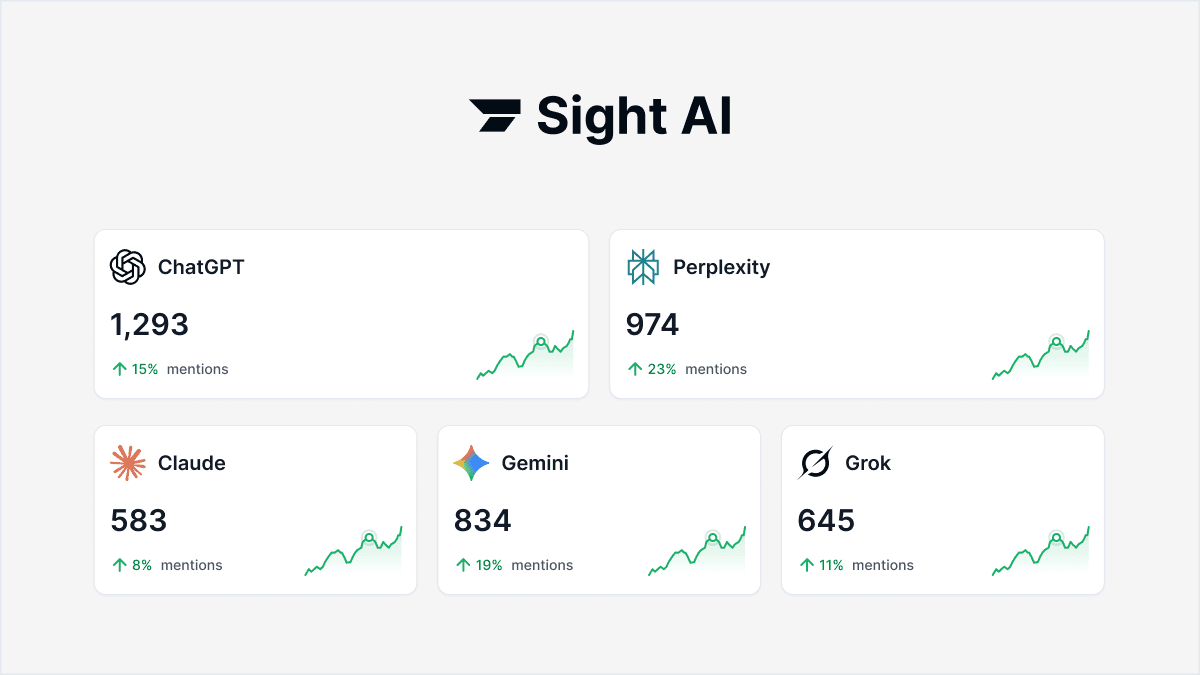
But here's the reality: getting content indexed quickly is only part of the visibility equation. While traditional search engines slowly discover your content, AI models like ChatGPT, Claude, and Perplexity are already answering questions and making recommendations—potentially about your brand, your competitors, or your industry. The question isn't just whether your content gets indexed. It's whether AI models know about your brand at all, how they're describing it, and what content opportunities you're missing in this new landscape.
Start tracking your AI visibility today and see exactly where your brand appears across top AI platforms. Stop guessing how AI models talk about your brand—get visibility into every mention, track content opportunities, and automate your path to organic traffic growth that works across both traditional search and AI-powered discovery.