You've invested years building your brand's online presence. Your website ranks well in Google. Your content gets shared. Your SEO metrics look solid. Then you test something new: you open ChatGPT and ask it to recommend solutions in your category.
Your competitors appear. Industry newcomers get mentioned. But your brand? Nowhere.
This isn't a hypothetical scenario anymore. As AI assistants become the first stop for research and recommendations, brands are discovering a harsh reality: traditional SEO success doesn't guarantee AI visibility. When someone asks Claude for software recommendations, queries Perplexity for industry leaders, or prompts ChatGPT for product comparisons, the brands that appear in those responses gain exposure, credibility, and customers. The brands that don't exist in AI's knowledge base simply don't exist to a growing segment of potential customers.
The shift is measurable and accelerating. People are moving from typing queries into search boxes to having conversations with AI assistants that synthesize information and make recommendations. If your brand isn't part of that synthesis, you're losing ground to competitors who are. The good news? AI visibility isn't random luck or algorithmic mystery. It follows patterns you can understand, diagnose, and systematically improve. This guide breaks down exactly why brands get overlooked by AI models and provides a practical framework for fixing it.
How AI Models Decide Which Brands to Mention
Understanding AI visibility starts with understanding how these models actually work. Unlike traditional search engines that crawl and index pages in a relatively straightforward way, AI models operate through multiple information layers that all influence which brands they mention.
First, there's training data—the massive corpus of text these models learned from during their initial training. This includes books, articles, websites, and publicly available content up to a specific cutoff date. If your brand had strong presence in authoritative publications, industry analyses, and widely-cited content before that cutoff, you're already in the model's base knowledge. If you launched recently or maintained minimal public presence, you're starting from a knowledge deficit.
Second, many AI models now use retrieval-augmented generation. Think of this as real-time research capability. When you ask a question, the model doesn't just rely on what it learned during training—it actively searches current web content, pulls relevant information, and synthesizes it into responses. This is why you'll sometimes see citations in ChatGPT or Perplexity responses. Your brand's current web presence directly influences these real-time retrievals.
Third, authority signals matter enormously. AI models are trained to prioritize information from sources that demonstrate expertise, credibility, and trustworthiness. When multiple authoritative sources mention your brand, cite your research, or reference your solutions, the model learns to weight your brand more heavily. This is why brands with strong backlink profiles, media coverage, and industry recognition tend to appear more frequently in AI responses. Understanding how AI models choose brands to recommend is essential for developing an effective visibility strategy.
The recency factor adds another layer. AI systems with real-time retrieval capabilities favor fresh, updated content. If your most recent substantial content is from two years ago while competitors publish weekly thought leadership, the model naturally gravitates toward the more current information. This doesn't mean older brands are disadvantaged—it means maintaining an active content presence matters more than ever.
Context matching is the final critical piece. When someone asks an AI assistant for recommendations, the model analyzes the specific intent behind the question. Are they looking for enterprise solutions or small business tools? Do they need budget options or premium features? The brands that appear are those whose documented positioning, use cases, and content best match that specific query context. Generic marketing speak doesn't cut it—AI models respond to specific, detailed information that clearly articulates what you do and who you serve.
Common Reasons Your Brand Gets Overlooked by AI
The most frequent culprit behind AI invisibility is content that's too thin to be useful. Your homepage says you're "innovative" and "customer-focused." Your product pages list features without context. Your blog covers surface-level topics without depth. AI models can't extract meaningful information from vague marketing language or shallow content. They need substance: detailed explanations of how things work, specific use cases, concrete examples, and clear positioning statements.
Many brands have what looks like robust content libraries but fail the depth test. You might have fifty blog posts, but if they're all 400-word summaries of industry news, they don't establish your expertise or give AI models enough substantive information to cite. Compare that to a competitor who publishes comprehensive guides, detailed case studies, and thought leadership that takes clear positions on industry issues. The model has far more to work with from the competitor's content.
Technical barriers create another common gap. If your content isn't being indexed quickly or isn't accessible to AI crawlers, it simply doesn't exist in the model's knowledge base. Some brands have entire sections of valuable content blocked by robots.txt configurations meant for traditional search engines but that also block AI systems. Others have slow indexing processes that mean their newest, most relevant content doesn't appear in real-time retrieval results. If you're experiencing new pages not indexed quickly, this directly impacts your AI visibility.
Missing from key data sources is often the hidden issue. AI models don't just learn from your website—they synthesize information from across the web. Industry comparison sites, software directories, review platforms, and authoritative publications all feed into AI knowledge. If your competitors appear on G2, Capterra, and industry roundups while you're absent from these sources, the model has multiple reinforcing signals about your competitors and minimal information about you.
Brand name ambiguity creates problems too. If your brand name is a common word or phrase, AI models may struggle to distinguish your company from other contexts. This is particularly challenging for brands with generic names or those that conflict with established terms. Clear, consistent brand presentation across all platforms helps, but names that naturally stand out have an inherent advantage in AI visibility.
Diagnosing Your AI Visibility Gap
Before you can fix AI invisibility, you need to understand exactly where and how you're missing. This requires systematic testing across multiple platforms with the kinds of prompts your actual customers use. Don't just search for your brand name—that tells you nothing about whether you appear in recommendation contexts.
Start by identifying the key questions and scenarios your target customers face. If you sell project management software, test prompts like "what are the best project management tools for remote teams" or "compare project management software for agencies." If you're a marketing agency, try "which agencies specialize in B2B SaaS marketing" or "recommend agencies for content marketing strategy." Use the language your customers actually use, not how you describe yourself internally.
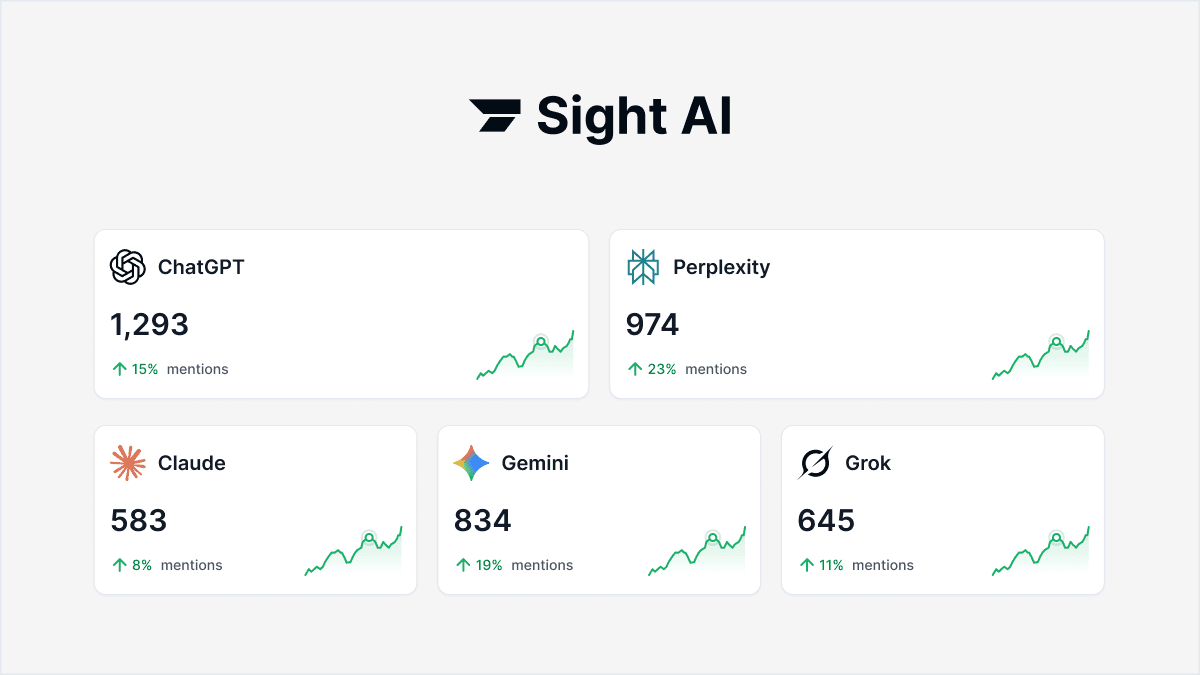
Test these prompts across ChatGPT, Claude, Perplexity, and any other AI platforms your audience might use. The results will vary—sometimes significantly. You might appear in Claude's responses but not ChatGPT's, or show up in Perplexity but with outdated information. Document everything: which platforms mention you, in what context, alongside which competitors, and with what kind of positioning or description. Learning how to track brand in AI search systematically will help you maintain consistent monitoring.
Pay close attention to the competitors who do appear. What content assets do they have that you lack? Are they featured in industry publications you've ignored? Do they have comprehensive comparison pages while yours are sparse? Have they published detailed guides on topics you've only covered superficially? This competitive analysis reveals exactly what the AI models are finding valuable enough to reference.
When your brand does appear, analyze the sentiment and context carefully. Are you mentioned positively as a strong option, or as a cautionary example? Is the information accurate and current, or outdated and misleading? Sometimes negative or incorrect mentions can be worse than invisibility—they require active correction through updated content and authoritative sources that provide accurate information.
Track these results over time rather than treating this as a one-time audit. AI models update their training data, their retrieval sources change, and your competitors are actively working on their own AI visibility. Monthly testing with consistent prompts gives you a clear picture of whether your efforts are working and where gaps persist.
Building Content That AI Models Actually Reference
Creating content that AI models cite requires a fundamental shift from writing for human readers scrolling through search results to writing for AI systems that synthesize and summarize information. The good news is that what works for AI also tends to work exceptionally well for human readers—it's comprehensive, clearly structured, and genuinely useful.
Structure your content for AI consumption by using clear hierarchical headings that signal exactly what each section covers. AI models parse content structure to understand relationships between concepts. When you write a guide on "Choosing Marketing Automation Software," use H2 headings like "Key Features to Evaluate" and "Common Implementation Challenges" rather than vague headings like "What to Know" or "Important Considerations." Definitive statements work better than hedging language—"Email automation reduces manual work by handling triggered campaigns automatically" is more useful to an AI model than "Email automation can potentially help with some manual tasks."
Develop comparison and listicle content where your brand naturally fits alongside competitors. AI models frequently respond to recommendation queries by synthesizing comparison information. If authoritative comparison content exists that includes your competitors but not you, you're missing opportunities. Create your own comparison content that positions your solution fairly alongside alternatives. Include specific feature comparisons, pricing information, and use case recommendations. This isn't about claiming superiority—it's about providing the detailed comparative information AI models need to make informed recommendations.
Thought leadership content establishes your brand as an authority worth citing. Take clear positions on industry trends, challenges, and best practices. Publish research, original analysis, and frameworks that other sources might reference. When you create genuinely valuable intellectual property—whether that's a methodology, a framework, or original research—other publications cite it, which signals to AI models that your brand produces reference-worthy content. This approach directly supports building brand authority in LLM responses.
Question-answering content directly addresses the kinds of queries people pose to AI assistants. Create comprehensive FAQ sections, detailed how-to guides, and explainer content that thoroughly addresses common questions in your space. Format this content so AI models can easily extract specific answers. Use clear question headings, provide direct answers, and support those answers with detailed explanations and examples.
Cite your facts and include sources. AI models are trained to value factually accurate, well-sourced information. When you make claims about industry trends, market sizes, or best practices, cite authoritative sources. This isn't just good practice—it signals to AI systems that your content meets quality standards worth referencing.
Technical Foundations for AI Discoverability
Content quality matters immensely, but technical infrastructure determines whether AI systems can access and understand that content in the first place. The technical foundations of AI discoverability overlap with traditional SEO but include specific considerations for AI crawlers and retrieval systems.
Rapid indexing is critical because AI models with real-time retrieval capabilities pull from recently published content. If your new article takes two weeks to get indexed, it misses the window when it's most relevant and timely. Implementing IndexNow integration allows you to notify search engines and AI systems immediately when you publish new content. This protocol pushes your URLs directly to participating platforms rather than waiting for them to discover changes through traditional crawling. Understanding why content is not indexed quickly helps you address these technical barriers.
Automated sitemap updates ensure that AI crawlers always have an accurate map of your content. When you publish new pages or update existing ones, your sitemap should reflect those changes immediately. Many AI retrieval systems use sitemaps as a primary discovery mechanism, so outdated sitemaps mean outdated AI knowledge about your content.
Clear site architecture helps AI systems understand your brand's expertise areas and content relationships. Organize your content into logical topic clusters with clear internal linking. When AI models crawl your site, they should be able to easily identify that you have comprehensive coverage of specific topics based on how your content is structured and interconnected.
Implement structured data markup where relevant. While AI models can extract information from unstructured text, structured data provides explicit signals about what your content covers, what your organization does, and how different pieces of information relate. Schema markup for articles, products, organizations, and FAQs all help AI systems parse your content more accurately.
Create an llms.txt file in your site root to provide explicit guidance to AI crawlers. This emerging standard allows you to specify which content is most important for AI systems to understand, provide context about your brand and offerings, and guide how AI models should represent your information. Think of it as a README file for AI systems crawling your site.
Ensure your robots.txt configuration doesn't inadvertently block AI crawlers. Some AI systems identify themselves with specific user agents that may not be covered by traditional search engine crawler allowances. Review your robots.txt file to confirm you're not blocking legitimate AI crawlers from accessing your content.
Measuring Progress and Iterating Your Strategy
AI visibility improvement isn't a one-time project—it's an ongoing process that requires consistent measurement and iteration. Without systematic tracking, you're operating blind, unable to tell whether your efforts are working or which tactics deliver the best results.
Establish baseline measurements across all major AI platforms before you start making changes. Test a consistent set of prompts on ChatGPT, Claude, Perplexity, and any other platforms relevant to your audience. Document whether your brand appears, in what context, with what positioning, and alongside which competitors. This baseline gives you a clear starting point to measure progress against. Using tools to monitor brand mentions across AI platforms streamlines this process significantly.
Track changes over time as you implement your content and technical improvements. Monthly testing with the same prompts reveals trends and patterns. You might notice that you start appearing in ChatGPT responses three months after publishing comprehensive comparison content, or that your Claude visibility improves after getting featured in industry publications. These patterns inform where to focus your efforts.
Monitor which specific content pieces drive AI mentions. When you do appear in AI responses, try to identify which of your content assets the model likely referenced. Did your comprehensive guide get cited? Is your comparison page showing up? Are industry publications that featured your research being referenced? Understanding which content types and topics generate AI visibility helps you double down on what works.
Pay attention to sentiment and accuracy in AI mentions. As your visibility increases, ensure the information AI models present about your brand is accurate and positioned appropriately. If you notice consistent mischaracterizations or outdated information, that signals a need for updated authoritative content that corrects the record. Implementing brand sentiment monitoring in AI tools helps you catch these issues early.
Adjust your content strategy based on results. If you discover that detailed how-to guides generate more AI mentions than general thought leadership, shift resources toward practical instructional content. If comparison content consistently gets you mentioned alongside key competitors, prioritize creating more comparison resources. Let the data guide your content roadmap rather than assumptions about what should work.
Your Path to AI Visibility Starts With Knowing Where You Stand
AI visibility has moved from experimental edge case to core component of digital presence. As more people turn to AI assistants for recommendations, research, and discovery, the brands that appear in those conversations gain compounding advantages. They build awareness with new audiences, establish credibility through AI endorsement, and capture opportunities that invisible competitors never even see.
The diagnostic framework covered here—understanding how AI models select brands, identifying why you're being overlooked, systematically testing your visibility, creating content AI systems reference, ensuring technical discoverability, and measuring progress—provides a practical path forward. This isn't about gaming algorithms or trying to trick AI systems. It's about ensuring your brand's genuine value, expertise, and solutions are accessible to the AI models that increasingly mediate how people discover and evaluate options.
Start with diagnosis. Test your brand across AI platforms with the prompts your customers actually use. Document the gaps. Analyze what competitors have that you lack. Then systematically address those gaps through comprehensive content, technical optimization, and authority building. Track your progress monthly and iterate based on what moves the needle.
The brands winning at AI visibility aren't necessarily the biggest or most established—they're the ones who recognized this shift early and took systematic action. Stop guessing how AI models like ChatGPT and Claude talk about your brand—get visibility into every mention, track content opportunities, and automate your path to organic traffic growth. Start tracking your AI visibility today and see exactly where your brand appears across top AI platforms.