What if you could publish high-quality blog posts every week without spending hours researching, writing, and optimizing each piece? For most content marketers, that sounds like a fantasy. The reality is far less glamorous: you're juggling keyword research spreadsheets, staring at blank documents, and watching deadlines slip while trying to maintain quality standards.
Here's the problem that keeps content teams stuck in endless cycles: manual blog creation demands 3-5 hours per article when you factor in research, writing, editing, SEO optimization, and publishing. Multiply that by the 2-3 posts per week you need to stay competitive, and you're looking at 15+ hours of pure content production time. That's nearly half your work week consumed by a single marketing channel.
The quality versus quantity dilemma becomes impossible to solve through sheer effort. Publish more frequently and your content quality suffers. Focus on quality and your publishing consistency falls apart. Try to do both and you'll burn out within months. This bottleneck explains why so many content strategies fail—not from lack of ideas or expertise, but from the fundamental math of manual content creation.
But what if the entire equation could change? Automated blog posts aren't about replacing human creativity with robotic content. They're about building intelligent systems that handle the repetitive, time-consuming tasks while you focus on strategy, brand voice, and high-level creative decisions. The technology has reached a point where properly configured automation can maintain quality standards while dramatically increasing output.
This guide walks you through building a complete automated blogging system from the ground up. You'll learn how to set up AI-powered content generation that maintains your brand voice, automate SEO optimization without sacrificing quality, and create publishing workflows that run with minimal oversight. By the end, you'll have a step-by-step blueprint for producing consistent, high-quality blog content while reclaiming 15+ hours per week.
We're not talking about basic ai blog writing tools that spit out generic content. This is about engineering sophisticated automation systems that handle everything from keyword research and content planning to multi-platform distribution and performance tracking. The difference between automation that fails and automation that transforms your content marketing comes down to proper setup and configuration.
Let's walk through how to build this system step-by-step, starting with the essential foundation every automated blogging operation needs.
Creating effective blog content through automation requires understanding the fundamental structure that makes articles both reader-friendly and search engine optimized. Whether you're building content manually or through automated systems, following a proven article structure ensures consistency and quality across every piece you publish.
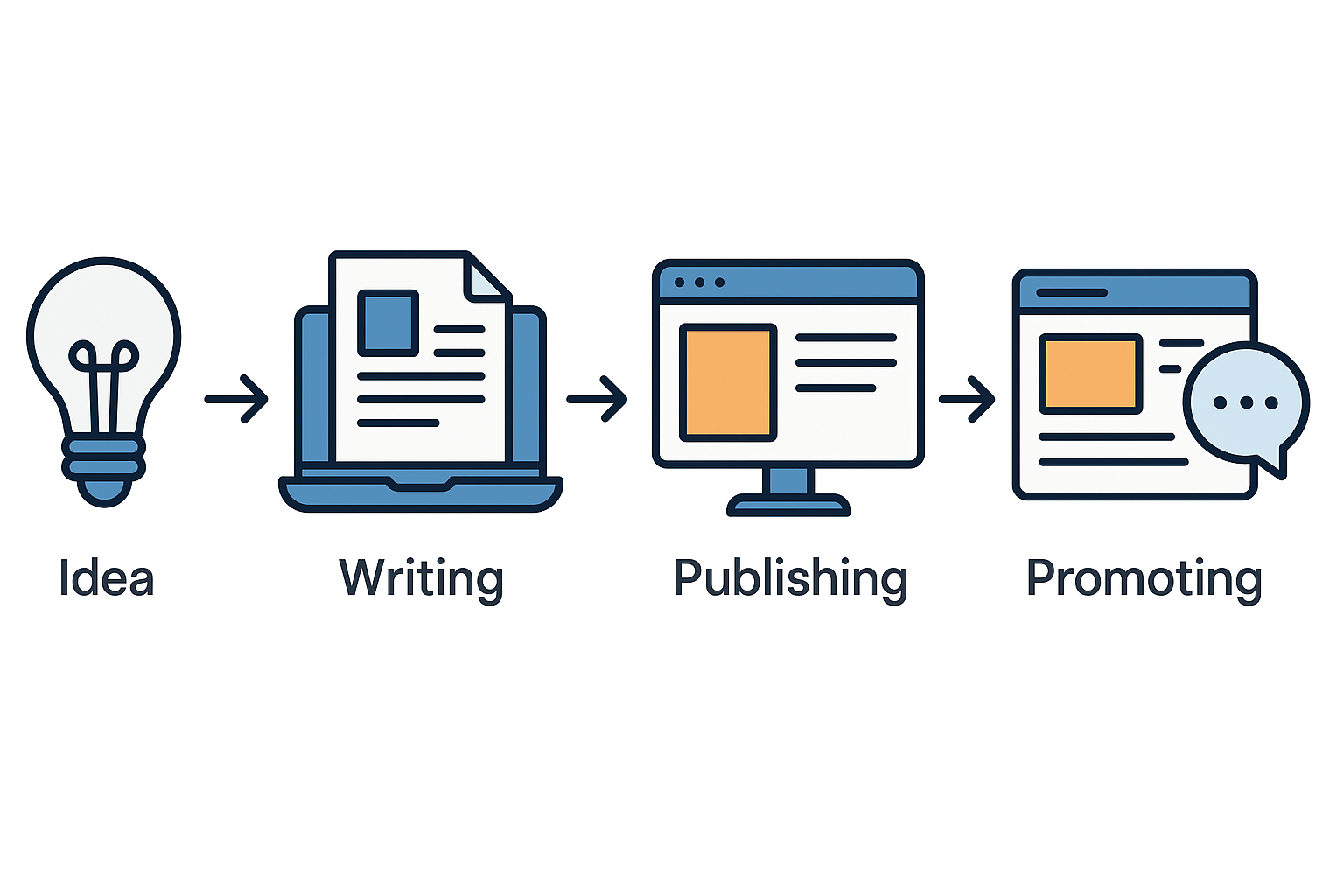
The content creation process breaks down into distinct phases that automation can streamline significantly. Here's how to approach each stage:
Research and Planning Phase:
Begin by identifying your target audience's specific questions and pain points. This foundation determines everything that follows:
Analyze search intent behind your target keyword to understand what readers actually want
Review top-ranking content to identify gaps and opportunities for differentiation
Compile relevant statistics, expert insights, and supporting evidence before writing begins
Create a preliminary outline that maps main points to search intent
Determine the appropriate content depth based on topic complexity and competition
Article Structure Foundation:
Every high-performing blog post follows a recognizable architecture that guides readers through your content logically:
Hook Opening: Start with a compelling statement, question, or scenario that immediately resonates with your target reader's situation
Problem Identification: Clearly articulate the challenge or question your article addresses, making readers feel understood
Solution Preview: Briefly outline what readers will learn and why it matters to them specifically
Value Promise: Set clear expectations about the actionable insights or knowledge they'll gain
Body Content Organization:
The main content sections should flow naturally while maintaining reader engagement throughout:
Break complex topics into digestible sections with clear thematic boundaries
Lead each major section with a summary sentence that previews what's coming
Use progressive disclosure—start with foundational concepts before advancing to complex applications
Include transitional phrases that connect ideas and maintain narrative flow
Vary paragraph length to create visual rhythm (mix 2-3 sentence paragraphs with longer 4-5 sentence blocks)
Content Depth Strategies:
Quality automated content requires strategic decisions about how deeply to explore each topic:
Provide specific implementation steps rather than vague advice
Include context about why certain approaches work better than alternatives
Address common objections or challenges readers might encounter
Offer concrete examples that illustrate abstract concepts (clearly marked if hypothetical)
Layer information so beginners can follow while advanced readers find value
Visual Formatting Elements:
Structure extends beyond words to how content appears on the page:
Use subheadings every 300-400 words to break up text and improve scannability
Bold key phrases and important takeaways to help readers quickly identify main points
Implement bullet points for lists, steps, or multiple related items
Add single-sentence paragraphs sparingly for emphasis on critical points
Include white space strategically to prevent walls of text that discourage reading
SEO Optimization Integration:
Structure your content with search visibility in mind from the start:
Place your primary keyword naturally in the opening paragraph without forcing it
Include semantic variations and related terms throughout the body content
Structure subheadings to match common question patterns in your niche
Build internal links to related content that adds value for readers
Optimize meta descriptions to summarize value proposition in 150-160 characters
Conclusion Architecture:
Strong endings reinforce key messages and guide readers toward next actions:
Summarize the most important takeaways without simply repeating earlier content
Connect back to the problem stated in your introduction, showing how you've addressed it
Provide a clear next step that readers can immediately implement
Include a relevant call-to-action that aligns with reader intent
End with forward momentum rather than just stopping
Quality Control Checkpoints:
Before publishing any blog post—automated or manual—verify these structural elements:
Each section delivers on the promise made in its subheading
Paragraphs maintain focus on single ideas without topic drift
Transitions between sections feel natural rather than abrupt
The article answers the question implied by your target keyword
Content provides sufficient depth to satisfy reader intent completely
Tone remains consistent throughout without jarring style shifts
When you automate blog content creation, these structural principles become the template your system follows. Configure your automation to recognize these patterns, and you'll maintain consistency across every article while dramatically reducing the time investment required. The structure itself becomes a quality control mechanism—deviations from these proven patterns often signal content that needs human review before publication.
The foundation of successful automated blog posts starts with understanding what automation can and cannot do. Automation excels at handling repetitive tasks like formatting, keyword placement, meta description generation, and scheduling. It can analyze top-performing content in your niche and identify patterns that resonate with readers. What automation cannot replace is strategic thinking about your audience's evolving needs, the creative insights that make content memorable, and the nuanced judgment calls about brand positioning.
Building your automation system requires selecting the right technology stack. Your content management system needs robust API access that allows external tools to create, update, and publish posts programmatically. Many businesses use WordPress with REST API enabled, while others prefer headless CMS solutions that separate content creation from presentation. The key is ensuring your chosen platform supports webhook integrations and automated workflows without requiring constant manual intervention.
Content quality in automated systems depends heavily on your training data and prompts. When you configure an AI content generation system, you're essentially teaching it what good content looks like for your brand. This means providing multiple examples of your best-performing articles, documenting your style preferences in detail, and creating specific guidelines for tone, structure, and depth. The more precise your initial configuration, the less editing you'll need to do later.
Your automation workflow should include multiple quality checkpoints before content goes live. Consider implementing a staging environment where generated content awaits human review for accuracy, brand alignment, and strategic fit. Some teams use automated scoring systems that flag content below certain readability thresholds or missing key SEO elements. This hybrid approach maintains efficiency while ensuring nothing publishes without meeting your standards.
Keyword research automation transforms one of content marketing's most time-consuming tasks. Rather than manually analyzing search volumes and competition metrics, automated tools can continuously monitor keyword opportunities in your niche. They identify rising search trends, map semantic relationships between related terms, and suggest content gaps your competitors haven't addressed. This ongoing intelligence gathering ensures your content calendar stays aligned with actual search demand.
Content calendars become dynamic rather than static when properly automated. Instead of planning topics months in advance based on guesswork, your system can adjust in real-time based on performance data and trending topics. When certain content themes drive exceptional engagement, your automation can prioritize similar topics. When search patterns shift in your industry, your content pipeline adapts accordingly without requiring complete calendar overhauls.
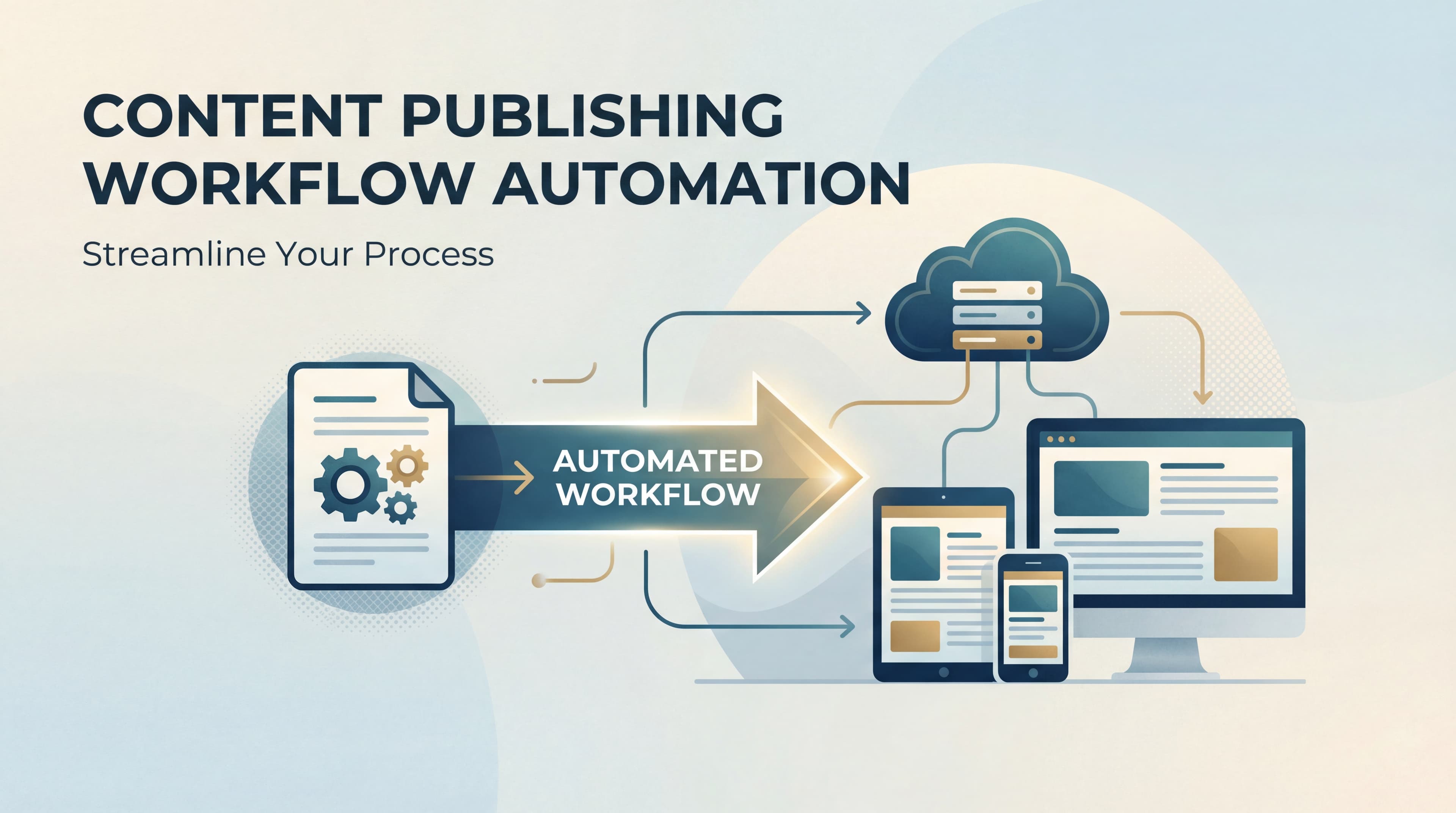
The technical implementation of automated publishing involves connecting several systems through APIs or automation platforms. You might use tools that trigger content generation based on calendar schedules, route drafts through approval workflows, optimize images automatically, and publish to your CMS at predetermined times. Each connection point needs error handling and fallback procedures to prevent system failures from derailing your entire publishing schedule.
Content distribution automation extends beyond your primary blog. Once a post publishes, automated systems can adapt it for social media platforms, email newsletters, and content syndication networks. Each platform requires different formatting, optimal posting times, and engagement strategies. Automation handles these variations while maintaining message consistency across channels, multiplying the reach of every piece of content you create.
Performance monitoring becomes crucial when scaling content production through automation. You need systems that track not just traffic and rankings, but quality indicators like time on page, scroll depth, and conversion actions. This data feeds back into your automation system, helping it learn which topics, formats, and approaches generate the best results for your specific audience. Without this feedback loop, automation can perpetuate unsuccessful patterns at scale.
Common automation pitfalls include over-relying on templates that make all content feel formulaic, neglecting to update prompts as your brand evolves, and failing to maintain human oversight of strategic decisions. The most successful automated content operations treat technology as an amplifier of human expertise rather than a replacement for it. Your team's knowledge about your audience, industry, and brand should guide the automation, not the other way around.
Security and content ownership considerations matter when using third-party automation tools. Ensure any platforms you integrate understand that you retain full rights to generated content. Review their data handling practices, particularly regarding proprietary business information you might include in prompts or training data. Many businesses maintain separate environments for testing automation versus production content to minimize risk exposure.
Scaling your automated content system happens gradually as you validate each component. Start by automating one aspect of your workflow, measure the results, refine the process, then add the next layer. This incremental approach prevents the overwhelm of trying to automate everything simultaneously while building institutional knowledge about what works for your specific use case. Teams that rush full automation often end up reverting to manual processes when quality issues emerge.
The cost-benefit analysis of content automation extends beyond simple time savings. Consider the opportunity costs of what your team could accomplish with reclaimed hours, the competitive advantage of publishing more consistently than rivals, and the compounding SEO benefits of sustained content velocity. Many businesses find that even modest automation investments pay for themselves within the first few months through improved content output and team productivity.
When you build an automated blog posts system, one critical challenge emerges that most content teams overlook until it's too late: you have no way to know if your content is actually reaching audiences through AI-powered search platforms like ChatGPT, Claude, and Perplexity. While traditional SEO tools track Google rankings, they leave you completely blind to whether AI systems are discovering, citing, or recommending your automated content.
This visibility gap matters more than most marketers realize. AI platforms now handle billions of queries monthly, and users increasingly trust AI-generated answers over traditional search results. Your automated blog posts might rank perfectly in Google while remaining completely invisible in AI responses—meaning you're missing a massive and growing segment of your potential audience.
Sight AI solves this blind spot by tracking how your content performs across AI platforms. The platform monitors whether AI systems cite your automated blog posts, which queries trigger mentions of your content, and how your AI visibility changes over time. This intelligence becomes crucial when you're publishing content at scale through automation—you need to know whether your efficiency gains are translating into actual discovery and engagement.

For automated content operations specifically, Sight AI provides feedback that directly improves your system's output quality. You can identify which content formats, topic approaches, and structural elements make your automated posts more likely to appear in AI responses. This data feeds back into your automation configuration, allowing you to optimize prompts and templates based on what actually drives AI platform visibility rather than guessing based on traditional SEO principles alone.
The platform's competitive intelligence features help you understand how rival content performs in AI platforms, revealing opportunities your automation system should prioritize. When you see competitors gaining AI citations in specific topic areas, you can adjust your automated content calendar to address those gaps with better, more comprehensive coverage. This strategic layer transforms content automation from a purely efficiency play into a competitive advantage.
Integration with automated workflows means you can monitor new content as it publishes without manual tracking. Set up automated alerts when your blog posts start appearing in AI responses, or when visibility drops for key topics. This continuous monitoring ensures your automation system maintains both publishing consistency and discoverability across the evolving search landscape where AI platforms increasingly drive traffic and brand awareness.
You now have a complete blueprint for building automated blog posts that maintain quality while reclaiming 15+ hours per week. The key is treating automation as a system rather than a single tool—starting with solid foundations in Section 2, progressing through strategic content planning in Section 3, and culminating in sophisticated SEO automation and multi-platform distribution by Section 5.
The difference between automation that fails and automation that transforms your content marketing comes down to proper configuration. Focus on training your ai content writer systems with high-quality examples of your brand voice, establish clear quality thresholds that trigger human review, and build feedback loops that continuously improve your prompts and workflows based on performance data.
Start with the essentials: set up your content management system with API access, configure one reliable ai blog writer platform, and automate your keyword research process. Once those foundations are solid, layer in advanced SEO automation, multi-platform distribution, and performance tracking. This progressive approach prevents overwhelm while building toward enterprise-scale content operations.
Your automated content system should get smarter over time, learning from what works and scaling successful patterns. Track both efficiency metrics (time saved, cost per article) and performance metrics (traffic growth, engagement rates, conversion improvements) to calculate true ROI and identify optimization opportunities. Modern ai content creation tools provide analytics dashboards that make this tracking straightforward.
Ready to see how your automated content performs across traditional search and emerging AI platforms? Start tracking your AI visibility today to ensure your content gets discovered faster and drives measurable organic growth.