Understanding what your competitors publish is no longer about manually scrolling through their blogs or setting up basic Google Alerts. AI-powered competitor content analysis transforms how marketers, founders, and agencies uncover content gaps, identify winning topics, and build strategies that capture organic traffic before competitors can react.
Think of it like this: traditional competitive analysis is like watching a chess game after it's over. AI-powered analysis lets you see the board in real-time, predict your opponent's next three moves, and position yourself two steps ahead.
This guide delivers seven actionable strategies that leverage artificial intelligence to analyze competitor content at scale—from tracking how rivals appear in AI search results to identifying semantic patterns that drive their rankings. Each strategy includes implementation steps you can execute immediately, whether you're a solo founder or leading an agency team.
1. Track Competitor Mentions Across AI Models
The Challenge It Solves
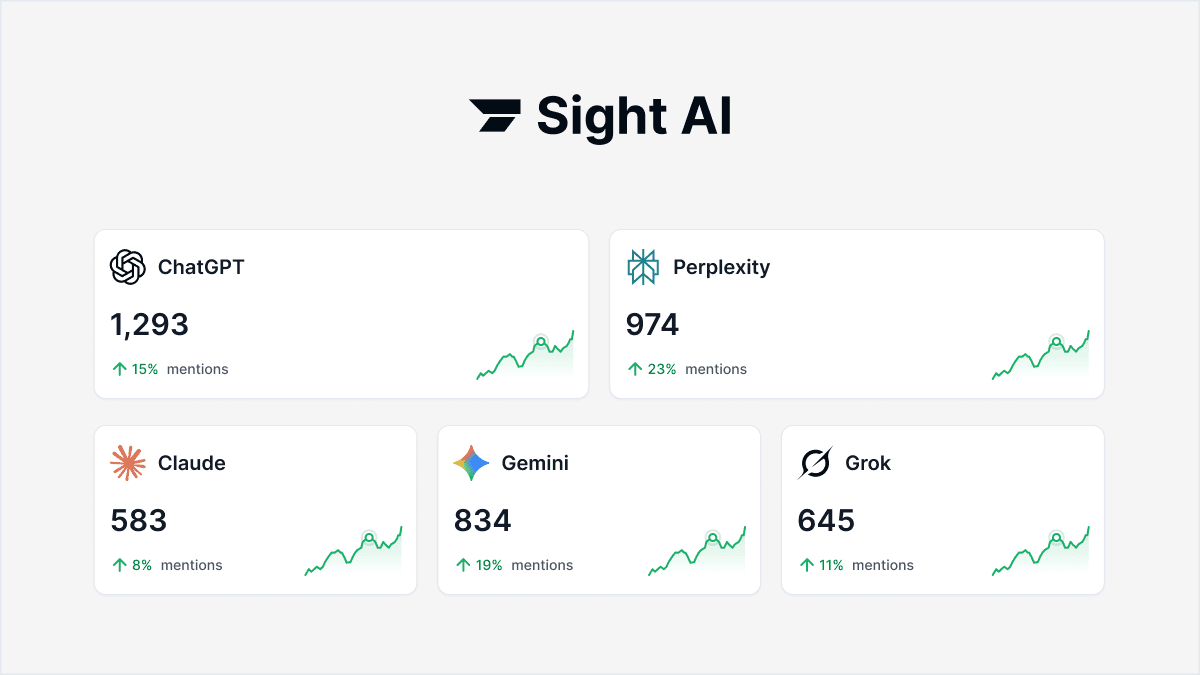
Your competitors might rank well in Google, but how do they appear when potential customers ask ChatGPT, Claude, or Perplexity for recommendations? Traditional SEO tools can't show you this critical visibility layer. When someone asks "What's the best project management tool for remote teams?" and your competitor gets cited while you don't, you're losing customers before they ever reach a search engine.
AI models increasingly influence purchase decisions and brand perception, making visibility in these platforms strategically important for long-term growth.
The Strategy Explained
AI visibility tracking monitors how your competitors appear in conversational AI responses across multiple platforms. This reveals positioning advantages you can't see through traditional analytics. You're not just tracking mentions—you're analyzing context, sentiment, and the specific prompts that trigger competitor citations.
The insight here goes beyond vanity metrics. When you understand which competitor features get highlighted by AI models, which pain points their brand solves in AI responses, and how they're positioned relative to your brand, you can adjust your content strategy to capture those same citation opportunities.
Implementation Steps
1. Create a baseline by manually testing 10-15 prompts related to your industry across ChatGPT, Claude, and Perplexity, documenting which competitors appear and in what context.
2. Set up systematic tracking using AI visibility platforms that automate prompt testing across models, capturing mention frequency, sentiment, and positioning relative to your brand.
3. Analyze patterns in competitor citations—identify which topics trigger their mentions, what language the AI uses to describe their strengths, and which use cases they dominate.
4. Build a content response strategy targeting the gaps where competitors aren't mentioned or where AI models express uncertainty about solutions in your space.
Pro Tips
Test prompts from different buyer journey stages—awareness, consideration, and decision. Competitors might dominate awareness-stage mentions while you could capture decision-stage queries. Track how AI model updates change competitor visibility patterns, as major model releases can shift citation behavior dramatically.
2. Map Competitor Content Clusters with Semantic Analysis
The Challenge It Solves
Your competitors publish dozens or hundreds of articles, but which topics actually form their authority foundation? Manual analysis takes weeks and misses subtle semantic relationships between pieces. You need to understand not just what they write about, but how their content interconnects to build topical authority that search engines and AI models recognize.
The Strategy Explained
Semantic analysis tools process content relationships at scale that would take humans weeks to map manually. These tools examine entity relationships, topic modeling, and internal linking patterns to reveal how competitors structure their content authority. You're essentially reverse-engineering their content architecture to find the gaps where they lack depth or coverage.
This approach identifies clusters where competitors have built comprehensive coverage—and more importantly, where they haven't. A competitor might have twenty articles about email marketing but only two about email deliverability, revealing a vulnerability you can exploit.
Implementation Steps
1. Extract all published URLs from your top three competitors using sitemap analysis or crawling tools, creating a comprehensive content inventory.
2. Feed this content through semantic analysis platforms that identify topic clusters, entity relationships, and content depth scores across their entire site.
3. Map their cluster architecture visually—identify pillar content, supporting articles, and orphaned pieces that don't connect to broader themes.
4. Compare their cluster coverage against your own content map, highlighting gaps where they lack authority and opportunities where you can build superior coverage.
Pro Tips
Look for clusters where competitors have strong pillar content but weak supporting articles—these represent quick wins where you can build depth faster than they can respond. Pay attention to semantic relationships between clusters, as competitors often miss opportunities to connect related topics that would strengthen their overall authority.
3. Reverse-Engineer Top-Performing Competitor Content
The Challenge It Solves
You know which competitor articles rank well, but understanding why they perform requires analyzing dozens of factors simultaneously—content structure, entity coverage, semantic depth, and topic comprehensiveness. Doing this manually for even a single article takes hours. Doing it for your competitor's entire top-performing content library? Impossible without AI assistance.
The Strategy Explained
AI-powered content analysis examines structural patterns, entity relationships, and topic coverage in high-ranking competitor pages, identifying the specific attributes that correlate with performance. You're not copying their content—you're understanding the patterns that make it effective so you can apply those insights to your own unique approach.
This strategy reveals whether competitors succeed through comprehensive coverage, specific entity mentions, particular content structures, or semantic depth around core topics. Armed with these insights, you can create content that matches their strengths while adding unique value they haven't addressed.
Implementation Steps
1. Identify your competitors' top 20 performing articles using ranking data, traffic estimates, or backlink profiles as performance proxies.
2. Run these URLs through AI content analysis tools that extract structural elements—heading hierarchy, content depth per section, entity mentions, semantic relationships, and topic coverage breadth.
3. Look for patterns across high-performers—do they consistently use certain structures, cover specific subtopics, or mention particular entities that correlate with success?
4. Create content briefs for your own articles that incorporate these successful patterns while addressing gaps or weaknesses you've identified in competitor coverage.
Pro Tips
Compare high-performing articles against lower-performing ones from the same competitor to isolate what actually drives success versus what's just their standard approach. Pay special attention to entity coverage—articles that mention specific tools, people, or concepts often perform better because they satisfy search intent more completely.
4. Monitor Competitor Content Velocity and Timing
The Challenge It Solves
Your competitor suddenly doubles their publishing frequency or pivots to entirely new topics. By the time you notice through casual observation, they've already captured rankings and attention. You need early warning systems that detect strategic shifts in competitor content behavior before those shifts translate into market advantages.
The Strategy Explained
Content velocity tracking monitors publishing patterns, seasonal strategies, and content pivots to help you respond strategically rather than reactively. This isn't about matching their output—it's about understanding the strategic thinking behind their content decisions so you can counter effectively or identify when they're making mistakes you should avoid.
Many organizations find that tracking content velocity helps identify competitor strategic pivots early, allowing them to adjust their own strategies before competitors gain significant traction.
Implementation Steps
1. Establish baseline metrics for each competitor—average monthly publishing frequency, typical article length, primary topic categories, and seasonal patterns over the past 12 months.
2. Set up automated monitoring that alerts you to significant deviations—50% increases in publishing frequency, new topic categories, or sudden changes in content depth or format.
3. When velocity changes occur, analyze the strategic context—are they launching a new product, responding to market shifts, or testing a new content approach?
4. Decide whether to counter their move, ignore it as a likely failed experiment, or accelerate your own timeline if they're moving into territory you had planned to dominate.
Pro Tips
Track not just how much competitors publish, but when they publish. Some competitors front-load content in Q1 to build authority before busy seasons. Others publish reactively to news events. Understanding their timing patterns helps you anticipate their next moves and position your content strategically.
5. Analyze Competitor Content Performance Signals
The Challenge It Solves
A competitor's article jumps from page three to position two seemingly overnight. What changed? Was it the content update they made, the backlinks they acquired, or something else entirely? Without correlating multiple signals, you're guessing about what drives their success—and your own optimization efforts become shots in the dark.
The Strategy Explained
This strategy correlates content attributes with ranking improvements and AI citation patterns to identify what actually drives competitor performance. You're looking for causal relationships: when competitors update content depth, do rankings improve? When they add specific entities or restructure articles, does AI visibility increase?
The power here lies in moving beyond correlation to informed causation. If you notice that every time a competitor adds comparison tables to their articles, those articles gain rankings within two weeks, you've identified a tactical pattern worth replicating.
Implementation Steps
1. Select 10-15 competitor articles to track intensively, monitoring ranking positions, estimated traffic, backlink acquisition, and AI model citations weekly.
2. Use change detection tools to identify when competitors update these articles—note content additions, structural changes, or new sections added.
3. Correlate updates with performance changes occurring 1-4 weeks later, building a database of actions and outcomes that reveal what optimization tactics actually work.
4. Test the highest-confidence patterns on your own content, measuring whether the same tactics produce similar results for your brand.
Pro Tips
Don't just track ranking changes—monitor AI citation frequency as a leading indicator. Articles that start appearing more frequently in AI responses often see ranking improvements 2-3 weeks later, giving you advance warning of competitor content that's gaining traction.
6. Identify Content Gaps Through AI-Powered SERP Analysis
The Challenge It Solves
Traditional keyword research shows you what people search for, but it doesn't reveal the intent gaps where existing content fails to satisfy searchers. You might target a keyword with decent volume, only to discover that every ranking page addresses a slightly different angle than what users actually need. AI-powered SERP analysis reveals these mismatches at scale.
The Strategy Explained
This approach finds search intent gaps and long-tail opportunities competitors haven't addressed by analyzing the disconnect between what users search for and what currently ranks. AI tools can process hundreds of SERPs simultaneously, identifying patterns in user intent that existing content misses.
The insight comes from understanding not just what ranks, but what should rank based on the full spectrum of user needs around a topic. When you identify intent gaps, you can create content that serves underserved segments of the market.
Implementation Steps
1. Generate a comprehensive keyword list around your core topics using traditional research tools, aiming for 200-500 keywords per topic cluster.
2. Feed these keywords through AI SERP analysis tools that evaluate whether ranking content actually matches the likely user intent based on query structure and context.
3. Identify keywords where ranking content has low intent-match scores—these represent opportunities where current results don't fully satisfy searchers.
4. Prioritize gaps based on search volume and competitive weakness, then create content specifically designed to address the intent mismatch you've identified.
Pro Tips
Look for question-based queries where current results provide definitions instead of actionable answers—these often represent high-value gaps. Also monitor how AI models answer these queries; if AI provides better answers than ranking pages, you've found an opportunity to create content that serves both traditional search and AI platforms.
7. Build Automated Competitive Intelligence Workflows
The Challenge It Solves
Running these analyses manually takes hours each week, and by the time you compile insights, market conditions have shifted. You need competitive intelligence that updates continuously, alerts you to significant changes, and feeds directly into your content planning process without requiring constant manual intervention.
The Strategy Explained
Automated workflows connect analysis tools into unified dashboards with trigger-based content creation recommendations. Instead of manually checking competitor sites, running analyses, and compiling reports, you build systems that monitor continuously and surface insights when they matter most.
Many organizations find that automated competitive intelligence workflows reduce manual research time significantly while improving coverage, allowing teams to focus on strategy and execution rather than data collection.
Implementation Steps
1. Map your current competitive analysis process—identify every manual step from monitoring competitor content to creating your own content briefs.
2. Select tools that can automate each step—content monitoring, semantic analysis, performance tracking, gap identification, and brief generation.
3. Connect these tools using automation platforms or APIs, creating workflows where insights from one analysis automatically trigger the next step in your process.
4. Set up alert thresholds that notify you only when significant changes occur—competitor velocity spikes, major ranking shifts, or new content gaps that match your strategic priorities.
Pro Tips
Start with one workflow—perhaps automated competitor content monitoring that feeds into weekly digest reports—then expand to more complex automations as you refine the process. Build feedback loops where content performance data updates your competitive models, making your intelligence more accurate over time.
Putting It All Together
Implementing AI-powered competitor content analysis doesn't require tackling all seven strategies simultaneously. Start with tracking competitor mentions across AI models—this reveals positioning insights invisible to traditional tools and directly informs your content priorities.
Here's your implementation roadmap: Week one, audit how your brand appears in AI search results compared to your top three competitors. Week two, map competitor content clusters to identify gaps. Week three, begin tracking content velocity to understand their strategic patterns. From there, layer in performance signal analysis and SERP gap identification as your competitive intelligence matures.
The marketers and agencies gaining ground in 2026 aren't just creating more content—they're using AI to understand exactly where competitors are vulnerable and moving faster to capture those opportunities. They know which topics competitors dominate, where their coverage falls short, and how to position their own content for maximum visibility in both traditional search and AI platforms.
Your competitive advantage comes from seeing patterns others miss and acting on insights before they become obvious. When you notice a competitor building authority in a new cluster, you can decide whether to compete head-on or find an adjacent opportunity they're neglecting. When you spot intent gaps in their coverage, you can create content that captures traffic they're leaving on the table.
Stop guessing how AI models like ChatGPT and Claude talk about your brand—get visibility into every mention, track content opportunities, and automate your path to organic traffic growth. Start tracking your AI visibility today and see exactly where your brand appears across top AI platforms, then build your content roadmap around the gaps you discover.